


TL;DR:
- Sleep actively restores the body, consolidates memory, and regulates vital systems during intense neurological activity.
- Prioritizing quality sleep improves immune function, hormone balance, cognitive performance, and reduces disease risk over time.
Sleep is a vital, active biological process that restores your body, consolidates memory, and regulates nearly every major system in your body. It is not passive downtime. Research confirms that sleep involves intense neurological activity during which your brain clears waste, your tissues repair, and your hormones reset. Yet more than one-third of U.S. adults report chronic sleep deprivation, and only 1 in 10 seek professional help. For adults in their 40s, 50s, and 60s, understanding why sleep is important is not just useful knowledge. It is a foundation for long-term health.
What are the main health benefits of adequate sleep?
Quality sleep does more for your body than most people realize. When you sleep, your immune system releases proteins called cytokines that fight infection and inflammation. Skipping sleep reduces cytokine production, leaving you more vulnerable to illness and slower to recover.

Hormonal balance is another major benefit. Sleep regulates leptin and ghrelin, the two hormones that control hunger and fullness. When you get enough rest, leptin signals satisfaction and ghrelin stays low. When you don’t, ghrelin spikes and leptin drops, which is why a bad night often leads to stronger cravings the next day.
Cognitive performance peaks with the right amount of rest. Optimal cognitive function occurs with 7–8 hours of sleep per night. Both sleeping less and sleeping significantly more associate with poorer memory, slower thinking, and reduced focus. That sweet spot matters more as you age, because the brain becomes less forgiving of sleep debt over time.
The long-term disease picture is equally clear. Adults who regularly sleep fewer than 6 hours per night face significantly higher risks of hypertension, obesity, and type 2 diabetes. These are not distant threats. They are conditions that develop gradually, and sleep is one of the most controllable factors in preventing them.
Here is a quick summary of the core physical and mental benefits:
- Immune support: Your body produces protective proteins during sleep that fight infection and reduce inflammation.
- Hormonal regulation: Sleep keeps leptin and ghrelin balanced, which directly affects appetite and weight.
- Memory consolidation: REM sleep processes and stores new information, making learning stick.
- Physical repair: Deep non-REM sleep triggers growth hormone release, which repairs muscle and tissue.
- Disease prevention: Consistent 7–8 hour sleep reduces the risk of cardiovascular disease, diabetes, and metabolic disorders.
Pro Tip: If you wake up hungry most mornings even after a full meal the night before, poor sleep may be disrupting your ghrelin levels. Prioritizing sleep is often more effective than changing your diet alone.
How do sleep quality and sleep phases affect your health?
Duration alone does not tell the full story of restorative sleep. Sleep health is actually multidimensional. Researchers define it across six dimensions: regularity, satisfaction, alertness, timing, efficiency, and duration. You can sleep 7 hours and still feel exhausted if your sleep is fragmented, poorly timed, or inefficient.
Each sleep phase serves a distinct biological purpose. REM sleep supports learning and memory, processing emotional experiences and consolidating new information. Deep non-REM sleep, also called slow-wave sleep, handles physical repair. During this phase, growth hormone pulses through your body, rebuilding muscle and replenishing energy stores. Both phases are non-negotiable for full restoration.
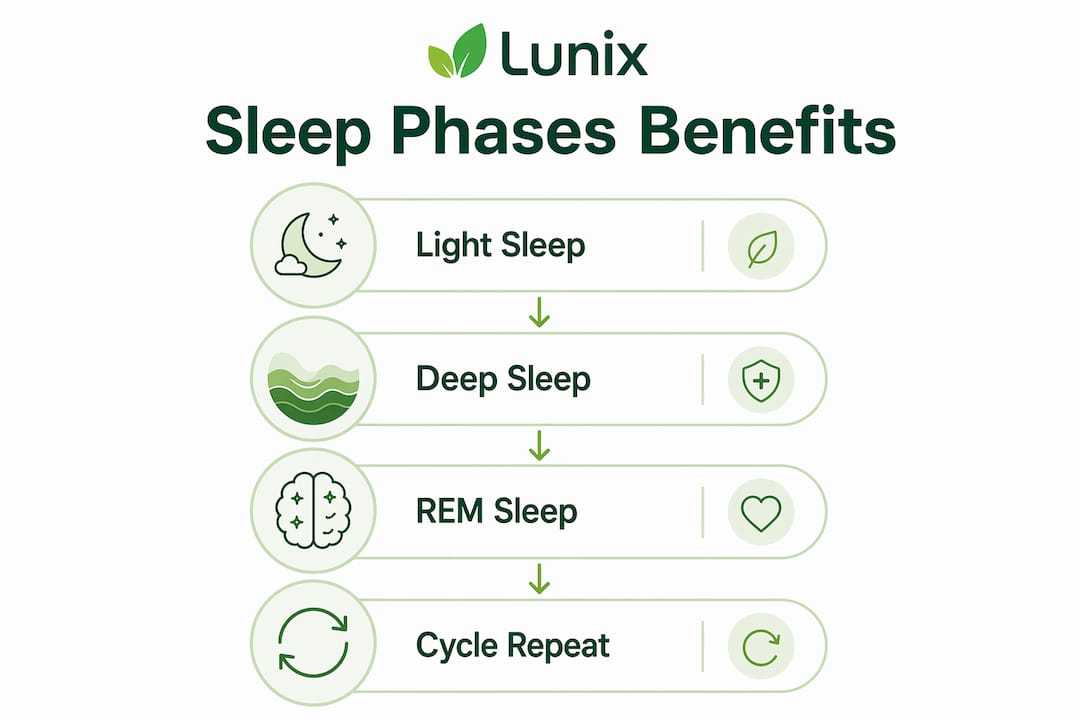
One of the most compelling discoveries in sleep science involves the brain’s glymphatic system. During deep sleep, this waste-clearance network flushes out neurotoxic proteins, including amyloid and tau, the same proteins linked to Alzheimer’s disease. Glymphatic waste clearance during deep sleep may be one of the most important reasons why consistent, quality rest protects long-term brain health.
The table below breaks down the six dimensions of sleep health and what each one means for you:
| Dimension | What it means | Why it matters |
|---|---|---|
| Duration | Total hours of sleep per night | 7–8 hours supports cognitive and physical health |
| Regularity | Consistent sleep and wake times | Stabilizes your circadian rhythm |
| Efficiency | Percentage of time in bed actually sleeping | Low efficiency signals fragmented or disrupted sleep |
| Timing | When you sleep relative to your body clock | Misaligned timing reduces sleep quality even at 8 hours |
| Satisfaction | Your subjective sense of rest | Poor satisfaction predicts daytime fatigue and mood issues |
| Alertness | Daytime wakefulness without excessive sleepiness | A true measure of whether sleep is actually restorative |
Pro Tip: Track your sleep satisfaction, not just your hours. If you consistently feel unrefreshed despite 7–8 hours in bed, the issue is likely sleep efficiency or timing, not duration. A sleep diary kept for two weeks can reveal patterns your memory misses.
What are the risks of chronic sleep deprivation for adults over 40?
Chronic sleep deprivation is not just tiredness. It is a physiological state that damages multiple body systems over time. For adults over 40, the risks compound because the body’s natural recovery capacity already begins to shift with age.
The metabolic consequences are significant. Sleep deprivation disrupts metabolism, increasing cravings for fats and carbohydrates while impairing the hormones that regulate hunger. This creates a cycle where poor sleep drives weight gain, and excess weight further disrupts sleep quality. Breaking that cycle requires addressing sleep directly, not just diet or exercise.
Cardiovascular and neurological risks are equally serious. Chronic short sleep raises blood pressure, increases inflammation, and accelerates arterial stiffness. On the cognitive side, repeated sleep deprivation impairs decision-making, emotional regulation, and working memory. Over years, these effects accumulate and raise the risk of mood disorders and cognitive decline.
Caffeine masks the symptoms of sleep deprivation but does not repair the underlying physiological damage. Relying on stimulants to function through chronic sleep loss is a short-term fix that allows long-term harm to continue unaddressed. The dangers of caffeine masking are well-documented and often underestimated.
The specific risks adults over 40 face include:
- Cardiovascular disease: Chronic short sleep raises blood pressure and promotes arterial inflammation.
- Type 2 diabetes: Sleep loss impairs insulin sensitivity, increasing blood sugar dysregulation.
- Alzheimer’s risk: Reduced deep sleep means less glymphatic clearance of amyloid and tau proteins.
- Weight gain: Hormonal disruption from poor sleep drives increased calorie intake and fat storage.
- Mood disorders: Sleep deprivation amplifies anxiety, irritability, and depressive symptoms.
- Impaired judgment: Even moderate sleep loss reduces decision-making accuracy in ways you often don’t notice.
Understanding these risks is the first step toward treating sleep as the health priority it actually is.
What practical strategies help adults 40 to 65 sleep better?
Good sleep does not happen by accident after 40. Your circadian rhythm shifts, sleep architecture changes, and life stressors accumulate. The good news is that targeted habits produce real results. Here are the most effective strategies, grounded in current research:
-
Set a fixed sleep-wake schedule. Go to bed and wake up at the same time every day, including weekends. Regularity is one of the six dimensions of sleep health and one of the most powerful levers you control. Your body clock responds to consistency within days.
-
Create a sleep-supportive environment. Keep your bedroom cool (between 65°F and 68°F), dark, and quiet. Blackout curtains, white noise, and a supportive mattress or pillow all reduce nighttime disruptions. Physical comfort directly affects sleep efficiency.
-
Limit caffeine after noon. Caffeine has a half-life of roughly 5–7 hours. A 3:00 PM coffee still has significant stimulant effects at 10:00 PM. Cutting off caffeine by midday is one of the simplest ways to improve sleep onset.
-
Reduce screen exposure 60 minutes before bed. Blue light from phones and tablets suppresses melatonin, the hormone that signals your body to prepare for sleep. Replacing screen time with reading, light stretching, or a warm shower helps your body shift into sleep mode naturally. A restful bedtime routine makes this transition easier and more consistent.
-
Exercise regularly, but time it right. Moderate aerobic exercise improves sleep quality and reduces the time it takes to fall asleep. Vigorous exercise within 2–3 hours of bedtime can delay sleep onset for some adults, so morning or early afternoon workouts tend to work best.
-
Consider light therapy if your timing is off. Morning light exposure helps reset a drifting circadian rhythm. Even 20–30 minutes of natural light in the morning can improve sleep timing and daytime alertness within a week.
-
Seek professional help when habits are not enough. Cognitive behavioral therapy for insomnia (CBT-I) is the gold-standard treatment for chronic insomnia and outperforms sleep medication in long-term outcomes. If sleep problems persist beyond 3–4 weeks despite good habits, a sleep specialist or your primary care physician can assess for underlying conditions like sleep apnea.
Pro Tip: If you wake frequently during the night, positional therapy using a wedge pillow may reduce airway obstruction and improve sleep continuity, especially if snoring is involved.
Key Takeaways
Quality sleep is the single most controllable factor in protecting your physical health, cognitive function, and long-term well-being as you age.
| Point | Details |
|---|---|
| Sleep is active, not passive | Your body repairs tissue, clears brain waste, and consolidates memory every night. |
| Duration alone is not enough | Sleep health spans six dimensions: regularity, timing, efficiency, satisfaction, alertness, and duration. |
| Deprivation compounds with age | Adults over 40 face higher risks of cardiovascular disease, diabetes, and cognitive decline from chronic short sleep. |
| 7–8 hours is the cognitive sweet spot | Both less and more sleep than this range associate with poorer memory and decision-making. |
| Habits outperform quick fixes | Consistent schedules, a cool dark room, and CBT-I produce lasting results that caffeine and sleep aids cannot. |
What I’ve learned about sleep after 40 that most articles won’t tell you
Working closely with adults navigating wellness in their 40s, 50s, and 60s, I’ve noticed a consistent pattern. Most people treat sleep as the last variable to address. They fix their diet, add exercise, manage stress, and then wonder why they still feel worn down. Sleep is almost always the missing piece.
What surprises people most is how much sleep quality changes with age, even when the hours look fine on paper. The deep, slow-wave sleep that drives physical repair and brain waste clearance naturally decreases as you get older. You can spend 8 hours in bed and still miss out on the restorative phases your body needs most. That is why I think the conversation needs to shift from “am I sleeping enough?” to “am I sleeping well?”
The other thing I’ve come to believe strongly is that physical comfort is underrated in sleep health. A body that is uncomfortable, whether from joint pain, poor positioning, or an unsupportive surface, will not reach deep sleep consistently. Addressing the physical environment is not a luxury. It is part of the foundation.
My honest advice: treat sleep with the same seriousness you give nutrition and exercise. Track it, protect it, and invest in the conditions that make it possible. The adults I’ve seen make this shift report changes in energy, mood, and mental clarity that no supplement or fitness routine delivered on its own.
— Lunix
Rest better with Lunixinc recovery solutions
If sleep quality is your priority, the physical environment where you rest matters as much as the habits you build around it.

Lunixinc designs recovery-focused products built specifically for adults who need more than a standard mattress or generic pillow. From supportive positioning aids to comfort-engineered sleep surfaces, each product targets the physical conditions that disrupt deep sleep, including poor spinal alignment, pressure buildup, and nighttime discomfort. For adults 40 and older, these details are not minor. They determine whether your body reaches the restorative sleep phases that repair tissue, regulate hormones, and protect your brain. See how Lunixinc approaches personalized comfort for long-term wellness.
FAQ
Why is sleep important for adults over 40?
Sleep supports immune function, hormone regulation, cardiovascular health, and cognitive performance. Adults over 40 are at higher risk for chronic disease when sleep is consistently short or fragmented.
How many hours of sleep do adults actually need?
Research shows that 7–8 hours per night produces the best cognitive and physical outcomes. Both sleeping less and sleeping significantly more associate with poorer health results.
What happens to your body during deep sleep?
During deep non-REM sleep, the brain’s glymphatic system clears neurotoxic waste, growth hormone triggers tissue repair, and energy stores replenish. Missing this phase regularly raises the risk of neurodegeneration and physical fatigue.
Can you make up for lost sleep on weekends?
Occasional recovery sleep helps short-term alertness but does not fully reverse the metabolic and neurological damage from chronic sleep deprivation. Consistent nightly sleep is far more effective than weekend catch-up.
What is the most effective treatment for chronic insomnia?
Cognitive behavioral therapy for insomnia (CBT-I) is the gold-standard treatment, outperforming sleep medication in long-term outcomes. It addresses the thought patterns and behaviors that perpetuate poor sleep rather than masking symptoms.