


TL;DR:
- Sleep hygiene involves behavioral and environmental practices that promote consistent, restorative sleep, especially for adults aged 40–65.
- While foundational, sleep hygiene alone often offers limited relief for chronic insomnia, which typically requires cognitive behavioral therapy.
Sleep hygiene is defined as the collection of behavioral and environmental practices that prepare your body and mind for restorative, consistent sleep. For adults aged 40–65, the role of sleep hygiene becomes especially significant as circadian rhythms naturally shift and sleep architecture changes with age. The good news is that sleep hygiene is foundational for regulating these rhythms, even if it is not a standalone cure for chronic sleep disorders. Small, deliberate adjustments to your daily habits can produce real, lasting improvements in how well you sleep.
What core sleep hygiene practices actually improve sleep quality?
The most effective sleep hygiene practices target two things: your body clock and your brain’s association with the bedroom. When both are working in your favor, falling asleep and staying asleep becomes far less of a struggle.
The Cleveland Clinic recommends these evidence-based sleep practices as the foundation of any solid routine:
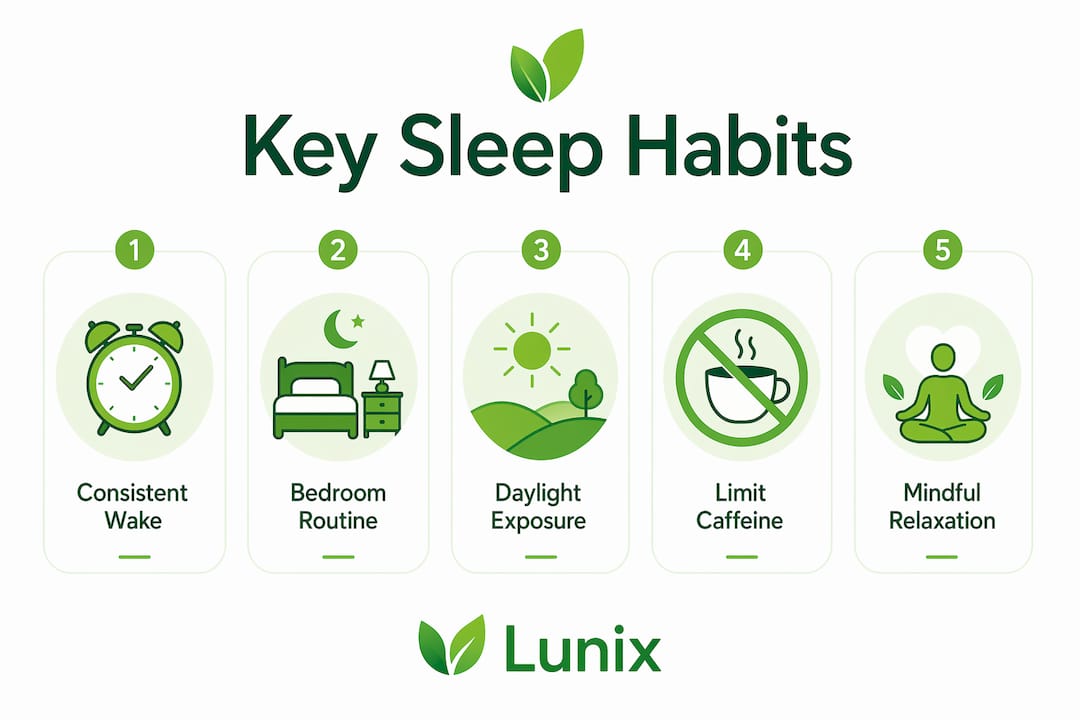
- Consistent wake time. Wake at the same time every day, including weekends. This single habit anchors your circadian clock more reliably than any other non-clinical intervention.
- Bedroom temperature. Keep your room between 60–67°F. Your core body temperature drops as you fall asleep, and a cool room accelerates that process.
- Darkness and quiet. Blackout curtains and white noise or earplugs reduce the sensory interruptions that fragment sleep, especially light sleep stages that become more common after 40.
- Pre-sleep wind-down. A 60-minute wind-down routine before bed signals your nervous system to shift from alert to restful. Reading, gentle stretching, or a warm bath all work well.
- Moderate aerobic exercise. Daily movement improves sleep depth and reduces the time it takes to fall asleep. Morning or early afternoon workouts are ideal.
- Caffeine cutoff. Stop caffeine by early afternoon. Caffeine has a half-life of 5–7 hours, meaning a 3 p.m. coffee still has half its stimulant effect at 8 p.m.
- Alcohol awareness. Alcohol reduces sleep onset latency but damages overall sleep quality and depth. It is not a sleep aid.
- Bed for sleep only. Use your bed exclusively for sleep and sex. This strengthens the mental association between your bed and sleep, rather than wakefulness or stress.
Pro Tip: If you can only commit to one change this week, make it your wake time. Dr. Lauren E. Broch notes that consistent wake times and reserving the bed for sleep are the two habits that deliver the greatest return.
How effective is sleep hygiene alone for chronic insomnia?

Sleep hygiene works well as a foundation, but it has real limits when insomnia is chronic. Randomized trials show that sleep hygiene alone produces modest improvements and is consistently less effective than cognitive behavioral therapy for insomnia, known as CBT-I, for people with persistent sleep problems.
The reason comes down to biology and psychology. Chronic insomnia often involves hyperarousal, a state where your nervous system stays on high alert even in bed. It also involves conditioned wakefulness, where your brain has learned to associate the bedroom with frustration and alertness rather than rest. No amount of blackout curtains or chamomile tea reverses that pattern on its own.
“Sleep hygiene is foundational prep work that protects sleep, but it should be part of a broader health approach rather than a strategy for forcing sleep.” — Dr. Foldvary-Schaefer, Cleveland Clinic
CBT-I directly addresses the thought patterns and behaviors that maintain insomnia. It includes techniques like sleep restriction, which limits time in bed to actual sleep time, and cognitive restructuring, which challenges the anxious thoughts that keep you awake. If you have been struggling with sleep for more than three months despite good hygiene habits, a referral for CBT-I is the right next step, not more optimization of your bedroom environment.
What misconceptions exist about sleep hygiene practices?
Several widely repeated sleep hygiene tips are either oversimplified or misunderstood. Getting these right matters, especially for adults over 40 whose sleep is already more sensitive to disruption.
-
Screens are not the whole story. The blue light from phones and tablets is less harmful than the activating content you consume on them. Scrolling through stressful news or social media at 10 p.m. raises cortisol regardless of screen color temperature. The content is the problem, not just the device.
-
Caffeine affects you longer than you think. Caffeine’s 5–7 hour half-life means afternoon consumption can impair sleep quality even when you feel tired. Many adults over 40 metabolize caffeine more slowly than they did at 25, making this effect more pronounced.
-
Stimulus control outperforms comfort adjustments. Limiting time in bed to actual sleep duration is a technique called stimulus control. It often delivers better results than upgrading your mattress or perfecting your room temperature, because it breaks the conditioned wakefulness cycle at its root.
-
More time in bed does not mean more sleep. Lying awake in bed for hours reinforces the brain’s association between your bed and wakefulness. If you cannot sleep after 20 minutes, get up and do something calm until you feel sleepy again.
-
Rigid rule-following creates its own stress. Tailoring sleep hygiene to your individual patterns is more effective than following every recommendation on a checklist. Trying to optimize too many variables at once raises anxiety, which is the opposite of what sleep needs.
Pro Tip: Daytime light exposure is one of the most underused sleep hygiene tools. Getting 15–20 minutes of natural light in the morning strengthens your circadian signal and makes it easier to feel sleepy at the right time at night.
How can adults 40–65 build sustainable sleep hygiene routines?
Sustainable sleep hygiene is built on a few consistent habits, not a perfect nightly checklist. The goal is to make good sleep behaviors automatic rather than effortful. Here is how to build that foundation in a realistic way.
- Lock in your wake time first. Choose a wake time you can maintain seven days a week and stick to it for at least two weeks before adjusting anything else. This one anchor does more for your circadian rhythm than any other single change.
- Design your bedroom for sleep. Keep the room cool (60–67°F), dark, and quiet. Remove your phone from the nightstand or at minimum set it to Do Not Disturb. For detailed guidance on bedroom environment design, small changes like blackout curtains and a white noise machine make a measurable difference.
- Build a 60-minute wind-down. Start winding down an hour before bed. Dim the lights, avoid stimulating content, and choose calming activities. A warm bath or shower 1–2 hours before bed also helps lower core body temperature, which speeds sleep onset.
- Audit your caffeine and alcohol habits. Set a firm caffeine cutoff at 1–2 p.m. if you are over 40, since metabolism slows with age. Limit alcohol to one drink and finish it at least three hours before bed.
- Time your exercise wisely. Morning or early afternoon exercise supports deeper sleep. Vigorous workouts within two hours of bedtime can delay sleep onset for some adults, so pay attention to how your body responds.
- Change one habit at a time. Gradual changes stick better than overnight overhauls. Pick the habit with the highest potential impact for your specific issue and give it two weeks before adding another.
The table below summarizes the key practices and their primary sleep benefit.
| Sleep hygiene habit | Primary benefit |
|---|---|
| Consistent wake time | Anchors circadian rhythm |
| Bedroom temperature 60–67°F | Supports core body temperature drop for sleep onset |
| 60-minute wind-down routine | Reduces nervous system arousal before bed |
| Caffeine cutoff by early afternoon | Prevents stimulant interference with sleep onset |
| Stimulus control (limit time in bed) | Breaks conditioned wakefulness cycle |
| Morning light exposure | Strengthens circadian signal for nighttime sleepiness |
If you have applied these habits consistently for four to six weeks without meaningful improvement, that is a clear signal to seek a professional evaluation. A sleep specialist can rule out conditions like sleep apnea or restless leg syndrome, and refer you for CBT-I if chronic insomnia is the diagnosis. You can also read more about why restorative sleep matters specifically for adults in this age group.
Key takeaways
Good sleep hygiene builds the behavioral and environmental foundation your body needs for restorative sleep, but persistent insomnia requires CBT-I, not more habit optimization.
| Point | Details |
|---|---|
| Consistent wake time is the top priority | Anchoring your wake time daily does more for sleep quality than any other single habit. |
| Bedroom environment has clear targets | Keep temperature at 60–67°F, maximize darkness, and minimize noise for best results. |
| Sleep hygiene has real limits | Chronic insomnia requires CBT-I, not just better habits. Sleep hygiene alone is insufficient. |
| Stimulus control beats comfort upgrades | Limiting time in bed to actual sleep hours breaks conditioned wakefulness more effectively. |
| Gradual change reduces stress and improves adherence | Changing one habit at a time prevents the anxiety that undermines sleep improvement efforts. |
What I have learned from years of watching adults sleep better
The most common mistake I see adults over 40 make is treating sleep hygiene as an all-or-nothing project. They read a checklist, try to implement every item in one week, and then feel like failures when they still wake at 3 a.m. That approach misses the point entirely.
The basics genuinely matter most. A consistent wake time and a bedroom used only for sleep will do more for most people than any combination of supplements, gadgets, or elaborate wind-down rituals. The research backs this up, and so does every conversation I have had with adults who finally cracked their sleep problems after years of struggling.
What I find equally true is that perfectionism about sleep is its own enemy. The moment you start lying in bed mentally grading your sleep hygiene performance, you have already activated the arousal that keeps you awake. Sleep hygiene works best when it becomes background behavior, not a nightly performance review.
For adults in the 40–65 range, I also want to be direct about one thing: if your sleep problems have lasted more than three months, hygiene habits alone will not resolve them. That is not a failure of willpower. It is a physiological and psychological pattern that requires the structured approach of CBT-I. Good habits create the right conditions. CBT-I rewires the patterns that good conditions alone cannot fix.
Build a restful bedtime routine that you can actually maintain. Keep it simple. Give it time. And if it is not enough, get professional support without guilt.
— Lunix
Lunixinc’s recovery tools for a better night’s sleep
Your sleep environment and your recovery habits work together. When your body is physically at ease, the behavioral side of sleep hygiene becomes far more effective.

Lunixinc designs recovery products built to complement the sleep hygiene practices covered here. From targeted comfort solutions to tools that help your body decompress after a long day, the Lunixinc collection supports the physical side of restful sleep. Pairing good habits with the right physical environment gives your body every advantage it needs to restore overnight. Adults who invest in both the behavioral and physical dimensions of sleep tend to see the most consistent results. Explore the Lunixinc recovery collection and find the tools that fit your routine.
FAQ
What is sleep hygiene?
Sleep hygiene is the set of behavioral and environmental practices that support consistent, restorative sleep. It includes habits like consistent wake times, bedroom temperature control, and limiting caffeine in the afternoon.
Does sleep hygiene alone cure insomnia?
Sleep hygiene alone provides modest improvements for chronic insomnia and is less effective than CBT-I. Persistent insomnia lasting more than three months typically requires a structured therapeutic approach beyond habit changes.
What is the single most effective sleep hygiene habit?
Maintaining a consistent wake time every day, including weekends, is the most effective single habit for anchoring your circadian rhythm and improving overall sleep quality.
How does caffeine affect sleep after 40?
Caffeine has a half-life of 5–7 hours, and metabolism slows with age. An afternoon coffee can still impair sleep quality at night even when you feel tired, making an early cutoff especially important for adults over 40.
What is stimulus control in sleep hygiene?
Stimulus control means limiting time in bed to actual sleep hours and leaving the bed if you cannot sleep within 20 minutes. This technique breaks the conditioned association between your bed and wakefulness, often outperforming environmental comfort adjustments alone.