


TL;DR:
- Restorative routines are simple daily practices that signal safety to the nervous system and promote recovery. They help reduce stress hormones, improve sleep, and build long-term resilience through consistent, low-effort habits. Starting with small, repeatable actions like breathwork or nature walks can foster lasting health benefits beyond stress relief.
Restorative routines are defined as predictable, low-effort daily rituals that signal safety to the nervous system and shift the body from stress into recovery mode. Unlike motivation-driven wellness trends, these routines work because they automate recovery, bypassing mood swings and energy dips that derail good intentions. The industry term for this process is active recovery, and understanding why restorative routines matter is the first step toward building health that holds up over decades. For adults between 35 and 65, this distinction is not academic. It is the difference between feeling depleted by Thursday and feeling steady all week.
Why restorative routines matter for your nervous system
Your nervous system operates in two primary states: the sympathetic state, which drives alertness and stress responses, and the parasympathetic state, which governs rest, digestion, and repair. Most adults spend far too many hours in sympathetic overdrive. Consistent daily rhythms reduce cortisol and stabilize circadian timing, which directly supports sleep quality and hormonal balance. That stabilization is not a side effect. It is the core mechanism behind why structured daily habits produce lasting health improvements.

Cortisol, the body’s primary stress hormone, spikes when the brain detects uncertainty. Consistent wake and meal times send safety signals to the brain, reducing fight-or-flight activation throughout the day. Each predictable action, whether it is a morning glass of water, a set bedtime, or five minutes of quiet breathing, tells your nervous system that the environment is stable. That signal lowers threat monitoring and frees up mental and physical resources for repair.
Breathwork is one of the most direct tools for this shift. Slow, deep breathing reduces anxiety and depressive symptoms within 10–20 minutes of practice. The mechanism is straightforward: slow exhalations activate the vagus nerve, which triggers the parasympathetic response. You do not need an hour-long session to benefit. Five to ten minutes of deliberate breathing produces measurable changes in heart rate variability and perceived stress.
Pro Tip: Start with a minimum viable routine. A five-minute breathing practice or ten minutes of silence each morning builds more resilience over months than an ambitious hour-long program you abandon by week two.
| Physiological Effect | What Changes | Time Frame |
|---|---|---|
| Cortisol reduction | Lower baseline stress hormone levels | Days to weeks |
| Circadian stabilization | Improved sleep onset and duration | 1–3 weeks |
| Parasympathetic activation | Reduced heart rate and muscle tension | Minutes per session |
| Neural pathway reinforcement | Stronger calm and self-trust responses | Weeks to months |
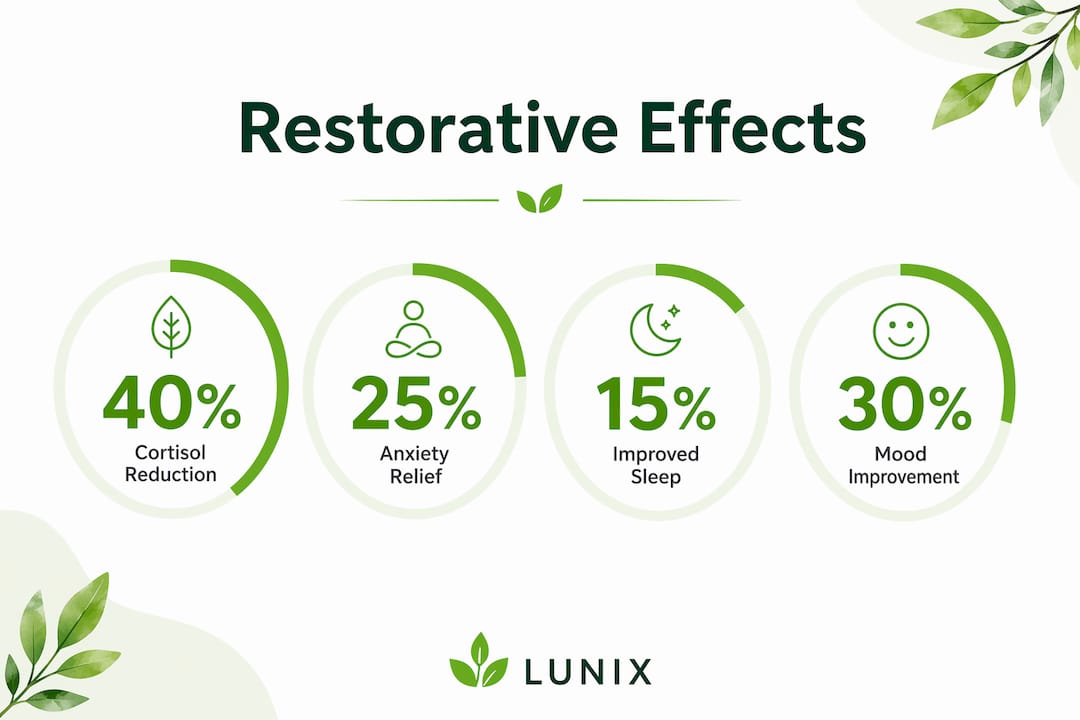
What benefits do restorative routines bring to health?
The benefits of restorative routines extend well beyond feeling less stressed. Routine behaviors strengthen neural pathways associated with calm and self-trust, which produces compounding improvements in emotional regulation over time. This is active recovery working at the neurological level. Each consistent practice reinforces the brain’s capacity to return to baseline after stress, making you more resilient with every repetition.
Mental health benefits are among the most immediate and noticeable:
- Reduced anxiety. Predictability lowers the brain’s threat-detection load, which directly reduces anxious thinking.
- Emotional stability. Regular restoration practices prevent the cortisol buildup that drives irritability and mood swings.
- Improved sleep. Bedtime routines resolve a significant portion of sleep difficulties by anchoring the body’s internal clock.
- Greater mental clarity. Structure frees brainpower, allowing for sharper focus on relationships, creative work, and decision-making.
Physical health benefits are equally significant, especially after 40. Adults who maintain recovery-focused routines report lower fatigue levels and reduced injury risk, because the body gets consistent time to repair tissue and regulate inflammation. Nature exposure adds another layer. Twenty minutes of nature measurably lowers stress hormones and heart rate in adults aged 35–65. That is a meaningful physiological shift from a walk around the block or ten minutes in a garden.
Restoration is not passive rest. Real restoration leads to a calmer nervous system and a clearer mind after the practice ends. Passive distraction, like watching television for hours, does not produce the same result. The body needs intentional, low-stimulation input to complete the recovery cycle.
Common myths about restorative routines
The most damaging myth about restoration is that you have to earn it. Self-care does not need to be earned. Intentional restoration is a proactive process, not a reward for productivity. When you wait until you are exhausted to rest, you are already running a deficit. The nervous system does not recover efficiently from a depleted state. It recovers best when restoration is woven into the day before depletion sets in.
A second myth is that longer or more intense practices produce better results. Consistency over months builds resilience far more effectively than daily perfection or lengthy sessions. A ten-minute walk taken every day outperforms a two-hour wellness retreat taken once a month. The brain learns safety through repetition, not through occasional intensity.
False recovery is a real pitfall. Mindless scrolling stimulates rather than calms the nervous system, yet it feels like rest because it requires no effort. The same applies to passive television watching or social media browsing. These activities keep the brain in a low-grade alert state, which prevents the parasympathetic shift that genuine restoration requires. The “Energy Ledger” method, which involves tracking how you feel before and after an activity, helps you identify which habits actually restore you versus which ones simply fill time.
Pro Tip: When you miss a day, return to your routine the next morning without self-judgment. Missing a day is part of building rhythm. Sustainability and return to practice matter more than perfect adherence.
How to create restorative routines that last past 40
Building a sustainable restorative routine starts with one small, repeatable habit. Choose a single anchor point: a consistent wake time, a morning breathing practice, a short walk after lunch, or a screen-free wind-down before bed. Anchor habits work because they attach to existing behaviors, which reduces the decision-making load that derails new practices. The morning relaxation routine approach works particularly well for adults in midlife because it sets a parasympathetic tone before the demands of the day begin.
Predictability is the engine of the routine. Schedule your restorative practices at the same time each day, even if the duration is short. The nervous system responds to timing cues as much as to the practice itself. A five-minute breathing session at 7:00 AM every day trains the body to begin downshifting at that hour, which compounds into better stress tolerance throughout the morning.
| Practice Type | Primary Benefit | Minimum Effective Dose |
|---|---|---|
| Slow breathwork | Parasympathetic activation | 5–10 minutes daily |
| Nature exposure | Cortisol and heart rate reduction | 20 minutes, most days |
| Consistent sleep schedule | Circadian stabilization | Same bedtime and wake time |
| Gentle movement (yoga, walking) | Reduced muscle tension and fatigue | 15–20 minutes daily |
| Screen-free wind-down | Improved sleep onset | 30–60 minutes before bed |
Slow movement practices, such as gentle yoga, tai chi, or a deliberate evening walk, are especially well-suited to adults over 40. They combine physical restoration with nervous system signaling, producing benefits in both categories simultaneously. For women navigating midlife hormonal shifts, a midlife wellness plan built around these practices addresses both physical and emotional recovery needs. The key is to treat your routine as a non-negotiable appointment with your own health, not as something you fit in when time allows.
Key Takeaways
Restorative routines work because they signal safety to the nervous system through consistent, low-effort daily practices that reduce cortisol, improve sleep, and build long-term resilience.
| Point | Details |
|---|---|
| Routine signals safety | Predictable daily habits lower cortisol by reducing the brain’s uncertainty load. |
| Consistency beats intensity | A five-minute daily practice builds more resilience over months than occasional long sessions. |
| False recovery is a real risk | Mindless scrolling stimulates the nervous system rather than restoring it. |
| Start with one anchor habit | Choose one repeatable practice and attach it to an existing daily behavior. |
| Restoration is proactive | You do not need to earn rest. Intentional recovery works best before depletion sets in. |
Rhythm over motivation: what I’ve learned from years of restoration work
Most people come to restorative practices looking for motivation. What they find, if they stay consistent, is something better: rhythm. Rhythm does not depend on how you feel on a given morning. It runs on structure, and structure creates a kind of freedom that motivation never can. Routine frees brainpower, and that freed capacity shows up in your relationships, your work, and your ability to be present in your own life.
What I have seen, both personally and in the people who commit to this work, is that the ripple effect of restoration is wider than expected. When your nervous system is no longer burning energy on constant threat monitoring, you have more patience. You make better decisions. You recover from conflict faster. These are not small gains. They are the difference between a life that feels reactive and one that feels chosen.
The hardest part is not the practice itself. It is trusting that small, quiet, consistent actions are enough. They are. The body does not need grand gestures. It needs to know, day after day, that you will show up for it. Start with five minutes. Keep the appointment. Let the rhythm build.
— Lunix
Lunixinc’s recovery collection for your daily restoration practice
Building a restorative routine is easier when your environment supports it. Lunixinc designs recovery and comfort products that fit naturally into the daily rituals your nervous system depends on.

The Lunixinc Recovery Collection brings together tools built for breathwork support, deep relaxation, and physical recovery, all designed to help you create a consistent restoration practice at home. Whether you are establishing a morning wind-down, a post-work decompression ritual, or a sleep-focused evening routine, Lunixinc products are built to make those moments more effective. Pair them with the relaxation techniques that align with your goals, and your restorative routine becomes something you actually look forward to.
FAQ
What are restorative routines?
Restorative routines are predictable, low-effort daily practices that shift the nervous system from a stress state into recovery mode. Examples include consistent sleep schedules, slow breathwork, nature exposure, and screen-free wind-down periods.
How long does it take for a restorative routine to work?
Parasympathetic benefits from breathwork appear within a single 5–10 minute session. Broader benefits like improved sleep and reduced anxiety build over weeks of consistent practice.
Why is self-care considered essential for adults over 40?
After 40, the body’s recovery capacity decreases and stress hormones take longer to normalize. Intentional restoration practices counteract this by actively supporting nervous system regulation and reducing cumulative stress load.
What counts as false recovery?
False recovery includes activities like mindless scrolling or passive television watching that feel restful but keep the brain in a low-grade alert state. True restoration produces a measurably calmer nervous system after the practice ends.
How do I start a restorative routine if I have no time?
Begin with a minimum viable routine: five minutes of slow breathing or ten minutes of silence at the same time each day. Consistency over weeks produces more lasting benefit than longer, irregular sessions.