


TL;DR:
- Wellness design involves intentionally creating environments that support physical, mental, and emotional health through evidence-based principles. It emphasizes invisible factors like air quality, lighting, and materials, which significantly impact biological well-being. Implementing these principles in homes or workplaces can improve sleep, reduce stress, and enhance overall health at any budget level.
Wellness design is defined as the intentional creation of built environments that actively support the physical, mental, and emotional health of the people who use them. This goes far beyond choosing calming colors or adding plants to a room. The practice draws on evidence-based frameworks like the WELL Building Standard V2 and approaches like Emotive Interiors™ to shape spaces that work with your biology. The global wellness real estate market is valued at $438 billion in 2026 and projected to more than double by 2028. That number tells you this is not a passing trend. It reflects a fundamental shift in how people think about the spaces where they live and work.
What is wellness design and its core principles?
Wellness design is built on 10 core principles that target specific physiological and psychological markers. These principles come from the WELL Building Standard V2 and the Healthy Homes Framework, two of the most respected evidence-based systems in the field. Each principle addresses a different biological system in your body.
| Principle | What it addresses | Key benefit |
|---|---|---|
| Air | Indoor air purity and ventilation | Reduces respiratory irritants and fatigue |
| Water | Filtration and hydration access | Supports kidney function and energy |
| Nourishment | Kitchen layout and food access | Encourages healthier eating habits |
| Light | Circadian-aligned lighting design | Regulates sleep hormones and mood |
| Movement | Space planning for physical activity | Reduces sedentary behavior |
| Thermal Comfort | Temperature and humidity control | Improves focus and sleep quality |
| Sound | Acoustic management | Lowers stress and cognitive load |
| Materials | Low-toxicity finishes and furnishings | Reduces chemical exposure |
| Mind | Spaces for mental restoration | Supports stress recovery and clarity |
| Community | Social zones and connection spaces | Strengthens emotional well-being |
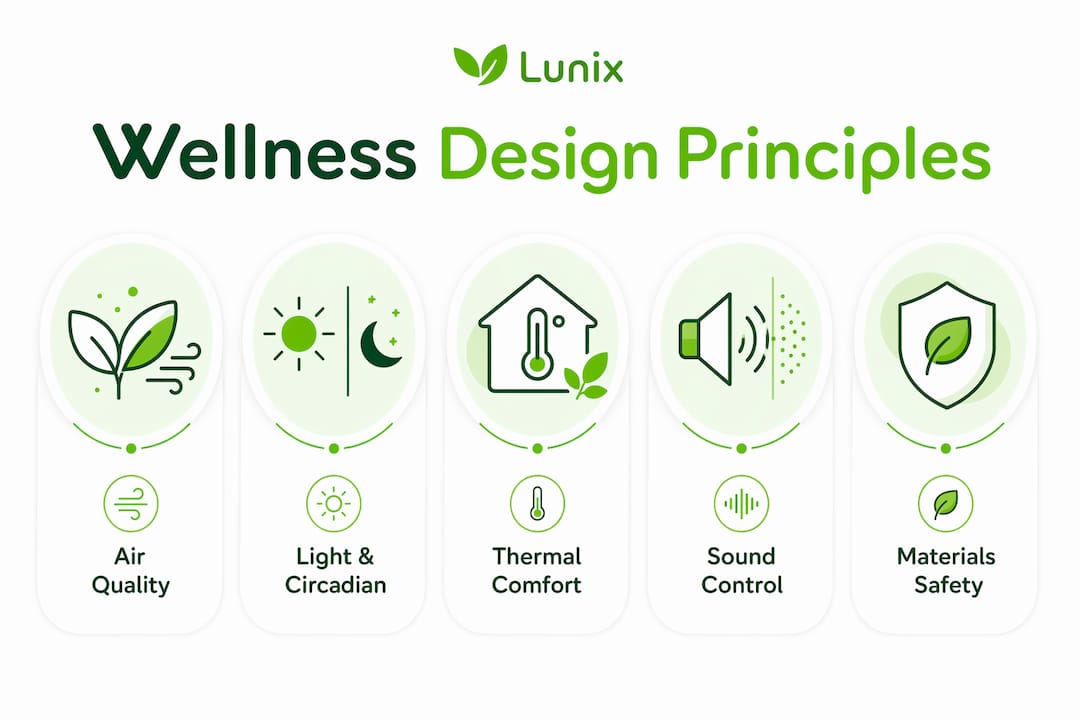
These principles do not operate in isolation. Poor air quality affects sleep. Poor sleep degrades cognitive function. Cognitive decline increases stress. Wellness design interrupts that chain at the environmental level, before it becomes a health problem.
How does wellness design improve health and daily life?
Wellness design improves sleep quality, reduces stress, and enhances cognitive function through targeted environmental interventions. These are measurable outcomes, not marketing claims. The science behind them is grounded in how your nervous system, endocrine system, and respiratory system respond to the spaces around you.
Here is what the research shows about specific health improvements:
- Sleep quality: Lighting aligned to circadian rhythms signals your brain to produce melatonin at the right time. Cold, bright light at night suppresses that signal and fragments sleep.
- Stress reduction: Acoustic treatments and thermal comfort lower cortisol levels. A noisy, overheated room keeps your nervous system in a low-grade stress state all day.
- Cognitive function: Clean air and natural light improve focus and memory. Indoor air quality can be 2 to 5 times more polluted than outdoor air, which directly impairs brain performance.
- Respiratory health: High-performance filtration systems rated MERV 13 or HEPA remove particulates, allergens, and volatile organic compounds from the air you breathe indoors.
“The primary goal of wellness design is to evoke emotional states that support daily life, such as restoration and clarity. Many clients confuse it with luxury, but the two are not the same.” — Emotive Interiors™ framework
Pro Tip: Start your wellness design upgrades in the kitchen and bathroom. These rooms influence hydration, air quality, and stress management more than any other space in your home. Small changes there produce outsized results.
Understanding the key advantages of home wellness helps you prioritize where to invest your time and money first.

What are common misconceptions about wellness design?
The biggest misconception about wellness design is that it is about aesthetics. A spa-like bathroom with marble tiles and soft towels is not wellness design unless the ventilation, lighting, and materials also support your biology. Visual beauty and biological function are different goals. Wellness design pursues both, but never sacrifices function for appearance.
Here are the most common myths, and what the reality actually looks like:
- “Wellness design is only for luxury homes.” The core interventions, such as better air filtration, acoustic panels, and circadian lighting, are available at a wide range of price points. The WELL Building Standard applies to commercial offices and affordable housing alike.
- “If it looks calm, it is wellness design.” A room painted in soft gray with minimal furniture may look serene but still have poor ventilation, harsh overhead lighting, and off-gassing furniture. Appearance does not equal function.
- “Wellness design is just about natural materials.” Natural materials matter, but invisible wellness elements like silent HVAC systems, acoustic panels, and electromagnetic exposure management are equally critical. You cannot see them, but your body responds to them constantly.
- “Lighting is just about brightness.” Lighting must align with circadian rhythms, providing bright, cool light in the morning and warm, dim light in the evening. A visually beautiful chandelier that emits cold white light at 9 p.m. actively harms your sleep.
“Wellness design challenges designers to shift focus from visual trends to biological outcomes, especially in lighting and materials selection.” — Beverly Hills Luxury Interiors
Pro Tip: Check the color temperature of every light bulb in your bedroom and living room. Bulbs above 3000K emit blue-spectrum light that suppresses melatonin. Swap them for bulbs rated 2200K–2700K for evening use. This single change costs under $20 and directly supports your sleep and hormone health.
One area that surprises most people is electromagnetic exposure. Strategic placement and shielding of Wi-Fi routers are growing priorities in wellness design to reduce EMF exposure and create restorative zones, particularly in bedrooms.
How to apply wellness design principles in your home or workplace
Applying wellness design does not require a full renovation. You can make meaningful changes room by room, starting with the spaces where you spend the most time. The goal is to audit your current environment against the 10 principles and address the gaps that matter most to your health.
Assessing your space
Walk through your home or office and ask these questions. Does the air smell stale or feel dry? Do you feel alert in the morning but foggy by midday? Do you struggle to wind down at night despite feeling tired? These are signals that your environment is working against your biology.
Common vs. wellness-oriented design choices
| Design element | Conventional approach | Wellness-oriented approach |
|---|---|---|
| Lighting | Single overhead fixture, fixed brightness | Layered lighting with circadian-tuned bulbs |
| Air quality | Standard HVAC filter | MERV 13 or HEPA filtration with regular maintenance |
| Materials | Standard paint and furniture | Low-VOC paint, formaldehyde-free furniture |
| Sound | No acoustic treatment | Soft furnishings, acoustic panels, white noise |
| Movement | Fixed desk setup | Sit-stand desk, clear floor space for stretching |
| Mental restoration | No dedicated quiet zone | A defined reading or meditation corner |
Practical steps you can take this week
- Replace bedroom bulbs with warm-spectrum options rated 2200K–2700K.
- Add a HEPA air purifier to your bedroom or home office.
- Place a water filter at your kitchen sink and keep a glass on the counter as a hydration reminder.
- Rearrange furniture to create a clear path for movement through your main living area.
- Add a soft rug, curtains, or upholstered furniture to absorb sound in your noisiest room.
Creating a home wellness space step by step makes the process feel manageable rather than overwhelming. For workplace applications, reviewing healthy workspace examples gives you a concrete starting point for office environments.
Kitchens and bathrooms deserve special attention. These rooms directly influence your hydration habits, air quality exposure, and morning stress levels. A well-ventilated bathroom with warm lighting and low-toxicity cleaning products is a genuine wellness intervention. A kitchen with clear counter space, good task lighting, and a water filter supports both nourishment and daily calm.
The materials you choose also carry long-term consequences. Conventional paints, adhesives, and composite wood furniture release volatile organic compounds into your air for months or years after installation. Switching to low-VOC or zero-VOC alternatives is one of the highest-impact changes you can make for indoor air quality.
Key takeaways
Wellness design is the most direct tool you have for improving your health through the spaces you already occupy every day.
| Point | Details |
|---|---|
| Definition of wellness design | Wellness design is the intentional shaping of spaces to support physical, mental, and emotional health. |
| Ten core principles | Air, Water, Nourishment, Light, Movement, Thermal Comfort, Sound, Materials, Mind, and Community guide every decision. |
| Invisible factors matter most | HVAC filtration, acoustic treatment, and lighting temperature affect your biology more than visual decor. |
| Start with high-impact rooms | Kitchens and bathrooms offer the greatest return on wellness design investment per square foot. |
| Accessible at any budget | Core interventions like HEPA filters, warm-spectrum bulbs, and low-VOC paint are affordable for most households. |
Why wellness design is the most underrated health investment you can make
I have watched people spend thousands on supplements, gym memberships, and sleep trackers while never questioning the air they breathe for eight hours a night or the lighting that suppresses their melatonin every evening. The environment is the foundation. Everything else sits on top of it.
What strikes me most about wellness design is how much of it is invisible. The HVAC filter you never think about. The light bulb color temperature you have never checked. The furniture off-gassing compounds into your bedroom air right now. These are not dramatic problems. They are slow, cumulative ones. And they respond to slow, cumulative solutions.
The shift I find most meaningful is moving from designing for appearance to designing for biological response. A room can look beautiful and still exhaust you. A room can look ordinary and still restore you. The difference lies in whether the environment supports or fights your body’s natural rhythms.
Wellness design is not a luxury category. It is a longevity strategy. The people who understand this earliest will spend less time managing health problems later. That is the investment worth making.
— Lunix
How Lunixinc supports your wellness design goals

At Lunixinc, we build recovery and comfort products that fit directly into wellness-oriented spaces. Whether you are setting up a dedicated recovery corner at home or upgrading your office for better physical restoration, our products are designed to complement the biological principles behind wellness design. Good design creates the environment. The right recovery tools help your body respond to it.
Explore the Lunixinc recovery collection to find products built around the same principles this article covers: restorative comfort, thoughtful materials, and support for your body’s natural recovery process. Your space sets the stage. Lunixinc helps you make the most of it.
FAQ
What is the simplest definition of wellness design?
Wellness design is the practice of creating spaces that actively support human health through intentional choices about air, light, materials, sound, and layout. It goes beyond aesthetics to address how environments affect your biology.
How is wellness design different from interior design?
Interior design focuses primarily on visual appeal and function. Wellness design adds a biological layer, prioritizing how a space affects sleep, stress, air quality, and hormonal balance alongside how it looks.
What are the most important elements of wellness design for a home?
Air quality, circadian-aligned lighting, and low-toxicity materials deliver the highest health impact in residential spaces. Kitchens and bathrooms are the most critical rooms to address first.
Does wellness design require a large budget?
No. Replacing light bulbs with warm-spectrum options, adding a HEPA air purifier, and switching to low-VOC paint are all affordable interventions that produce measurable health benefits without a full renovation.
What is the WELL Building Standard?
The WELL Building Standard is an evidence-based certification system that defines how buildings should be designed to support occupant health. It covers the same 10 principles outlined in this article and applies to both commercial and residential projects.