


TL;DR:
- Sustainable wellness emphasizes building long-term habits across nutrition, movement, sleep, and stress management. Only 23% of Americans currently meet all four healthy lifestyle criteria, highlighting the need for systemic behavior change. Starting with one small habit and aligning actions with personal values increases chances of lasting health improvements.
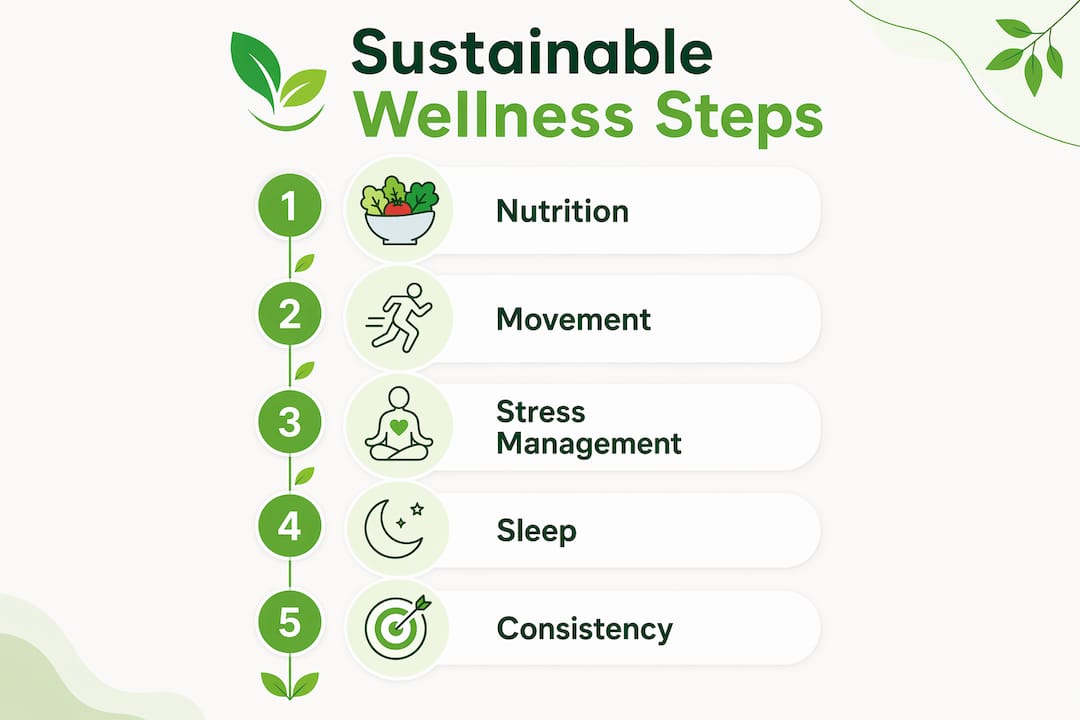
Sustainable wellness is defined as the integrated practice of maintaining personal health while minimizing environmental impact through consistent, long-lasting habits. Unlike short-term fitness trends, this approach treats your body as a connected system, not a collection of isolated problems to fix. The four pillars of sustainable wellness are nutrition, movement, stress management, and sleep, and these four pillars account for 80% of health outcomes according to board-certified physician Dr. Rhea Rogers. That figure reframes wellness entirely: most of your long-term health is shaped by daily choices, not medical interventions. Yet only 23% of Americans currently meet all four healthy lifestyle criteria. That gap is exactly why understanding what is sustainable wellness matters so much right now.
What is sustainable wellness, and what are its core components?
Sustainable wellness is built on four interconnected pillars. Each one reinforces the others, so neglecting any single pillar creates a ripple effect across your overall health.
-
Nutrition. A plant-forward, nutrient-dense diet supports stable blood glucose and metabolic resilience. This means prioritizing whole foods, seasonal produce, and home-cooked meals over processed convenience foods. Sustainable healthy eating does not require an expensive overhaul. Families can maintain quality nutrition for $150–200 per week by focusing on seasonal and local ingredients.
-
Movement. Experts recommend 150 minutes of moderate-intensity physical activity per week as the baseline for sustainable physical health. That breaks down to about 30 minutes, five days a week. A brisk walk, a bike ride, or a swim all count. Consistency matters far more than intensity.
-
Stress management. Chronic stress disrupts sleep, raises inflammation, and slows metabolism. Brief daily pauses, such as five minutes of deep breathing or a short mindfulness session, build resilience over time. You can explore step-by-step relaxation techniques to find what fits your schedule.
-
Sleep. Adults need 7–9 hours of quality sleep nightly for the body to repair, regulate hormones, and consolidate memory. Poor sleep undermines every other wellness effort. A consistent bedtime, even on weekends, is one of the highest-return habits you can build.
-
Preventive care. Standard screenings and vaccinations are a core part of long-term wellness that many people overlook. Preventive maintenance catches problems early, before they become expensive or debilitating.
Pro Tip: Start tracking your sleep duration for one week before making any other changes. Most people discover they are sleeping 60–90 minutes less than they think, and that single insight motivates real action.
How does sustainable wellness differ from traditional wellness approaches?
Traditional wellness often focuses on symptoms. You feel tired, so you buy an energy supplement. Your back hurts, so you stretch for a week. Sustainable wellness addresses root causes instead.
“Holistic wellness treats the body as a complex adaptive system where physical, psychological, social, and environmental health interact continuously. Intervening across all these domains produces results that last.”
This systems view changes how you make decisions. A wellness framework that addresses interconnected domains simultaneously produces lasting impact. Chronic stress, for example, does not just make you feel anxious. It disrupts sleep, drives inflammation, and slows your metabolism in a chain reaction that no single supplement can break.
The wellness industry also has a greenwashing problem. Products labeled “natural,” “clean,” or “eco-friendly” are not automatically aligned with sustainable health practices. True sustainable wellness is about behavior, not purchasing. Buying an expensive superfood powder while skipping sleep and skipping checkups is not wellness. It is a product habit dressed up as self-care.

| Approach | Focus | Time horizon | Method |
|---|---|---|---|
| Traditional wellness | Symptom relief | Short-term | Targeted products or treatments |
| Sustainable wellness | Root causes | Long-term | Habit systems across all health domains |
The shift from symptom-chasing to system-building is the defining difference. You can read more about what holistic wellness means for adults in your age group to see how this plays out in practice.
What practical steps can you take to achieve sustainable wellness?
The most common mistake people make is trying to change everything at once. Overhauling all wellness behaviors simultaneously dramatically increases failure rates. Start with one low-friction habit and build from there.
-
Pick one anchor habit. Choose something small and specific: a 10-minute walk after dinner, a consistent 10:30 PM bedtime, or swapping one processed snack for a piece of fruit. Do it for three weeks before adding anything else.
-
Build a plant-forward plate. You do not need to go fully vegetarian. Shifting half your plate to vegetables, legumes, and whole grains at most meals delivers measurable metabolic benefits. Choosing local and seasonal foods also reduces your environmental footprint while improving nutrient quality.
-
Schedule daily stress pauses. Set a phone reminder for two brief pauses during your workday. Use that time for slow breathing, a short walk outside, or a few minutes of mindfulness practice. These micro-breaks lower cortisol and improve afternoon focus.
-
Protect your sleep window. Set a consistent wake time first, then work backward to determine your bedtime. Dim screens 60 minutes before bed. Keep your bedroom cool and dark. These environmental cues signal your nervous system to wind down.
-
Book your preventive care appointments. Schedule your annual physical, dental cleaning, and any age-appropriate screenings now. Preventive care is the part of sustainable wellness most people defer, and deferring it is where long-term health costs accumulate.
-
Align habits with your values. Intrinsic motivation drives long-term adherence far more reliably than external pressure. If you value time with family, frame your evening walk as family time. If you value the environment, frame your plant-forward meals as an ecological choice. The habit sticks better when it connects to something you already care about.
Pro Tip: Write down your “why” for each new habit on a sticky note and put it somewhere you will see it daily. Research on intrinsic motivation consistently shows that visible reminders of personal values improve follow-through.
What are common challenges and misconceptions about sustainable wellness?
Most people who struggle with wellness are not lazy. They are trying to do too much at once, or they are chasing a version of wellness that does not fit their actual life.
-
The all-or-nothing trap. Skipping one workout does not erase your progress. Sustainable health practices are built on averages, not perfect streaks. One missed day is irrelevant. Three missed weeks is a pattern worth examining.
-
Wellness is not only physical. Mental health, social connection, and a sense of purpose are as central to sustainable wellbeing as diet and exercise. Ignoring psychological health while perfecting your nutrition plan leaves a major gap in your overall resilience.
-
Quick fixes do not compound. A 30-day detox, a juice cleanse, or a crash diet produces short-term results that rarely last. Sustainable wellness shifts the focus away from weight loss toward long-term metabolic health, rest, and stress resilience. That shift requires patience, not intensity.
-
Burnout comes from misalignment. When your wellness practices feel like obligations imposed from outside, you will eventually drop them. Aligning habits with personal values is not a soft concept. It is the mechanism that keeps behavior change alive past the first month.
-
Eco-friendly wellness is not expensive. Seasonal produce, home-cooked meals, walking, and adequate sleep cost very little. The wellness industry profits from convincing you otherwise.
Key Takeaways
Sustainable wellness is the most effective long-term health strategy because it addresses nutrition, movement, stress, sleep, and environmental responsibility as a connected system rather than isolated fixes.
| Point | Details |
|---|---|
| Four pillars drive most outcomes | Nutrition, movement, stress management, and sleep account for 80% of long-term health results. |
| Start with one habit | Changing one low-friction behavior first prevents the failure that comes from overhauling everything at once. |
| Systems beat symptoms | Addressing root causes across physical, mental, and social domains produces results that last longer than targeted treatments. |
| Values fuel adherence | Habits aligned with personal values are far more likely to survive past the first month than externally pressured routines. |
| Preventive care is non-negotiable | Screenings and checkups catch problems early and are the most overlooked pillar of durable wellness. |
Why I believe sustainable wellness is the only wellness worth pursuing
Lunixinc has worked with adults across the 30–55 age range long enough to see a clear pattern. The people who feel best in their bodies are not the ones who did the most. They are the ones who stopped starting over.
The wellness industry is very good at selling urgency. New year, new you. Thirty-day challenges. Before-and-after transformations. What it rarely sells is the unglamorous truth: lasting health is built in the quiet, unremarkable repetition of small choices made consistently over years.
What I find most underappreciated is the environmental dimension of personal wellness. Choosing local, seasonal food is not just an ecological act. It is a nutritional one. Seasonal produce is harvested closer to peak ripeness, which means higher nutrient density. Walking instead of driving is not just carbon reduction. It is cardiovascular medicine. The personal and the planetary are not separate tracks. They are the same track.
The adults who thrive long-term are also the ones who have made peace with imperfection. They do not need a perfect week to feel like they are on track. They need a clear direction and a handful of habits that feel like theirs, not borrowed from someone else’s Instagram feed.
Sustainable wellness is not a destination. It is a practice you return to, again and again, with a little more ease each time.
— Lunix
Recovery tools that support your wellness practice
Building sustainable wellness habits takes real effort, and your body needs time to recover from that effort.

Lunixinc designs recovery solutions that fit directly into the daily routines you are already building. Whether you are managing muscle tension from new movement habits, improving your sleep environment, or creating a dedicated space for rest and restoration, Lunixinc products are built to support the physical recovery your body needs to keep showing up. Explore the full recovery collection to find tools that align with your wellness pillars and help your body perform at its best, day after day. You can also learn more about home wellness environments and how your space shapes your long-term health.
FAQ
What is sustainable wellness in simple terms?
Sustainable wellness is the practice of building consistent habits across nutrition, movement, sleep, and stress management that support long-term health without burning out or harming the environment.
How is sustainable wellness different from holistic wellness?
Sustainable wellness and holistic wellness overlap significantly. Holistic wellness addresses the full person across physical, mental, social, and existential domains. Sustainable wellness adds an emphasis on long-term consistency and ecological responsibility.
How many Americans currently meet all four wellness criteria?
Only 23% of Americans meet all four healthy lifestyle criteria covering nutrition, physical activity, sleep, and stress management, representing a slight improvement over previous years.
What is the best first step toward sustainable wellness?
The most effective first step is choosing one small, low-friction habit and practicing it consistently for three weeks before adding anything else. A 10-minute daily walk or a fixed bedtime are both strong starting points.
Does sustainable wellness have to be expensive?
No. Seasonal produce, home-cooked meals, walking, and consistent sleep cost very little. Sustainable health practices are built on behavior, not on purchasing premium products.