


TL;DR:
- Practicing good sleep hygiene involves establishing routines and optimizing the bedroom environment for restorative sleep. It relies on consistent habits like maintaining a regular schedule, limiting stimulation, and controlling light and temperature. Small behavioral adjustments over weeks can significantly improve sleep quality and overall health.
Sleep hygiene is defined as the set of behavioral and environmental practices that prepare your body and mind for consistent, restorative sleep. The Cleveland Clinic identifies eight foundational habits that form the core of good sleep hygiene, from stable sleep schedules to bedroom optimization. These habits support physical repair, sharper thinking, and emotional steadiness. For adults aged 30–65, building strong sleep hygiene is one of the most direct ways to protect long-term health and daily performance.
What is sleep hygiene and why does it matter?
Sleep hygiene is the practice of creating the right conditions for sleep, not forcing sleep itself. Think of it as prep work. You set the stage, and your body does the rest. Experts emphasize that trying to demand sleep increases anxiety and actually makes rest harder to achieve.

The importance of sleep hygiene goes beyond feeling rested. Quality sleep drives cellular repair, hormone regulation, and memory consolidation. When your sleep hygiene practices are consistent, your brain and body learn when to wind down and when to be alert. That rhythm, known as the circadian rhythm, is the biological clock that governs nearly every system in your body.
Adults over 40 face particular challenges. Hormonal shifts, increased stress, and busier schedules all chip away at sleep quality. Restorative sleep for adults 40 to 65 becomes harder to achieve without deliberate habits in place. The good news is that basic sleep hygiene factors like consistency and bedroom environment are clinically proven, free, and produce real results before any complex intervention is needed.
What are the key sleep hygiene practices?
Strong sleep hygiene rests on a handful of core habits. Each one reinforces the others, creating a compounding effect on your sleep quality over time.
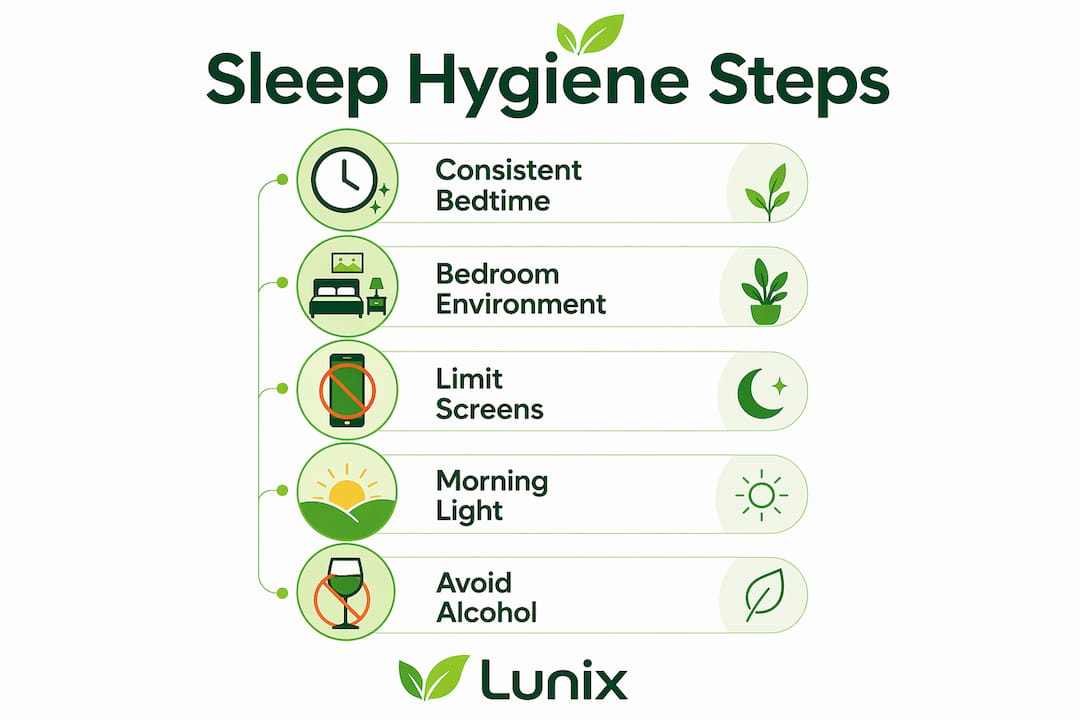
- Keep a consistent sleep and wake time. Consistent sleep schedules stabilize your circadian rhythm and reduce non-refreshing sleep. Even small schedule shifts on weekends can disrupt your sleep-wake cycle for days.
- Build a wind-down routine. Spend 30–60 minutes before bed doing something calm: reading, light stretching, or a warm shower. This signals your nervous system that sleep is coming.
- Optimize your bedroom environment. Harvard Health recommends a bedroom temperature between 60°F and 67°F, with darkness and quiet as non-negotiables. Blackout curtains, eye masks, and fans all help.
- Avoid stimulants before bed. Caffeine and nicotine stay active in your system for hours. Eat dinner at least three hours before bedtime to prevent digestion from interfering with deep sleep.
- Limit naps to 10–20 minutes. Short afternoon naps taken early in the day restore alertness without stealing from your night sleep.
- Time your exercise carefully. Avoid vigorous workouts within two hours of bedtime. Physical exertion raises core temperature and cortisol, both of which delay sleep onset.
- Use your bed only for sleep. Working, scrolling, or watching TV in bed weakens the mental link between your bed and rest. Rebuild that association by keeping the bed a single-purpose space.
Pro Tip: Remove your phone from the bedroom entirely. Even using it as an alarm clock creates a subconscious habit of checking it. A basic alarm clock costs less than $15 and removes the temptation completely.
How does your sleep environment affect sleep quality?
Your bedroom is not just where you sleep. It is an active participant in how well you sleep. The right environment lowers your body temperature, reduces sensory input, and cues your brain to release melatonin, the hormone that initiates sleep.
Temperature is the most underestimated factor. Your core body temperature needs to drop slightly to trigger deep sleep phases. A room set between 60°F and 67°F supports that drop naturally. Rooms that are too warm push your body to stay alert. Many adults sleep in rooms closer to 72°F and wonder why they wake up feeling unrested.
Light is equally powerful. Darkness promotes melatonin production, while even small amounts of light suppress it. Blackout curtains are the most effective solution. If full blackout is not possible, a well-fitted sleep mask works just as well. For a detailed approach to designing a restful bedroom, the principles of darkness, temperature, and quiet form the foundation.
Noise disrupts sleep even when it does not fully wake you. A fan or white noise machine masks irregular sounds like traffic or a partner’s movements. The goal is not silence but consistency. Sudden changes in sound are what pull you out of deep sleep, not ambient noise itself.
| Environmental factor | Recommended standard | Why it matters |
|---|---|---|
| Temperature | 60°F–67°F | Supports core body temperature drop for deep sleep |
| Light | Full darkness or blackout | Triggers melatonin release and sleep onset |
| Noise | Consistent ambient sound | Prevents sudden disruptions from breaking sleep cycles |
| Electronics | Removed from bedroom | Eliminates light exposure and subconscious stimulation |
Removing phones and screens from the bedroom eliminates both light interference and the mental pull of notifications. Even a phone face-down on a nightstand emits enough light to affect melatonin levels.
What daytime habits improve or hurt your sleep?
Sleep quality is not decided at bedtime. It is shaped by what you do from the moment you wake up. Daytime behaviors set the biological conditions for how easily you fall asleep and how deeply you stay asleep.
Morning light exposure is the single most powerful daytime habit for sleep. Bright natural light in the morning signals your body clock that the day has started, which in turn sets the countdown for when melatonin will release that evening. Spending 10–15 minutes outside within an hour of waking, even on a cloudy day, makes a measurable difference.
As evening approaches, dim your environment. Bright overhead lights and screens after 8:00 PM delay melatonin release and push your sleep window later. Switching to lamps, warm-toned bulbs, or blue-light-filtering glasses in the evening helps your body shift into sleep mode on schedule.
Pro Tip: Judge your sleep hygiene by how you feel during the day, not by how many hours you logged. Focusing on daytime energy and mood gives you a more honest and less anxiety-provoking measure of sleep health than tracking every metric.
Alcohol is a common sleep disruptor that many adults overlook. It may help you fall asleep faster, but it fragments the second half of your sleep cycle, cutting into REM sleep. The result is waking up feeling groggy despite a full night in bed. Heavy meals close to bedtime have a similar effect, keeping your digestive system active when your body should be in recovery mode. For adults navigating these habits, improving sleep quality after 40 often starts with these daytime adjustments rather than bedtime fixes.
What are common sleep hygiene myths and what experts actually say?
Several widely held beliefs about sleep actively work against good rest. Clearing them up is part of building a sustainable sleep hygiene checklist.
Myth: More time in bed means more sleep. The reality is the opposite. Spending extra time in bed beyond your actual sleep need fragments your sleep and creates performance anxiety. Limiting time in bed to the hours you genuinely sleep builds stronger, more efficient sleep pressure.
Myth: Tracking your sleep score improves your sleep. Obsessing over nightly metrics can cause performance anxiety that makes sleep harder to achieve. Overfocus on sleep data creates a paradox where the act of monitoring sleep disrupts it. Experts recommend using daytime energy and mood as your primary feedback signal.
Myth: Sleep hygiene is a quick fix. Good sleep hygiene practices take weeks to produce consistent results. The habits work by gradually resetting your circadian rhythm and rebuilding mental associations with sleep. Expecting overnight results leads to abandoning habits before they take hold.
Pro Tip: If you have followed consistent sleep hygiene habits for four to six weeks and still struggle with sleep, seek a medical evaluation. Sleep hygiene is especially critical for people with insomnia, anxiety, or chronic pain, but those conditions may need clinical treatment beyond behavioral changes.
| Common myth | What experts actually say |
|---|---|
| More time in bed improves sleep | Excess bed time fragments sleep and increases anxiety |
| Sleep tracking always helps | Metric obsession can worsen sleep onset through performance pressure |
| Sleep hygiene works immediately | Consistent habits take weeks to reset circadian rhythms |
| Alcohol helps you sleep | Alcohol fragments REM sleep and reduces overall sleep quality |
| Napping always disrupts night sleep | Short naps of 10–20 minutes early in the day support alertness without harm |
Key Takeaways
Consistent behavioral and environmental habits are the foundation of sleep hygiene, and small daily changes compound into lasting improvements in sleep quality and overall well-being.
| Point | Details |
|---|---|
| Sleep hygiene is prep work | Set the right conditions each day; your body handles the rest naturally. |
| Environment drives quality | Keep your bedroom between 60°F and 67°F, dark, quiet, and screen-free. |
| Daytime habits matter most | Morning light and evening dimness regulate melatonin and your body clock. |
| Consistency beats perfection | A stable sleep schedule seven days a week stabilizes your circadian rhythm. |
| Metrics can mislead | Judge sleep health by daytime energy and mood, not nightly scores. |
What I’ve learned from years of watching people sleep better
Most people approach sleep hygiene the wrong way. They treat it like a checklist to complete once and then forget. The adults who actually improve their sleep treat it like a practice, something they return to and refine over time.
The biggest mistake I see is multitasking in bed. Reading work emails, watching intense shows, or scrolling social media in bed trains your brain to associate that space with stimulation. Undoing that association takes weeks of deliberate effort. The bed has to mean one thing only, and that boundary has to hold even on weekends.
Technology is the other major pitfall. Phones in the bedroom create a low-grade alertness that most people do not even notice until they remove the device and feel the difference. The change is often dramatic within just a few nights.
What actually works is patience combined with small, consistent adjustments. Dropping your room temperature by two degrees, moving your phone to another room, and getting outside for ten minutes each morning are not dramatic changes. But stacked together over four to six weeks, they shift your sleep in ways that feel significant. The adults who see the best results are not the ones who overhaul everything at once. They are the ones who pick two habits, hold them for a month, and then add more.
Self-compassion matters here too. A bad night does not erase your progress. Treating one poor night as a failure creates the exact anxiety that makes the next night worse. The goal is a general trend toward better rest, not a perfect score every morning.
— Lunix
How Lunixinc supports your sleep hygiene routine
Good sleep hygiene sets the conditions for rest. The right recovery environment helps your body follow through.

Lunixinc designs recovery and comfort products built for adults who take their rest seriously. From products that support proper positioning to solutions that make your bedroom a dedicated recovery space, the Lunixinc recovery collection complements every habit covered in this article. When your environment and your body are both prepared for sleep, the quality of your rest reflects it. Browse the collection and find what fits your routine.
FAQ
What is sleep hygiene in simple terms?
Sleep hygiene is the set of daily habits and bedroom conditions that help your body fall asleep and stay asleep consistently. It includes a stable sleep schedule, a cool dark room, and avoiding stimulants before bed.
How long does it take for sleep hygiene to work?
Most people notice meaningful improvement after four to six weeks of consistent habits. Sleep hygiene works by gradually resetting your circadian rhythm, which takes time rather than a single night of changes.
What is the most important sleep hygiene habit?
Keeping a consistent sleep and wake time every day, including weekends, is the most foundational habit. It stabilizes your circadian rhythm and reduces non-refreshing sleep more reliably than any other single change.
Does removing your phone from the bedroom really help?
Yes. Removing the phone eliminates both light exposure and the subconscious pull to check notifications, both of which delay sleep onset and reduce melatonin production. Most people report faster sleep onset within a few nights of making this change.
When should you see a doctor about sleep problems?
If consistent sleep hygiene practices over four to six weeks do not improve your sleep, a medical evaluation is the right next step. Conditions like insomnia, sleep apnea, anxiety, and chronic pain require clinical treatment beyond behavioral changes alone.