


TL;DR:
- Restorative living is the proactive practice of renewing the mind, body, and environment through daily routines. It emphasizes small, consistent habits like breathing exercises and intentional movement to build resilience and prevent stress. This approach fosters balance, enhances recovery, and improves overall well-being over time.
Restorative living is defined as the intentional practice of renewing your mind, body, and environment through balanced daily rhythms and mindful habits. Unlike reactive wellness approaches that address problems after they appear, restorative living works proactively to prevent chronic stress from accumulating in the first place. It draws on principles from neuroscience, behavioral psychology, and sustainability to build a life that replenishes you as fast as it depletes you. If you have ever felt like rest never quite reaches you, this approach offers a different path.
What is restorative living and why does it matter?
Restorative living is the practice of moving away from chronic overextension toward balanced cycles that support physical, social, and emotional stability. The term sits within the broader field of restorative wellness, which integrates mind, body, and spirit proactively rather than treating symptoms after they surface. Think of it as the difference between patching a leaking roof every winter and replacing the structure so it holds through every season.
The core claim is direct: your body and nervous system are not designed for sustained output without recovery. When you skip recovery, you accumulate a deficit that compounds over time. Restorative living rejects the idea that productivity and rest are opposites. Instead, it treats renewal as the foundation that makes sustained performance possible.
This matters most for adults in the 30–60 age range. By this stage of life, chronic stress has often become the background noise of daily existence, and the body’s natural recovery signals get ignored or overridden. Restorative living gives you a framework to hear those signals again and act on them consistently.
What are the foundational principles of restorative living?
The definition of restorative living rests on five core principles. Each one builds on the last, creating a structure you can return to when life pulls you off course.
- Balance over intensity. Recovery is not a reward for hard work. It is a biological requirement, as essential as food and sleep. Scheduling rest before you feel depleted is the defining shift.
- Proactive maintenance. Restorative living addresses physical, mental, and environmental health before problems become crises. This mirrors the logic of preventive medicine applied to daily life.
- Small acts, consistently. Daily micro-habits compound more effectively than occasional large interventions for long-term nervous system regulation. Ten minutes of silence every morning outperforms a weekend retreat you take twice a year.
- Relational restoration. Authentic connection with others is a core restorative mechanism, not a bonus. Isolation accelerates depletion; genuine community slows it.
- Ecological awareness. Intentional biological rhythm adherence promotes sustainability not just personally but environmentally and socially. How you live affects the systems around you.
Pro Tip: Start by identifying one area where you consistently feel drained by midweek. That is your first restoration target, not your last.
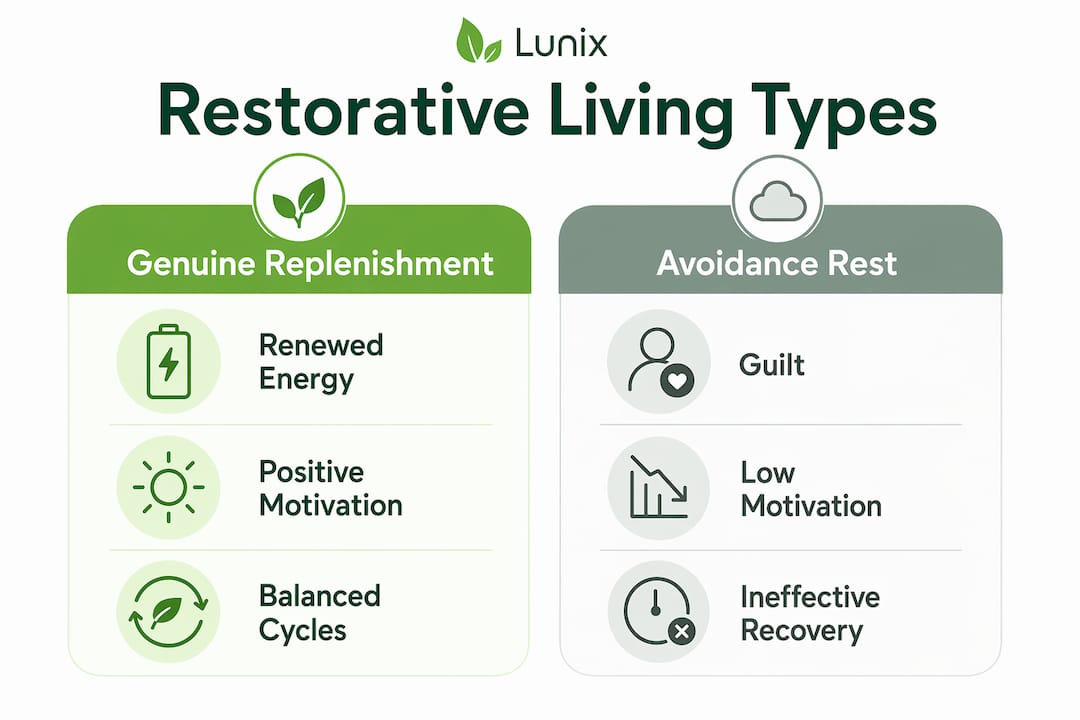
Rest motivated by genuine replenishment produces renewed energy. Rest motivated by avoidance produces guilt and low motivation. The distinction sounds subtle, but it changes everything about how you approach recovery time.
How does restorative living work from a neuroscience perspective?
Your nervous system operates in two primary modes: sympathetic activation, which drives the stress response, and parasympathetic activation, which governs rest and repair. Chronic stress keeps the sympathetic system dominant, which raises cortisol, disrupts sleep, and accelerates cellular aging. Restorative living deliberately shifts the balance toward parasympathetic dominance.

The most direct technique is slow exhale breathing. Practicing slow exhales twice as long as your inhales for just 5 minutes daily reduces stress and improves sleep. This works because extended exhales stimulate the vagus nerve, which is the primary pathway for parasympathetic activation. You do not need equipment or a quiet room. You need five minutes and a consistent habit.
Neuroplasticity is the second key mechanism. Restorative wellness uses neuroplasticity for sustainable personal growth rather than focusing only on symptom management. Your brain physically rewires itself based on repeated experience. Daily restorative practices create new neural pathways that make calm and recovery your default state over time, not just an occasional destination.
The types of rest you need go beyond sleep. Research identifies at least seven distinct categories:
- Physical rest. Passive sleep plus active recovery like gentle stretching or warm baths.
- Mental rest. Breaks from decision-making and cognitive load throughout the day.
- Sensory rest. Reducing screen time, noise, and visual clutter.
- Emotional rest. Space to feel without performing or managing others’ reactions.
- Social rest. Time with people who restore you rather than drain you.
- Creative rest. Exposure to beauty, nature, or art without a productive goal.
- Spiritual rest. A sense of meaning and connection beyond daily tasks.
Most adults in the 30–60 range get some physical rest but neglect the other six. That gap explains why you can sleep eight hours and still wake up exhausted.
What are common misconceptions about restorative living?
The biggest misconception is that restoration means escape. Watching three hours of television or scrolling social media feels like rest, but it is avoidance. Genuine restoration replenishes your capacity to engage with life, not your ability to avoid it.
A second misconception is that restorative living requires large blocks of time. Most people believe they need a vacation or a full weekend off to truly recover. Small consistent restorative micro-habits are more sustainable and reliable than large, infrequent efforts. A 10-minute walk without your phone does more for your nervous system than a two-week trip you spend half of recovering from.
- Stillness feels wrong at first. Brain resistance to quiet time is common because of conditioning to constant input. If sitting quietly feels uncomfortable, that discomfort is evidence your nervous system needs the practice, not a reason to stop.
- Restoration is not regression. Successful restoration activates latent redundancy, allowing alternative pathways when primary ones fail. You are not trying to return to who you were at 25. You are building a more resilient version of who you are now.
- Community is not optional. Restorative living requires authentic relationships. Isolation is one of the fastest routes to depletion, regardless of how much sleep you get.
Pro Tip: When quiet time feels unbearable, set a timer for just two minutes. Sit without your phone. The discomfort usually peaks at 90 seconds and then softens. That softening is your nervous system beginning to downshift.
How can you incorporate restorative living practices into daily life?
Starting a restorative living practice does not require a lifestyle overhaul. It requires scheduling small, consistent acts and protecting them from interruption.
- Begin with breath. Spend 5 minutes each morning practicing slow exhale breathing before checking your phone. Inhale for 4 counts, exhale for 8. This sets your nervous system tone for the entire day.
- Move intentionally. Gentle yoga, tai chi, or a 20-minute walk without a destination or podcast activates the parasympathetic system through rhythmic, low-intensity movement. These relaxation techniques for stress relief work because they combine physical movement with sensory downshift.
- Create a restorative space. Designate one corner of your home for rest. Remove screens, add soft lighting, and keep it free of work materials. A dedicated relaxation zone signals to your brain that recovery is a priority, not an afterthought.
- Schedule micro-restorations. Block two or three 10-minute windows in your calendar each day for sensory or mental rest. Treat them like meetings you cannot cancel.
- Audit your social energy. After each social interaction this week, note whether you feel more or less energized. Prioritize the relationships that restore you and set boundaries around the ones that consistently drain you.
The comparison that matters most is not restorative living versus doing nothing. It is restorative living versus the slow accumulation of stress that most adults accept as normal. Daily restorative practices including quiet time, intentional movement, slow breathing, warm water, creative activities, and quality social connection support nervous system downshift and renewal. Each practice is small. The cumulative effect is not.
Pro Tip: Track your energy level on a simple 1–10 scale each evening for two weeks. Patterns will emerge that show you exactly which days and habits restore you most.
Key Takeaways
Restorative living works because small, consistent daily practices rebuild nervous system resilience more effectively than any single large recovery effort.
| Point | Details |
|---|---|
| Core definition | Restorative living is intentional, proactive renewal of mind, body, and environment through daily rhythms. |
| Neuroscience foundation | Slow exhale breathing and daily quiet time shift the nervous system toward parasympathetic recovery. |
| Small habits win | Ten minutes of daily restoration compounds more effectively than occasional large recovery efforts. |
| Rest has seven types | Physical sleep alone is not enough; mental, sensory, emotional, and social rest are equally necessary. |
| Restoration builds forward | The goal is not returning to a past state but building greater resilience and adaptive capacity. |
Restorative living as a way of being, not a checklist
At Lunixinc, we have watched people approach restorative living the same way they approach a fitness program: with intensity for three weeks, then abandonment. The ones who sustain it are not the most disciplined. They are the ones who stopped treating restoration as a task and started treating it as an identity.
Restorative living requires a fundamental shift to being restorative at a core human level, beyond situational strategies. That distinction is not philosophical. It is practical. When restoration is who you are rather than what you do, you stop negotiating with yourself about whether you have time for it.
The ripple effect is real. When you restore yourself consistently, you show up differently in your relationships, your work, and your community. The people around you feel it before you can articulate it. That is not a soft benefit. It is one of the most concrete outcomes of this practice.
Early resistance is normal and expected. Your nervous system has been conditioned to constant input for years, possibly decades. Give it three weeks of consistent micro-practices before you evaluate whether it is working. The gradual shift in your baseline energy and patience will be the clearest signal you need.
— Lunix
Recovery tools that support your restorative practice
Physical restoration works best when your environment supports it. Lunixinc designs recovery products built specifically to help your body downshift, repair, and renew during the windows you create for rest.

Whether you are building a dedicated restorative space at home or adding physical recovery to your daily micro-habit stack, the Lunixinc recovery collection offers targeted tools for muscle relief, circulation support, and deep physical rest. These products are designed to complement the breathing, movement, and quiet time practices described throughout this article. For adults in the 30–60 range, pairing intentional restorative habits with the right physical support makes the practice easier to sustain and the results easier to feel. Explore the collection and find what fits your rhythm.
FAQ
What is the simplest definition of restorative living?
Restorative living is the intentional practice of renewing your mind, body, and environment through consistent daily habits rather than reactive recovery. It prioritizes proactive balance over burnout and repair.
How is restorative living different from just resting?
Rest motivated by avoidance produces guilt and low motivation, while restorative living uses rest as a deliberate replenishment strategy aligned to biological needs. The intent and consistency are what separate the two.
How long does it take to feel the benefits of restorative living?
Most people notice measurable shifts in energy and stress levels within two to three weeks of consistent daily micro-practices. Nervous system rewiring through neuroplasticity takes longer but builds steadily with repetition.
Can restorative living help with chronic stress?
Yes. Chronic sympathetic nervous system activation drives most stress-related health decline, and restorative practices like slow exhale breathing directly counteract that pattern by activating the parasympathetic system daily.
Do I need a lot of free time to practice restorative living?
No. The most effective restorative practices take 5–10 minutes and fit within an existing daily schedule. Small consistent acts compound more powerfully than occasional large recovery efforts.