


TL;DR:
- Mental rejuvenation involves actively restoring mental clarity, focus, and emotional balance through daily habits. Practicing brief, intentional breaks aligned with natural brain rhythms improves attention, reduces stress, and enhances creativity over time. Consistent small efforts prevent burnout and build long-term cognitive resilience.
Mental rejuvenation is the intentional process of restoring your cognitive and emotional resources to recover clarity, focus, and vitality. Unlike passive rest, it requires active effort. The American Psychological Association recognizes seven distinct types of rest needed to fully restore mental energy, which means sleep alone never covers the full picture. For adults between 30 and 65, understanding what is mental rejuvenation, and actually practicing it, is one of the most direct ways to protect long-term brain health and emotional balance.
What is mental rejuvenation and how does it work?
Mental rejuvenation is defined as the active, intentional restoration of your mind’s capacity to think clearly, regulate emotion, and sustain focus. The standard clinical term for this process is “cognitive restoration,” a concept rooted in Attention Restoration Theory developed by environmental psychologists Rachel and Stephen Kaplan. Both terms describe the same core idea: your brain has a finite capacity for directed effort, and it needs deliberate recovery to perform well.

The mechanism behind this matters. Your brain operates on roughly 90-minute ultradian cycles of high-intensity focus followed by a natural need for rest. Pushing past that window does not produce more output. It produces diminishing returns, irritability, and mental fog. Recognizing this rhythm is the first step toward working with your brain rather than against it.
Mental rejuvenation also activates the parasympathetic nervous system, which governs the body’s “rest and digest” response. This shift reduces cortisol, lowers physical tension, and creates the internal conditions for clear thinking. Without it, the stress response stays switched on, and cognitive performance degrades steadily over time.
How does cognitive restoration improve brain performance?
The benefits of mental rejuvenation show up in measurable ways. Brief 5-minute mental refreshment periods aligned with the brain’s 90-minute ultradian rhythm can improve attention span by nearly 13%. That is not a trivial gain. It means that a short, intentional pause mid-morning can make the next 90 minutes of work meaningfully more productive.
Breathing techniques add another layer of benefit. Box breathing and similar methods reduce heart rate by up to 15% during acute stress. Lower heart rate signals safety to the brain, which reduces anxiety-driven cognitive fog and restores the capacity for clear, focused thought.
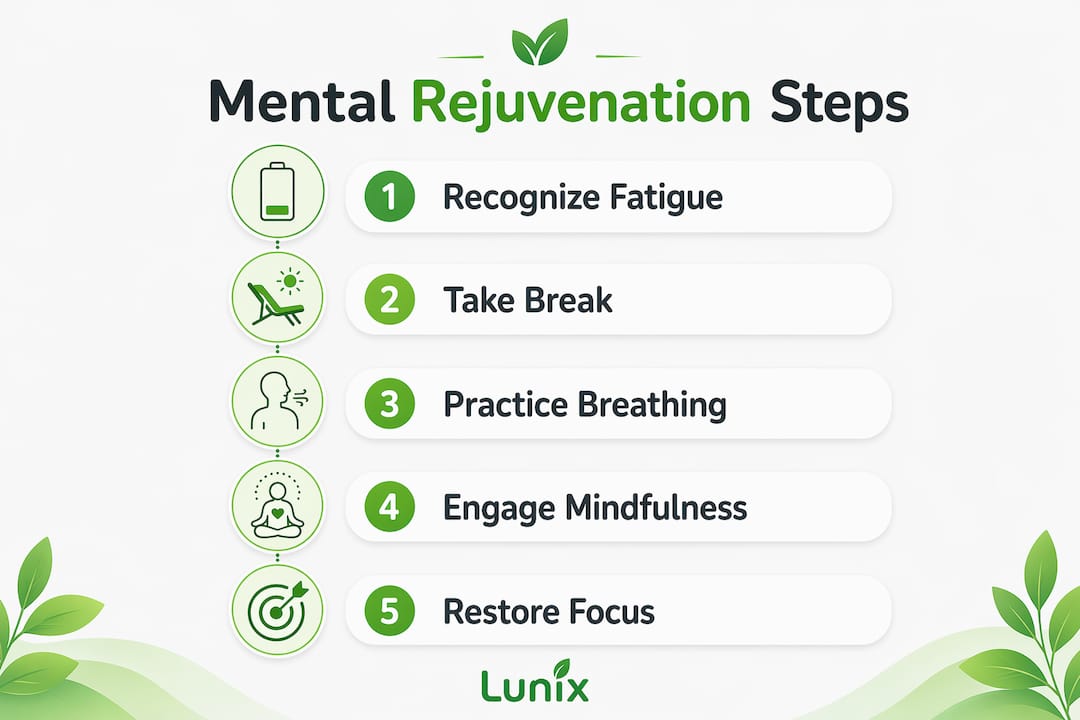
Beyond performance, mental rest restores cognitive flexibility and emotional balance, creating the conditions for flow states and creative thinking. Flow is the mental state where effort feels effortless and output is at its best. You cannot force flow. You can only create the conditions for it, and intentional mental rest is one of the most reliable ways to do that.
Key benefits you can expect from consistent practice include:
- Improved attention span after short, timed breaks aligned to natural brain cycles
- Reduced anxiety and cognitive fog through controlled breathing techniques
- Greater emotional regulation as the parasympathetic nervous system gets regular activation
- Access to flow states that support creativity and deep focus
- Lower cortisol levels over time, reducing the physical toll of chronic stress
Pro Tip: Set a gentle timer for 90 minutes while working. When it goes off, take a 5-minute break before you feel tired. Proactive breaks outperform reactive ones every time.
What are the best daily mental refreshment techniques?
Practical mental refreshment techniques do not require a meditation retreat or an hour of free time. The most effective methods fit inside a normal day. Here are five approaches backed by research:
-
5-minute mindshowers. A mindshower is a brief, structured mental reset timed to your brain’s natural 90-minute rhythm. Step away from your screen, close your eyes, and let your attention drift without a goal. This activates undirected attention, which is the mode your brain uses to consolidate information and restore focus.
-
Box breathing. Inhale for four counts, hold for four, exhale for four, hold for four. Repeat four times. This structured breathing pattern directly engages the parasympathetic nervous system and can reduce heart rate within minutes. The role of breathing in stress relief is well-documented and the technique requires zero equipment.
-
Physiological sighs combined with sensory grounding. A physiological sigh is a double inhale through the nose followed by a long exhale through the mouth. Pair it with two minutes of sensory grounding, noticing five things you can see, four you can touch, three you can hear. Stacking these techniques accelerates nervous system regulation faster than either method alone.
-
Journaling. Writing down your worries and to-do items offloads cognitive load by externalizing mental clutter. Your brain stops cycling through unfinished tasks once they are captured on paper. Even five minutes of free writing before a work session can clear the mental runway.
-
Brief physical movement. A quick stretch or spinal twist pumps fresh blood to the prefrontal cortex, the part of the brain responsible for decision-making and focus. You do not need a gym. Standing up and rotating your spine for 60 seconds produces a measurable shift in mental clarity.
Pro Tip: Combine techniques rather than using them in isolation. A 30-second physiological sigh followed by two minutes of sensory grounding followed by a brief stretch creates a synergistic reset that works faster than any single method.
Common misconceptions about mind rejuvenation
The biggest barrier to mental rejuvenation is a set of beliefs that quietly undermine it. Clearing these up makes the practice far easier to sustain.
-
“Rest means doing nothing.” Passive zoning out, scrolling social media, or watching television does not restore cognitive resources. True mental rest is an active process that engages the parasympathetic nervous system. It requires intention, not just inactivity.
-
“Sleep covers it.” Sleep is one type of rest, but the APA identifies seven distinct types, including sensory rest, creative rest, and emotional rest. Sleeping eight hours while carrying unresolved emotional stress still leaves you depleted in ways sleep cannot fix.
-
“I’ll rest when I crash.” Most people wait until total depletion before seeking relief. Proactive, low-intensity daily strategies prevent cortisol dysregulation and mental fatigue crashes far more effectively than recovery after the fact. Waiting for burnout is the equivalent of only drinking water when you are already severely dehydrated.
-
“I don’t have time.” A 5-minute mindshower takes less time than most coffee breaks. The return on that investment, nearly 13% better attention for the next 90 minutes, makes it one of the highest-value uses of five minutes in a workday.
Recognizing these patterns in your own thinking is the first step toward changing them. The mental wellness checklist for adults 40–65 from Lunixinc offers a practical audit of where your current habits may be falling short.
How does consistent practice build long-term mental resilience?
The long-term benefits of mental rejuvenation compound over time. Mindfulness practice transitions from deliberate effort to effortless cognitive clarity over approximately six months of consistent practice. That timeline matters because it sets realistic expectations. You are not building a skill in a week. You are rewiring a habit over months, and the payoff is a brain that handles stress with less effort.
Daily low-intensity interventions also prevent the dramatic mental fatigue crashes that derail productivity and mood. Small resets, practiced consistently, keep cortisol levels stable and protect the prefrontal cortex from the wear of chronic overload. For adults in midlife, this is especially relevant. Cognitive resilience does not maintain itself automatically. It requires the same kind of regular attention you give to physical health.
The table below shows how consistent mental rejuvenation practices connect to specific long-term outcomes:
| Practice | Long-term outcome |
|---|---|
| Daily 5-minute mindshowers | Sustained attention span improvement over weeks |
| Box breathing twice daily | Stable heart rate and reduced anxiety baseline |
| Six months of mindfulness | Effortless cognitive clarity and reduced overwhelm |
| Journaling before work sessions | Lower cognitive load and faster mental transitions |
| Consistent physical movement breaks | Improved prefrontal cortex blood flow and decision quality |
For adults building lasting wellness routines in midlife, mental rejuvenation practices fit naturally alongside sleep hygiene, nutrition, and movement as non-negotiable pillars of health.
Key Takeaways
Mental rejuvenation is an active, intentional practice that restores cognitive clarity, reduces stress, and builds long-term emotional resilience through structured daily habits.
| Point | Details |
|---|---|
| Active rest, not passive | True mental rejuvenation requires intention, not just inactivity or screen time. |
| Work with your brain’s rhythm | Take 5-minute breaks every 90 minutes to protect attention span and prevent fatigue. |
| Stack your techniques | Combining breathing, sensory grounding, and movement works faster than any single method. |
| Start before you crash | Proactive daily resets prevent burnout far better than recovery after depletion. |
| Consistency builds resilience | Six months of regular mindfulness practice produces lasting cognitive clarity and emotional balance. |
What I’ve learned from watching people neglect mental rest
The modern mental load is real, and most people carry far more of it than they realize. You absorb information constantly, make dozens of decisions before noon, and rarely give your brain a genuine break between tasks. The result is not dramatic burnout. It is a slow, quiet erosion of focus, patience, and creativity that most people mistake for aging or personality.
What I have observed at Lunixinc is that the people who resist mental rejuvenation the most are often the ones who need it most urgently. There is a cultural story that says pushing through exhaustion is strength. That story is wrong. Intentional mental rest is not weakness. It is the discipline that keeps high performers functioning at their best over years, not just weeks.
The other thing worth saying plainly: perfection is not the goal. You do not need a silent meditation room or a 30-minute morning ritual. A physiological sigh at your desk, a 5-minute walk without your phone, or three minutes of journaling before a meeting all count. The practice does not need to be beautiful. It needs to be consistent.
Small resets, done daily, change the baseline. That is the insight most wellness content skips over in favor of dramatic transformations. The real work is quiet, ordinary, and deeply worth doing.
— Lunix
Mental wellness support from Lunixinc
Mental rejuvenation works best when it is part of a broader wellness structure, not an isolated technique you try once.

Lunixinc has built a library of practical resources specifically for adults who want to protect their mental well-being for the long term. The stress management guide for adults 40–65 walks you through a step-by-step approach to managing cognitive load and emotional strain. The mindfulness and meditation guide covers techniques for building a daily mental clarity practice from scratch. Both resources are free and designed for real schedules, not ideal ones. Visit Lunixinc to find the right starting point for your mental wellness goals.
FAQ
What is the simplest definition of mental rejuvenation?
Mental rejuvenation is the intentional process of restoring your brain’s capacity for clear thinking, emotional balance, and focused attention. It requires active effort, not just passive rest.
How long does it take to see benefits from mental rejuvenation?
Short-term benefits like improved attention span can appear within a single session. Long-term cognitive clarity and reduced overwhelm typically develop after approximately six months of consistent mindfulness practice.
Is mental rejuvenation the same as meditation?
Meditation is one method of mental rejuvenation, but not the only one. Breathing exercises, journaling, physical movement, and structured mental breaks all qualify as cognitive restoration practices.
How often should you practice mental refreshment techniques?
The most effective approach is a 5-minute reset every 90 minutes during focused work, aligned with the brain’s natural ultradian rhythm. Daily practice produces better outcomes than occasional long sessions.
Can mental rejuvenation help with anxiety?
Yes. Techniques like box breathing reduce heart rate by up to 15% during acute stress, which directly lowers anxiety-driven cognitive fog and supports clearer thinking.