


TL;DR:
- Movement mindfulness involves intentionally paying attention to breath and bodily sensations during physical activity to enhance awareness and well-being. It emphasizes internal experience over performance, fostering a mind-body connection that improves stress, mood, and physical health. Beginners can start with simple, short practices like mindful walking or stretching, focusing on sensations and accepting discomfort without judgment.
Movement mindfulness is the intentional practice of tracking breath and bodily sensations during physical activity to build awareness and support well-being. Unlike ordinary exercise, this approach, often called mindful movement in clinical and wellness settings, places your attention on what you feel inside your body rather than on speed, reps, or performance. Practices like yoga, tai chi, mindful walking, and qigong all fall under this definition. Each one trains you to stay present with your body as it moves, creating a feedback loop between your nervous system, mind, and muscles that ordinary workouts rarely touch.
What is movement mindfulness and why does it matter?
Movement mindfulness is defined as deliberate, attentive physical activity where you focus on internal sensations and breath from moment to moment. The key word is intentional. You are not just moving your body through space. You are listening to it. This separates mindful movement from a brisk walk while scrolling your phone or a gym session focused entirely on hitting a personal record.
The practice matters because it addresses something traditional exercise misses: the mind-body connection. Mindful movement integrates the body, nervous system, and mind through focused attention on sensations and breath, producing benefits for stress, sleep, and mood that go beyond what physical exertion alone delivers. That integration is the core value proposition of the practice.
Yoga, tai chi, and mindful walking are the three most recognized entry points. Yoga is the most common complementary health approach among U.S. adults, with yoga use increasing from 9.5% in 2012 to 14.3% in 2017. That growth reflects a broader cultural shift toward practices that treat the body and mind as one system rather than separate problems to solve.
What are the mental and physical benefits of movement mindfulness?
The benefits of movement mindfulness span both mental and physical health, and the research behind them is specific. A 6-month tai chi program for older adults increased positive affect and decreased negative affect and psychological distress. That result matters because it shows a structured mindful movement practice can shift emotional baselines, not just provide temporary relief.
On the physical side, the gains are equally concrete:
- Stress reduction: Yoga participation reduces physiological stress markers, including cortisol levels, making it one of the most studied tools for reducing stress naturally.
- Pain management: Mindful movement alters brain pain processing by regulating the nervous system, reducing the subjective feeling of pain during daily activities.
- Better sleep and mood: Regular practice improves sleep quality and emotional regulation, two outcomes that compound over time.
- Body awareness: You develop a clearer sense of how your body feels, which helps you catch tension, fatigue, or discomfort before it becomes a bigger problem.
“Combining physical exertion with acceptance and non-judgmental detachment enables mindful movement to provide superior mental health benefits compared to seated meditation or exercise alone.”
That combination effect is what makes mindful movement worth your attention. You get the physiological benefits of movement and the cognitive benefits of meditation in a single practice.
How to practice movement mindfulness: techniques for beginners

The core technique elements of mindful movement are attention to internal sensations, breath awareness, non-judgmental observation, and moment-to-moment tracking. You do not need a studio, a class, or any equipment. A complete practice can take as little as 5 minutes at home. That accessibility is one of its greatest strengths.
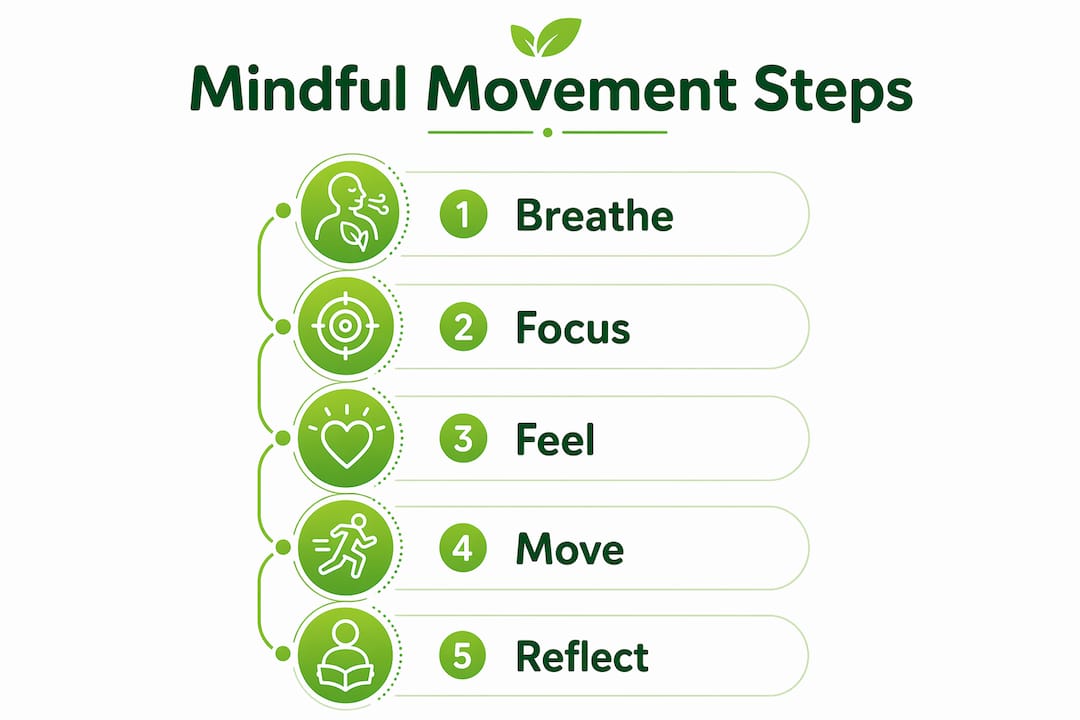
Here is a simple framework to start:
- Choose a movement. Pick something gentle: walking, slow stretching, or a few yoga poses. Keep it simple enough that you can pay attention to how it feels.
- Set an intention. Before you begin, remind yourself that the goal is awareness, not performance. You are here to notice, not to achieve.
- Focus on breath first. Take three slow breaths and feel your chest or belly rise and fall. This anchors your attention before movement begins.
- Track sensations as you move. Notice where you feel tension, warmth, or ease. Notice how your feet contact the ground or how your arms feel as they swing.
- Return without judgment. When your mind wanders, and it will, gently bring your attention back to your body. Success means noticing mind wandering and returning to body sensations, not achieving perfect mental clarity.
- Close with stillness. Spend 30–60 seconds standing or sitting quietly after your session. Notice how your body feels compared to when you started.
Pro Tip: Beginners often treat mindful movement as a task to complete rather than an inward inquiry. If you catch yourself rushing or mentally checking off steps, pause and take one slow breath. That pause is the practice.
One important caution: mindful movement can surface emotions or physical tensions more rapidly than seated meditation. Do not push through discomfort the way you might in a high-intensity workout. Respect what your body signals and adjust your intensity accordingly.
How does movement mindfulness differ from exercise and meditation?
Understanding what sets mindful movement apart from traditional exercise and seated meditation helps you use all three more effectively. They are not competing approaches. They serve different purposes.
| Practice | Primary Focus | Mental Engagement | Key Outcome |
|---|---|---|---|
| Traditional Exercise | Performance metrics (speed, reps, weight) | External goals | Physical fitness, strength |
| Seated Meditation | Stillness, breath, or thought observation | Internal, static | Calm, focus, emotional regulation |
| Mindful Movement | Body-led awareness during motion | Internal, dynamic | Stress relief, mind-body integration |
Traditional exercise focuses on what your body can do. Mindful movement focuses on what your body is telling you. Shifting focus from performance metrics to body-led awareness activates the relaxation response and reduces stress in a way that goal-driven training rarely achieves.
Seated meditation, on the other hand, builds attention and calm through stillness. That is powerful, but some people find it difficult to sustain, especially when stress or physical discomfort makes sitting quietly feel impossible. Mindful movement offers a dynamic alternative. You can explore mindfulness therapy methods that combine both approaches for a fuller picture of how they work together.
The real advantage comes when you combine all three. Research in exercise psychology confirms that integrating mindful movement with acceptance and non-judgmental awareness produces better emotion and thought management than either practice alone.
What mindful movement practices can you try today?
Several well-established practices fit the movement mindfulness definition and are accessible to adults at most fitness levels. Here is a quick overview:
- Mindful walking: Walk at a natural pace and focus on the sensation of each foot lifting, moving forward, and landing. This works on a sidewalk, in a park, or even indoors. It is the most portable option available.
- Yoga: Combines breath-linked movement with body awareness. Styles like Hatha and Yin yoga are especially well-suited to beginners because they move slowly and hold poses long enough to notice internal sensations. You can learn more about movement therapy for wellness to see how yoga fits into a broader recovery context.
- Tai chi: A slow, flowing martial art practiced for health. The 6-month tai chi program research cited earlier shows measurable improvements in emotional well-being for older adults. Classes are widely available at community centers and online.
- Qigong: Similar to tai chi in its slow, deliberate movements, qigong emphasizes breath coordination and energy awareness. It is particularly useful for people managing chronic pain or fatigue.
- Intuitive dance or free movement: No choreography required. You move however your body wants to move, with attention on how each movement feels rather than how it looks. This option works well for people who find structured practices too rigid.
The common thread across all of these is attention. The form matters less than the quality of awareness you bring to it. If you are over 40 and want to understand how these practices support long-term health, the research on mobility exercises for midlife offers useful context.
Key takeaways
Movement mindfulness works because it combines the physical benefits of exercise with the mental benefits of meditation, producing outcomes that neither practice achieves alone.
| Point | Details |
|---|---|
| Core definition | Movement mindfulness is intentional, attentive physical activity focused on breath and bodily sensations. |
| Mental health benefits | Tai chi and yoga reduce psychological distress, improve mood, and lower cortisol levels with consistent practice. |
| Pain and stress relief | Mindful movement regulates the nervous system and alters brain pain processing to reduce discomfort. |
| How to start | Begin with 5 minutes of mindful walking or gentle stretching, focusing on sensations rather than performance. |
| Advantage over exercise alone | Combining movement with non-judgmental awareness produces superior emotional regulation compared to traditional exercise. |
What Lunixinc has learned about mindful movement
Most people come to mindful movement looking for stress relief. What they find, if they stick with it, is something more useful: a reliable way to read their own body. That shift changed how I think about recovery and daily well-being entirely.
The hardest part is not the movement itself. It is resisting the urge to evaluate your performance. Years of fitness culture train you to measure, push, and improve. Mindful movement asks you to do the opposite: notice, accept, and respond. That feels counterintuitive at first. It gets easier fast.
One thing I have found consistently true: short sessions beat long ones when you are building the habit. Five minutes of genuine attention beats thirty minutes of distracted stretching every time. Start smaller than you think you need to. The practice compounds quietly, and one day you realize your baseline stress level has dropped without you doing anything dramatic to cause it.
The other thing worth saying plainly: mindful movement is not a replacement for medical care or physical therapy. It is a complement. Use it alongside whatever else supports your body. Gentle curiosity and patience are the only tools you actually need to begin.
— Lunix
Support your practice with Lunixinc recovery solutions
Movement mindfulness asks a lot of your body, especially when you are returning to regular physical activity after years of sedentary habits or managing chronic discomfort. Recovery is where the real progress gets locked in.

Lunixinc designs recovery products specifically to support the kind of physical restoration that makes consistent mindful movement possible. From targeted comfort solutions to tools that help your body decompress after activity, the Lunixinc Recovery collection is built around the same principle that drives mindful movement: your body deserves attention, not just effort. Explore the collection and find what fits your practice.
FAQ
What does movement mindfulness mean?
Movement mindfulness means paying deliberate, non-judgmental attention to your breath and bodily sensations while you are physically moving. It is the practice of turning ordinary movement into a form of present-moment awareness.
How long does a mindful movement session need to be?
A session can be as short as 5 minutes and still be effective. Consistency matters more than duration, especially when you are building a new habit.
Is movement mindfulness the same as yoga or tai chi?
Yoga and tai chi are two of the most common forms of mindful movement, but the practice is broader. Any physical activity done with deliberate attention to breath and sensation qualifies, including walking or gentle stretching.
Can movement mindfulness help with chronic pain?
Yes. Research shows that mindful movement alters how the brain processes pain by regulating the nervous system, which reduces the subjective experience of pain during daily activities.
Do i need equipment or a class to start?
No equipment or class is required. Mindful movement is portable and free, and you can begin with a short walk or a few minutes of slow stretching at home.