


The role of recovery in longevity comes down to this: recovery is not downtime, it’s an active biological process that repairs tissue, regulates inflammation, balances your nervous system, and clears waste from your brain while you sleep. Every one of those mechanisms is tied to slower biological aging.
Three moves matter more than any gadget you could buy:
- Protect a sleep window of at least seven hours nightly, aiming for a consistent schedule
- Practice extended-exhale breathing (4-count inhale, 6-8-count exhale) daily to raise heart rate variability (HRV)
- Schedule one structured rest or deload day every week, not just whenever you feel wrecked
Adults who consistently sleep fewer than seven hours show measurable increases in inflammatory markers and reduced insulin sensitivity, two of the clearest short paths to accelerated aging. This article is educational and not a substitute for personalized medical advice. Talk to a clinician about any existing condition or new symptoms before changing your routine.
Key Takeaways
Recovery is an active biological process, not passive rest, and consistent sleep, breathing practice, and planned deloads compound into measurably slower biological aging.
| Point | Details |
|---|---|
| Sleep is foundational | Protect 7+ hours nightly; consistent short sleep raises inflammatory markers and lowers insulin sensitivity. |
| Breathing builds HRV | Practice 4-count inhale, 6 to 8-count exhale daily to raise HRV and lower resting heart rate. |
| Order of operations matters | Fix sleep, then training, then nutrition, before adding recovery tech or devices. |
| Track trends, not single nights | Watch HRV and resting heart rate over two to three weeks, not day to day. |
| Lunix supports, not replaces, basics | Lunix recovery devices complement sleep and breathing habits once those foundations are solid. |
Table of Contents
- Why the Role of Recovery in Longevity Gets Misunderstood
- How Does Recovery Slow Biological Aging?
- What Recovery Habits Should You Prioritize First?
- What Metrics Actually Show You’re Recovering?
- A Sample Week for Recovery-Focused Living
- Common Myths About Recovery You Should Ignore
- What the Research Actually Shows
- A Publisher’s Take on Where Recovery Fits
- Where Lunix Fits Into Your Recovery Routine
- Frequently Asked Questions
- Sources
Why the Role of Recovery in Longevity Gets Misunderstood
Most people picture recovery as collapsing on the couch. That’s passive inactivity, and it’s not the same thing.
True recovery is active and intentional. It’s the deliberate shift of your body from sympathetic “go” mode into parasympathetic “repair” mode, and it happens through specific behaviors: sleep, controlled breathing, mobility work, and adequate protein and fluid intake. Your body doesn’t fully switch into repair mode just because you stopped moving.
Compare these two evenings. In one, you do 10 minutes of diaphragmatic breathing, stretch your hips and shoulders, and eat a protein-rich dinner before bed. In the other, you scroll on your phone for two hours, mind racing over tomorrow’s to-do list, then fall asleep with your nervous system still activated. Both look like “rest” from the outside. Only one produces the physiological conditions your body needs for repair.
This distinction matters because rest and structured recovery affect mobility, injury prevention, and long-term function at every activity level, not just for athletes. A planned deload week, a mobility session, or a night of genuinely restorative sleep does something scrolling never will: it lets your tissues, hormones, and brain reset.
How Does Recovery Slow Biological Aging?
Recovery connects to longevity through five overlapping pathways, and each one has a research trail behind it.
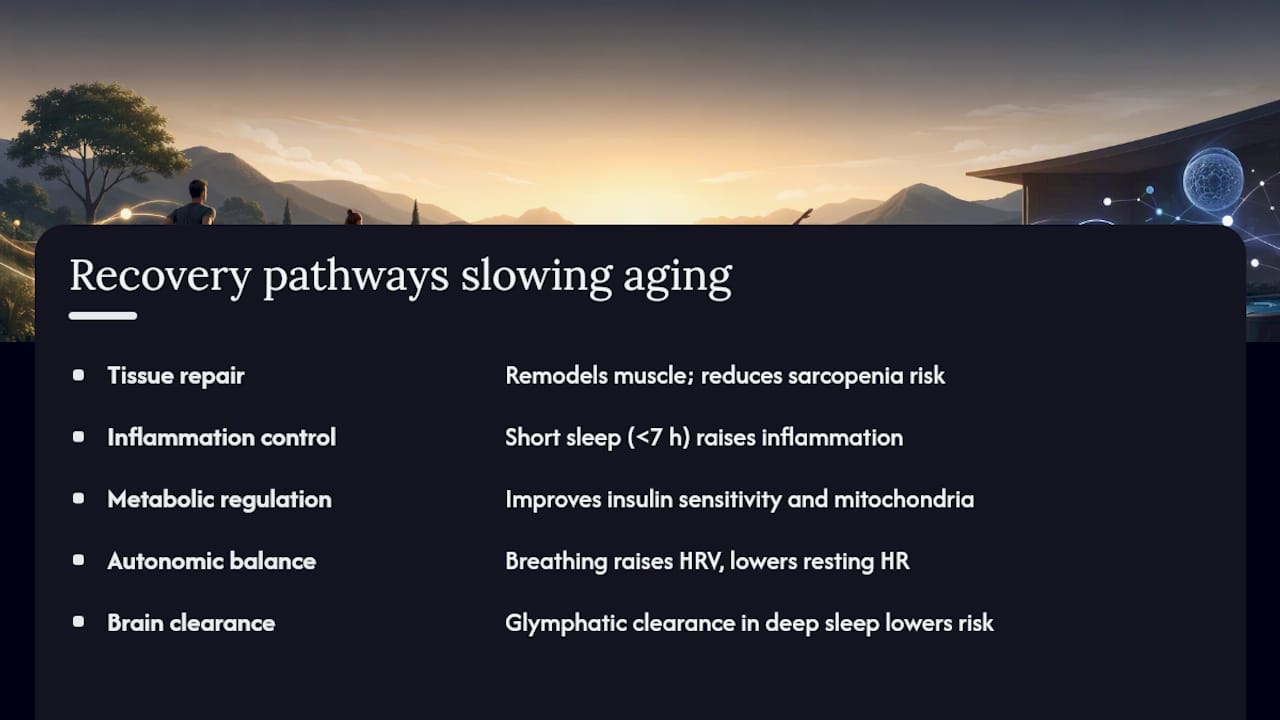
Tissue repair and protein turnover. Sleep and adequate protein intake drive the remodeling of muscle and connective tissue. Skip consistent recovery windows for years and you accelerate sarcopenia, the age-related muscle loss that predicts frailty and mortality risk far better than most people realize.

Inflammation and immune regulation. This is where the evidence gets stark. Adults who sleep fewer than seven hours consistently show measurable increases in inflammatory markers, along with suppressed immune response and impaired cognitive function. Chronic low-grade inflammation, sometimes called “inflammaging,” is a documented driver of cardiovascular disease, type 2 diabetes, and neurodegeneration. Guidelines call for sufficient quality sleep for adults, and the effects of falling short on inflammation increase with less sleep: the less you sleep, the worse the inflammatory signal.

Metabolic regulation. Recovery supports insulin sensitivity and mitochondrial function. When you consistently under-recover, cardiometabolic risk climbs even if your diet and training look fine on paper.
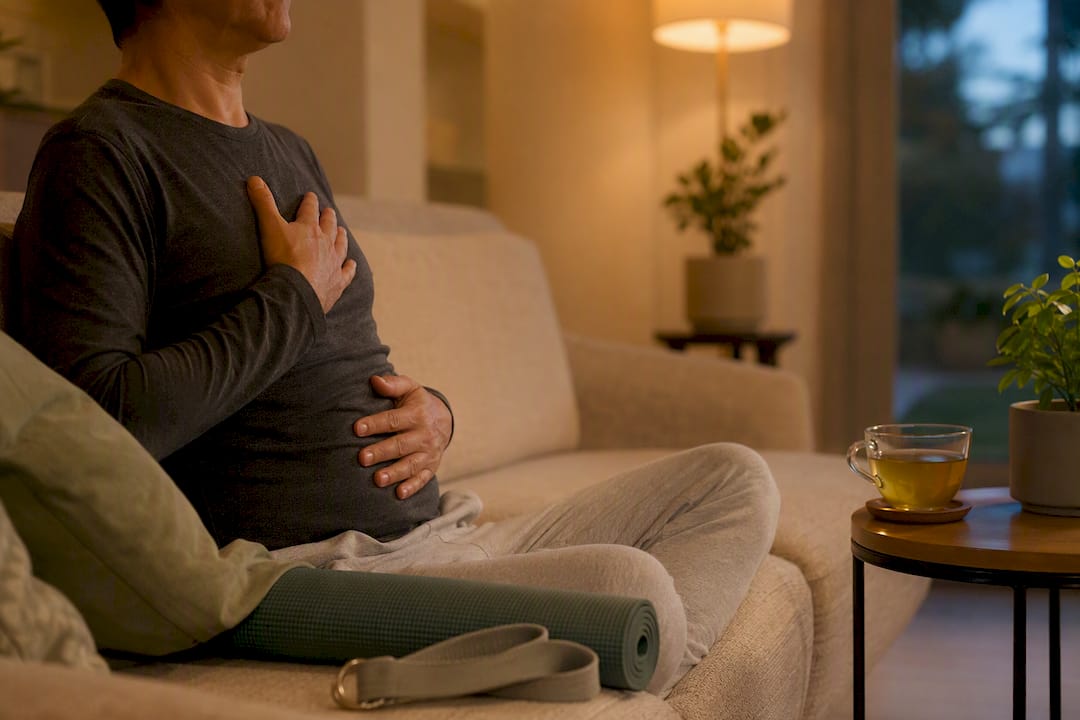
Autonomic balance. This is the piece most people never learn to influence deliberately. Practicing an extended-exhale breathing pattern, a 4-count inhale followed by a 6 to 8-count exhale, raises baseline HRV and lowers resting heart rate over weeks of consistent practice. Higher HRV reflects stronger vagal tone and is associated with slower cardiovascular aging. It’s one of the few longevity markers you can move with five minutes of practice.
Brain clearance and cognition. During deep sleep, your brain runs its glymphatic system, a waste-clearance process that flushes metabolic byproducts and consolidates memory. Recovery here isn’t cosmetic; it’s linked to reduced neurodegeneration risk over decades.
Recovery is systemic. It involves brain clearance, connective tissue remodeling, and hormonal recalibration happening together, and consistent small daily practices produce more reliable long-term benefits than occasional intense recovery sessions.
Timelines vary by mechanism. HRV and sleep architecture can shift within two to four weeks of consistent practice. Metabolic markers like insulin sensitivity often take a few months to show clear movement. Population-level mortality and disease-risk signals, the kind captured in large cohort studies, take years to reveal themselves. Patience is part of the protocol.
What Recovery Habits Should You Prioritize First?
Not all recovery inputs carry equal weight, and trying to fix everything at once usually means fixing nothing. Work through these in order.
- Sleep first. Seven or more hours, consistent bedtime and wake time. This is the foundation everything else sits on; see how sleep supports recovery differently for adults over 40.
- Autonomic regulation second. Daily breathing practice, five to ten minutes, using the 4-count inhale and 6 to 8-count exhale pattern. This is the fastest lever you have for raising HRV.
- Structured exercise with planned rest. Training without deloads is the single most common way ambitious adults sabotage their own longevity goals. Build in a lighter week every four to six weeks.
- Nutrition and hydration. Protein adequacy supports the tissue repair that happens during your recovery windows; an anti-inflammatory eating pattern supports the immune regulation piece.
- Mobility and functional movement. Treat this as scheduled training, not something you do if you have leftover time.
- Psychosocial recovery. Social connection and low-cognitive-load decompression reduce the mental “training load” that most people never account for.
- Strategic adjuncts. Sauna, cold exposure, and targeted recovery devices belong last, as complements to a foundation that’s already solid, not substitutes for one that isn’t.
Pro Tip: If your sleep is consistently poor, stop adding intensity to your training. More hard sessions on top of bad sleep compounds the damage instead of building fitness.
A simple nightly wind-down checklist works better than any app: dim lights an hour before bed, five minutes of extended-exhale breathing, no screens in the last 20 minutes. After resistance training, aim for 20 to 40 grams of protein within a couple of hours to support the muscle repair process.
Order of operations matters more than most wellness marketing admits. The most reliable longevity gains come from foundational habits, movement, sleep, nutrition, stress reduction, and social connection, not from expensive tech. Fix sleep before you optimize training. Optimize training before you overhaul nutrition. Get all three solid before you spend money on tools.
What Metrics Actually Show You’re Recovering?
You don’t need a lab to track recovery, but you do need to know what to look at and how long to watch it.
Objective metrics worth tracking:
- Sleep duration and continuity, and sleep stage data if your device tracks it
- Resting heart rate trend over two to three weeks, not a single morning
- HRV baseline and its week-over-week direction
- Training load balance: session intensity multiplied by duration, compared against your recovery inputs
- Grip strength or a simple jump test, useful proxies for neuromuscular recovery if you train hard
Subjective metrics worth tracking:
- A one-to-ten daily wellness rating (energy, soreness, mood)
- A perceived recovery scale before training sessions
- Concentration and mood notes, since cognitive fog is often the earliest recovery red flag
The single biggest mistake people make with wearables is reacting to one bad night. HRV and resting heart rate both fluctuate night to night from stress, alcohol, or a late meal. Look for trends across two to three weeks, not daily noise.
Watch for a specific warning pattern: HRV trending down while resting heart rate trends up, paired with fragmented sleep and a performance decline you can’t explain. That combination, sustained for more than two or three weeks, is a signal to pull back training volume and talk to a clinician rather than pushing through.
A Sample Week for Recovery-Focused Living
Recovery has to fit into a life that already has a job, a family, and a commute. Here’s a realistic weekly structure built around that reality.
| Day | Primary Focus | Recovery Actions |
|---|---|---|
| Monday | Strength training | Sleep 7+ hrs, 5-min breathing post-workout |
| Tuesday | Active recovery (walk) | Mobility session, 10-min breathing |
| Wednesday | Strength training | Sleep 7+ hrs, protein-focused meals |
| Thursday | Active recovery | Mobility, evening wind-down routine |
| Friday | Strength or cardio | Sleep 7+ hrs, social decompression time |
| Saturday | Light movement | Extended breathing session, mobility |
| Sunday | Full rest / deload | No structured training, sleep priority |
Anchor the small stuff to routines you already have. Do breathing work during your commute or right after you brush your teeth. Stretch for ten minutes while dinner cooks. Wind-down rituals stick when they attach to something you’d do anyway, not when they demand a new block of time you don’t have.
If you notice two or three consecutive weeks of poor sleep, flat energy, or declining performance despite following this structure, that’s your signal to extend the deload or check in with a healthcare provider rather than pushing through on willpower.
Common Myths About Recovery You Should Ignore
“Recovery means doing nothing.” Wrong. Recovery is intentional parasympathetic activation, not inactivity. Scrolling your phone keeps your nervous system engaged; breathing work and sleep actually shift it into repair mode.
“More training always means better longevity.” More training without planned rest leads to overtraining, which raises injury risk and blunts the very adaptations you’re chasing.
“Expensive gadgets replace sleep and stress management.” They don’t. Devices are a late-stage addition, not a substitute for the fundamentals covered above.
“A weekend detox reverses months of poor recovery.” It doesn’t. Consistent micro-recoveries, practiced daily, produce durable change. One good weekend doesn’t offset a pattern.
What the Research Actually Shows
The evidence behind these recommendations isn’t marketing copy. It’s a consistent thread across sleep science, autonomic physiology, and longevity research.
- Short sleep is tied to measurable inflammation and metabolic dysfunction, with guidelines recommending 7 to 9 hours for adults
- The 4-count inhale, 6 to 8-count exhale breathing protocol reliably improves HRV with consistent daily practice
- Sleep-dependent brain clearance and tissue remodeling are documented mechanistic pathways linking rest to long-term brain and connective tissue health
- Poor sleep has ripple effects into areas people rarely connect it to, including oral health
Foundational habits, sleep, movement, nutrition, stress reduction, and social connection, consistently outperform tech-based interventions for extending healthy years of life.
Lunixinc publishes this content to give health-conscious readers a clear, evidence-first starting point…
A Publisher’s Take on Where Recovery Fits
We built Lunixinc around a simple observation: people chase performance and ignore the repair side of the equation until their body forces the issue. Recovery isn’t a wellness trend to us, it’s the daily habit that makes every other health investment pay off over decades. That belief shapes every product we design, always as a complement to sleep, breathing, and movement, never a replacement for them.
Where Lunix Fits Into Your Recovery Routine
Once sleep, training, and nutrition are actually in place, the right tools can extend what your body is already doing well. That’s the honest order: foundational habits first, devices second.

When you’re ready to add support, look for durable materials, easy-to-clean surfaces, and features that align with what the evidence actually supports, not flashy extras that don’t move the needle. A percussion massager can support post-training muscle recovery after your protein and sleep are dialed in. An infrared sauna blanket complements the parasympathetic work you’re already doing with breathing practice. Orthopedic wedge pillow sets support the sleep positioning that protects your seven-plus-hour window in the first place.
Lunix designs each product around that hierarchy: washable covers and high-density foam for daily use, simple touchscreen controls so the tool doesn’t add friction to a routine you’re trying to simplify. Browse the Lunix Recovery collection to see which pieces fit into the week you just built. If you’re managing a medical condition or significant symptoms, talk with a clinician before adding new recovery tools or changing your training load.
Frequently Asked Questions
What is the role of recovery in longevity? Recovery supports tissue repair, reduces chronic inflammation, regulates metabolism, and clears waste from the brain during sleep. All four mechanisms are linked to slower biological aging and a longer healthspan.
How does sleep affect longevity specifically? Sleeping fewer than seven hours consistently raises inflammatory markers and reduces insulin sensitivity, both established drivers of age-related disease. Guidelines recommend 7 to 9 hours nightly for adults.
Can breathing exercises really improve recovery? Yes. A 4-count inhale, 6 to 8-count exhale pattern, practiced daily, raises HRV and lowers resting heart rate within a few weeks, both markers of improved autonomic recovery.
How long does it take to see results from better recovery habits? HRV and sleep quality can shift within two to four weeks. Metabolic markers often take a few months. Longer-term health and mortality benefits build over years of consistent practice.
Do recovery gadgets replace sleep and stress management? No. Devices work best as complements once sleep, training, and nutrition are already solid. Skipping the fundamentals and relying on tools first produces limited results.
Sources
- Consistent short sleep linked to inflammation and metabolic dysfunction (PMC2635584)
- Extended-exhale breathing protocols improve HRV and autonomic recovery (PMC8924557)
- The 5 pillars of longevity: movement, nutrition, sleep, stress reduction, and social connection — Harvard Health
- The Longevity Protocol: A Realistic Daily Routine — RecoveryStack
- Mechanisms of recovery: brain clearance, tissue remodeling, and hormonal recalibration (PMC8841422)