


Good product design determines whether a home wellness device actually improves your health — by making it usable, safe, and motivating enough to use every single day. That’s the role of design in health, and it’s more practical than most buyers realize. When you’re comparing orthopedic pillows, percussion massagers, or infrared sauna blankets online, design isn’t just about how something looks. It’s about whether you’ll still be using it six months from now.
Here are the core design elements that separate devices that deliver real benefit from ones that collect dust:
- Usability: Can you operate it correctly without reading a 40-page manual?
- Safety compliance: Does it meet recognized standards like IEC 60601-1-11 or IEC 62366-1?
- Feedback and motivation: Does it show you progress in a way that keeps you coming back?
- Fit-for-home form factor: Is it compact, easy to store, and simple to clean?
Guidance from AHRQ and research published in BMC Medical Informatics both confirm that these factors predict adoption far more reliably than raw clinical specs. Lunixinc builds each of its recovery products around exactly these principles.
Key Takeaways
Good product design is the single most important factor in whether a home wellness device delivers lasting health benefit — because a device you use correctly and consistently is the only one that works.
| Point | Details |
|---|---|
| Design drives adoption | Usability gaps in controls, instructions, and cleaning are the primary reason home devices get abandoned. |
| Safety standards matter | Look for IEC 60601-1-11, IEC 62366-1, and FDA documentation before purchasing any device that makes health claims. |
| Feedback sustains habits | Devices with clear progress indicators and accessible feedback keep users engaged beyond the first week. |
| Fit-for-home form factor | Compact size, low weight, and easy storage predict long-term use more reliably than advanced features alone. |
| Lunixinc’s approach | Lunixinc builds washable covers, one-button controls, and ergonomic shaping into every recovery product for daily home use. |
Table of Contents
- Why design turns clinical potential into real-world outcomes
- Core design principles every home wellness buyer should recognize
- What safety standards and privacy documentation actually tell you
- How manufacturers test home devices and what those results mean for you
- Your buying checklist for home wellness and recovery devices
- How Lunixinc applies these design principles in its products
- What Lunixinc believes about design responsibility
- Lunixinc recovery products built on these principles
- Sources
Why design turns clinical potential into real-world outcomes
A device can be clinically effective in a lab and still fail completely in your living room. That gap between potential and practice is almost always a design problem.
StarFish Medical’s analysis of home-use device usability found that human factors gaps — confusing controls, unclear instructions, and hard-to-clean surfaces — are among the primary barriers to adoption and safe use at home. When a device is difficult to set up or maintain, most people simply stop using it.
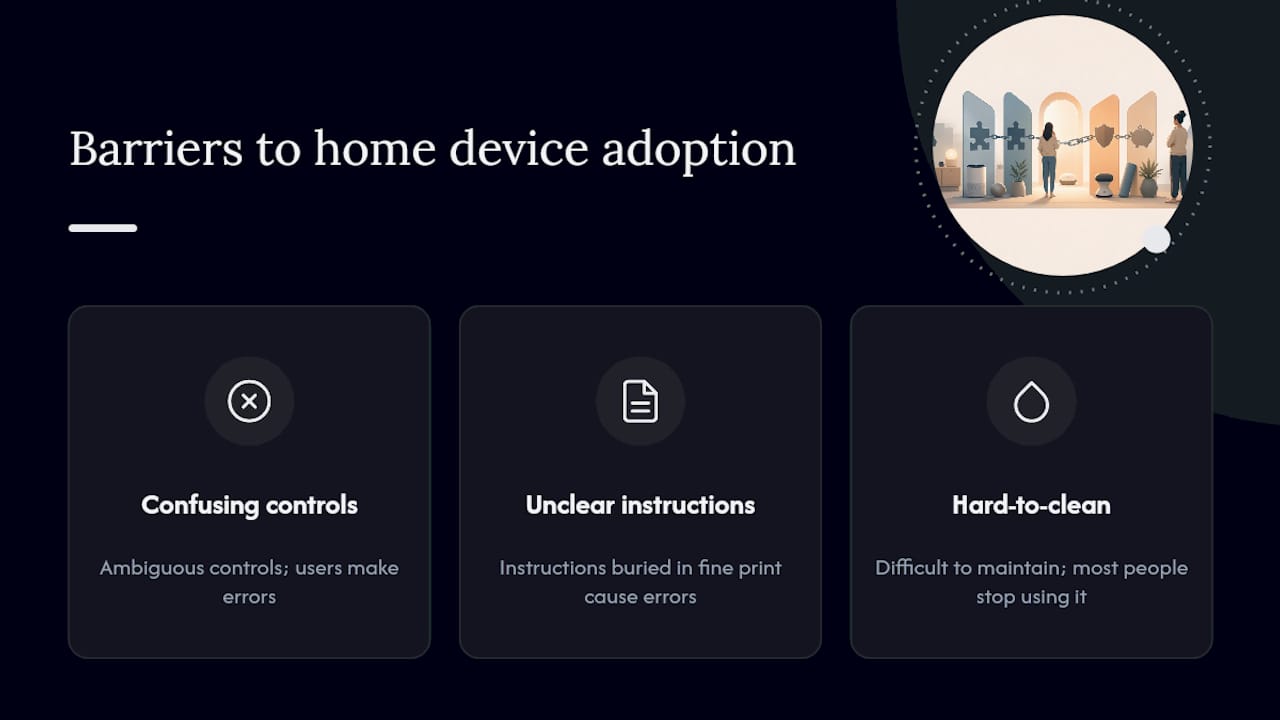
Think about the difference between a compact hand massager you can grab off the nightstand in 10 seconds versus a bulky device that requires assembly, a cleared table, and 15 minutes of setup. The second one gets used twice, then stored in a closet. The design failure isn’t cosmetic; it’s behavioral.
Poor usability also creates real safety risks. When controls are ambiguous or instructions are buried in fine print, users make errors. Those errors reduce benefit, and in some cases cause harm. BMC Medical Informatics research shows that manufacturers frequently underuse in-house user research, which means products reach consumers without being validated for the actual conditions of home use.
The impact of design on health, then, is largely the impact of design on behavior. A device you use consistently, correctly, and safely is one that was designed with you in mind from the start.
Core design principles every home wellness buyer should recognize
The best home recovery devices share a recognizable set of design attributes. Understanding them helps you evaluate any product page with confidence.
- Human-centered design: The device was shaped around real users’ needs, not just engineering specs. Look for mentions of user testing or usability studies in product descriptions.
- Learnability and simplicity: You should be able to operate the device correctly within minutes. Clear physical controls, intuitive interfaces, and a short learning curve reduce errors and build confidence.
- Feedback and motivation: Research on consumer recovery tools shows that transparent, accessible progress feedback keeps users engaged without overwhelming them. Progress indicators, session summaries, and gentle prompts all serve this function.
- Ergonomics and home fit: A PMC study on home rehabilitation devices found that adjustable ergonomic structures and real-time feedback significantly improved user engagement. A device that fits your body and your space gets used.
- Portability and storage: ASME/DMD 2025 research identified foldability, low weight, and easy single-person setup as key predictors of long-term home use. If it’s awkward to store, it won’t stay in your routine.
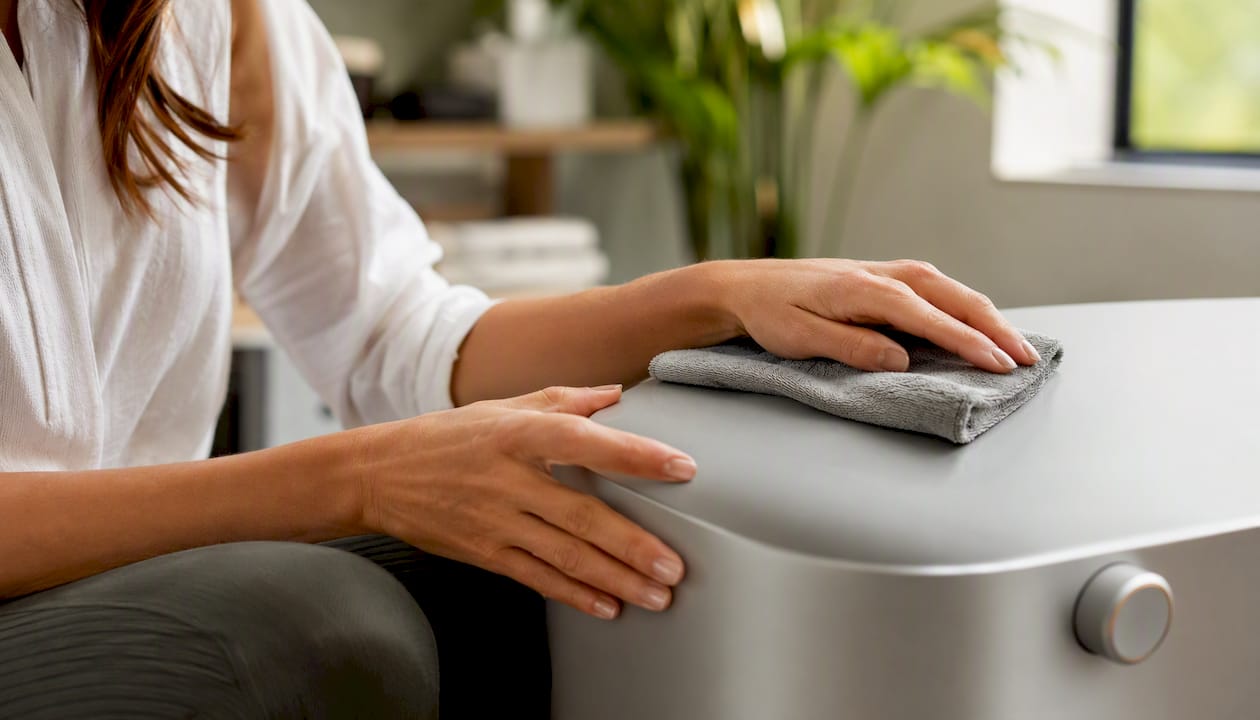
- Hygiene and maintainability: Washable covers, wipeable surfaces, and accessible replaceable parts aren’t luxury features — they’re design requirements for anything that touches your body regularly.
- Accessibility: Controls should work for users across a range of hand strength, vision, and tech comfort. This matters especially for the 40–65 age group, where dexterity and screen familiarity vary widely.
The Google/Fitbit design team’s work on health data reinforced a related point: health insights need to feel personal and immediately actionable, not clinical and abstract. The same principle applies to any feedback your wellness device gives you.
Pro Tip: On any product page, scroll past the marketing copy and look for the specs section. Check for words like “washable cover,” “one-button control,” “adjustable intensity,” and “compact footprint.” Those terms signal that the manufacturer thought about real home use, not just lab performance.
Quick checklist before you buy:
- [ ] Does the product page mention usability testing or home-environment validation?
- [ ] Are cleaning and maintenance instructions clearly listed?
- [ ] Is the footprint and storage solution addressed?
- [ ] Does it offer feedback (visual, haptic, or audio) on your session?
- [ ] Are controls simple enough for someone unfamiliar with the device?
What safety standards and privacy documentation actually tell you
When a product claims to be “safe” or “clinically tested,” you deserve specifics. Here’s what to look for.
Standards worth knowing:
- IEC 60601-1-11 covers safety requirements for medical electrical equipment used in home healthcare environments specifically.
- IEC 62366-1 sets the framework for usability engineering applied to medical devices — it’s the standard that governs how manufacturers must test and document human factors.
- FDA consumer device guidance applies to devices that make health claims; look for FDA registration numbers or 510(k) clearance when a device claims therapeutic benefit.
- AHRQ’s consumer health IT guide recommends that developers address privacy, interoperability, and safety throughout the entire development lifecycle — not just at launch.
Red flags to watch for:
- No user manual or only a digital-only manual with no print option
- Vague claims like “clinically proven” with no linked study or registration number
- No information about data handling for connected devices
- Unclear or missing cleaning instructions
- No warranty or support contact listed
For connected devices — anything that pairs with an app or syncs data — check the privacy policy before purchasing. You should know exactly what health data is collected, how it’s stored, and whether it’s shared with third parties. Interoperability matters too: a device that only works with one proprietary app creates dependency and limits your options over time.
How manufacturers test home devices and what those results mean for you
The most credible home wellness products go through multiple rounds of testing before reaching your door. Knowing what those stages look like helps you ask better questions.
Common testing stages:
- Early prototype testing — rough versions tested with small groups to catch fundamental usability errors
- In-home usability sessions — participants use the device in their actual living spaces, not a lab
- Iterative refinement — design changes based on observed errors and user feedback, repeated until targets are met
- Remote monitoring pilots — for connected devices, testing whether data transmission, alerts, and app interfaces work reliably in varied home environments
AHRQ recommends that consumer health IT products be tested early, often, and in the environments where they’ll actually be used. The SMARTCLOTH project published in JMIR demonstrated how a structured Double Diamond design-thinking process — combining interviews, focus groups, and iterative prototyping — produced a usable hardware prototype for home health management.
| Metric | What it means | What a credible result looks like |
|---|---|---|
| Task completion rate | % of users who complete a core task correctly on first try | High completion with minimal errors |
| Time-to-learn | How quickly a new user operates the device correctly | Minutes, not hours, for basic functions |
| Error rate | How often users make mistakes during normal operation | Low and decreasing across test rounds |
| Adherence over weeks | Whether users continue using the device after the first week | Sustained use beyond the initial novelty period |
| Satisfaction score | Self-reported ease and comfort of use | Consistently positive across diverse user groups |
Your buying checklist for home wellness and recovery devices
Prefer devices that demonstrate documented usability, safety compliance, and fit-for-home design. Use this checklist when you’re comparing options online.
What to check on every product page:
- Physical fit and footprint: Will it fit where you plan to use it? Is storage addressed?
- Ease of use: Are controls labeled clearly? Is there a quick-start guide?
- Maintenance and cleaning: Are covers washable? Are surfaces wipeable?
- Feedback features: Does it show session progress, intensity levels, or completion signals?
- Connectivity and privacy: If it connects to an app, is the data policy publicly available?
- Warranty and support: Is there a clear warranty period and a real support contact?
Questions worth asking before checkout:
- Was this device tested with home users, not just in a clinical setting?
- Does it meet IEC or FDA standards relevant to its category?
- How long does setup take for a first-time user?
Typical price ranges and timelines:
- Entry-level percussion massagers and orthopedic pillows: $40–$120; most users are comfortable within 1–3 days
- Mid-range compression massagers and red light therapy devices: $100–$300; expect a 1–2 week adoption curve
- Infrared sauna blankets and advanced recovery systems: $200–$600+; allow 2–4 weeks to build a consistent routine
Red flags at checkout:
- No return policy or a very short return window (under 30 days)
- No mention of materials, certifications, or safety testing
- Customer reviews that mention confusing instructions or poor build quality
- No physical address or customer service phone number listed
For more on setting up a home recovery space, the home wellness stations guide from Lunixinc walks through placement, integration, and daily routine tips.
How Lunixinc applies these design principles in its products
Lunixinc designs for learnability, home-environment fit, easy cleaning, and clear session feedback — translating the research-backed principles above into concrete product features.
Across the Lunixinc recovery lineup, you’ll find:
- Washable, removable covers on orthopedic pillows and modular comfort products
- Compact footprints on massagers and therapy devices sized for nightstands and shelves
- One-button or touchscreen controls that work without a manual
- Real-time feedback through intensity indicators and session timers
- High-density foam and ergonomic shaping that supports correct posture without adjustment
Lunixinc also applies iterative feedback from real customers to refine products over time, treating post-purchase reviews as a form of ongoing usability data. That loop between user experience and product development is exactly what StarFish Medical’s home-use device research identifies as the missing piece in most home device development.
Explore the full Lunixinc recovery collection to see how these principles show up in products built for daily use.
What Lunixinc believes about design responsibility
At Lunixinc, we believe that a wellness product that sits unused on a shelf has failed — regardless of its clinical specs. User-centered design isn’t a marketing claim for us; it’s the standard we hold every product to before it reaches your home. That means testing for real-world use, prioritizing cleaning and maintenance, and making sure the feedback you get from a device actually motivates you to keep going.
If you have questions about the design, safety documentation, or materials behind any Lunixinc product, our support team is ready to help — visit Lunixinc or reach out directly through the product pages.
Lunixinc recovery products built on these principles
Most home wellness devices are designed for a showroom, not a Tuesday night after work. Lunixinc takes a different approach: every product in the recovery lineup is sized for real living spaces, built for easy cleaning, and designed to give you clear feedback so you actually feel the benefit. From orthopedic wedge pillow sets to heated air compression hand massagers and infrared sauna blankets, each product reflects the usability and safety standards this guide covers.
If you’re managing joint discomfort, muscle tension, or simply want a consistent recovery routine, the Lunixinc recovery collection is a practical starting point. Browse the full lineup and find the product that fits your space, your body, and your daily schedule at Lunixinc.
For more on managing stress and building a calming daily routine alongside your recovery practice, MindShift Wellness Center’s guide to anxiety management offers practical behavioral strategies that pair well with physical recovery habits.
This article is general information, not a substitute for advice from a qualified doctor. Consult a qualified healthcare professional about your own circumstances before acting on anything here.
Sources
- Home-Use Medical Device Usability: Designing for lay users - StarFish Medical
- Designing consumer health IT: a guide for developers and systems designers — AHRQ
- JMIR Human Factors (2025) — consumer recovery tool design
- Home-based upper-limb rehabilitation device study — PMC
- SMARTCLOTH tutorial — JMIR (2026)