


Strong community connections are one of the most powerful predictors of long-term health. The role of community in wellness spans every dimension of wellbeing, from your mental resilience to your physical longevity, and the evidence from global health authorities is striking. According to the WHO’s 2025 report, loneliness affects 1 in 6 people worldwide and contributes to roughly 871,000 deaths every year. That is about 100 lives lost every hour, not to disease alone, but to disconnection.
Here is what strong community involvement actually does for your health:
- Cuts your risk of depression, stroke, heart disease, and diabetes
- Reduces inflammation and supports longer life
- Builds emotional resilience and stress-coping capacity
- Encourages healthier behaviors like regular exercise and better sleep
- Strengthens the social fabric that makes neighborhoods safer and more stable
The scale of this: Lonely individuals are twice as likely to develop depression compared to those with strong social ties. Community is not a lifestyle bonus. It is a health necessity.
What community wellness actually means
Community wellness is not just about living near other people. It is the combined effect of social connections, shared values, access to resources, physical safety, cultural identity, and a sense of belonging, all working together to shape how healthy you feel and how long you stay that way.
Two types of community matter here. Place-based communities are your neighborhood, your local park, your block. Identity-based communities are the groups you belong to by shared experience, culture, faith, or interest. Both shape health outcomes in meaningful ways, and both can either protect or undermine your wellbeing depending on how connected and supported you feel within them.
The core building blocks of community wellness include:
- Social networks: The relationships you can count on during hard times and good ones
- Shared values and trust: The sense that your neighbors and community members are looking out for each other
- Access to resources: Parks, libraries, health services, and gathering spaces that make healthy choices easier
- Cultural identity and inclusion: Feeling seen, respected, and represented within your community
- Civic participation: Having a voice in decisions that affect your neighborhood and your health
When these elements are present, communities become places where people genuinely thrive, not just survive.
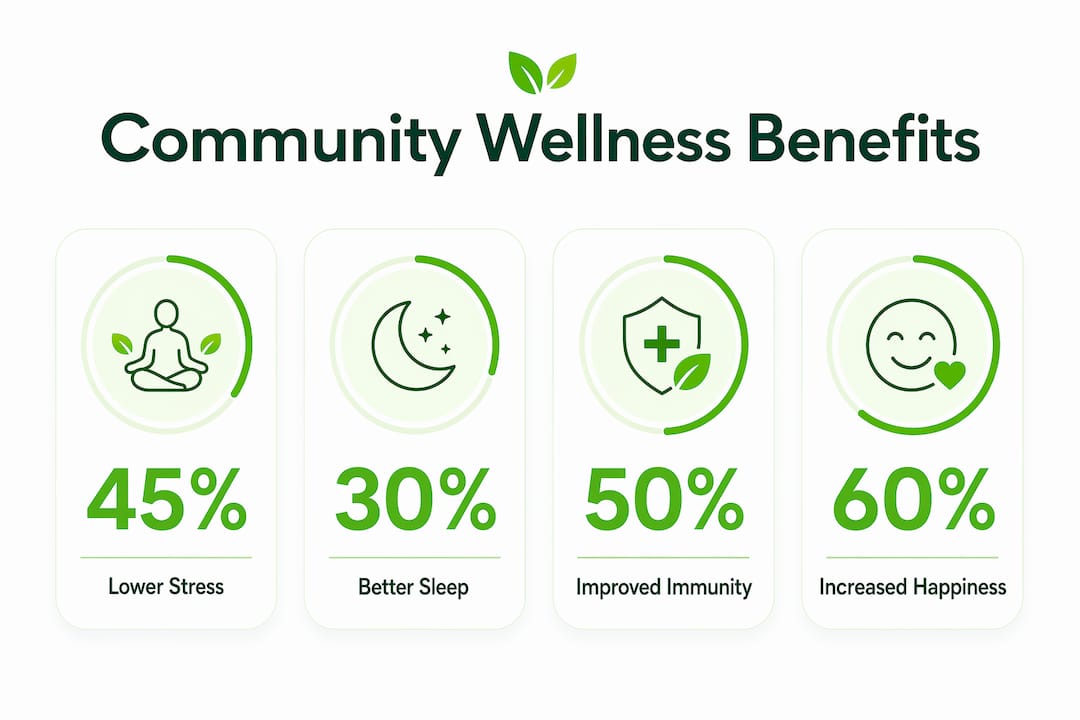
How social connections protect your mental health
Social support is one of the most reliable buffers against mental health challenges. The CDC frames social connectedness as a continuum, meaning the more quality relationships you have, the better your ability to manage stress, anxiety, and depression. It is not about having hundreds of friends. It is about having people who genuinely care.
When you feel connected, your nervous system responds. Supportive interactions help regulate your stress response, lower cortisol levels, and create a sense of emotional safety that makes hard days more manageable. The collective mental health benefits of belonging to a caring community include improved self-worth, greater purpose, and a reduced sense of isolation, all of which are protective factors against anxiety and depression.
Research note: People who are lonely face twice the depression risk of those with strong social ties. Loneliness also raises the risk of anxiety and, in severe cases, thoughts of self-harm. The mental health case for community is not subtle.
For practical guidance on strengthening social bonds as part of your broader mental health routine, the mental health tips for adults resource from Lunixinc covers this in depth.
Physical health benefits you gain through community engagement
Your body responds to community just as much as your mind does. Adults with strong social connections have a measurably lower risk of heart disease, stroke, diabetes, and cognitive decline, according to the WHO’s findings on social connection. The mechanism is partly behavioral and partly biological. When you are part of a community, you are more likely to exercise, eat well, and sleep consistently because the people around you model and reinforce those habits.
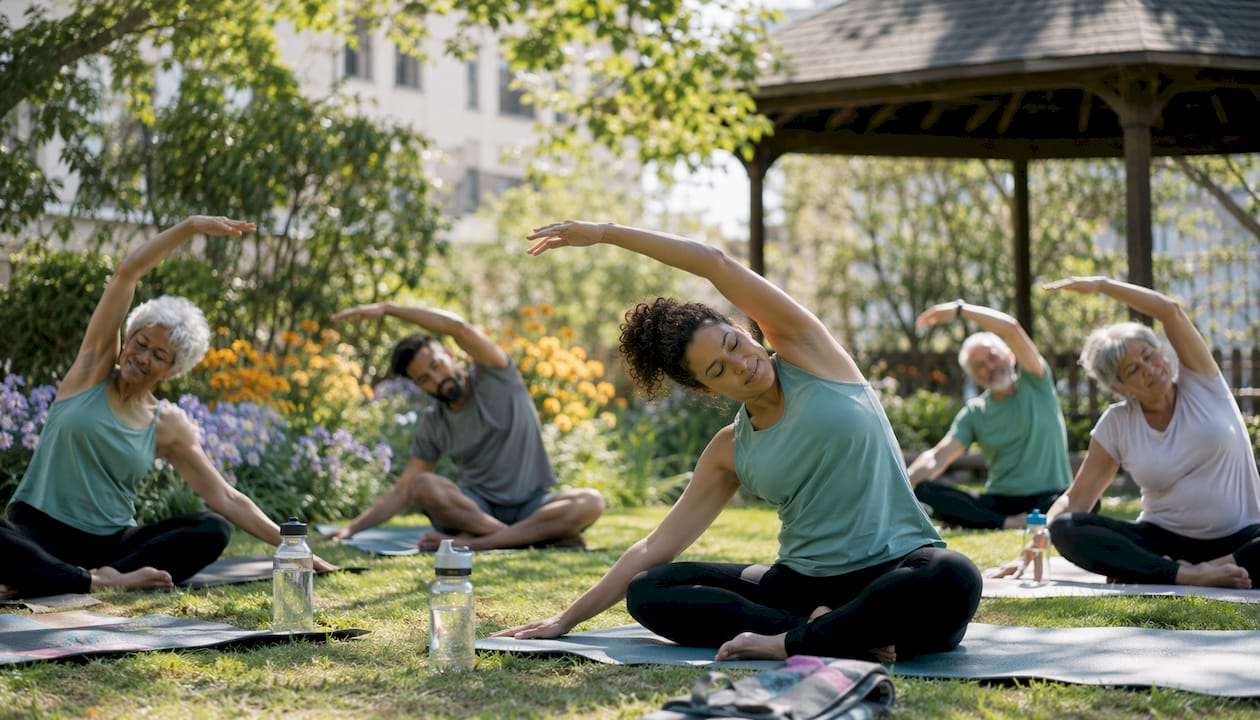
Neighborhood wellness initiatives make this even more concrete. Community gardens, group fitness programs, walking clubs, and local health fairs all create low-barrier entry points for physical activity and nutrition education. These are not just nice extras. They are proven tools for reducing chronic disease risk in populations that might otherwise lack access to private gyms or expensive health services.
Key physical health benefits linked to community involvement:
- Lower blood pressure and reduced cardiovascular risk
- Better weight management through shared activity and accountability
- Improved sleep quality, supported by reduced stress and stronger routines
- Reduced risk of cognitive decline in older adults
- Greater likelihood of attending preventive screenings and following medical advice
The impact of social connections on wellness is not abstract. It shows up in your bloodwork, your sleep tracker, and your doctor’s notes.
Public health strategies that build community wellness
The most effective community wellness programs are not designed for communities. They are designed with them. Research consistently shows that top-down, overly medicalized models fail when they ignore the relational and participatory nature of health. People engage when they feel ownership, not when they feel managed.
Co-designed initiatives, where residents help shape the goals and methods, produce stronger outcomes and last longer. The Local Area Coordination model is one example: trained coordinators build trusted relationships within communities, connecting people to local resources and each other rather than routing everyone through clinical services. Community hubs work similarly, serving as gathering points that reduce isolation while building social infrastructure.
Best practices for community-driven health programs include:
- Co-designing programs with residents from the start, not after the fact
- Using asset-based language that frames community needs as growth opportunities rather than deficits
- Investing in physical social infrastructure like parks, libraries, and community centers
- Balancing organizational support with genuine resident leadership
- Measuring success through connection and belonging, not just clinical metrics
Pro Tip: When evaluating a community wellness program, ask whether residents helped design it. Programs built on community input consistently outperform those delivered to communities without their involvement.
For a broader look at how these principles connect to personal wellness, Lunixinc’s guide on sustainable wellness practices explores the same bottom-up philosophy.
What global and US health authorities say about community’s impact
The evidence base here is deep and growing. The WHO’s Commission on Social Connection released its landmark global report in 2025, calling on all member states to make social connection a public health priority. The report describes social bonds as protective against inflammation, chronic disease, and premature death, while framing loneliness as a systemic public health crisis, not a personal failing.
The CDC reinforces this from a behavioral angle. Social connection supports healthier eating, regular physical activity, and better sleep, three of the most powerful levers for long-term health. The CDC also highlights that safe public spaces, where people can gather and connect, reduce isolation and strengthen community resilience over time.
Peer-reviewed research published in PMC in 2024 found that social connection predicts survival across species and life stages, with both behavioral and biological mechanisms at work. Community integration, specifically the sense of belonging and access to trusted relationships, is one of the strongest predictors of wellbeing researchers have identified.
The broader picture: At a community level, loneliness undermines social cohesion and costs billions in lost productivity and health care. Communities with strong social bonds are safer, healthier, and more resilient, including during disasters.
The loneliness and internet culture piece from VEU News offers a compelling look at how modern digital habits interact with these dynamics, worth reading alongside the clinical data.
How community involvement reduces stress and builds resilience
The stress-reduction effect of community is both psychological and physical. When you feel supported by people around you, your body’s threat-response system dials down. Stable, trusted relationships give you a buffer against life’s harder moments, whether that is job loss, illness, or grief. You are not eliminating stress. You are building the capacity to recover from it faster.
Deeper, longer interactions build this capacity more effectively than frequent shallow ones. A weekly dinner with close friends does more for your nervous system than daily brief exchanges with acquaintances. Quality of connection, not just quantity, is what drives resilience. Biological research has found that supportive social contact can produce cardiac synchrony between people, a sign that the nervous system is genuinely regulating in response to trusted relationships.
Communities that offer consistent, meaningful connection create what researchers call social infrastructure: the invisible scaffolding that holds people up when individual resources run thin.
How community engagement helps manage chronic disease
For people living with chronic conditions like diabetes, heart disease, or hypertension, community support is a practical health tool. The NYC Community Support Network, part of the HealthyNYC initiative, directly connects residents to chronic disease support, mental health resources, and food and housing stability services, recognizing that health is shaped by far more than clinical care alone.
Community-based programs improve chronic disease outcomes through accountability, education, and access. A neighbor who walks with you three mornings a week is more effective than a pamphlet about exercise. A community health worker who speaks your language and knows your neighborhood can connect you to screenings and services that a hospital referral alone never would.
The role of social groups in wellbeing is especially pronounced for older adults managing multiple conditions. Social connection reduces the likelihood of skipping medications, missing appointments, or falling into the isolation that accelerates decline.
How community activities give you a sense of purpose and belonging
Purpose is not something you find alone. It tends to emerge through contribution, through being needed, recognized, and part of something larger than yourself. Community activities, whether volunteering, joining a local club, or simply showing up consistently for a neighbor, create exactly that kind of meaning.
The Mayo Clinic notes that friendships raise your sense of connection, belonging, and purpose while lowering stress and improving self-confidence. These are not soft benefits. They translate directly into measurable health outcomes, including longer life expectancy in older adults with close social ties.
Belonging also works as a protective factor against the kind of chronic low-grade stress that wears the body down over years. When you know you matter to the people around you, your baseline sense of safety shifts. That shift has real physiological consequences.
Barriers to community participation and how to overcome them
Not everyone finds community participation easy, and the barriers are real. Time pressure, physical limitations, language differences, past experiences of exclusion, and lack of safe public spaces all keep people from connecting. For older adults, mobility and transportation are frequent obstacles. For immigrants and cultural minorities, feeling unwelcome or unseen in mainstream community spaces can be just as limiting.
Effective strategies to lower these barriers include:
- Meeting people where they are: Bringing programs into trusted spaces like faith communities, libraries, and community centers rather than expecting people to seek out unfamiliar settings
- Offering flexible formats: Evening and weekend programming, online options, and drop-in models reduce the commitment threshold
- Building cultural competence: Programs that reflect the language, values, and traditions of the people they serve earn trust faster
- Training community connectors: Peer navigators and community health workers who share lived experience with participants are among the most effective tools in public health
The impact of community on wellbeing depends on whether programs are genuinely accessible. Designing for inclusion from the start, rather than retrofitting it later, is what separates programs that reach everyone from those that reach only the already-connected.
Key Takeaways
Strong community connections are a direct driver of physical, mental, and social health, with loneliness linked to 871,000 deaths annually and twice the risk of depression.
| Point | Details |
|---|---|
| Loneliness is a health crisis | Loneliness affects 1 in 6 people worldwide and contributes to roughly 871,000 deaths each year. |
| Social ties cut disease risk | Strong connections lower your risk of heart disease, stroke, diabetes, and cognitive decline. |
| Mental health improves with belonging | Lonely individuals face twice the depression risk of those with strong social ties. |
| Co-designed programs work best | Community wellness initiatives built with residents, not just for them, produce lasting engagement. |
| Barriers require active solutions | Flexible, culturally competent, and accessible programs reach the people who need community most. |