


TL;DR:
- Weighted blankets apply deep pressure stimulation that calms the nervous system and improves sleep. They activate the parasympathetic nervous system, reduce cortisol, and promote relaxation within minutes. Properly chosen, they support sleep and anxiety management when used consistently with other wellness practices.
Weighted blankets are defined as therapeutic blankets filled with materials like glass beads or plastic pellets to apply firm, even pressure across the body. This pressure, known in clinical settings as deep pressure stimulation, triggers a calming response in your nervous system that reduces anxiety and improves sleep quality. Research from the Journal of Clinical Sleep Medicine and Baylor College of Medicine confirms these effects are measurable, not just anecdotal. If you have been wondering why use weighted blankets, the short answer is that they work through real physiology, not placebo.
Why use weighted blankets: the science behind deep pressure stimulation
Deep pressure stimulation is the core mechanism that makes weighted blankets effective. When firm, distributed pressure is applied to your body, your nervous system interprets it as a signal of safety. That signal sets off a chain of physiological changes that move you from tension toward rest.
Here is what happens inside your body when you use a weighted blanket:
- Parasympathetic activation: The pressure activates vagus nerve mechanoreceptors that increase parasympathetic nervous system activity. This is your body’s rest-and-digest mode, the direct opposite of fight-or-flight.
- Cortisol reduction: Your body reduces cortisol and increases serotonin and melatonin, the hormones most directly linked to relaxation and sleep onset.
- Sympathetic suppression: The fight-or-flight response quiets down. Your heart rate slows, your breathing deepens, and muscle tension releases.
- Stored tension release: Weighted blankets signal safety to the brain, releasing physical tension held in the shoulders, jaw, and abdomen. These are the exact spots where most adults carry chronic stress.
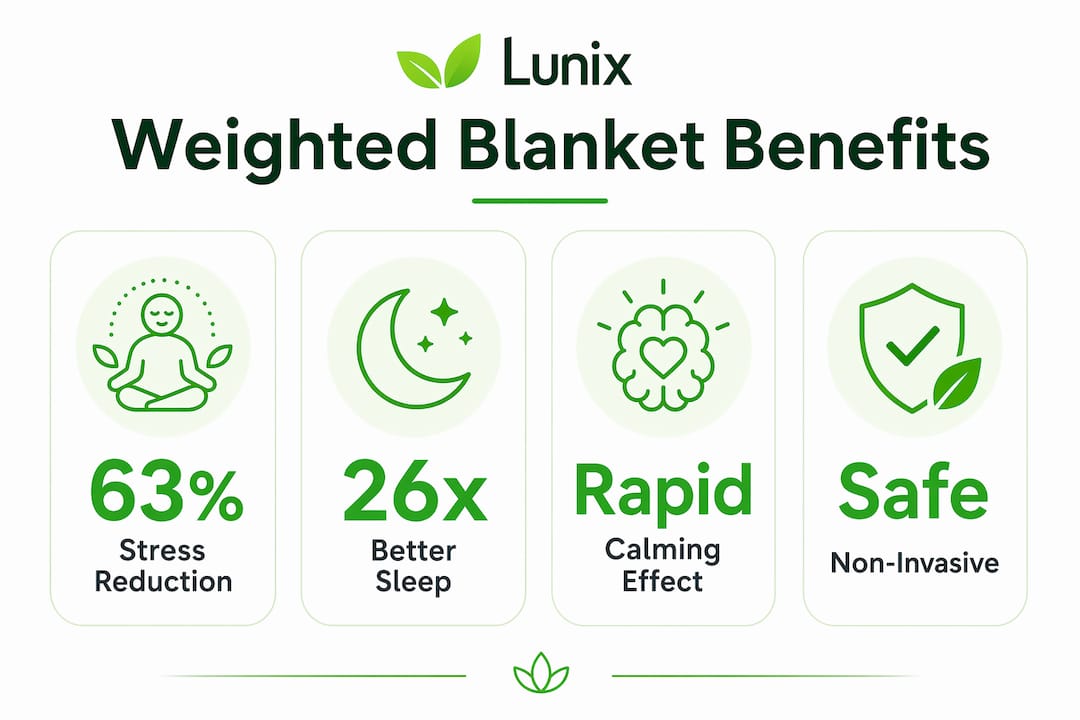
The speed of this response is striking. Clinical observations show a 33% reduction in electrodermal activity and a 63% self-reported anxiety decrease within just 5 minutes of use. Electrodermal activity measures skin conductance, a reliable marker of nervous system arousal. A 33% drop in that window means your body is genuinely calming down, not just feeling like it is.
This is why weighted blankets for anxiety have gained serious clinical attention. The effect is not subtle. It is fast, measurable, and grounded in the same neural pathways used by occupational therapists for decades.
What does the research say about weighted blanket effectiveness?
The evidence base for weighted blankets has grown considerably in recent years. A 2020 randomized controlled trial published in the Journal of Clinical Sleep Medicine found that adults using weighted blankets were nearly 26 times more likely to reduce insomnia severity by 50% or more compared to controls. That is not a marginal improvement. That is a dramatic shift in sleep outcomes for people who had struggled for years.
A broader analysis of 18 studies published as of June 2026 found that weighted blankets improve sleep quality and mood across adults with anxiety, bipolar disorder, and ADHD. The consistency across such different populations suggests the underlying mechanism, deep pressure stimulation, works regardless of the specific diagnosis.
That said, the research also shows important nuances:
| Population | Benefit observed | Limitation noted |
|---|---|---|
| Adults with insomnia | Up to 26x more likely to cut severity by 50% | Results vary by individual sensitivity |
| Adults with anxiety | 63% self-reported anxiety reduction in 5 min | Stronger for situational than clinical anxiety |
| Adults with ADHD | Improved mood and sleep quality | Limited large-scale trials |
| Adults with bipolar disorder | Better sleep continuity | Requires monitoring alongside treatment |
The honest picture is this: weighted blankets show promising and often strong results, but they are not a standalone cure. They work best as a complement to other wellness practices, not as a replacement for clinical treatment when a real disorder is present. Weighted blankets should complement existing wellness protocols, not replace them.
Pro Tip: If you are evaluating whether weighted blankets are worth it for your specific situation, start by tracking your sleep quality and anxiety levels for two weeks before using one. That baseline makes it much easier to measure whether the blanket is actually helping you.
How to safely choose and use a weighted blanket
Choosing the right weighted blanket is not complicated, but getting it wrong reduces the benefit and can create discomfort. Follow these steps to get it right from the start.
-
Match the weight to your body. According to Baylor College of Medicine, a weighted blanket should weigh about 10% of your body weight and should not exceed 25 pounds. A blanket that is too heavy feels restrictive rather than calming.
-
Cover your torso and legs, not your entire body. Clinicians observe that covering torso and legs rather than the full body reduces the risk of overheating and the trapped feeling some users report. This targeted coverage also keeps the pressure where your body holds the most tension.
-
Make sure you can remove it easily. A weighted blanket works best when you can remove it quickly on your own. If the blanket feels impossible to shift, it is too heavy or the wrong size for your frame.
-
Keep children under 3 away from weighted blankets entirely. Baylor College of Medicine guidelines confirm that weighted blankets are not suitable for children under 3 due to suffocation risk. Children aged 3 to 5 require close adult supervision.
-
Pair your blanket with other calming practices. Weighted blankets work well alongside sensory stimulation for relaxation, breathing exercises, or a consistent sleep schedule. The blanket cues your nervous system to relax. Other habits reinforce that cue.
-
Trial and adjust. Personal comfort varies. Some people prefer a lighter blanket used only during evening wind-down rather than overnight. Others sleep better with it all night. Give yourself two to three weeks to find your preference before deciding if it is working.
Pro Tip: If you tend to sleep hot, look for weighted blankets made with breathable cotton or bamboo covers rather than minky or fleece. The weight does the therapeutic work. The fabric determines your comfort.
Weighted blankets vs. other sensory and sleep improvement tools
Weighted blankets are one tool in a broader category called deep pressure therapy. Understanding where they fit helps you decide whether they are the right choice for your needs.
Other deep pressure tools include weighted vests, weighted lap pads, and compression garments. Weighted vests are portable and useful during the day for people with ADHD or sensory processing differences. Weighted lap pads work well at a desk or in a car. Weighted blankets, however, cover the largest surface area and are the most practical option for sleep.
Weighted blankets also pair naturally with other sensory therapies:
- Heat therapy: Combining warmth with pressure amplifies the relaxation response. You can read more about heat therapy for stress relief to understand how these two approaches work together.
- Sleep music: Pairing a weighted blanket with music for sleeping adults creates a multi-sensory wind-down environment that addresses both auditory and tactile nervous system inputs.
- Aromatherapy: Lavender and chamomile scents activate the olfactory system in ways that complement deep pressure stimulation. The combined effect is stronger than either alone.
Here is how weighted blankets compare to the most common alternatives:
| Tool | Best for | Portability | Cost range | Limitation |
|---|---|---|---|---|
| Weighted blanket | Sleep, anxiety, evening wind-down | Low | $50–$200 | Not portable; can cause overheating |
| Weighted vest | Daytime focus, ADHD | High | $40–$150 | Not suitable for sleep |
| Weighted lap pad | Desk use, travel | Medium | $20–$80 | Limited body coverage |
| Compression garments | Active use, sensory regulation | High | $30–$120 | No sleep-specific benefit |
The weighted blanket advantages over alternatives come down to coverage and context. For sleep and evening anxiety, no other deep pressure tool covers as much of the body or integrates as naturally into a bedtime routine.
Key Takeaways
Weighted blankets reduce anxiety and improve sleep by applying deep pressure stimulation that activates the parasympathetic nervous system, increases serotonin and melatonin, and measurably lowers nervous system arousal within minutes.
| Point | Details |
|---|---|
| Core mechanism | Deep pressure stimulation activates the vagus nerve and shifts the body into rest-and-digest mode. |
| Sleep benefit | Adults using weighted blankets are nearly 26 times more likely to cut insomnia severity by 50% or more. |
| Safe weight selection | Choose a blanket that is about 10% of your body weight and does not exceed 25 pounds. |
| Best usage method | Cover torso and legs rather than the full body, and always choose a blanket you can remove easily. |
| Complementary tool | Weighted blankets work best alongside other wellness practices, not as a replacement for clinical care. |
My honest view on weighted blankets after years in wellness
I have seen a lot of wellness products come and go, and most of them overpromise. Weighted blankets are different. The mechanism is real, the research is credible, and the results are often immediate enough that users feel the difference on the first night.
That said, I want to be direct about what weighted blankets are not. They are not a treatment for clinical anxiety disorders or chronic insomnia on their own. If you are dealing with a diagnosed condition, a weighted blanket is a tool to support your recovery, not replace it. The people who get the most out of them are those who treat them as one part of a broader approach to sleep and stress management.
The most common mistake I see is choosing the wrong weight. People assume heavier means better. It does not. A blanket that is too heavy creates resistance and discomfort, which defeats the entire purpose. Start lighter than you think you need and adjust from there.
The other thing people overlook is consistency. A weighted blanket used three nights a week delivers far less benefit than one used every night as part of a deliberate wind-down routine. Your nervous system responds to patterns. Give it a consistent cue, and it will learn to relax faster over time. Pair it with relaxation techniques and a regular sleep schedule, and you are building a system, not just using a product.
— Lunix
Rest better with Lunixinc recovery solutions
If the benefits of weighted blankets resonate with you, the next step is building a recovery environment that supports your body every single day. Lunixinc designs products specifically for this purpose.

The Lunixinc recovery product collection brings together sensory comfort tools, relaxation aids, and body restoration solutions in one place. Each product is built around the same principle that makes weighted blankets effective: your body heals and restores best when your nervous system feels safe. Whether you are managing stress, improving sleep, or simply prioritizing recovery, Lunixinc has options designed to fit your daily routine without friction. Explore the full collection and find what works for your body.
FAQ
How do weighted blankets help with anxiety?
Weighted blankets apply deep pressure stimulation that activates the parasympathetic nervous system, reducing cortisol and increasing serotonin. Clinical observations show a 63% self-reported anxiety decrease within 5 minutes of use.
Are weighted blankets worth it for sleep problems?
Yes, for most adults with insomnia or poor sleep quality. A 2020 randomized controlled trial found adults using weighted blankets were nearly 26 times more likely to reduce insomnia severity by 50% or more compared to controls.
What weight should I choose for a weighted blanket?
Baylor College of Medicine recommends choosing a blanket that is about 10% of your body weight and does not exceed 25 pounds. A blanket that is too heavy feels restrictive rather than calming.
Can children use weighted blankets?
Children under 3 should not use weighted blankets due to suffocation risk. Children aged 3 to 5 may use them only with close adult supervision, according to safety guidelines published by Baylor College of Medicine.
Do weighted blankets work for ADHD?
An analysis of 18 studies found that weighted blankets improve sleep quality and mood in adults with ADHD, alongside those with anxiety and bipolar disorder. Results are most consistent when the blanket is used as part of a regular nightly routine.