


TL;DR:
- Stretching is essential for maintaining mobility, comfort, and independence as muscles and connective tissues lose elasticity with age. Even brief, consistent routines can lead to meaningful flexibility and pain relief, especially when combined with strength training and proper warm-ups. Starting at any age improves posture, balance, mental health, and reduces injury risks, making stretching a vital lifelong habit.
Stretching gets written off as something athletes do before a race, or a quick formality you rush through at the gym. But if you’re in your 40s, 50s, or 60s and you’ve noticed your back tightening after a long drive, your hips aching after a walk, or your mornings feeling stiffer than they used to, you’re already feeling what happens when flexibility slips away. Understanding why stretching is important goes well beyond sports performance. It’s about staying mobile, comfortable, and independent as your body changes with age.
Table of Contents
- Key takeaways
- Why stretching is important for flexibility and joint health
- Stretching for injury prevention: what the evidence actually says
- More benefits of stretching you might not expect
- How to build a stretching routine that actually sticks
- My honest take on stretching after 40
- Support your stretching with the right recovery tools
- FAQ
Key takeaways
| Point | Details |
|---|---|
| Flexibility declines with age | Muscles and connective tissue lose elasticity after 40, making regular stretching critical for daily function. |
| Small doses deliver real results | Just 10 minutes of static stretching per week produces significant, measurable flexibility gains over time. |
| Injury prevention needs a team | Stretching alone won’t prevent injuries; pair it with strength training and dynamic warm-ups for best protection. |
| Benefits go beyond the body | Regular stretching reduces stress, improves mood, and supports better posture and balance. |
| Starting late still pays off | Adults with lower baseline flexibility see the biggest early gains, so beginning anytime is worthwhile. |
Why stretching is important for flexibility and joint health
Flexibility is not just about touching your toes. It’s about whether you can tie your shoes without pain, reach a high shelf without wincing, or climb stairs without gripping the railing for support. As you age, your muscles and tendons naturally lose water content and elasticity, which makes them tighter and less forgiving. The importance of flexibility becomes most obvious in the moments when you don’t have it.
The science behind stretching’s effect on flexibility is now well documented. A 2026 meta-analysis covering 189 studies and 6,654 adults found that acute static stretching improved flexibility with a moderate to large effect (Hedges’ g=0.63), while chronic stretching over weeks produced even bigger gains (g=0.96). That’s a meaningful improvement in real-world movement, not just a lab statistic.
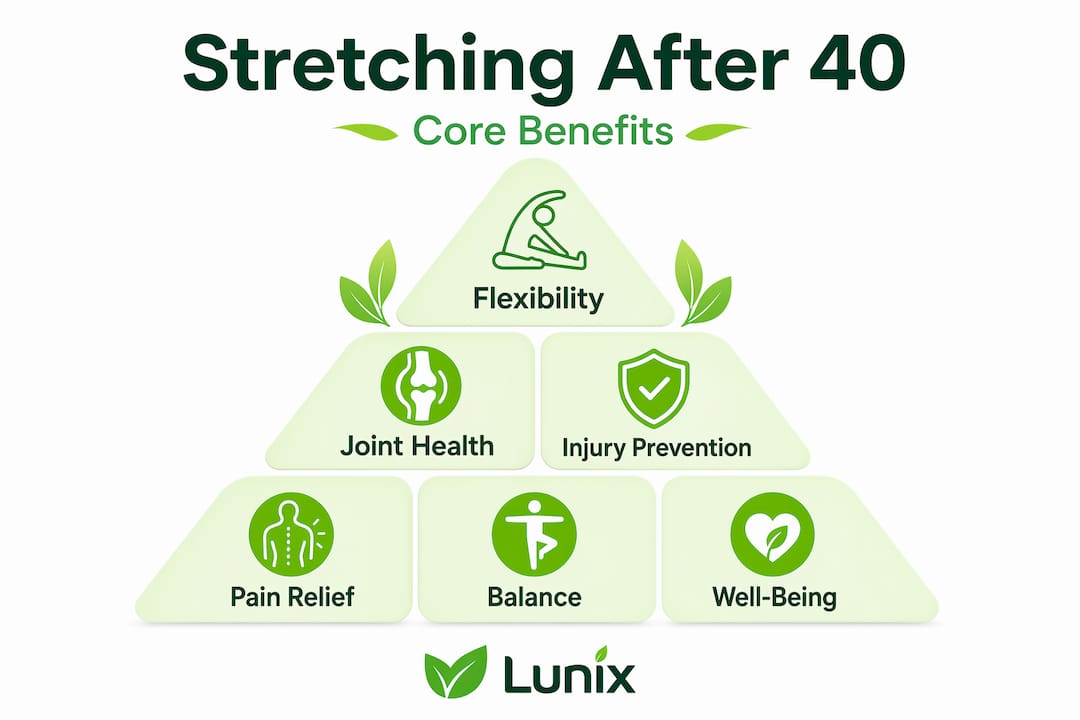
What makes this especially encouraging is that you don’t need to spend hours on the floor. Research points to an optimal dose that’s surprisingly manageable.
| Stretching type | Optimal session length | Weekly target | Expected benefit |
|---|---|---|---|
| Acute static stretching | ~4 minutes per session | 2–3 sessions | Immediate range of motion improvement |
| Chronic static stretching | 10+ minutes per week | Consistent over weeks | Large flexibility gains over time |
| Key muscle groups | Calves, hamstrings, hips, quads, shoulders, neck, lower back | All sessions | Full-body mobility maintenance |
Harvard Health recommends holding each stretch for 15 to 20 seconds, repeated three times, targeting your calves, hamstrings, hip flexors, quadriceps, shoulders, neck, and lower back at least two to three times per week. That routine takes less time than a coffee break and produces measurable results.
Pro Tip: If you’re new to stretching or returning after a long break, the research shows that lower baseline flexibility actually means you’ll see bigger and faster improvements. Your starting point is not a disadvantage. It’s an opportunity.
Stretching for injury prevention: what the evidence actually says
One of the most common beliefs about stretching is that it prevents injuries. The truth is more nuanced, and understanding that nuance will help you use stretching more effectively.
Stretching does reduce muscle stiffness and improves joint range of motion, which supports healthier movement patterns and reduces the kind of muscular tension that leads to strains over time. Tight hip flexors, for example, can pull your pelvis out of alignment and create a domino effect of strain through your lower back, knees, and ankles. Regular stretching interrupts that chain before it causes real damage.
However, stretching alone is not a guaranteed shield against injury. According to Memorial Health System, stretching before activity has mixed evidence for preventing acute injuries, particularly when done as isolated static holds before intense physical effort. Context and pairing matter enormously.
Here’s how to use stretching safely and effectively as part of your injury prevention approach:
Do:
- Stretch after a light warm-up or after exercise when muscles are already warm
- Hold stretches steadily without bouncing or jerking
- Focus on tight areas specific to your daily activities and movement patterns
- Pair static stretching with dynamic warm-ups (leg swings, arm circles) before vigorous exercise
- Combine stretching with strength training for the most protection against injury
Don’t:
- Stretch a cold muscle aggressively, especially first thing in the morning
- Push through sharp pain or force a stretch beyond your comfortable range
- Rely on stretching alone before a high-intensity activity as your only preparation
- Skip stretching on rest days, as those sessions often build the most lasting flexibility
- Overdo the duration. Exceeding recommended time offers no extra flexibility benefit and can lower your motivation to stick with it
Pro Tip: Think of stretching as one tool in a toolkit. Combined with a short dynamic warm-up and consistent strength work, it becomes a genuinely powerful injury prevention strategy rather than a checkbox habit.
More benefits of stretching you might not expect
The benefits of daily stretching reach well beyond your muscles. For adults between 40 and 65, several of the most meaningful payoffs have nothing to do with athletic performance and everything to do with everyday quality of life.
Posture and pain relief
Tight chest muscles pull your shoulders forward. Tight hip flexors tilt your pelvis and compress your lower back. These are not abstract biomechanical concerns. They’re the reason your neck aches after a day at your desk and your back stiffens after sitting through a long movie. Stretching those muscle groups supports better posture by restoring the natural length and balance of the muscles that hold your skeleton upright. Harvard Health confirms that targeted stretching can relieve arthritis, back, and knee pain when matched to individual needs.

Balance and fall prevention
Falls are one of the most serious health risks for adults over 60. Better flexibility directly supports better balance by keeping the ankle, hip, and core muscles responsive and mobile. When your body can shift weight and recover from a stumble more easily, you’re less likely to fall in the first place. That’s a benefit worth treating seriously.
Mental health and stress relief
Here’s one that surprises many people. Regular stretching promotes endorphin release and reduces physical tension held in the body, which translates into measurably lower stress and improved mood. If you’ve ever finished a 10-minute stretch session feeling calmer and clearer than when you started, that’s not a coincidence. The physical and mental effects of stretching are genuinely connected.
The benefits of stretching in this area include:
- Reduced cortisol levels linked to chronic muscle tension
- Better sleep quality from a more relaxed nervous system at night
- Lower anxiety from the meditative, breath-focused nature of a stretch session
- Greater body awareness, which helps you catch small tension patterns before they become pain
How to build a stretching routine that actually sticks
Knowing why stretching matters is one thing. Building a habit you’ll actually maintain is another. The good news is that the benefits of daily stretching don’t require a gym membership, special equipment, or a large block of time.
Here is a practical, step-by-step approach to getting started:
-
Start with an honest assessment. Notice where you feel stiff during the day. Is it your lower back after sitting? Your calves after walking? Your neck and shoulders after screen time? Those areas are your starting priorities.
-
Choose a consistent time. Morning stretching after a warm shower works well because your muscles are slightly warmer. Evening stretching is excellent for releasing the tension you’ve accumulated all day. Either works. Pick the one you’ll actually do.
-
Begin with just five minutes. Two to three stretches held for 20 to 30 seconds each is a legitimate starting point. The research on optimal stretch duration makes it clear that more is not always better. Consistency beats length every time.
-
Build gradually over two to four weeks. Add one or two new stretches as the initial ones start feeling easy. Target the major groups: calves, hamstrings, hip flexors, lower back, shoulders, and neck.
-
Adapt for specific issues. If you have lower back stiffness, prioritize hip flexor and piriformis stretches. If arthritis affects your knees, focus on gentle quadriceps and hamstring work. If you have any serious joint conditions, check with your doctor before starting.
-
Track your progress. Notice when a stretch that once felt tight becomes comfortable. That tangible improvement is what keeps people going.
Pro Tip: Pair your stretch session with something you already do every day, like your morning coffee or your evening TV time. Habit stacking removes the decision-making barrier and makes the routine feel natural within weeks.
My honest take on stretching after 40
I’ve seen a clear pattern over the years. The people who invest five to ten minutes a day in stretching don’t just move better. They feel younger, report less chronic pain, and carry themselves with noticeably more confidence and ease. The transformation isn’t dramatic from week to week, but over three to six months it becomes undeniable.
What I’ve learned from working in the wellness space is that the biggest barrier isn’t willpower or time. It’s the belief that it’s too late to make a difference. That belief is simply wrong. The largest flexibility gains often happen in the earliest weeks of a new stretching routine, especially for adults who’ve been largely sedentary. Your body responds quickly when you give it the right input.
I also think people dramatically underestimate how much physical tension shapes their mental state. The stiff shoulders, the tight jaw, the compressed lower back — these aren’t just physical inconveniences. They create a background noise of discomfort that drains energy and undermines mood. A consistent stretch practice begins to quiet that noise. My take is that flexibility is not a fitness bonus. It’s a foundation.
— Lunix
Support your stretching with the right recovery tools
Building a stretching routine is one of the best decisions you can make for your body after 40. Pairing it with the right recovery support makes those sessions even more effective.

At Lunixinc, we design recovery solutions specifically to help adults restore comfort, ease muscle tension, and build the kind of physical foundation that makes daily stretching feel rewarding rather than effortful. Whether you’re dealing with chronic back stiffness, tight hips, or general post-activity soreness, our recovery collection includes tools that complement everything you’ve read here. You can also explore our guide on back stiffness relief for targeted stretching mat recommendations. Your body does the work. We help it recover better.
FAQ
Why is stretching important as you get older?
Muscles and connective tissue lose elasticity with age, which restricts joint range of motion and increases injury risk. Regular stretching maintains flexibility, supports balance, and reduces the chronic muscle tension that causes many common aches in midlife adults.
How often should adults over 40 stretch?
Harvard Health recommends stretching all major muscle groups at least two to three times per week, holding each stretch for 15 to 20 seconds and repeating three times. Even 10 minutes of static stretching per week produces measurable flexibility gains over time.
Does stretching actually prevent injuries?
Stretching reduces muscle stiffness and supports joint function, but it works best when combined with dynamic warm-ups and strength training rather than used alone. Relying solely on stretching before activity has mixed evidence for preventing acute injuries.
Can stretching help with back and joint pain?
Yes. Targeted stretching relieves tension in the muscles surrounding the spine and joints, and Harvard Health confirms it can reduce arthritis, back, and knee pain when matched to individual needs and done consistently.
Is it too late to start stretching if you haven’t done it in years?
Not at all. Research shows that adults with lower baseline flexibility see the biggest early improvements when they begin stretching. Starting anytime delivers real benefits, and noticeable gains typically appear within just a few weeks of consistent practice.