


TL;DR:
- Emotional wellness involves actively managing feelings to support health and life satisfaction. It significantly impacts physical health, resilience, and long-term disease risk. Practicing mindfulness, sleep, social connection, and self-compassion builds emotional stability after 40.
Emotional wellness is defined as the ability to recognize, understand, and manage your feelings in ways that support long-term health and life satisfaction. The National Center for Emotional Wellness describes it not as the absence of pain, but as an active capacity to channel difficult emotions into purposeful action. The Harvard Study of Adult Development found that good relationships and emotional well-being predict longevity better than cholesterol levels or income. That finding alone reframes why emotional wellness matters. It is not a soft lifestyle topic. It is a measurable health variable with physical consequences you can feel every decade after 40.
Why emotional wellness matters for your physical health
Your emotions and your body share the same operating system. When you feel chronically stressed, your body releases cortisol, a hormone that, at elevated levels, triggers cravings, disrupts sleep, and drives weight gain. Research confirms that cortisol elevation from emotional stress leads to emotional eating and metabolic imbalance. For adults in their 40s and 50s, this is not a minor inconvenience. It is a direct pathway to conditions like type 2 diabetes, cardiovascular disease, and autoimmune disorders.

The benefits of emotional health run in the other direction too. Positive emotional expression reduces the risk of mortality and chronic illness in adults. Positive emotions strengthen immunity and improve metabolic regulation, two systems that become more vulnerable as you age. Think of emotional wellness as a maintenance schedule for your body. Neglect it, and the physical systems start to break down faster.
How emotional distress affects the body over time
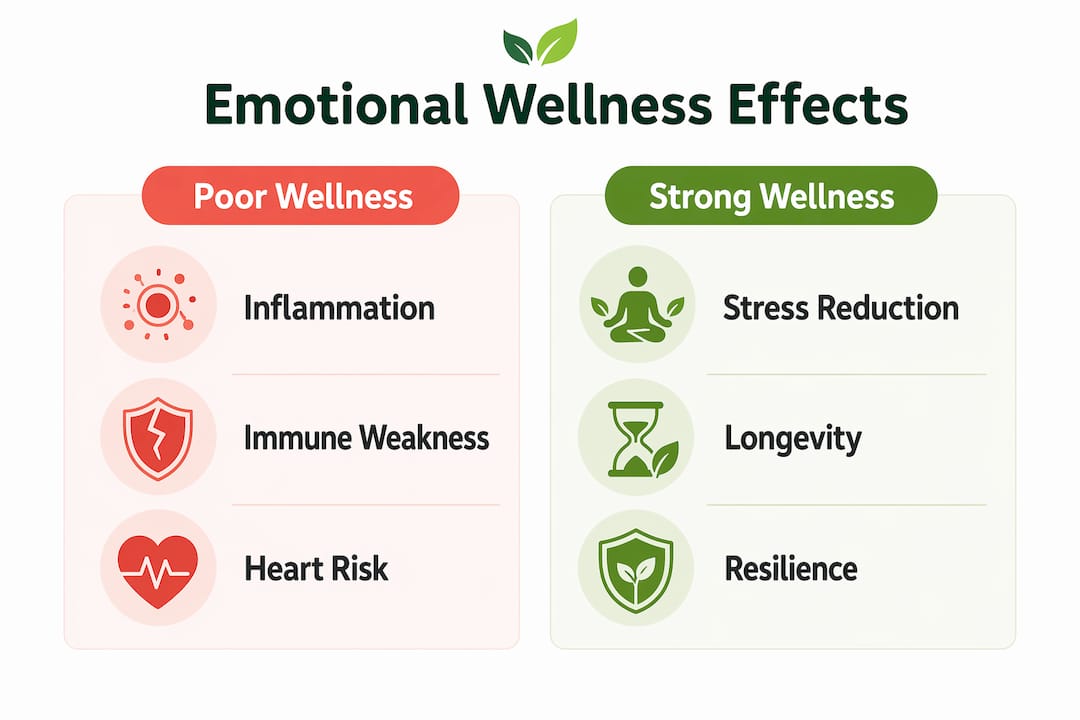
Chronic emotional distress does not stay in your head. It lowers systemic inflammation thresholds, weakens immune response, and increases risks for diabetes and autoimmune diseases. The body keeps a running tab on unresolved emotional strain, and midlife is often when that tab comes due. Adults aged 40–65 face compounding stressors: career pressure, aging parents, shifting relationships, and hormonal changes. Each of these stressors, left unaddressed emotionally, adds biological load.
| Physical health area | Impact of poor emotional wellness | Impact of strong emotional wellness |
|---|---|---|
| Immune function | Weakened response, slower recovery | Stronger immunity, faster healing |
| Metabolic health | Weight gain, blood sugar instability | Better metabolic regulation |
| Heart health | Increased coronary heart disease risk | Reduced cardiovascular risk |
| Inflammation | Elevated systemic inflammation | Lower inflammatory markers |
Pro Tip: Track your stress triggers for two weeks using a simple journal. Patterns you identify there give you a concrete starting point for emotional wellness work, not vague self-improvement goals.
How does emotional wellness support mental resilience?
Resilience is the hallmark of emotional health. It is the ability to absorb a setback and return to functioning without prolonged collapse. Adults who prioritize emotional wellness show lower rates of mental illness and recover faster when they do struggle. That is not coincidence. Emotional wellness builds the mental infrastructure that makes recovery possible.
Strong emotional health produces a specific set of skills that compound over time:
- Emotional awareness: You recognize what you feel before it controls your behavior.
- Empathy: You read situations and relationships more accurately, reducing conflict.
- Conflict resolution: You respond to disagreement with clarity rather than reactivity.
- Decision-making: You make choices from a grounded state rather than from fear or frustration.
- Patience and optimism: Stable emotional health fosters the patience and optimism needed to maintain lifestyle changes over time.
One common misconception is that emotional wellness and mental health are the same thing. They are related but distinct. Mental health refers to clinical conditions like depression or anxiety. Emotional wellness is a proactive capacity, more like fitness than medicine. You can have strong emotional wellness while managing a mental health condition, and you can have poor emotional wellness with no clinical diagnosis at all. The importance of emotional wellness lies precisely in this gap. It is the daily practice that keeps the clinical edge further away.
What are the nuances and pitfalls of emotional wellness?
Emotional wellness is not a personality trait you either have or lack. Biology shapes it significantly. Dopaminergic activity, hormonal shifts, neurological conditions like Parkinson’s disease, and chronic pain all influence how you experience and regulate emotion. This matters because it means emotional wellness requires self-compassion alongside self-discipline. Blaming yourself for emotional struggles that have a physiological root is counterproductive.
A growing category of support has emerged under the label AI-Integrated Emotional Wellness. These tools use algorithms to deliver cognitive behavioral techniques, mood tracking, and guided exercises. They offer real benefits, particularly for people who lack access to in-person care or who want daily support between therapy sessions. But the research is clear on one boundary:
AI-Integrated Emotional Wellness provides evidence-based techniques, but it cannot replace authentic human connection. Face-to-face interaction remains essential for emotional stability, and no algorithm replicates the regulatory effect of genuine human presence.
The second major pitfall is treating emotional wellness as a peripheral lifestyle accessory, something you address after the “real” health priorities. That framing is backward. Emotional instability acts as a silent driver of metabolic and lifestyle sabotage in midlife adults. You can follow a perfect nutrition plan and still undermine it through unmanaged stress. Emotional wellness is not supplemental. It is foundational.
Practical strategies for building emotional wellness after 40
Adults aged 40–65 benefit most from approaches that are sustainable, not dramatic. The goal is consistent practice, not periodic intensity. These strategies are grounded in evidence and realistic for busy midlife schedules.
Start with the fundamentals that affect your emotional baseline every day:
- Mindfulness meditation: Meta-analyses confirm that mindfulness meditation reduces psychological stress and improves emotional regulation. Even 10 minutes daily produces measurable changes in anxiety and mood over weeks.
- Emotion labeling: Naming what you feel, specifically and accurately, reduces the emotional charge of that feeling. “I feel anxious about this presentation” is more useful than “I feel bad.”
- Cognitive behavioral techniques: Identifying distorted thought patterns and replacing them with realistic ones is a core skill you can practice without a therapist, using workbooks or guided apps.
- Sleep hygiene: Poor sleep amplifies emotional reactivity. Adults aged 40–65 who prioritize 7–9 hours of sleep report better mood stability and lower stress levels.
- Physical movement: Regular exercise reduces cortisol and increases endorphins. Even a 30-minute walk three times per week shifts your emotional baseline noticeably.
- Social connection: Scheduled, intentional time with people you trust is not optional. Isolation accelerates emotional decline in midlife adults faster than almost any other factor.
Pro Tip: Use a mental wellness checklist to assess your current emotional health habits monthly. Tracking progress over time builds motivation and reveals which practices actually work for you.
The table below compares two common approaches to emotional wellness practice by effort level and evidence strength.
| Approach | Effort level | Evidence strength | Best for |
|---|---|---|---|
| Mindfulness meditation | Low to moderate | Very strong | Daily stress reduction |
| Cognitive behavioral techniques | Moderate | Very strong | Thought pattern change |
| Social connection practices | Low | Strong | Longevity and mood |
| AI-assisted mood tracking | Low | Moderate | Daily awareness, not replacement |
| Sleep optimization | Low | Strong | Emotional baseline stability |
Personalized goal setting matters here. A well-being improvement plan built around your specific stressors and lifestyle produces better results than a generic program. Start with one practice, measure how you feel after four weeks, and add from there.
Key Takeaways
Emotional wellness is a foundational health variable that directly shapes physical longevity, mental resilience, and relationship quality in adults aged 40–65.
| Point | Details |
|---|---|
| Emotional wellness affects physical health | Chronic emotional distress raises cortisol, disrupts metabolism, and increases disease risk. |
| Resilience is the core outcome | Strong emotional wellness builds the capacity to recover from setbacks without prolonged collapse. |
| Biology shapes emotional experience | Hormones, dopamine, and chronic pain influence emotions, so self-compassion is part of the practice. |
| Technology complements, not replaces | AI wellness tools support daily practice but cannot substitute for authentic human connection. |
| Consistency beats intensity | Sustainable daily habits like sleep, movement, and mindfulness outperform occasional intensive efforts. |
What I’ve learned about emotional wellness that most people miss
Most adults treat emotional wellness like a fire extinguisher. They reach for it only when something is already burning. What I’ve seen, working closely with adults navigating midlife health, is that the people who thrive emotionally are the ones who treat it like a daily practice, not a crisis response.
The insight that changed how I think about this comes from the National Center for Emotional Wellness. Emotional wellness means you actively influence your life’s emotional direction rather than passively experiencing emotions. That is a profound shift. You are not a passenger in your emotional life. You are the driver, and the road conditions after 40 require more skill, not less.
What most adults overlook is how directly their emotional state determines whether their physical health efforts succeed or fail. You can have the best diet plan, the right supplements, and a solid exercise routine. But if chronic stress is flooding your system with cortisol, those efforts face constant resistance. Emotional wellness is not the soft part of health. It is the part that makes the hard parts work.
I also believe human connection is underrated as a wellness tool. Technology can support your emotional practice, but it cannot replace the regulatory effect of a real conversation with someone who knows you. Protect that time fiercely.
— Lunix
How Lunixinc supports your recovery and emotional well-being
Lunixinc builds recovery and comfort solutions designed for adults who take their long-term health seriously. The connection between physical recovery and emotional wellness is direct. When your body rests and restores properly, your emotional resilience strengthens alongside it.

Lunixinc’s recovery collection brings together products designed to help your body decompress, reduce physical tension, and support the kind of deep rest that emotional health depends on. For a broader look at how Lunixinc approaches well-being, the benefits page outlines the evidence-based thinking behind every product category. Adults aged 40–65 who invest in physical recovery create the conditions their emotional wellness needs to grow.
FAQ
What is emotional wellness?
Emotional wellness is the ability to recognize, understand, and manage your emotions in ways that support daily functioning and long-term health. The National Center for Emotional Wellness defines it as an active capacity to channel difficult emotions into purposeful action, not simply the absence of distress.
How does emotional wellness affect physical health?
Poor emotional wellness raises cortisol levels, disrupts metabolic function, and increases the risk of coronary heart disease, diabetes, and autoimmune conditions. Positive emotional health, by contrast, strengthens immunity and supports better metabolic regulation.
What are the best emotional wellness practices for adults over 40?
Mindfulness meditation, cognitive behavioral techniques, consistent sleep, regular physical movement, and intentional social connection are the most evidence-supported practices. Starting with one habit and tracking results over four weeks is more effective than attempting multiple changes at once.
Can technology replace therapy for emotional wellness?
AI-Integrated Emotional Wellness tools deliver evidence-based support and are useful for daily mood tracking and guided exercises. They cannot replace authentic human connection, which remains essential for emotional stability according to the National Center for Emotional Wellness.
How is emotional wellness different from mental health?
Mental health refers to clinical conditions like depression or anxiety. Emotional wellness is a proactive daily practice, closer to fitness than medicine. You can build strong emotional wellness while managing a mental health condition, and poor emotional wellness can exist without any clinical diagnosis.