


TL;DR:
- Improving balance through regular exercises reduces the risk of falls, injuries, and decline in independence.
- Self-assessment tests and home modifications help detect early decline and create a safer environment.
Maintaining balance is one of the most powerful things you can do to protect your independence, mobility, and safety as you age. According to the CDC, about 30% of adults 65 and older experience balance problems, and falls are the leading cause of injury in that group, with U.S. non-fatal fall costs reaching an estimated $80 billion in 2020. The good news: you can act right now.
Three things to do today:
- Stand near a counter and try balancing on one leg for 10 seconds per side.
- Walk through your home and remove loose rugs, extension cords, or anything you could trip over.
- Write down all your current medications and ask your doctor or pharmacist whether any affect balance or blood pressure.
Table of Contents
- 1. Why balance tends to decline with age
- 2. What poor balance costs you and what improving it gives back
- 3. Common causes and risk factors to check for
- 4. How to tell whether your balance is declining
- 5. Balance exercises to try: what to practice and how to progress
- 6. When to see a healthcare professional
- 7. What the evidence says and a starter routine you can use now
- 8. Assistive devices and home modifications that reduce fall risk
- Key Takeaways
- Balance training is more forgiving than most people expect
- Recovery and comfort tools that support your balance practice
- Further reading and sources
1. Why balance tends to decline with age
Balance declines with age because three interconnected systems, sensory input, musculoskeletal strength, and neural processing speed, all change over time. When any one of them weakens, the others have to compensate. When two or three weaken together, the risk of a stumble rises quickly.
The three main systems:
- Sensory input: Vision sharpness decreases, the vestibular system (the inner ear’s balance organ) becomes less responsive, and proprioception (your body’s sense of where it is in space) dulls. Together, these changes mean your brain receives slower, less accurate signals about your position.
- Musculoskeletal strength: Sarcopenia, the gradual loss of muscle mass that typically accelerates after 60, reduces the leg and core strength needed to catch yourself when you start to tip. Joint stiffness compounds this by limiting how quickly you can shift your weight. Keeping joints flexible and strong is a direct investment in balance.
- Neural processing: Reaction time slows with age, and cognitive load, the mental effort of navigating an uneven sidewalk or a crowded room, can overwhelm the brain’s ability to coordinate movement in real time.
A comprehensive review published in PMC confirms that sensory loss, muscle weakness, and cognitive decline are the key drivers of age-related balance disorders, and that early, multimodal intervention meaningfully reduces fall risk. Conditions like peripheral neuropathy and vestibular disorders can accelerate all three pathways, which is why addressing them early matters.
2. What poor balance costs you and what improving it gives back
Better balance directly reduces your odds of falling and helps you stay mobile and independent for longer. That connection is not abstract.
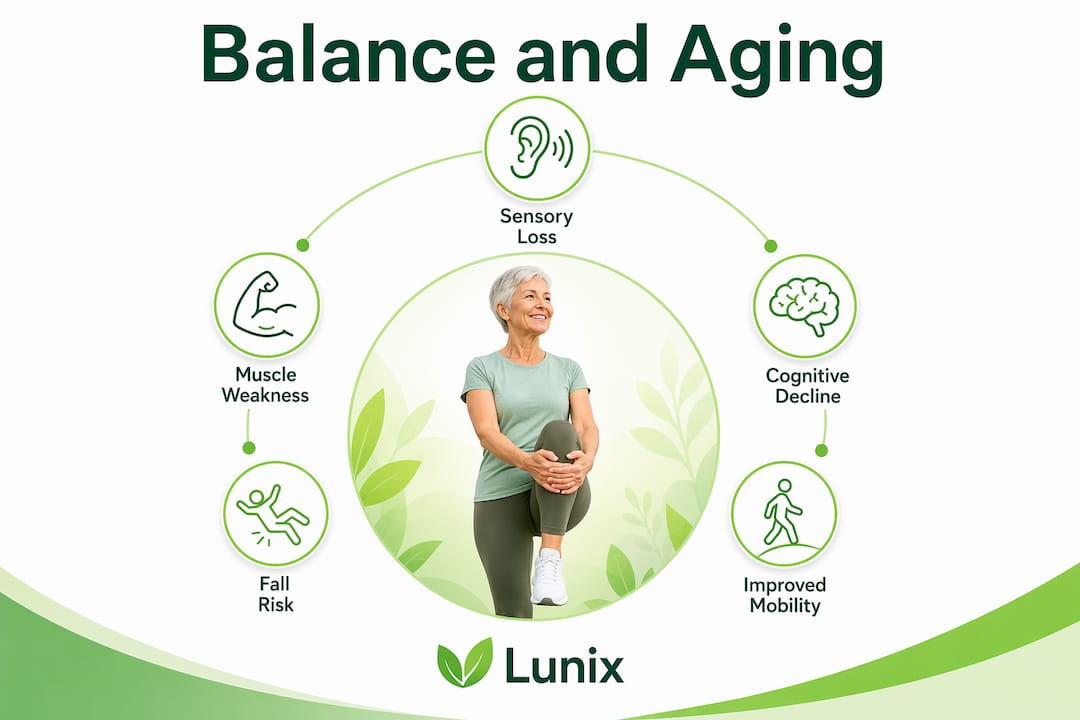
CDC data puts the scale in sharp relief: falls are the leading cause of injury among older adults in the United States, with non-fatal fall costs estimated at $80 billion in 2020. Beyond the financial burden, a single fall can trigger a cascade of consequences, fracture, surgery, reduced activity, muscle loss, and fear of moving freely.
What you gain by improving your balance:
- Fewer falls and a lower risk of fractures.
- Better gait stability and walking confidence on uneven surfaces.
- Greater independence in daily tasks like climbing stairs or carrying groceries.
- More social participation, because you feel safe enough to go places.
- Reduced fear of falling, which itself is a risk factor for inactivity and further decline.
There is also a longevity angle worth knowing. UCLA Health reports that a faster walking pace (roughly 63–88 steps per minute) is associated with a reduced risk of death compared with much slower gait speeds. Gait speed is partly a product of balance and leg strength, so working on stability has benefits that reach well beyond fall prevention.
3. Common causes and risk factors to check for
Multiple overlapping factors usually raise fall risk, and many of them are modifiable. Identifying which ones apply to you is the fastest way to prioritize what to fix first.
Common risk factors:
- Polypharmacy: Taking five or more medications raises fall risk, particularly when the list includes blood pressure drugs, sedatives, or diuretics. Johns Hopkins Medicine specifically flags polypharmacy, orthostatic hypotension, and foot problems as frequent contributors to instability.
- Orthostatic hypotension: A sudden drop in blood pressure when you stand up causes momentary dizziness that can lead to a fall.
- Peripheral neuropathy: Reduced sensation in the feet disrupts proprioception, making it harder to feel the ground beneath you.
- Vision changes: Uncorrected refractive errors or cataracts reduce depth perception and contrast sensitivity.
- Poor footwear: Smooth-soled shoes, high heels, or loose slippers are among the most preventable contributors to falls.
- Home hazards: Dim lighting, loose rugs, cluttered hallways, and no grab bars in the bathroom create unnecessary risk regardless of fitness level.
- Foot pain: Bunions, plantar fasciitis, or general foot discomfort alter your gait and shift your center of gravity.
Pro Tip: Before your next doctor’s visit, write down every medication you take, including over-the-counter drugs and supplements. Ask your pharmacist to review the list for drugs that affect blood pressure, sedation, or coordination. This one conversation can identify a modifiable fall risk in minutes.
4. How to tell whether your balance is declining
Simple tests, including the single-leg stand, the Timed Up and Go, and a basic gait speed check, can flag possible decline before a fall happens. You can do all three at home with no equipment.
| Test | What it measures | Threshold to note | Safety note |
|---|---|---|---|
| Single-leg stand | Static balance and lower-body stability | Under 10 seconds suggests follow-up is worthwhile | Stand near a counter; do not lock your knee |
| Timed Up and Go (TUG) | Dynamic balance, gait, and functional mobility | Over 12 seconds is a common clinical flag for fall risk | Clear the path; wear your usual shoes |
| 10-meter gait speed | Walking pace as a proxy for overall function | Under 63 steps per minute warrants discussion with a clinician | Walk at your comfortable normal pace, not a test pace |
How to do each test:
- Single-leg stand: Stand near a counter, lift one foot a few inches off the floor, and count how long you can hold it. Aim to build from 10 seconds toward 30 seconds per side. Clinical guidance treats 10 seconds as a useful starting benchmark.
- Timed Up and Go: Sit in a firm chair, stand up without using your arms if possible, walk 10 feet, turn around, walk back, and sit down. Time the whole sequence. Over 12 seconds is a commonly used clinical signal for elevated fall risk.
- 10-meter gait speed: Mark a 10-meter stretch (about 33 feet) in a hallway. Walk it at your normal pace and count your steps. Fewer than 63 steps per minute is worth discussing with your doctor.
Pro Tip: Do each test two or three times and record your results. A single attempt can be thrown off by nerves or an off day. Tracking the average over a few sessions gives you a much more honest picture of where you stand, and a baseline to measure progress against.
5. Balance exercises to try: what to practice and how to progress
Short, regular practice that combines static balance, dynamic movement, and lower-body strength is the most effective approach. You do not need a gym or special equipment to start.
Exercises to build into your routine:
- Single-leg stand: Hold a counter, lift one foot, and hold for 10–30 seconds. Progress by reducing your grip on the counter, then trying with eyes closed.
- Heel-to-toe walk (tandem walk): Walk in a straight line placing the heel of one foot directly in front of the toes of the other. Use a wall for support if needed.
- Sit-to-stand: Rise from a chair without using your hands, then lower back down slowly. This builds the quad and hip strength that catches you when you stumble.
- Side-stepping: Step sideways along a wall for 10–15 steps, then return. Strengthens the hip abductors that stabilize your pelvis during walking.
- Step-ups: Step up onto a low, stable step one foot at a time, then step down slowly and in a controlled manner. The NHS recommends up to five controlled step-ups per leg.
- Tai chi or balance-focused yoga: Both have strong evidence for improving stability and reducing fall risk. Mayo Clinic notes that tai chi may improve balance and make you more stable and less likely to fall.
Progression table:
| Level | Exercise | Target hold / reps | Key modifier |
|---|---|---|---|
| Beginner | Single-leg stand with counter grip | 10 seconds × 5 reps per side | Eyes open, firm surface |
| Intermediate | Single-leg stand, fingertip touch only | 20 seconds × 5 reps per side | Add slow head turns |
| Advanced | Single-leg stand, no support | 30 seconds × 5 reps per side | Eyes closed (supervision only) |
| Beginner | Sit-to-stand | 5–8 reps | Use armrests if needed |
| Intermediate | Sit-to-stand | 10–12 reps | No hands |
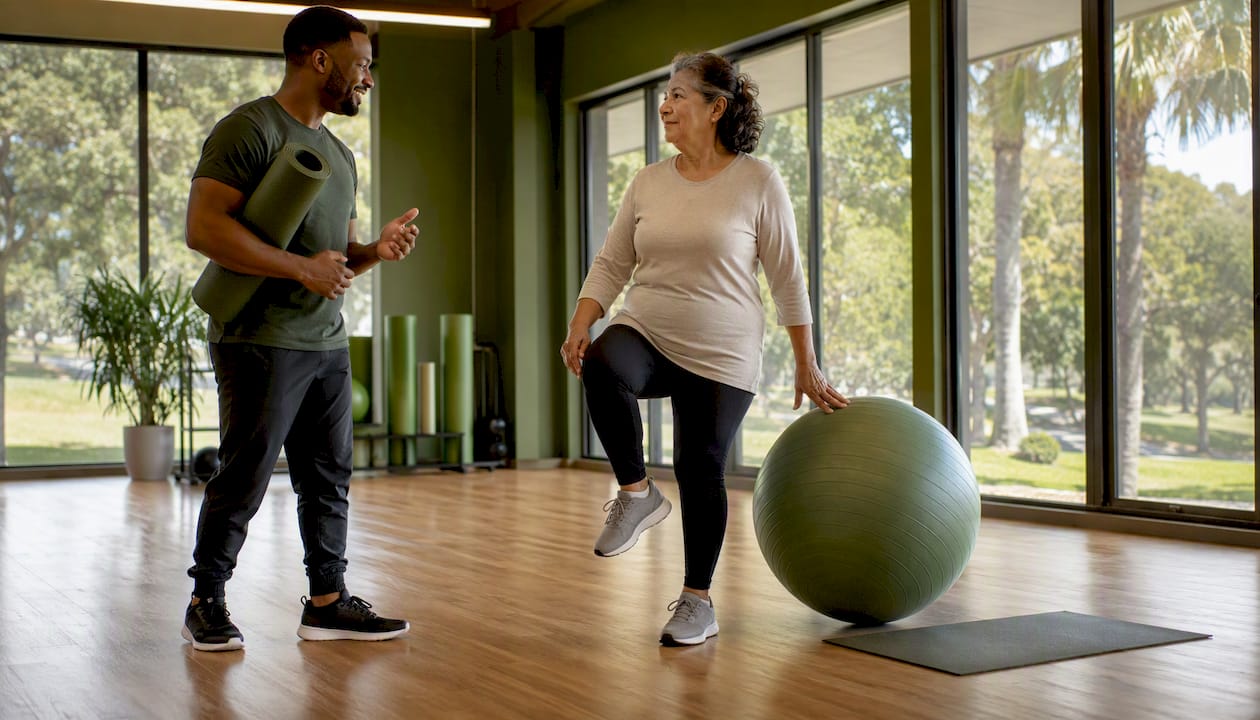
Frequency: Aim for balance drills daily or twice daily in short sessions (5–10 minutes). Pair strength and balance work two to three times per week. Cleveland Clinic recommends combining balance training with aerobic and strength exercise for the best protection against frailty.
Pro Tip: Practice in a corner of the room with walls on two sides, or directly beside a non-wheeled counter. When you first try an advanced progression, have someone nearby. Stop immediately if you feel dizzy, chest pain, or sudden weakness.
6. When to see a healthcare professional
See a clinician when self-tests show red flags, after any fall, or when new dizziness, weakness, or vision changes appear. Do not wait for a second fall to prompt the conversation.
Red flags that warrant prompt medical attention:
- A fall in the past year, even one you brushed off as minor.
- Inability to stand from a chair without using both hands.
- Sudden or new dizziness, especially when standing up.
- Double vision or new visual disturbances.
- Progressive weakness in the legs or feet.
- Chest pain or shortness of breath during light activity.
What to bring to your appointment:
- A complete medication list, including supplements and over-the-counter drugs.
- Notes on when symptoms occur (morning, after standing, during activity).
- Your self-test results if you recorded them.
Your clinician may refer you to a physical therapist for a formal gait and balance assessment, or to a vestibular specialist if inner ear involvement is suspected. Physical therapy for balance is highly effective and usually covered by Medicare for eligible patients.
7. What the evidence says and a starter routine you can use now
Structured balance and strength training reduces fall risk, and the evidence base is solid. Programs like Otago, a home-based balance and strength program with randomized trial support, and similar community exercise interventions consistently show meaningful reductions in falls among older adults. The core prescription across these programs is similar: progress hold times from 10 to 30 seconds, combine balance work with lower-body strength, and practice regularly.
About 30% of adults 65 and older experience balance problems or dizziness, yet most have never done a single targeted balance exercise. That gap is the opportunity.
A 4-move starter routine (do this 3 times per week):
- Single-leg stand near a counter: 10 seconds per side, 5 reps each leg. Progress toward 30 seconds over several weeks.
- Sit-to-stand from a firm chair: 10 repetitions, no hands when safe.
- Heel-to-toe walk: 20 steps forward along a wall, turn, 20 steps back.
- Step-ups on a low stable step: 5 controlled reps per leg, stepping up and down slowly.
Johns Hopkins Medicine recommends pairing this kind of balance work with lower-body strength exercises and practicing some drills twice daily for best results. Stanford Medicine experts advise starting in your 60s and 70s rather than waiting for symptoms, and pairing drills with a daily habit like brushing your teeth to make them stick.
8. Assistive devices and home modifications that reduce fall risk
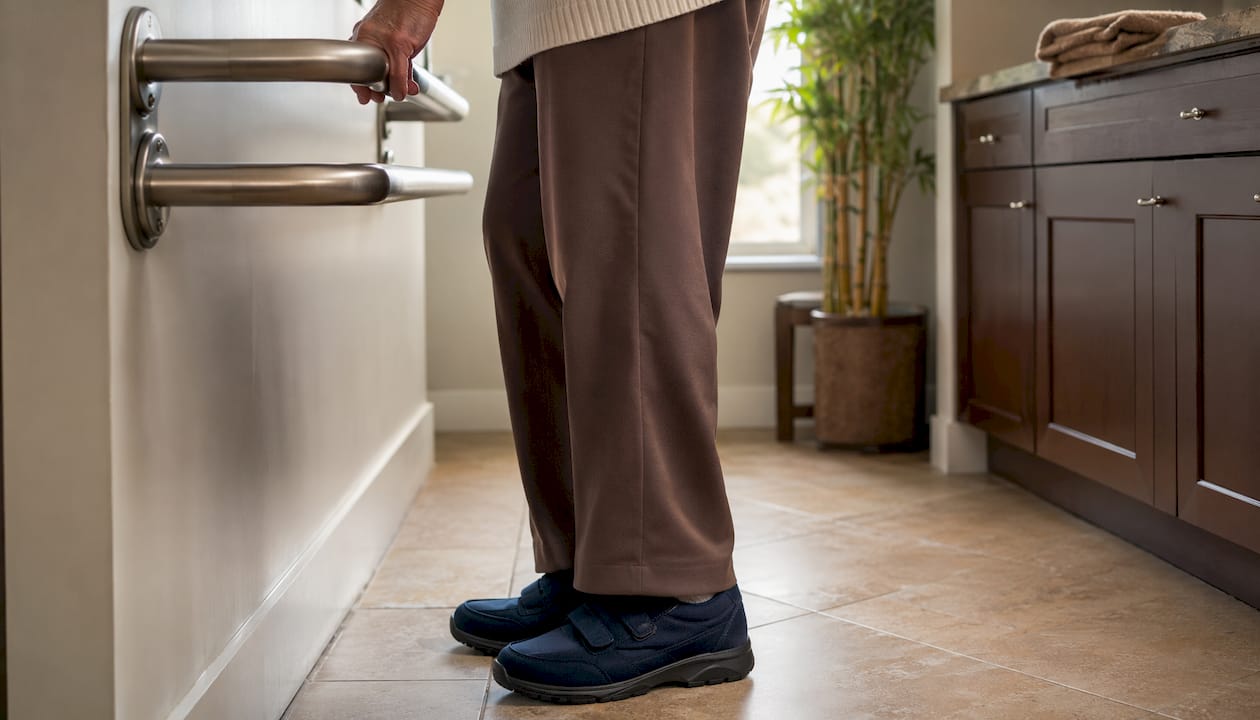
Even before your fitness improves, changes to your environment and equipment can cut fall risk significantly. CDC environmental research confirms that removing trip hazards, improving lighting, using non-slip footwear, and installing handrails are practical, evidence-backed risk reducers that work independently of fitness level.
Home modifications worth prioritizing:
- Install grab bars in the shower, beside the toilet, and at any step without a railing.
- Remove loose rugs or secure them with non-slip backing.
- Improve lighting in hallways, stairwells, and bathrooms; add nightlights for nighttime trips.
- Keep frequently used items at waist height to avoid reaching overhead or bending low.
- Clear clutter from walking paths, especially near the bed and bathroom.
Assistive devices: The National Institute on Aging recommends non-skid, rubber-soled, low-heeled shoes as a baseline. A cane or walker, properly fitted by a physical therapist, can restore confidence and stability for those who need more support. Avoid smooth-soled slippers or walking in socks on hard floors.
Good postural health also plays a role here. Rounded shoulders and a forward head position shift your center of gravity forward, making you more vulnerable to tipping. Supportive seating and sleep positioning that keeps the spine aligned can help maintain the upright posture that balance depends on.
Key Takeaways
Maintaining balance as you age is the single most direct way to protect your independence, reduce fall risk, and stay active on your own terms.
| Point | Details |
|---|---|
| Falls are a major health burden | About 30% of adults 65+ have balance problems; U.S. non-fatal fall costs reached $80 billion in 2020. |
| Three systems drive decline | Sensory input, muscle strength, and neural processing all weaken with age; targeting all three gives the best results. |
| Self-tests flag early decline | A single-leg stand under 10 seconds or a Timed Up and Go over 12 seconds are practical signals to discuss with a clinician. |
| Daily practice builds resilience | Short balance drills daily, paired with strength work two to three times per week, produce meaningful gains over weeks to months. |
| Lunixinc recovery tools support the process | Orthopedic wedge pillows, percussion massagers, and supportive mats from Lunixinc complement balance training and aid muscle recovery between sessions. |
Balance training is more forgiving than most people expect
Most people assume they need to be already fit to start balance work, or that the window for improvement has closed. Neither is true. The research is clear that meaningful gains are possible at any age with consistent, safe practice. What matters most is starting before a fall forces your hand.
The habit-stacking approach backed by Stanford Medicine is worth taking seriously. Pairing a single-leg stand with your morning coffee or a heel-to-toe walk with your trip to the bathroom removes the need for motivation entirely. You are not adding a workout; you are threading a skill into something you already do. Most people notice real improvement in stability within four to eight weeks of consistent practice.
One thing worth saying plainly: the fear of looking unsteady often keeps people from practicing in the first place. But practicing while you still feel steady is exactly the point. Balance is a skill, and skills erode when you stop using them. The adults who maintain the most independence into their 70s and 80s are usually the ones who treated balance like a daily habit, not a crisis response.
Recovery and comfort tools that support your balance practice
Balance training works your muscles, and those muscles need recovery time to adapt and grow stronger. That is where the right comfort and recovery tools make a real difference, not as a replacement for exercise or medical care, but as a practical support layer that helps you stay consistent.

Lunixinc’s recovery collection includes orthopedic wedge pillow sets that support spinal alignment during sleep and rest, percussion massagers that ease post-exercise muscle soreness in the legs and calves, and supportive mats that give you a stable, non-slip surface for heel-to-toe walks and single-leg stands at home. A cushioned, non-slip mat under your feet during balance drills reduces the risk of sliding and gives you a defined practice space, which makes it easier to build the habit.
For restorative recovery between sessions, proper sleep positioning with an orthopedic wedge pillow helps reduce overnight muscle tension that can affect morning stability. If you are working on leg strength through sit-to-stands and step-ups, a percussion massager on the quads and calves after your session supports faster muscle recovery. Browse the Lunixinc recovery collection to find tools that fit your routine. As always, consult your clinician for any medical conditions before starting a new exercise or recovery program.
Further reading and sources
- CDC Falls Data and Research: The primary source for U.S. fall prevalence, injury statistics, and healthcare cost data cited throughout this article.
- PMC/NCBI — Age-related dysfunction in balance: A peer-reviewed systematic review of the sensory, musculoskeletal, and cognitive mechanisms behind balance decline; useful for understanding the science.
- Johns Hopkins Medicine — Fall Prevention Exercises: Clinical exercise guidance including progression targets, risk factors, and self-test thresholds.
- UCLA Health — Why balance is so important: Accessible clinical overview linking gait speed to longevity and explaining balance’s role in healthy aging.
- Stanford Medicine — Healthy habits for aging in your 60s and 70s: Expert guidance on proactive balance training and habit-stacking strategies.
- National Institute on Aging — Older Adults and Balance Problems: A trusted government resource on balance disorders, fall prevention, and when to seek medical help.
- CDC Stacks — Environmental Factors and Fall Prevention: Evidence base for home modifications and environmental changes that reduce fall risk.
- Discover Medicine / Springer — A balancing act: falling versus aging: Reviews structured programs including Otago-style interventions with randomized trial evidence for fall reduction.
- Mayo Clinic — Balance Exercises: Practical exercise guidance including tai chi evidence and general balance training recommendations.
- Cleveland Clinic — Balance Exercises: Guidance on combining balance, strength, and aerobic training for systemic resilience.
This article is for general informational purposes only and does not constitute medical advice. Consult a qualified healthcare professional for guidance specific to your health situation.