


TL;DR:
- Mobility recovery is a structured process that restores functional movement after injury, surgery, or daily stress rather than just flexibility. It is especially crucial after 40, as aging affects tissue elasticity, neuromuscular response, and joint health, increasing fall and injury risks. Consistent, tailored exercises focusing on range of motion, strength, and balance improve independence, confidence, and long-term quality of life.
Most people assume mobility recovery means a few stretches after a workout. That assumption sells your body short. What is mobility recovery, really? It’s a structured approach to restoring functional movement after injury, surgery, pain, or the accumulated stress of training and daily life. For adults between 40 and 65, this distinction carries real weight. Your body’s ability to move well through everyday tasks, like bending to tie your shoes or stepping confidently off a curb, depends on more than flexibility alone. This article breaks down exactly what mobility recovery is, why it works, and how you can apply it.
Table of Contents
- Key takeaways
- What mobility recovery actually means
- Why mobility recovery matters more after 40
- Practical mobility recovery techniques and exercises
- Building your personal mobility recovery plan
- My perspective on mobility recovery at midlife
- How Lunixinc supports your mobility recovery
- FAQ
Key takeaways
| Point | Details |
|---|---|
| More than stretching | Mobility recovery restores functional movement, not just flexibility or range of motion on paper. |
| Age makes it urgent | Adults 40 to 65 face compounding risks from stiffness, injury, and balance decline that mobility recovery directly addresses. |
| Early movement speeds healing | Starting low-intensity mobility work soon after injury or surgery accelerates recovery compared to rest alone. |
| Consistency beats intensity | Short, regular mobility sessions produce more lasting gains than occasional aggressive stretching routines. |
| Tailored plans outperform generic ones | Matching your mobility program to your specific limitations and goals leads to measurably better outcomes. |
What mobility recovery actually means
Mobility recovery is best understood as recovery of function, not simply an improvement in how far a joint can move. The goal is restoring safe, repeatable movement that holds up in real-world tasks. Walking steadily, climbing stairs, getting up from the floor. These are the benchmarks that matter.
The rehabilitation targets in a mobility recovery program typically include joint range of motion, muscle function, coordination, and strength at end ranges of movement. That last element is worth pausing on. Many people can stretch a muscle into a lengthened position passively. Mobility recovery asks your body to actively control that position under load. That’s a fundamentally different demand.
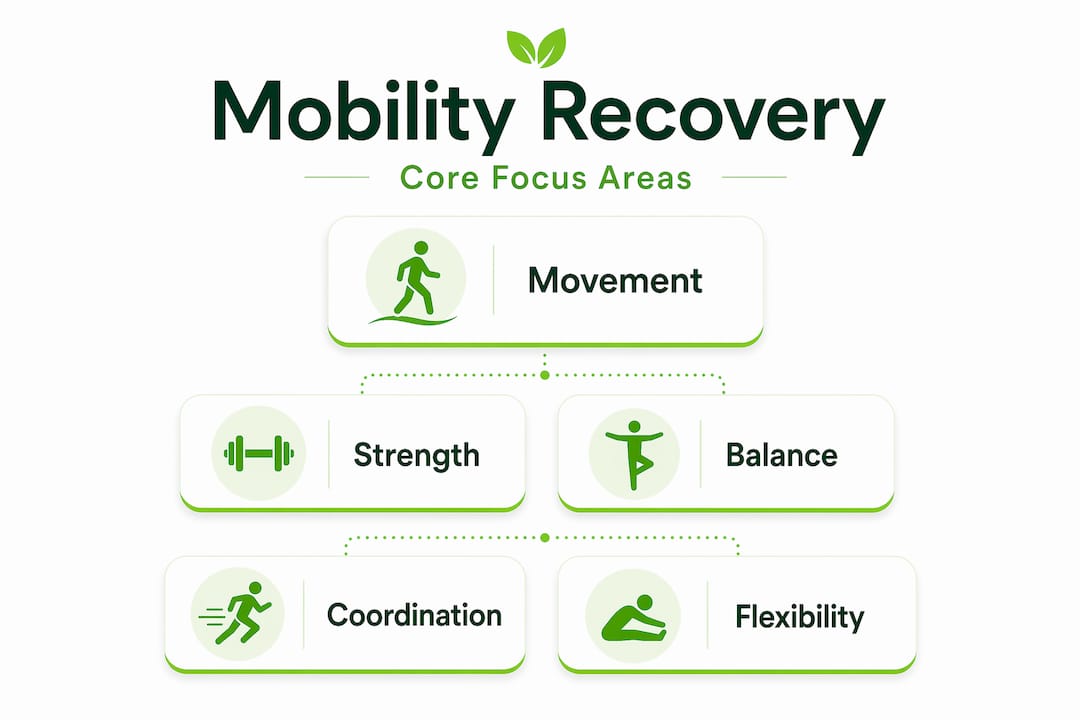
Here is how mobility recovery compares to related concepts you may already know:
| Concept | Primary goal | Intensity level | Best used for |
|---|---|---|---|
| Mobility recovery | Restore functional movement | Low to moderate | Post-injury, surgery, or training stress |
| Flexibility training | Increase passive range of motion | Low | Lengthening tight muscles |
| Active recovery | Reduce soreness via circulation | Very low | Rest days after hard training |
| Strength training | Build force production | Moderate to high | Muscle growth and performance |
All four approaches serve a purpose. But confusing them leads to programs that miss the mark. A person recovering from knee surgery who only stretches their quads and skips active range-of-motion work is leaving real progress behind.
Pro Tip: When assessing your own movement, notice where your body naturally compensates. Limping, favoring one side, or hunching forward are signals that functional recovery, not just flexibility, is what you need.
Why mobility recovery matters more after 40
The body changes meaningfully between your early forties and mid-sixties. Connective tissue becomes less elastic. Joint cartilage thins. Neuromuscular communication slows slightly, meaning your muscles respond a fraction later to balance demands. None of this is catastrophic on its own, but it creates a domino effect of physical strain if left unaddressed.
Multimodal exercise programs that combine balance, strength, and mobility work show meaningful improvements in gait and functional confidence for older adults. That’s not a minor quality-of-life upgrade. Falls are a leading cause of injury-related hospitalization in adults over 65, and the fear of falling itself reduces activity levels, which accelerates decline.
Here are the core benefits of mobility recovery that directly apply to your life at this stage:
- Reduced injury risk during daily activities. Moving through full, controlled ranges of motion keeps joints supported and muscles engaged, lowering the chance of strains during routine movements.
- Less stiffness and pain. Regular low-intensity movement promotes circulation and reduces the buildup of tension in overworked or underused muscle groups.
- Better balance and gait. Balance and coordination improvements from targeted mobility work translate directly into more confident movement.
- Faster recovery from training. Low-intensity mobility exercises increase blood flow and reduce post-exercise soreness without adding training stress.
- Greater independence. Physical therapy evaluations consistently focus on restoring the activities of daily living. That independence is worth protecting proactively, not just after a crisis.
The advantages of mobility exercises for people in midlife specifically reflect these exact benefits. The investment you make now pays forward into your sixties and beyond.
Practical mobility recovery techniques and exercises
Understanding the concept is one thing. Knowing what to actually do is where recovery begins.
The most effective mobility recovery methods follow a logical sequence. You start with symptom relief and gentle range-of-motion work, then build toward strength and control through that newly accessible range, and finally integrate those gains into functional movement patterns. Skipping ahead to step three without building steps one and two is why many people plateau.
Here is a practical starting framework for your mobility recovery exercises:
- Gentle range-of-motion movements. Gentle, pain-free circles and controlled sweeps through a joint’s natural range. Hip circles, shoulder rolls, ankle rotations. These prime the nervous system and improve circulation to joint tissues without overloading them.
- Walking. A short, intentional walk at a comfortable pace is one of the most effective active recovery tools available. It promotes blood flow, maintains gait patterns, and is genuinely low-stress on the body.
- Supine (lying down) mobility routines. Research shows a 10-minute supine routine improved balance, agility, and flexibility in as little as two weeks. Gentle leg lifts, knee-to-chest pulls, and hip bridges done on your back are beginner-friendly and surprisingly effective.
- End-range strengthening. Once you have access to a range of motion with less pain, exercises that challenge your muscles at that end range build the control needed for lasting functional gains. A physical therapist can guide appropriate progressions here.
- Balance and coordination drills. Single-leg stands, heel-to-toe walking, and lateral steps train the neuromuscular pathways that protect joints during unpredictable real-world movement.
For those recovering from an orthopedic procedure, early mobilization post-surgery speeds joint range of motion recovery compared to immobilization. That said, post-surgical progression must be carefully managed. Clinician guidance is not optional here because risks like hemodynamic instability make unsupervised progression genuinely dangerous.
Pro Tip: Keep mobility recovery work genuinely low in intensity. Active recovery only works when it stays below your training threshold. If you are breathing heavily or your muscles feel fatigued, you have crossed from recovery into training.
Building your personal mobility recovery plan
Knowing the techniques is only half the picture. Applying them consistently in a plan that fits your body and your life is what actually produces results.

Start by honestly assessing where your movement currently feels limited. Not on a range-of-motion chart. In real life. Where do you hesitate? Where do you feel stiff the morning after activity? These are your starting points.
From there, a practical mobility recovery plan for adults in the 40 to 65 range typically includes these elements:
- Specific, daily life goals. Not “improve flexibility” but “walk to the mailbox without hip stiffness” or “bend down to pick something up without back discomfort.” Concrete goals tied to real tasks keep you motivated and help you track genuine progress.
- A mix of mobility methods. Combine range-of-motion work, light walking, and balance drills rather than relying on a single modality. Improving mobility after injury or training stress requires stimulating the body in multiple ways.
- Gradual progression. Mobility gains require neuromuscular reorganization, not just tissue changes. That means your nervous system needs time to relearn patterns. Expect progress to feel slower than you want, and plan for it.
- Professional input when appropriate. If you are managing a diagnosed condition, recovering from surgery, or experiencing persistent pain, working with a physical therapist sets goals grounded in your actual functional status rather than guesswork.
- Regular check-ins with yourself. Every two to three weeks, revisit your starting goals. Are your daily tasks easier? Are you moving with more confidence? Adjust what is not working. Add challenge where you have made progress.
Program adherence tailored to older adults consistently produces better functional outcomes. Consistency, not heroic effort on any single day, is the mechanism that drives lasting change.
My perspective on mobility recovery at midlife
I’ve worked alongside a lot of adults in the 40 to 65 range who come in thinking their stiffness is just aging and that nothing short of a medical procedure will change it. That belief is one of the most limiting things I’ve encountered. Not because it feels wrong, but because it leads people to stop trying before they’ve given their body a real chance.
What I’ve learned is that the biggest obstacle isn’t physical. It’s the expectation of fast results combined with the fear of making things worse. People push too hard, feel worse, and conclude the approach doesn’t work. Or they stay so cautious they never actually challenge the tissues enough to adapt.
My honest take: the adults who make the best progress are not the ones doing the most. They’re the ones who show up consistently at an appropriate intensity, trust the process long enough to see neuromuscular changes, and treat mobility as a daily practice rather than a rehabilitation episode.
The other thing I’ve seen repeatedly is how much confidence matters. When you can move without bracing for pain, your whole relationship with your body shifts. That’s not a small thing at midlife. It’s the foundation of independence, activity, and quality of life for everything that comes after.
Mobility recovery is not a temporary fix. It’s an investment in the version of yourself you want to be ten and twenty years from now.
— Lunix
How Lunixinc supports your mobility recovery
At Lunixinc, we believe your recovery environment matters as much as your recovery routine.

The right support at home, after a workout, a long day on your feet, or a period of rehabilitation, makes it far easier to stay consistent with the gentle, restorative movement your body needs. Our recovery collection features products designed around the science of restoration, including targeted compression, positioning support, and tools that keep circulation moving between your active mobility sessions. Explore the full range of recovery benefits to find the solutions that fit where you are on your mobility journey. You do not need to build better movement alone.
FAQ
What is mobility recovery in simple terms?
Mobility recovery is a structured approach to restoring functional movement after injury, surgery, pain, or physical stress. It goes beyond stretching to include range-of-motion exercises, balance training, and low-intensity movement that rebuild how your body performs in real daily tasks.
How is mobility recovery different from stretching?
Stretching increases passive range of motion, while mobility recovery focuses on actively controlling movement through that range under real conditions. Mobility recovery also includes balance, coordination, and strength work that pure stretching does not address.
Why is mobility recovery important after 40?
After 40, connective tissue elasticity decreases, neuromuscular response slows, and joint health requires more deliberate attention. Exercise targeting balance and strength reduces fall risk and improves functional independence, both of which become more significant health priorities with age.
How soon should I start mobility recovery after an injury or surgery?
Early mobilization after orthopedic surgery speeds joint recovery compared to rest alone, but the timing and approach must be guided by a clinician due to individual health and surgical factors.
How long does it take to see results from mobility recovery?
Measurable improvements in balance and flexibility can appear in as little as two weeks with consistent practice. Deeper neuromuscular changes that translate into lasting functional gains typically take several weeks to months, depending on your starting point and consistency.