


TL;DR:
- Light therapy is a scientifically supported treatment using specific light wavelengths to improve mood, skin health, and pain. Its effectiveness depends on consistent use, device quality, and appropriate protocols, especially for mood and skin conditions. Consumers should choose devices with transparent specifications and follow recommended guidelines for safe, measurable results.
Light therapy gets dismissed as a wellness gimmick far more often than it deserves. If you’ve heard the term and wondered whether it’s backed by real science or just clever marketing, you’re asking the right question. What is light therapy, exactly? At its core, it’s the therapeutic use of specific wavelengths of light to trigger biological processes in your body, from regulating mood and sleep to improving skin and reducing pain. This guide breaks down the different types, what the evidence actually supports, and how to use it safely and effectively in your daily life.
Table of Contents
- Key takeaways
- Types of light therapy and how they work
- Clinical benefits of light therapy
- Risks, side effects, and common myths
- How to add light therapy to your daily routine
- My honest take on light therapy adoption
- Explore Lunix recovery devices
- FAQ
Key takeaways
| Point | Details |
|---|---|
| Multiple therapy types exist | Bright light, red light, LED, and photodynamic therapy each target different conditions and use different mechanisms. |
| Mood benefits are well-documented | Bright light therapy at 10,000 lux for 30 minutes each morning improves depression symptoms in roughly two out of three people. |
| Skin results require consistency | Red light therapy for skin and hair shows measurable outcomes, but only with regular sessions over several weeks. |
| Side effects are usually mild | Headaches and irritability are the most common reactions, and they tend to resolve on their own. |
| Device quality matters enormously | Effectiveness depends on verified wavelength and irradiance specs, not just marketing claims on the box. |
Types of light therapy and how they work
Light therapy is not one single treatment. It’s a category that includes several distinct approaches, each targeting different parts of your body and biology. Understanding which type does what is the first step to using any of them well.
Bright light therapy is probably the most clinically studied form. It uses a light box that emits 10,000 lux intensity for about 30 minutes each morning. The goal is to mimic natural sunlight, which your brain uses to regulate your internal clock. When you don’t get enough of it, especially in winter months, your hypothalamus and circadian rhythms fall out of sync, which can drag your mood and sleep quality down with them. Bright light therapy directly addresses that root cause.
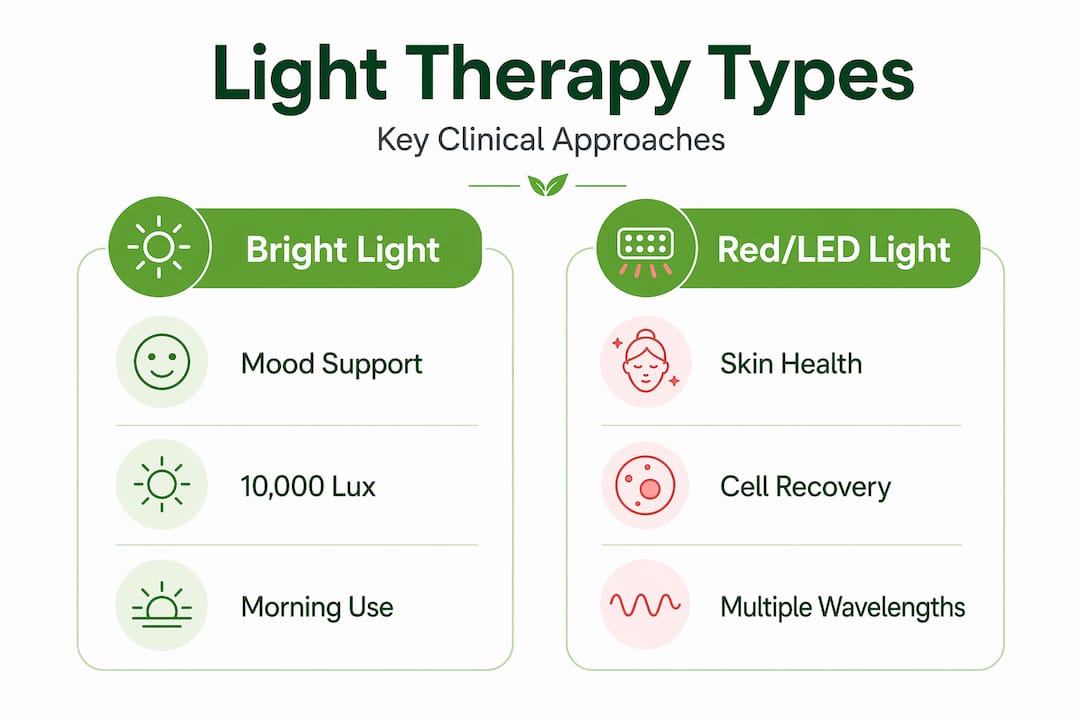
Red light therapy works very differently. Instead of stimulating your brain through your eyes, it works at the cellular level through your skin. It uses 630 to 850 nanometer wavelengths to reach your mitochondria, the energy-producing units inside your cells. When those wavelengths hit living tissue, they stimulate mitochondrial activity, increase cellular energy production, and reduce local inflammation. This is why it’s used for skin rejuvenation, hair regrowth, joint pain, and wound healing.
LED therapy falls under the red light umbrella but extends into blue and near-infrared wavelengths as well. Blue light (around 415 nm) targets acne-causing bacteria on the skin’s surface. Near-infrared light penetrates deeper into muscle and joint tissue. You’ll find LED panels, handheld wands, and wearable wraps, and each format suits a different application.
Photodynamic therapy is the clinical heavyweight of the group. It combines a photosensitizing agent applied to the skin with a specific light source to destroy abnormal cells. It’s used in dermatology clinics and oncology settings for conditions like actinic keratoses, certain skin cancers, and severe acne. This is not a home treatment.
Here’s a quick breakdown of each type:
- Bright light therapy: 10,000 lux light box, targets mood and circadian rhythm, used for seasonal and non-seasonal depression
- Red light therapy: 630 to 850 nm wavelengths, targets skin, hair, joints, and inflammation at the cellular level
- Blue LED therapy: Around 415 nm, targets surface-level acne bacteria, used in both clinic and home devices
- Near-infrared therapy: Penetrates deeper than red light, used for muscle recovery and joint pain relief
- Photodynamic therapy: Clinic-only, combines photosensitizers with light to treat skin conditions and cancers
Pro Tip: When shopping for a home light therapy device, look for published irradiance specs (measured in mW/cm²) and confirmed wavelength ranges. If a brand won’t disclose these numbers, that tells you something important about the product.
Clinical benefits of light therapy
The benefits of light therapy span mental health, skin health, and physical recovery. The evidence is stronger in some areas than others, so it’s worth being specific.
For mood and mental health, bright light therapy has one of the most consistent track records in clinical research. It resets your circadian rhythm by reinforcing your brain’s morning light signal, which in turn stabilizes the hormonal cascade that controls mood, energy, and sleep. The results aren’t marginal. Studies show that two out of three people with seasonal affective disorder (SAD) see meaningful symptom relief with regular morning use.
For skin, the evidence behind red light therapy is building steadily. One compelling data point: red light exposure produces a 79% reduction in acne over 12 weeks, outperforming several standard topical drug treatments. For hair loss, consistent sessions can increase hair counts by up to 51% after 17 weeks. Skin rejuvenation benefits, including collagen stimulation and reduced fine lines, have also been documented, though results vary based on device quality and individual skin type. You can read more about how this connects to overnight skin recovery in this look at the science of skin regeneration.
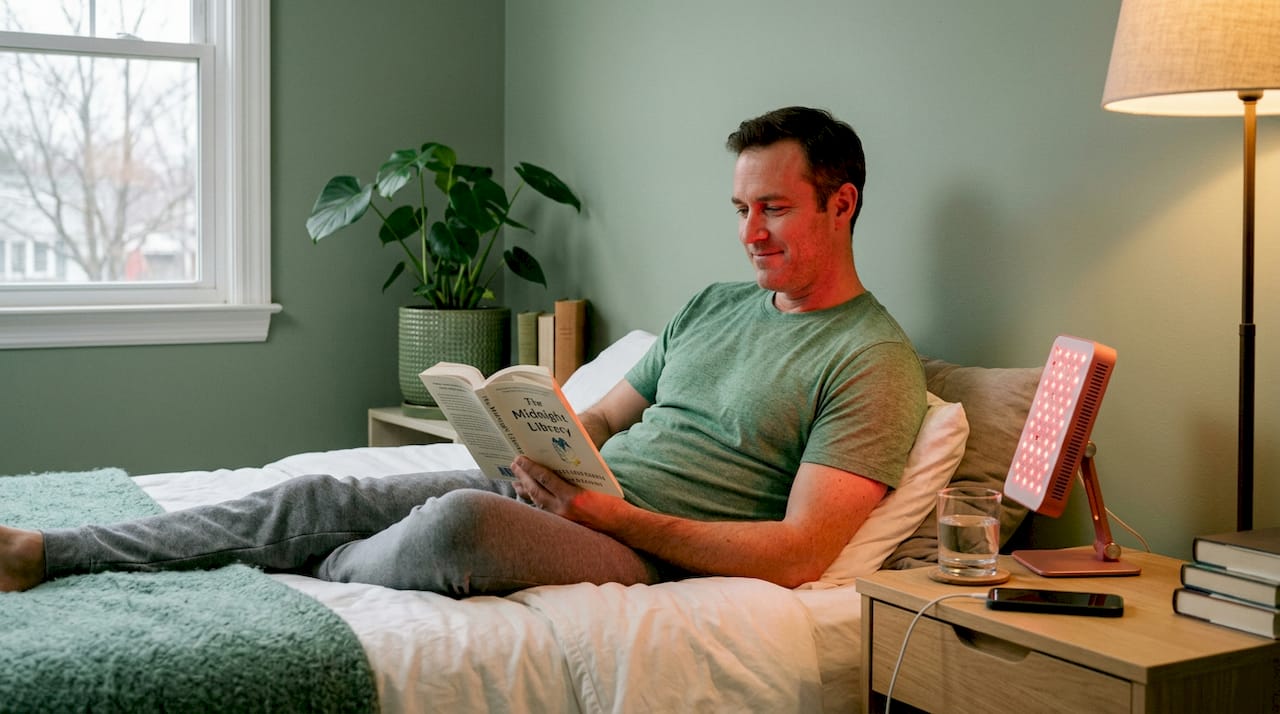
Here’s a summary of documented outcomes across major uses:
| Condition | Therapy type | Documented outcome | Timeframe |
|---|---|---|---|
| Seasonal depression (SAD) | Bright light therapy | ~66% symptom improvement | Daily use, weeks |
| Acne | Red/blue LED therapy | 79% reduction in pimples | 12 weeks |
| Hair loss | Red light therapy | Up to 51% more hair count | 17 weeks |
| Joint pain and inflammation | Near-infrared/red light | Reduced inflammation, pain relief | Varies |
| Skin aging | Red light therapy | Improved collagen, texture | 8 to 12 weeks |
“Marketing for red light therapy often runs well ahead of the science. The benefits that are backed by solid clinical data are real, but they’re specific and they require consistency. Expecting a full body transformation after three sessions is not a realistic outcome.”
Risks, side effects, and common myths
Light therapy is safe for most people when used correctly, but that caveat matters. There are real risks and widespread misconceptions worth addressing before you start any light therapy treatment.
The most common side effects from bright light therapy are:
- Headaches: Usually mild and temporary, especially in the first week of use
- Irritability or feeling “wired”: Often linked to sessions that are too long or too close to bedtime
- Eye strain: Can happen if you position the light box too close or look directly at the device
Headaches and irritability are the two most reported complaints, and most users find they resolve within a few days once their body adjusts. For red and photodynamic light therapy, the risk profile shifts. Photodynamic therapy in clinical settings can cause burning or stinging at the site for up to 24 hours after treatment. Overexposure with home red light devices can lead to skin irritation, particularly if you exceed recommended session lengths or use a device with higher-than-appropriate irradiance.
A few myths worth clearing up directly. Light therapy is not a one-session fix. It’s not an alternative to medication without your doctor’s involvement. And it does not work the same way for everyone. Red light therapy requires living tissue and consistent usage to produce results. If you stop after a week because you don’t see dramatic changes, you’re not giving it a fair chance.
Always talk to your doctor before starting any light therapy treatment if you take photosensitizing medications like lithium or certain antibiotics, or if you have a history of skin conditions or mood disorders that are already being managed clinically.
Pro Tip: Never stare directly at a bright light therapy box. Position the device at 12 inches and keep it in your peripheral vision while you read, eat breakfast, or work. This is how clinical protocols are designed.
How to add light therapy to your daily routine
Knowing the science is one thing. Putting it into practice in a way that actually fits your life is another. Here’s how to make light therapy work day to day.
For mood and sleep support: Start your bright light therapy session within an hour of waking up. The best outcomes for mood disorders happen when you reinforce the circadian clock early in the morning. Thirty minutes is the standard duration. You don’t need to sit and stare. Place the light box on your kitchen counter while you have breakfast or on your desk during the first part of your workday.
For skin and hair: Red light therapy sessions typically run six to thirty minutes, depending on the device and the target area. Most protocols suggest daily or thrice-weekly use for at least eight weeks before expecting visible results. Dedicated devices like targeted red light therapy wraps or handheld panels let you apply consistent, focused exposure to specific areas of the body.
Here’s a practical comparison to help you choose an approach:
| Goal | Therapy type | Session length | Frequency | Device type |
|---|---|---|---|---|
| Mood/SAD support | Bright light | 30 minutes | Daily, morning | 10,000 lux light box |
| Skin rejuvenation | Red light LED | 10 to 20 minutes | 3 to 5x per week | LED panel or wand |
| Hair regrowth | Red light | 6 to 30 minutes | Daily or 3x/week | Laser comb or helmet |
| Joint/muscle pain | Near-infrared | 10 to 20 minutes | Daily | Wearable wrap or pad |
| Acne treatment | Blue LED | 10 to 15 minutes | 3 to 5x per week | LED mask or wand |
A few things to keep in mind when selecting light therapy devices:
- Look for FDA-cleared status or clinically validated specs on the product page
- Check that wavelength and irradiance are disclosed by the manufacturer
- Be cautious with very cheap devices. Consumer device quality varies widely and effectiveness depends on specs that aren’t always disclosed
- Match the device format to how you’ll realistically use it. A wearable wrap is easier to keep consistent than a panel you have to set up each time
You can also explore how infrared light affects health and wellness as a useful companion to red light therapy, especially for deeper tissue and recovery goals.
My honest take on light therapy adoption
What I’ve learned after spending years watching wellness trends rise and fall is that light therapy sits in a genuinely interesting middle ground. It’s not snake oil, and it’s not a cure-all. The science behind bright light therapy for mood is about as solid as it gets in behavioral health. Red light therapy for skin and hair has real, peer-reviewed wins behind it. But the marketing ecosystem around it has gotten out of hand.
I’ve seen people spend hundreds of dollars on devices that don’t disclose a single irradiance number, then conclude that “light therapy doesn’t work” when they see no results. The therapy didn’t fail them. The product did.
My honest advice: start with the most evidence-backed use case for your specific concern. If it’s mood and seasonal depression, a quality 10,000 lux light box used consistently every morning is genuinely one of the most accessible, low-risk mental health tools available. If it’s skin or joint recovery, invest in a device from a brand that publishes its specs and stands behind clinical evidence.
The gap between what light therapy can do and what brands claim it does is real. Your job as a consumer is to stay on the right side of that line. Read the specs, manage your timeline expectations, and give any protocol at least eight weeks before you evaluate results.
— Lunix
Explore Lunix recovery devices

If this article has you thinking seriously about adding light therapy to your wellness routine, Lunixinc has built a collection of recovery devices designed for exactly that. Each product is built around verified clinical applications, with clear specs and ergonomic designs that make consistent daily use realistic, not aspirational. From targeted red light wraps to joint-specific therapy devices, the Lunix recovery collection is a practical starting point for anyone ready to move from research to results. Explore the full range and find the device that matches your specific health goals.
FAQ
What is light therapy used for?
Light therapy is used to treat seasonal affective disorder, non-seasonal depression, sleep disorders, acne, hair loss, skin aging, and joint pain. Each condition requires a different type of device and protocol.
How long does light therapy take to work?
Bright light therapy for mood can produce noticeable improvements within one to two weeks of daily morning use. Red light therapy for skin and hair typically requires eight to seventeen weeks of consistent sessions before meaningful results appear.
Is light therapy safe to use at home?
Yes, most home light therapy devices are safe when used as directed. The key risks are eye strain from bright light boxes and skin irritation from overexposure to red light. Always follow the manufacturer’s session guidelines and consult a doctor if you take photosensitizing medications.
Does red light therapy actually work for skin?
Clinical studies show red light therapy produces measurable improvements in acne, collagen production, and hair regrowth with consistent use. A 79% acne reduction over 12 weeks and a 51% increase in hair counts after 17 weeks are among the documented results.
What should I look for when buying a light therapy device?
Look for disclosed wavelength ranges, published irradiance values, and FDA-cleared status where applicable. Avoid devices that rely solely on before-and-after photos without publishing technical specifications.