


Digital wellness is the intentional, balanced use of digital technology to protect your physical, mental, and social well-being. It is not about quitting screens cold turkey. As the New York State BeWell program puts it, it is about noticing how technology makes you feel and making small, sustainable choices from there.
The core elements are straightforward:
- Intentionality: Choosing when and why you pick up a device, rather than reaching for it out of habit
- Limits: Setting boundaries around screen time, especially before bed and during meals
- Quality of interaction: Prioritizing connections and content that restore you, not drain you
A PLOS One experimental study found that even an 8-day reduction in smartphone use produced measurable increases in life satisfaction, mindfulness, and self-esteem, alongside drops in stress and loneliness. Eight days is enough to feel a difference.
Pro Tip: Try a one-hour phone-free window tonight, starting after dinner. Put your device in another room. That single change is where most people notice the first real shift.
Table of Contents
- Why digital wellness matters for adults in midlife
- The five domains your screen habits affect
- Simple, evidence-backed strategies you can start this week
- How quickly you’ll notice a difference, and how to track it
- Common barriers and how to get past them
- How Lunixinc thinks about designing a home for digital wellness
- Key Takeaways
- A note from Lunix on what we’ve learned
- Lunix recovery products that support a digital-wellness routine
- Useful sources and further reading
Why digital wellness matters for adults in midlife
Balanced tech use improves life satisfaction and reduces stress. That is not a vague promise. The same PLOS One study cited above showed those gains in about one week, and a Frontiers meta-analysis reported positive associations between mindful digital engagement and psychological well-being, with notable effect sizes.
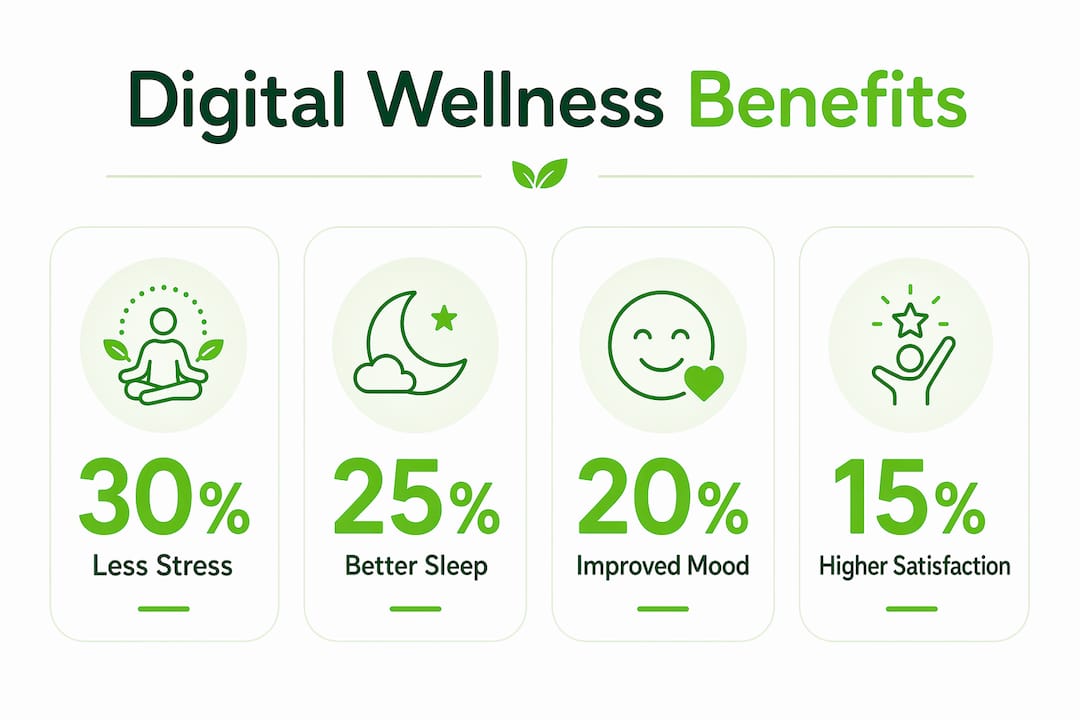
For adults 40–65 specifically, the risks of unmanaged use stack up quickly: technostress from always-on work expectations, sleep disruption from evening screen light, and blurred work-life boundaries that make genuine rest feel impossible. The OECD’s research on digital technologies and well-being confirms that while digital tools can empower people, they also introduce real mental health risks when used without awareness.
The measurable benefits midlife adults can expect from managing their digital habits include:
- Improved sleep quality and duration
- Lower perceived stress and anxiety
- Stronger focus and productivity during work hours
- More present, satisfying relationships at home
- Reduced physical tension from posture and eye strain
The five domains your screen habits affect
Digital wellness frameworks organize the impact of technology across five interconnected health domains. Think of them less as separate boxes and more as gears: when one slips, the others feel it.
- Mental/intellectual: Constant notifications fragment attention and reduce your capacity for deep thinking. A 45-minute uninterrupted reading session, no phone nearby, rebuilds that focus.
- Physical: Screen posture strains your neck and shoulders; blue light suppresses melatonin. Adults in this age group often feel these effects faster than younger users.
- Social: Passive scrolling can replace real conversation, increasing loneliness even while you feel “connected.”
- Emotional: Comparison-driven platforms raise anxiety and lower self-esteem over time.
- Spiritual: Constant digital noise crowds out the quiet reflection that gives life meaning and direction.
The domino effect is real. Poor social media habits at night disrupt sleep (physical), which raises irritability (emotional), which strains relationships (social), which deepens loneliness (mental). One habit change can interrupt that chain at any link.
Pro Tip: Pick the domain where you feel the most friction right now and start there. Trying to fix all five at once usually means fixing none.
Simple, evidence-backed strategies you can start this week
The Digital Wellness Institute recommends screen-time limits, mindful consumption, and regular digital detoxes as the core pillars. Here is how to put each into practice without overhauling your life.
- Set a daily screen-time limit. Use your phone’s built-in Screen Time (iOS) or Digital Wellbeing (Android) tool to cap social media at 30 minutes per day. The app sends a reminder when you hit it.
- Batch your notifications. Turn off all non-essential alerts and check messages at three set times: morning, midday, and early evening. This alone reduces the stress of constant interruption.
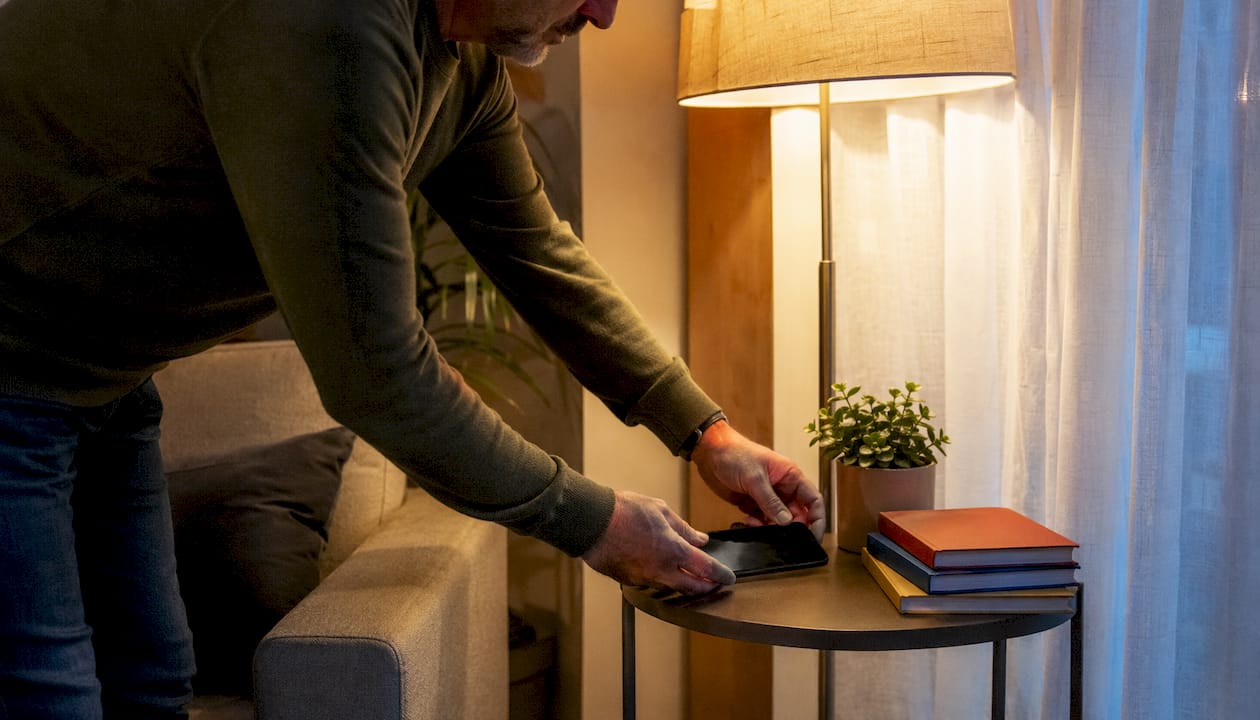
- Create a no-tech bedroom. Charge your phone outside the bedroom. Pair this with a physical recovery ritual, such as using a Lunixinc percussion massager or infrared sauna blanket, to signal to your body that the day is done.
- Apply a mindful content rule. Before opening an app, ask: “Am I choosing this, or am I just filling a gap?” That one-second pause breaks the automatic reach.
- Schedule a weekly micro-detox. One afternoon per week, leave your phone at home during a walk or errand. Quality of interaction matters more than raw screen-time numbers, so replacing passive scrolling with a deliberate activity counts as progress.
Pro Tip: Pair a recovery product session with your phone-free window. Using a heated hand massager or red light therapy device during a scheduled break makes the habit feel like a reward, not a restriction.
For a 7–10 day starter plan, try this daily checklist:
- Morning: no phone for the first 20 minutes after waking
- Midday: one 10-minute walk without a device
- Evening: phone out of the bedroom by 9 PM
- Weekly: one 2-hour tech-free block on a weekend afternoon
You can find additional mindfulness techniques for stress relief that pair well with these habits.
How quickly you’ll notice a difference, and how to track it
Many people feel small but real gains within 8 days. The PLOS One study showed measurable improvements in life satisfaction and stress after 8 days of reduced smartphone use. The Frontiers meta-analysis found positive associations between mindful digital engagement and psychological well-being with a moderate effect size.
| Marker | Baseline (Day 1) | Target by Day 10 |
|---|---|---|
| Daily recreational screen time | Track your current hours | Reduce by 30 minutes |
| Sleep quality (1–10 self-rating) | Note your score | Aim for +1 to +2 points |
| Stress level (1–10 self-rating) | Note your score | Aim for –1 to –2 points |
| Phone-free evening hours | Count current hours | Add one hour per evening |
A simple tracking method: keep a notes app entry (ironic, but effective) or a paper journal with four columns matching the table above. Check in each morning for 10 days. The pattern usually becomes visible by day five.
For a broader mental wellness checklist tailored to your age group, Lunixinc has a practical resource worth bookmarking.
Common barriers and how to get past them
The most common reasons people abandon digital wellness plans have nothing to do with willpower. They are structural.
- Job demands: Work culture expects instant replies. This makes boundaries feel risky.
- Family coordination: Teenagers and spouses have their own screen habits, and household change requires buy-in.
- Habit inertia: Reaching for a phone is automatic. The cue-routine-reward loop is deeply grooved by midlife.
- Caregiving responsibilities: Adults caring for aging parents or grandchildren often use devices as a lifeline, making limits feel impossible.
Here is how to address each one practically:
- For work: Set an email auto-reply after 7 PM stating your response window. Most colleagues adapt within a week.
- For family: Hold a 10-minute household conversation to agree on one shared rule, such as no phones at dinner. One rule is enough to start.
- For habit inertia: Use implementation intention: “When I sit on the couch after dinner, I will pick up a book instead of my phone.” Naming the cue breaks the automatic response.
- For caregiving: Designate one device as the “emergency contact only” phone during your recovery window. Everything else can wait.
Avoid all-or-nothing detoxes. Sustainable micro-breaks and routines tied to physical recovery consistently outperform cold-turkey approaches. Small, repeatable changes compound over weeks in a way that dramatic resets never do.
Pro Tip: If you need behavioral-change support beyond habit tips, online hypnotherapy for anxiety can help address the underlying stress patterns that drive compulsive phone use.
You can also explore healthy boundaries with technology for household and workplace scripts.
How Lunixinc thinks about designing a home for digital wellness
Environment shapes behavior more reliably than motivation does. When your physical space separates rest from screens, your nervous system follows. Designing physical no-tech zones with distinct furniture and lighting helps adults physically decouple from digital stimulation and encourages genuine recovery.
A simple home design checklist:
- Bedroom: Remove the TV. Charge phones in the hallway. Add a Lunixinc orthopedic wedge pillow set for reading or relaxation without a screen.
- Living room: Designate one chair as a “recovery seat” with no device rule. Pair it with a Lunixinc percussion massager for a 15-minute evening wind-down.
- Family room: Create a shared charging station outside the main seating area so devices are accessible but not the default activity.
Pairing physical recovery tools with intentional tech habits produces stronger restorative effects than passive screen use alone. A 20-minute session with a Lunixinc infrared sauna blanket during a phone-free window, for example, gives your body active recovery while your mind genuinely rests.
Pro Tip: Learn more about how technology can enhance wellness when used with intention, not just habit.
Key Takeaways
Digital wellness is the intentional, balanced use of technology, and most adults 40–65 can feel measurable improvements in stress and sleep within 8 days of making small, consistent changes.
| Point | Details |
|---|---|
| Start with a clear definition | Digital wellness means using devices intentionally to protect physical, mental, and social health. |
| Benefits arrive quickly | An 8-day reduction in smartphone use produced measurable gains in life satisfaction and lower stress. |
| Five domains interact | Habits in one area (sleep, social, emotional) create a domino effect across all five health domains. |
| Micro-changes beat detoxes | Sustainable daily habits, like a phone-free evening hour, outperform all-or-nothing approaches. |
| Lunixinc recovery products | Pairing tools like the infrared sauna blanket or percussion massager with phone-free windows deepens restorative rest. |
A note from Lunix on what we’ve learned
At Lunix, we hear from customers who bought a recovery product and then discovered something unexpected: the most powerful part of their routine was not the device itself. It was the 20 minutes of quiet they gave themselves to use it. That is digital wellness in practice, not as a concept, but as a felt experience.
We design products that make it easier to choose rest over scrolling. An infrared sauna blanket session is hard to combine with a phone. A percussion massager asks you to be present in your body. That is intentional. We believe physical recovery tools and mindful tech habits belong together, and we have built our product line with that pairing in mind.
One honest note: no product replaces the behavioral work. If your evenings are still dominated by notifications and passive scrolling, a massager will help your muscles but not your stress levels. The habit change comes first. The product makes it more enjoyable to sustain.
Lunix recovery products that support a digital-wellness routine
Physical recovery and intentional tech habits work best together. Here is how three Lunixinc products fit naturally into a digital-wellness plan.

- Infrared sauna blanket: Use during a scheduled 20-minute phone-free recovery block each evening. The warmth promotes circulation and muscle relaxation, and the format makes screen use impractical.
- Heated air compression hand massager: Keep it at your desk as a cue for a midday micro-break. Ten minutes of compression therapy with your phone face-down resets both your hands and your focus.
- Percussion massager: Pair with a phone-free wind-down in your designated recovery chair. It signals to your body and your household that the screen day is over.
These products work best as part of a routine, not as a replacement for one. When the behavior change is in place, physical recovery tools make it easier to stay consistent and more rewarding to show up for yourself each day.
Browse the full Lunixinc recovery collection to find the right fit for your routine.
Useful sources and further reading
The research behind this article is worth exploring directly. Here are the key sources with a brief note on what each one offers.
- PLOS One experimental study on smartphone reduction: The clearest evidence that 8 days of reduced use produces measurable well-being gains.
- Frontiers meta-analysis on digital technology and psychological well-being: Covers both positive and negative effects, including the r = 0.435 effect size for balanced use.
- OECD report on digital technologies and well-being: Broad policy and individual perspective on digital risks and empowerment.
- SUNY Digital Wellness Pressbooks: The five-domain framework explained clearly for general readers.
- Digital Wellness Institute blog: Practical strategy guidance and the quality-over-quantity perspective on screen time.
- New York State BeWell on digital wellness: A grounded, non-alarmist definition focused on sustainable choices.
- Springer Nature: understanding digital wellbeing: Conceptual framework covering attitudes, behaviors, and organizational strategies.
- Lunixinc: role of digital wellness tools: How physical wellness products and digital habits work together.
Start with the 7-day checklist in the tracking section above. Revisit your four markers on day 10. That single experiment will tell you more about your own digital habits than any article can.
This article provides general wellness information, not medical or mental health advice. For personal guidance, consult a qualified health professional.