


The fastest way to stay hydrated is simple: drink a full glass of water when you wake up, sip steadily through the day using your body weight and activity as your guide, and check your urine color once or twice daily as your reality check. Pale straw means you’re on track. Dark amber means it’s time to catch up. That’s the whole system in one sentence, and everything below builds on it.
Here’s your hydration checklist for right now, before you read another word:
- Wake-up water: One full glass (8 to 12 ounces) before coffee or breakfast.
- Bottle target: Refill your water bottle to a specific number of times based on its size (more on the math below).
- Pre-meal sip: A glass of water 15 to 20 minutes before each meal.
- Exercise rule: Drink before, sip during, and rehydrate after any workout longer than 30 minutes.
- Bedtime sip: A small glass an hour before bed, not right before, so you’re not up all night.
- Swap one sugary drink: Replace at least one soda or juice a day with water or unsweetened tea.
- Urine color check: Glance before you flush, once in the morning and once in the evening.
Pro Tip: Pale straw or light lemonade colored urine generally signals good hydration, while dark amber urine is your body’s polite way of asking for more fluids. Vitamins (especially B vitamins) and some medications can tint urine bright yellow or another color regardless of hydration status, so use this as one clue among several, not the only one.
Key Takeaways
A consistent hydration checklist built around wake-up water, pre-meal sips, exercise timing, and a urine-color check outperforms any single large-volume drinking strategy.
| Point | Details |
|---|---|
| Anchor drinks to routines | Attach water to waking up, meals, and bedtime instead of trying to remember randomly. |
| Use urine color as your gauge | Aim for pale straw and treat dark amber as your cue to drink more soon. |
| Personalize the numbers | Adjust upward for exercise, heat, altitude, pregnancy, breastfeeding, or illness. |
| Watch both extremes | Severe dehydration and rare overhydration both carry real risks that need medical attention. |
| Pair habits with the right tools | A Lunix Recovery product can support the comfort side of a hydration and recovery routine. |
Table of Contents
- Building Your Daily Hydration Checklist Step by Step
- How Do You Check Your Hydration Level in Real Time?
- How Much Water Do You Actually Need Each Day?
- When Should You Drink More Than Usual?
- Simple Habits That Make Hydration Automatic
- What Are the Warning Signs of Dehydration and Overhydration?
- Which Tracking Method Actually Works for You?
- The Lunix 7-Point Hydration Checklist You Can Print Today
- Author Perspective: Making Hydration Actually Stick
- Recovery Tools That Support Your Hydration Routine
- Sources
Building Your Daily Hydration Checklist Step by Step
A hydration checklist works best when it’s tied to moments you already experience every day, not treated as a separate chore. Think of it as attaching a new habit to an old one, the same way you might always brush your teeth right after breakfast.
Here’s how to structure your day around fluid intake without obsessing over it:
- On waking: Drink 8 to 12 ounces of water before anything else. Your body has gone six to eight hours without fluids overnight, so this is the easiest win of the day.
- Mid-morning: Finish one full 20 ounce bottle by midday. If your bottle is 32 ounces, aim for about two thirds of it.
- Before lunch: A glass of water 15 minutes ahead of eating helps with portion control and gets fluids in before you get distracted by food.
- Afternoon slump: Instead of reaching for coffee or a sugary snack, drink 8 ounces of water first. Dehydration often masquerades as fatigue.
- Before and after exercise: Drink roughly 8 ounces 20 to 30 minutes before activity, then replace fluids afterward based on how much you sweat.
- With dinner: Another glass alongside your meal, especially if you skipped the pre-meal sip earlier.
- Evening wind-down: A smaller sip, 4 to 6 ounces, an hour before bed.
If you’re using a standard 32 ounce bottle, refilling it two to three times covers a solid daily target for most adults. A 20 ounce bottle needs three to four refills to hit the same range. Either way, counting refills is far easier than tracking ounces in your head all day.
Plain water gets boring fast, and that’s usually where hydration plans fall apart. A few low-effort swaps keep things interesting:
- Add cucumber, lemon, or mint to a pitcher of water and let it sit in the fridge overnight.
- Try sparkling water with a splash of 100% juice instead of soda.
- Unsweetened iced tea counts toward your fluid total and adds variety without added sugar.
- Keep a bottle in the freezer for 20 minutes before a workout so it’s ice cold by the time you drink it.
For tracking, skip the app if you know you won’t open it. A rubber band moved down your bottle each time you refill, or four tally marks drawn in dry-erase marker, does the same job with zero friction.
How Do You Check Your Hydration Level in Real Time?
Urine color remains the most practical, at-home hydration gauge available, and it costs nothing. The Harvard T.H. Chan School of Public Health points to pale or straw-colored urine as a sign of adequate hydration, while darker, amber urine suggests your body needs more fluids soon.
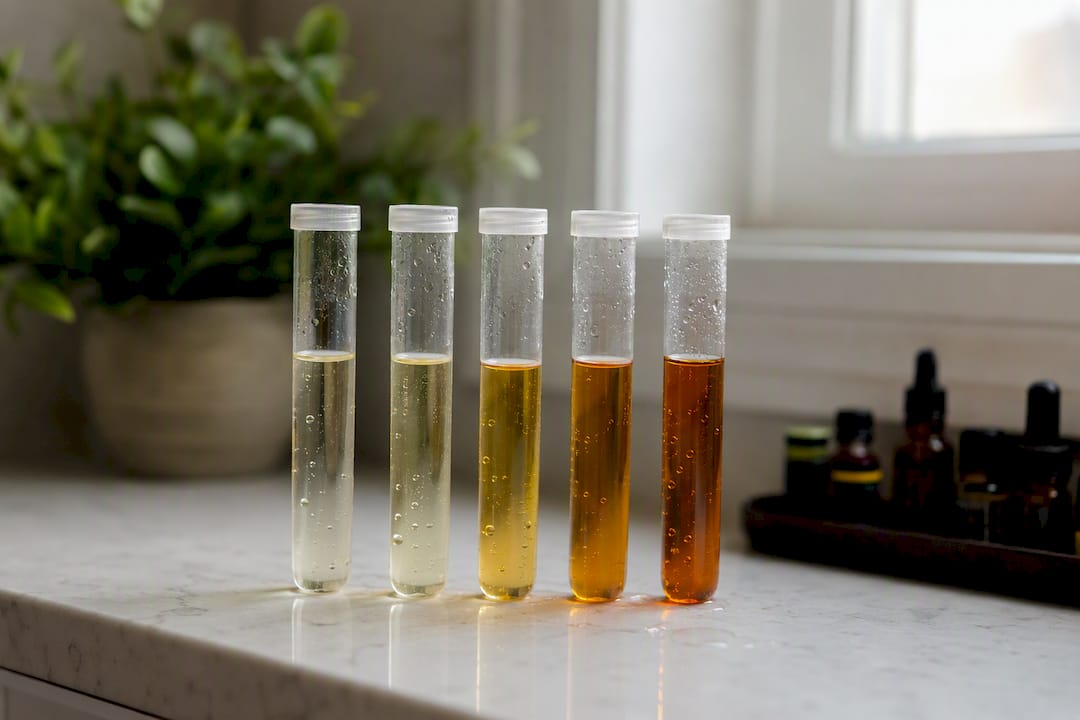
| Urine Color | What It Likely Means |
|---|---|
| Clear to pale straw | Well hydrated, keep your current pace |
| Light yellow | Adequate, but drink something in the next hour |
| Dark yellow | Mild dehydration, drink water now |
| Amber or honey colored | Noticeable dehydration, increase intake steadily |
| Brown or tea colored | Seek medical attention, especially with other symptoms |
A few things can throw this chart off. Vitamin B supplements often turn urine bright neon yellow no matter how hydrated you are. Certain medications, beets, and even asparagus can shift color temporarily. Use the chart as a trend indicator across a day, not a single gospel reading.
Beyond urine color, your body sends other signals worth noticing:
- Mild dehydration: Thirst, dry mouth, slight headache, dark urine, fatigue.
- Moderate to severe dehydration: Dizziness, rapid heartbeat, confusion, very dark or minimal urine output, sunken eyes.
- Exercise-specific check: Weigh yourself before and after a long workout. Every pound lost roughly equals 16 ounces of fluid you need to replace.
If you dropped two pounds during a hard run in the heat, that’s about 32 ounces to make up over the next few hours, ideally with some electrolytes mixed in if the session ran past 60 minutes.
Pro Tip: In hot or humid conditions, or during intense exertion, thirst often lags behind your actual fluid losses. Waiting until you feel thirsty in these situations means you’re already behind. Sip on a schedule instead of waiting for the signal.
How Much Water Do You Actually Need Each Day?
The “eight glasses a day” rule is a decent memory aid, but it’s not a precise target. The Mayo Clinic notes that adequate daily fluid intake, including everything you eat and drink, runs closer to moderate amounts for women and men respectively. Other estimates from the Academy of Nutrition and Dietetics put total fluid needs around 2.7 liters for women and 3.7 liters for men daily, factoring in both food and beverages.
Here’s the distinction that trips people up: these numbers describe total water intake, not just plain drinking water. Food, particularly fruits, vegetables, and soups, contributes a meaningful share. The CDC estimates food alone covers roughly 20% of total water intake for most people, which means your actual drinking target is somewhat lower than the total figures suggest.
A workable translation for most healthy adults:
- Women: Roughly 9 cups of fluid from drinks, once food’s contribution is factored out.
- Men: Roughly 13 cups of fluid from drinks, using the same logic.
- Everyone: Personalize upward if you’re larger, more active, live somewhere hot, or are pregnant or breastfeeding.
Several factors push your needs higher than the baseline: bigger body size, intense or prolonged exercise, hot or humid climates, high altitude, fever, and pregnancy or breastfeeding all call for more fluid than a sedentary adult in a mild climate.
One caution worth flagging here: more water isn’t automatically better. People with kidney disease, liver disease, heart failure, or those on certain medications should talk with a clinician before adopting an aggressive fluid target, since overhydration can dilute sodium levels in ways that create their own health risks.
When Should You Drink More Than Usual?
Baseline hydration goals are a starting point, not a ceiling. Certain situations call for a proactive bump in fluid intake well before thirst kicks in.
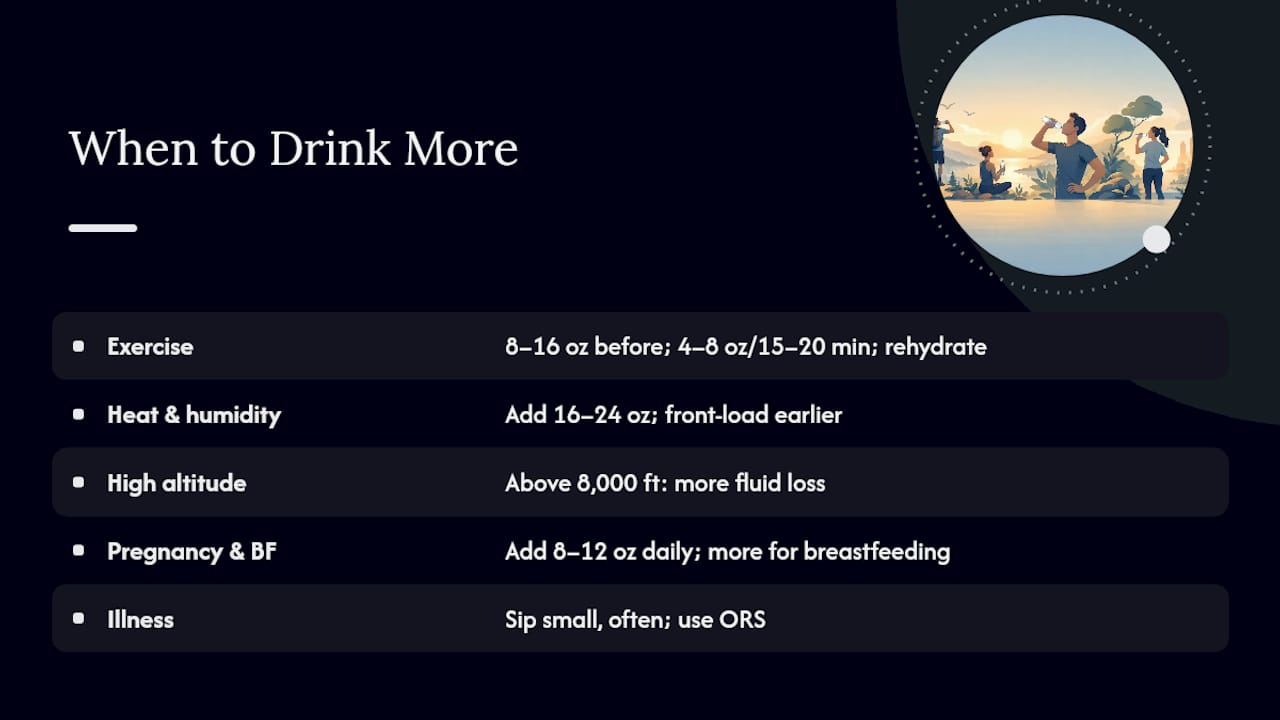
Exercise: Drink 8 to 16 ounces in the two hours before a workout, sip 4 to 8 ounces every 15 to 20 minutes during activity lasting longer than an hour, and replace losses afterward using the weigh-in method described earlier. For sessions under an hour in moderate conditions, water alone is usually enough. Longer or hotter sessions benefit from electrolytes.
Heat and humidity: On days above 85°F, or in humid conditions where sweat doesn’t evaporate efficiently, add an extra 16 to 24 ounces to your normal target and front-load fluids earlier in the day rather than trying to catch up in the evening.
High altitude: Elevations above 8,000 feet increase fluid loss through faster breathing and increased urination.
Pregnancy and breastfeeding: Fluid needs rise during both, since guidelines account for pregnancy and breastfeeding as factors that shift baseline requirements upward from standard adult targets. An extra 8 to 12 ounces daily is a reasonable starting adjustment, with breastfeeding parents often needing more given fluid loss through milk production.
Illness: Vomiting, diarrhea, and fever accelerate fluid loss quickly. Small, frequent sips work better than large volumes all at once, and an oral rehydration solution with electrolytes often outperforms plain water when losses are significant.
Pro Tip: If you take diuretics, have kidney or heart disease, or manage a chronic illness that affects fluid balance, ask your doctor for a personalized fluid range instead of following general guidelines. What works for a healthy 45 year old runner may not apply to your situation.
Simple Habits That Make Hydration Automatic
Willpower fades by mid-afternoon. Structure doesn’t. The most reliable way to hit your hydration checklist consistently is to stack a drink onto something you already do without thinking, a technique UCLA Health describes as one of the more effective behavioral approaches to consistent fluid intake.
A few habit-stacking anchors that work well:
- Drink a full glass the moment your coffee maker finishes brewing.
- Keep a bottle on your desk, in your car, and by your bed, visible at all times.
- Sip a glass every time you check your phone for the first hour after waking.
- Fill your bottle the night before and place it somewhere you’ll trip over it, literally, on your way out the door.
Container choice matters more than people expect. A bottle you actually enjoy carrying gets used; one that’s too bulky or the wrong temperature ends up abandoned in a bag. Insulated bottles keep water cold for hours, which makes a real difference in whether you finish it. Freezing a bottle a quarter full overnight, then topping it off with cold water in the morning, gives you ice-cold water that lasts most of the day.
For reminders, a basic phone alarm every two hours works fine if you’re not the type to ignore notifications. If you are, a rubber band around your bottle that you move down with each refill gives you a visual tally without any app at all. Small, consistent habit changes tend to stick better than ambitious overhauls that fizzle out by week two.
Pro Tip: Registered dietitians generally favor gradual, steady intake over trying to “catch up” by drinking large volumes in a short window. Spacing fluid intake across the day is easier on your kidneys and easier on your schedule than chugging 32 ounces in one sitting.
Pro Tip: Pair your hydration cues with meals you already eat. A glass before each of your three main meals adds roughly 24 ounces without requiring you to remember anything new.
What Are the Warning Signs of Dehydration and Overhydration?
Most hydration slip-ups are minor and self-correcting. Some aren’t, and knowing the difference matters.
Moderate dehydration signs include persistent thirst, dry mouth, headache, dark urine, fatigue, and dizziness when standing up quickly. These usually resolve within an hour or two of steady fluid intake.
Severe dehydration, which needs prompt medical attention, includes:
- Confusion or unusual irritability
- Rapid heartbeat or rapid breathing
- Little to no urination for eight hours or more
- Sunken eyes or, in infants, a sunken soft spot on the head
- Extreme fatigue or fainting
Call 911 or go to urgent care if someone shows confusion, fainting, or an inability to keep fluids down alongside these symptoms. A routine check with your doctor is more appropriate if you’re consistently seeing mild dehydration signs despite following a checklist, since that pattern can point to an underlying issue worth investigating.
Overhydration is far less common, but it’s not zero risk. Drinking excessive amounts of water in a short period can dilute sodium levels in the blood, a condition called hyponatremia. This shows up most often in endurance athletes drinking aggressively without electrolytes, and in people with kidney, liver, or heart conditions whose bodies can’t process fluid the same way. Symptoms include nausea, confusion, headache, and in severe cases, seizures.
If you’re on diuretics, have congestive heart failure, or manage chronic kidney disease, a personalized fluid ceiling from your doctor matters more than any general hydration checklist. This isn’t a situation where more is automatically safer.
Which Tracking Method Actually Works for You?
Tracking hydration doesn’t require anything fancy, and the best system is whichever one you’ll actually use for more than three days.
Paper checklists work well for people who like checking a physical box. A printed grid with time slots and a small column for urine color notes takes ten seconds to fill in and lives on your fridge or nightstand. The Helping Mom printable caregiver templates offer a useful format you can adapt for daily hydration logging if you want a ready-made structure.
Bottle tally methods suit people who hate writing anything down. A rubber band moved after each refill, or marker lines drawn directly on the bottle, gives a visual count with zero paperwork.
Phone apps appeal to data-minded people who like graphs and streaks, though they require you to remember to log every glass, which is exactly the kind of friction that causes most tracking systems to die within a week.
A simple daily log, whether on paper or in a notes app, needs only four columns: time, approximate ounces, urine color check, and a note if you exercised or felt off. That’s enough detail to spot patterns without turning hydration into a data project.
Privacy-minded readers should note that paper and bottle-tally methods keep everything offline, no account, no data sharing, just a physical object you control. For most people chasing consistent daily habits, the low-tech option produces the same behavior change as an app, minus the subscription and the notifications.
The Lunix 7-Point Hydration Checklist You Can Print Today
Screenshot this, print it, or copy it into your notes app. It’s designed to fit on a single index card or the front of your refrigerator.
- Wake-up glass: 8 to 12 ounces before coffee.
- Bottle refills: Two to three full 32 ounce bottles across the day.
- Pre-meal sip: One glass 15 minutes before each meal.
- Movement rule: Drink before, sip during, replace after any exercise past 30 minutes.
- Color check: Glance at urine color morning and evening, using pale straw as your target.
- One swap: Replace one sugary drink daily with water, sparkling water, or unsweetened tea.
- Wind-down sip: A small glass an hour before bed.
Use it daily by treating each item as a checkbox rather than a rule to obsess over. Missing one item on a busy day isn’t a failure, it’s a data point. Pair it with the bottle tally or paper log from the previous section for a full week to see where your natural gaps are, then adjust the timing that fits your actual schedule rather than an idealized one.
Each item on this list ties back to guidance from sources like the CDC and the Harvard T.H. Chan School of Public Health, translated into a format you can actually use without a nutrition degree. If you’re printing this for a wall or fridge, use at least a 14-point font and high contrast (black text on white or pale yellow) so it’s readable across the room, not just up close.
Author Perspective: Making Hydration Actually Stick
Most hydration advice fails for one reason: it treats drinking water like a task instead of a rhythm. We think the checklist approach works precisely because it removes the decision-making. You’re not asking “should I drink water now?” fifteen times a day, you’re just following a pattern that’s already built into moments you experience anyway.
Hydration isn’t just about thirst. It plays a real role in how your body recovers after physical effort and how your joints and muscles feel the next morning, which is part of why recovery and hydration are so closely linked in how your body bounces back from a hard workout or a long day on your feet.
A couple of small product choices support this rhythm without adding effort:
- A bottle you genuinely like carrying gets refilled more often than one that’s a chore to use.
- Recovery accessories that encourage rest after exertion, like heat or compression tools, pair naturally with a post-workout rehydration routine, since your body is doing two repair jobs at once.
None of this replaces the basics. But small environmental nudges make consistency far easier than relying on memory alone.
Recovery Tools That Support Your Hydration Routine
Staying hydrated is only half the recovery equation. What you do with your body afterward, especially after a hard workout, a long shift on your feet, or a stretch of physical strain, matters just as much for how you feel the next day.

Comfort and thermoregulation play a bigger role in recovery than most people realize. A heated compression tool applied to tired hands or joints after exertion helps blood flow return to normal, working alongside proper fluid intake rather than instead of it. Many customers pair a glass of water immediately post-workout with a short session using a heat or compression device, treating the two habits as one recovery ritual instead of separate chores.
If you’re building a hydration and recovery routine that actually holds up over months instead of days, explore the Lunix Recovery collection to see which comfort tools fit your specific routine, whether that’s post-exercise soreness, end-of-day tension, or general daily recovery support.
Sources
- How Much Water Do You Need? • The Nutrition Source
- Water and healthy drinks - CDC
- Water: How much should you drink? - Mayo Clinic
- How much water should you drink? - Harvard Health
The urine-color chart referenced throughout this article draws on general clinical guidance rather than a single standardized scale, and factors like vitamins, medications, and certain foods can shift color independent of hydration status.
This article is general information, not a substitute for advice from a qualified doctor. Consult a qualified healthcare professional about your own circumstances before acting on anything here.