


TL;DR:
- Establishing a consistent 30 to 60-minute bedtime routine is the most effective way to improve sleep quality.
- Using specific sensory cues consistently signals the brain to transition from alertness to rest, especially with lighting and temperature control.
Tonight, you can start with three steps: a 20-minute shutdown, a 30-minute wind-down, and a 10-minute sleep window. That’s the whole framework. Everything else in this guide helps you refine and personalize it.
Your starter ritual for tonight:
- Step 1 — Shutdown (20 min): Close all work tabs. Write tomorrow’s top three priorities on paper, then put the list away.
- Step 2 — Wind-down (30 min): Dim every light in the room. Put your phone face-down or in another room. Choose one calming activity: gentle stretching, reading a physical book, or slow breathing.
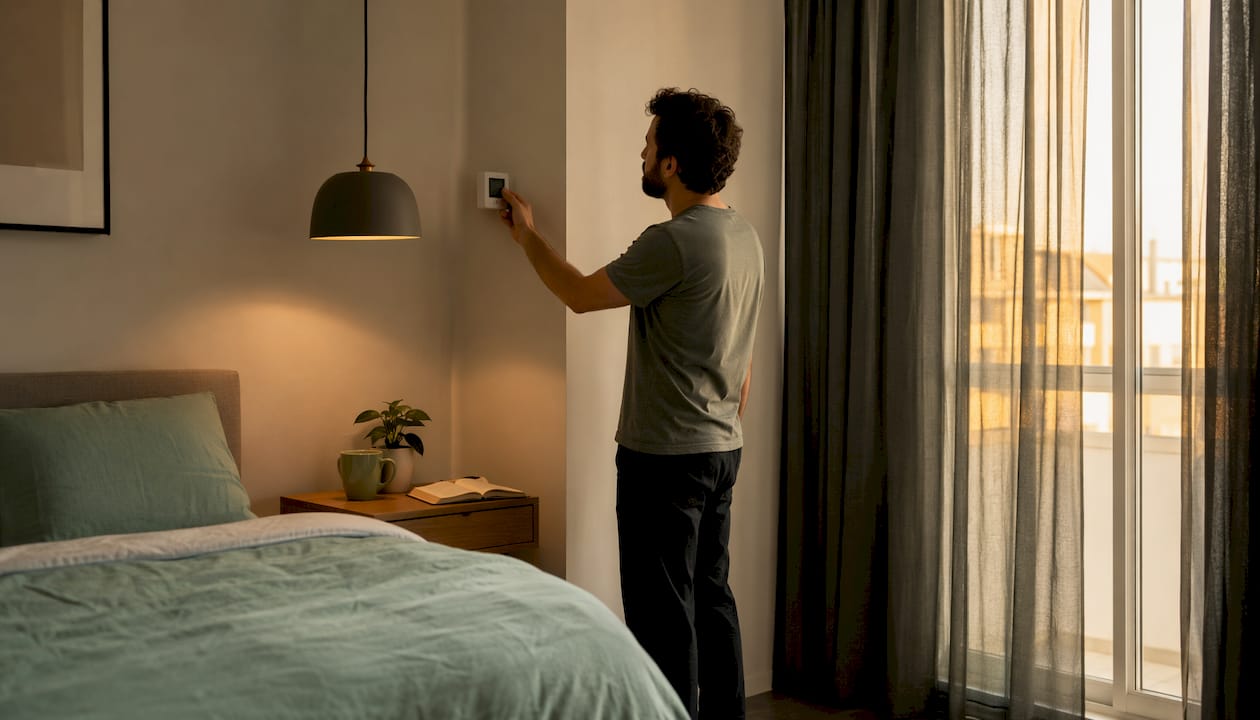
- Step 3 — Sleep window (10 min): Phone stays out of the bedroom. Cool the room to a temperature conducive to falling asleep. Get into bed and let your body do the rest.
That’s your foundation. Build from here.
Table of Contents
- How do bedtime rituals actually help you sleep?
- When should you start winding down, and for how long?
- What does your bedroom environment actually need?
- Which activities help you wind down, and which ones backfire?
- Three ready-made ritual templates you can use tonight
- How do you make a bedtime ritual stick?
- How to integrate Lunix recovery products safely and effectively
- What to do when your ritual isn’t working
- Key Takeaways
- What Lunix believes about bedtime rituals
- Lunix recovery products that support your nightly ritual
- Useful sources and further reading
How do bedtime rituals actually help you sleep?
A consistent evening routine acts as a dimmer switch for the nervous system, gradually signaling the brain to shift from alert to rest. It’s not magic. It’s biology. When you repeat the same sequence of sensory cues each night, your brain starts treating those cues as Pavlovian sleep triggers. The scent of lavender, a specific playlist, the sound of a warm shower running — over time, these become reliable on-ramps to sleep.
“If we can switch off a sense of any threat that’s mounted from the day, that will support our sleep.” — Dr. Allison Harvey, clinical psychologist, University of California, Berkeley
Sensory rituals like warm baths, lavender, and calming music can become reliable sleep cues when used consistently. The key word is consistently. One good night doesn’t build a trigger. A week of the same sequence does.
Screen time and insomnia: 1 hour of screen time before bed is linked to a 59% higher risk of insomnia. That single habit change — phones down an hour early — may be the highest-leverage move you make.
When should you start winding down, and for how long?
Start your wind-down 30 minutes to 2 hours before your target bedtime. For most adults, a 30–60 minute evening routine—composed of a 20-minute shutdown, 30-minute wind-down, and 10-minute sleep window—hits the sweet spot between effective and sustainable. Practiced consistently, this structure produces measurable improvements within two weeks for many working adults.
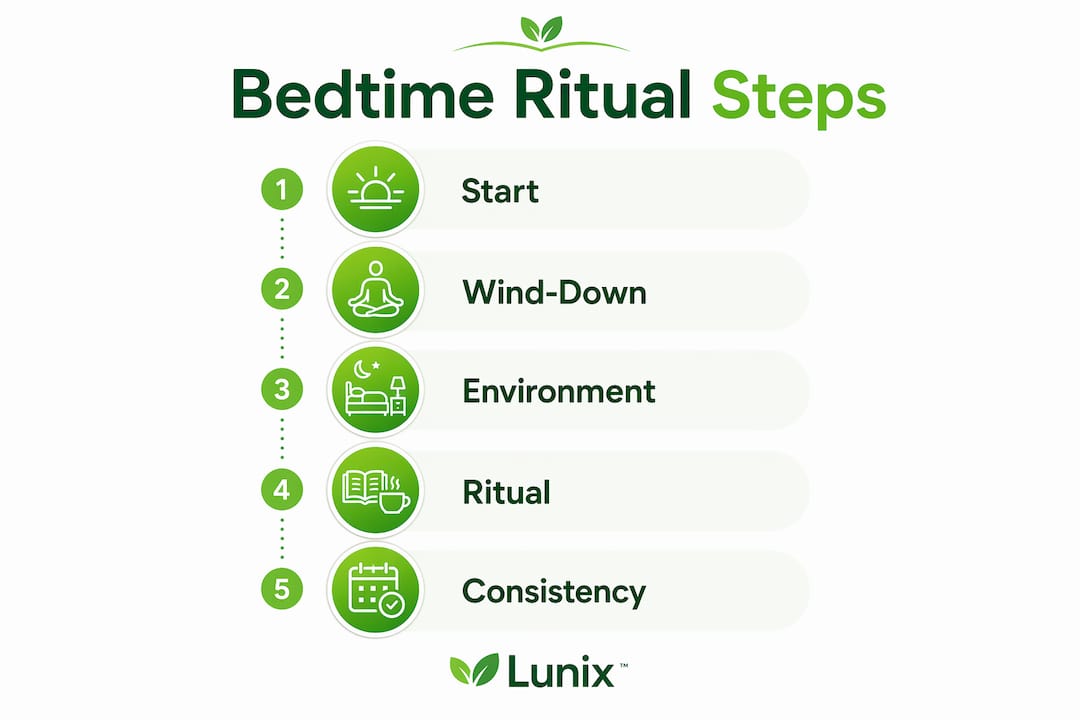
Tight on time? You can compress the routine if needed, but the evidence favors the standard 60-minute sequence (20 min shutdown, 30 min wind-down, 10 min sleep window).
On weekends, keep your bedtime within a 30-minute window of your weekday target. Sleeping in two hours on Saturday quietly resets your circadian clock and makes Monday harder than it needs to be.
What does your bedroom environment actually need?
Small, measurable changes to your sleep environment often outperform elaborate rituals. Here’s what the evidence supports:
| Factor | Target | Why it matters |
|---|---|---|
| Temperature | 65–68°F | A cooler core body temperature accelerates sleep onset |
| Light | Dim 1 hour before bed; blackout or eye mask at sleep | Even closed eyes register light; melatonin release depends on darkness |
| Noise | White noise, earplugs, or quiet | Unpredictable sounds disrupt sleep cycles more than steady ambient sound |
| Bedding | Breathable, supportive | Discomfort causes micro-arousals that fragment sleep |
The 65–68°F bedroom temperature recommendation comes from Sleep Foundation guidance and is echoed by sleep medicine physicians. If you can’t control your thermostat precisely, a fan or cooling mattress pad gets you close. For light, understanding how light affects your sleep quality is worth a few minutes of reading before you make changes.
Which activities help you wind down, and which ones backfire?
Include these:
- Gentle stretching or light yoga (5–10 minutes)
- A warm bath or shower timed about an hour before bed
- Brief journaling: three wins from the day, or tomorrow’s single top priority
- Low-stimulation reading (physical book or e-reader on warm, dim settings)
- Slow breathwork: 4-count inhale, 6-count exhale
- Calming audio: ambient music, nature sounds, or a podcast with no news content
- A skincare or hygiene ritual that signals “day is done”
- Scent cues: lavender or chamomile as part of a fragrance-supported daily ritual
Avoid these:
- Screens within 60 minutes of bed, especially social media and work email
- Emotionally charged conversations or late-night news
- Heavy meals or alcohol within 2–3 hours of sleep
- Vigorous exercise within 90 minutes of bedtime
- Bright overhead lighting after 9 PM
Pro Tip: Anchor your wind-down to one existing nightly habit. Finishing the dishes, plugging in your phone across the room, or changing into sleep clothes can all serve as the trigger that starts the whole sequence. Once the anchor fires, the rest of the routine follows with far less effort.
Three ready-made ritual templates you can use tonight
| Template | Shutdown | Wind-down | Sleep window | Optional product touch |
|---|---|---|---|---|
| 15-minute | 5 min: write top task | 7 min: breathwork or reading | 3 min: dim room, phone out | None needed |
| 30-minute | 10 min: close work, top 3 list | 15 min: warm shower or stretch | 5 min: cool room, scent cue | Localized heat (low setting) |
| 60-minute | 20 min: full shutdown ritual | 30 min: bath, reading, stretch | 10 min: dark cool room, wedge pillow | Percussion or compression (pre-wind-down) |
The 60-minute version is where recovery products fit most naturally. Use percussion massage or compression during the wind-down phase, not right before lights-out. A warm bath timed about an hour before bed can encourage sleep onset by helping your core temperature drop as you move into a cool room.
Quick win: Reading for as little as 6 minutes can reduce stress significantly, making it one of the most efficient activities in any template.
How do you make a bedtime ritual stick?
Consistency beats complexity every time. Dr. Allison Harvey’s guidance is clear: start with one or two habits you can actually maintain, not an elaborate ten-step plan you’ll abandon by Thursday.
- Pick one anchor cue that starts the routine (finishing dishes, plugging in your phone, a set alarm labeled “wind down”).
- Add one calming habit you genuinely enjoy: a short read, five minutes of stretching, or a warm drink.
- Set a consistent target bedtime and treat it as a trackable commitment, not a vague hope.
- Build a minimum version for hard nights: phone across the room, lights down, in bed. That still counts.
For the first four weeks, track your routine with a simple checkmark. Progress over perfection. If you miss a night, the goal is getting back to it the next evening, not deciding the whole system failed.
Pro Tip: Limit your routine to three essentials for the first two weeks: stop work, lower stimulation, get in bed on time. Once that’s stable, add one optional calming habit. Adding too much too soon is the most common reason routines collapse.
How to integrate Lunix recovery products safely and effectively
Recovery products work best when they support your wind-down, not compete with it. The general rule: introduce one product at a time, use lower intensity settings at night, and give yourself a gap before lights-out for anything that raises body temperature.
Timing matters: Devices that generate significant heat (infrared blankets, heated compression) work best when used 30–60 minutes before your sleep window, not immediately before bed. This gives your core temperature time to drop, which is what actually triggers sleep onset.
Here’s how each product category fits the three-phase structure:
- Shutdown phase: Low-tech cues only. Scent, journaling, dimming lights.
- Wind-down phase: The Lunix percussion massager at a low setting works well here for pre-bed muscle release. The Lunix infrared sauna blanket can be used early in the wind-down with a 30-minute cool-down gap before sleep. The Lunix heated air-compression hand massager is a good fit for the mid-wind-down, especially if tension accumulates in your hands and forearms.
- Sleep window: The Lunix orthopedic wedge pillow set supports comfortable sleep positioning from the moment you get into bed, with no timing concern.
Always read your device manual for specific guidance. For serious medical conditions, consult a clinician before adding heat or compression devices to your nightly routine.
What to do when your ritual isn’t working
Most routines fail for one of four reasons. Find yours and fix it:
- Timing mismatch: Your routine starts too late or your target bedtime is unrealistic. Move the first wind-down cue 15–20 minutes earlier.
- Too much stimulation: You’re still checking email or watching intense content during “wind-down.” Add a stronger mental shutdown step: a brain dump, three slow breaths, or a brief journal entry.
- Inconsistent schedule: Weekend sleep drift is resetting your circadian rhythm. Keep your bedtime within a 30-minute window, even on days off.
- Can’t fall asleep after 20 minutes: Get up and do a low-stimulation activity in another room, then return to bed only when you feel sleepy. This prevents your bed from becoming associated with frustration.
If you’re dealing with persistent insomnia, loud snoring, or significant daytime sleepiness, those are signals to consult a sleep specialist rather than adjust your routine further. The Mayo Clinic sleep guidance and Sleep Foundation are both solid starting points for understanding when professional help is the right call. For midlife-specific sleep challenges, sleep quality after 40 often involves hormonal and lifestyle factors that benefit from a more personalized approach.
Key Takeaways
A consistent 30–60 minute evening routine, begun 30 minutes to 2 hours before your target bedtime, is the single most effective step you can take to improve sleep quality and recovery.
| Point | Details |
|---|---|
| Start 30–60 min before bed | The Sleep Foundation recommends beginning your wind-down 30 minutes to 2 hours before your target bedtime. |
| Control light and temperature | Dim lights 1 hour before bed and keep your room at 65–68°F to support natural melatonin release and faster sleep onset. |
| Phones out of the bedroom | One hour of screen time before bed is linked to a 59% higher risk of insomnia; removing the phone is the highest-leverage change. |
| Build consistency, not complexity | Start with 1–2 habits you can maintain every night; Dr. Allison Harvey recommends consistency over elaborate routines. |
| Add Lunix products intentionally | Use the Lunix percussion massager or infrared sauna blanket during the wind-down phase, with a 30–60 minute gap before lights-out. |
What Lunix believes about bedtime rituals
The wellness industry loves to complicate sleep. Elaborate ten-step routines, expensive gadgets used in the wrong order, rituals that require more willpower than most people have at 10 PM. What the evidence actually supports is simpler: a short, consistent sequence of sensory cues that tells your nervous system the day is done.
At Lunix, the design philosophy behind every recovery product starts from that same place. A percussion massager used at low intensity during the wind-down phase isn’t a performance tool. It’s a signal. A wedge pillow isn’t just about posture. It’s about creating a sleep environment your body recognizes and trusts. The goal isn’t to add more to your night. It’s to make the transition from day to rest feel natural, repeatable, and worth looking forward to. That’s what good recovery tools do when they’re used thoughtfully.
Lunix recovery products that support your nightly ritual

Your ritual is the foundation. Lunix products are the tools that make it more effective, not more complicated. The Lunix orthopedic wedge pillow set supports comfortable sleep positioning from the moment you get into bed. The Lunix infrared sauna blanket fits naturally into the early wind-down phase, with a 30-minute cool-down gap before sleep. The Lunix heated air-compression hand massager releases tension in the hands and forearms mid-wind-down. The Lunix percussion massager works best at the start of the wind-down, at a low setting, for pre-bed muscle release.
Use each at the intensity your body needs at night, not the setting you’d use after a workout. Browse the full Lunix recovery collection to find the right fit for your ritual, and pair any product with the bedtime routine guidance on the Lunix blog for step-by-step integration tips.
Useful sources and further reading
- How to Build a Better Bedtime Routine for Adults — Sleep Foundation
- Sleep Tips: 6 Steps to Better Sleep — Mayo Clinic
- Improve Your Sleep with Evening Rituals — Healthline
- Evening Routine: 60-Min Wind-Down That Works — HabitBox Blog
- How to Build a Sleep Routine That Actually Works — GW Cancer Center
- Bedtime Habits That Can Help You Sleep Better — NPR
- Frontiers in Psychiatry — Screen Time and Insomnia Research