

TL;DR:
- Restorative sleep enables the body and brain to actively repair and rebuild, which is essential for long-term health in adults aged 40 to 65. Its quality depends on full, uninterrupted sleep cycles of deep non-REM and REM stages, crucial for detoxification, memory, and emotional stability. Improving sleep habits, environment, and routine can significantly restore sleep depth and continuity, reducing health risks associated with age-related changes.
Restorative sleep is defined as the sleep quality that allows your brain and body to actively repair, recharge, and rebuild, and it is the single most important factor in long-term health for adults aged 40 to 65. Unlike total sleep time, restorative sleep depends on completing full cycles of deep non-REM and REM sleep without interruption. The University of Rochester confirmed that sleep is an active brain maintenance process, not passive rest. The CDC reports that about 30.5% of U.S. adults get fewer than 7 hours of sleep per night. For anyone in midlife, that gap between hours logged and genuine restoration carries serious consequences for the brain, the immune system, and emotional health.
Why restorative sleep matters for your health
The benefits of restorative sleep reach far beyond feeling refreshed in the morning. During deep non-REM sleep, your brain activates the glymphatic system, a network of channels that flushes out metabolic waste products accumulated during the day. University of Rochester research shows this glymphatic clearance process directly supports memory consolidation, cognitive sharpness, and long-term neurological health. For adults in their 40s, 50s, and 60s, this is not a minor benefit. It is a biological necessity.

A 2026 study published in Nature Communications found that glymphatic activity during sleep correlates with measurably reduced levels of amyloid-beta and tau proteins in the blood. These are the same proteins linked to Alzheimer’s disease. That finding means the quality of your sleep tonight has a direct, measurable effect on your brain disease risk over the coming decades.
The physical benefits extend well beyond the brain:
- Immune function: Deep sleep strengthens immune defenses by triggering the release of cytokines that fight infection and inflammation.
- Muscle repair: Growth hormone is released primarily during deep non-REM sleep, making this stage critical for tissue recovery and physical resilience.
- Hormonal balance: Cortisol regulation, insulin sensitivity, and metabolic function all depend on consistent, uninterrupted sleep cycles.
- Emotional stability: REM sleep processes emotional memories and reduces the intensity of stress responses, helping you manage daily pressure more effectively.
A 2026 Frontiers neuroscience study confirmed that sleep deprivation activates inflammatory pathways and anxiety-related behaviors, with effects that are only partially reversed by sleep restoration. This means chronic poor sleep creates a biological debt that a single good night cannot fully repay. The importance of sleep quality compounds over time, for better or worse.
How does sleep quality differ from sleep quantity?
Most people measure sleep by the clock. Eight hours sounds like success. But two people can both sleep eight hours and wake up with completely different levels of restoration, because the architecture of their sleep differs. Sleep architecture refers to the pattern and proportion of sleep stages across a night, including light non-REM, deep non-REM (also called slow-wave sleep), and REM sleep.
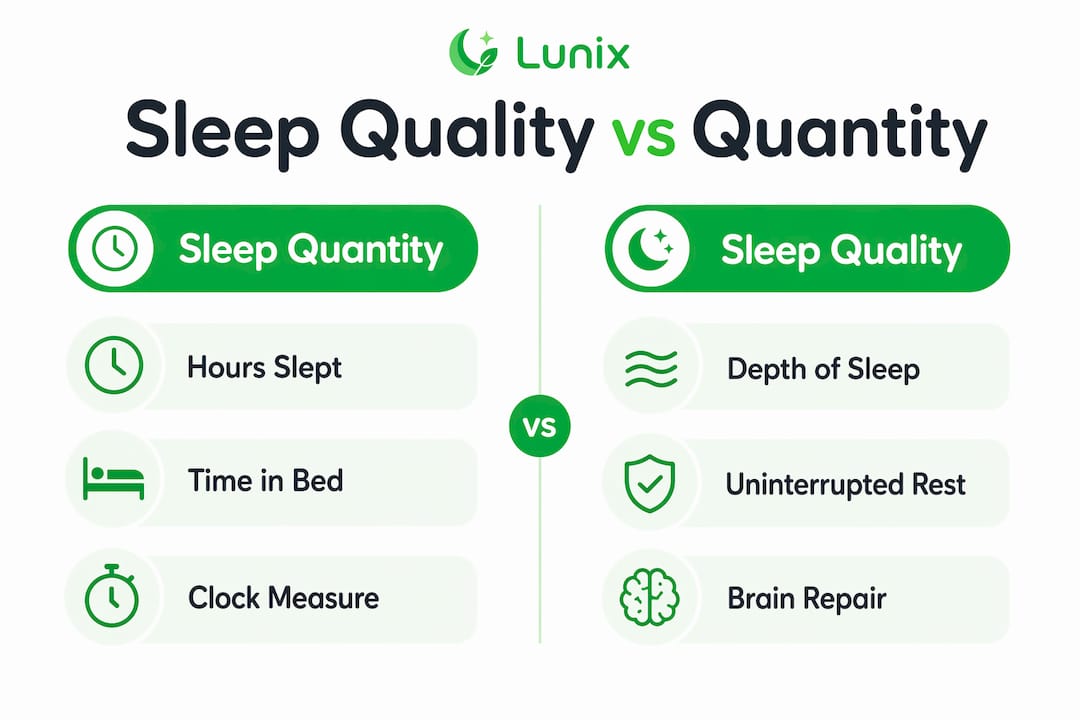
The American Academy of Sleep Medicine recommends that adults get 7 or more hours per night with attention to quality, timing, and regularity. Duration is just one dimension. The AASM frames healthy sleep as multidimensional, which means waking rested is a more reliable indicator of restorative sleep than the number of hours you logged.
Here is how quality and quantity compare across the factors that matter most:
| Factor | Sleep quantity | Sleep quality |
|---|---|---|
| What it measures | Total hours in bed or asleep | Depth, continuity, and stage distribution |
| Primary indicator | Clock time | How rested you feel on waking |
| Key disruptors | Early wake times, short nights | Awakenings, circadian misalignment, stress |
| Health impact | Linked to fatigue and duration deficits | Linked to cognitive, immune, and emotional outcomes |
| Improvement strategy | Earlier bedtime, consistent schedule | Sleep hygiene, environment, stress management |
Interrupted sleep is particularly damaging. Even if you spend eight hours in bed, frequent awakenings prevent you from reaching or sustaining deep non-REM and REM stages. MedlinePlus confirms that interrupted sleep stages lead to poor thinking, memory problems, and elevated risks for depression and anxiety. The continuity of your sleep matters as much as its length.
Pro Tip: Track how you feel 30 minutes after waking, not just how many hours you slept. Persistent grogginess, brain fog, or low mood are reliable signs that your sleep recovery process is incomplete, regardless of total sleep time.
What obstacles block restorative sleep after 40?
Sleep patterns change naturally with age. Adults over 40 tend to spend less time in deep non-REM sleep, experience more frequent nighttime awakenings, and shift toward earlier wake times. These changes are biological, but they are not inevitable or irreversible. Understanding what disrupts your sleep is the first step toward fixing it.
The most common obstacles for adults in this age group include:
- Stress and cortisol elevation: Chronic stress keeps cortisol levels elevated at night, which delays sleep onset and reduces deep sleep duration.
- Circadian disruption: Irregular schedules, late-night screen exposure, and shift work all misalign your internal clock, reducing the proportion of restorative sleep stages.
- Inflammation: The inflammatory consequences of sleep disruption are rooted in biological pathways, meaning poor sleep and inflammation reinforce each other in a cycle that worsens with age.
- Sleep aids: Many adults turn to medications as sleep difficulties increase. However, sedatives like zolpidem may suppress glymphatic function despite improving sleep duration, meaning you may sleep longer but restore less.
- Undiagnosed sleep disorders: Conditions like sleep apnea and restless leg syndrome are common in midlife and severely fragment sleep architecture.
The AASM survey found that nearly half of U.S. adults have never discussed sleep with a healthcare professional. That gap is significant. Many adults assume poor sleep is a normal part of aging and never seek evaluation. If you wake unrefreshed consistently, a conversation with your doctor is worth having.
Pro Tip: Before reaching for a sleep aid, try a two-week sleep hygiene experiment. Consistent wake times, reduced evening light exposure, and a cooler bedroom temperature often produce measurable improvements without affecting sleep architecture.
Which strategies actually improve restorative sleep?
The good news is that the sleep recovery process responds well to consistent, evidence-based habits. You do not need a complex protocol. You need a few well-chosen changes applied consistently. Here are the strategies with the strongest research support for adults aged 40 to 65:
-
Set a fixed wake time. Your circadian rhythm anchors to your wake time more than your bedtime. Waking at the same time every day, including weekends, stabilizes your sleep architecture over time.
-
Reduce light exposure after sunset. Blue light from screens suppresses melatonin production and delays the onset of deep sleep. Dimming lights and limiting screen use in the 90 minutes before bed supports natural sleep onset.
-
Cool your bedroom to between 65 and 68 degrees Fahrenheit. Core body temperature drops during deep sleep. A cooler environment accelerates that drop and deepens slow-wave sleep.
-
Limit alcohol in the evening. Alcohol may help you fall asleep faster, but it fragments REM sleep in the second half of the night, reducing the emotional processing and memory consolidation that make sleep restorative.
-
Build a wind-down routine. A consistent pre-sleep routine signals your nervous system to shift from alert to recovery mode. This can include light stretching, reading, or breathing exercises. Lunixinc’s guide on building a restful bedtime routine offers a practical framework for adults looking to structure this transition.
-
Prioritize sleep quality over quantity. The AASM’s multidimensional view of healthy sleep for adults includes timing and regularity alongside duration. Seven hours of uninterrupted, well-timed sleep outperforms nine hours of fragmented rest.
-
Address physical comfort. Your sleep surface, pillow support, and body positioning affect how often you shift or wake during the night. Reducing physical discomfort directly reduces sleep fragmentation. Lunixinc’s restorative living tips for adults 40+ covers how environment and physical support contribute to deeper, more consistent sleep.
Monitoring how you feel each morning, rather than how long you slept, gives you the most useful feedback on whether your approach is working. Improvement in restorative sleep techniques shows up as clearer thinking, steadier mood, and faster physical recovery, not just a longer number on your sleep tracker.
Key takeaways
Restorative sleep is an active biological process, and its quality determines your cognitive resilience, immune strength, and emotional health far more than total hours in bed.
| Point | Details |
|---|---|
| Quality over quantity | Uninterrupted deep non-REM and REM sleep restores more than extra hours of fragmented sleep. |
| Glymphatic brain protection | Deep sleep clears Alzheimer’s-linked proteins from the brain, reducing long-term neurological risk. |
| Age-related changes are manageable | Sleep architecture shifts after 40, but consistent habits and environment changes can restore depth and continuity. |
| Sleep aids carry trade-offs | Some sedatives improve duration but suppress glymphatic clearance, reducing true restoration. |
| Proactive evaluation matters | Nearly half of U.S. adults have never discussed sleep with a doctor, leaving many disorders undiagnosed and untreated. |
What we have learned from watching people sleep better
Most people who come to us at Lunixinc with sleep concerns share one thing in common. They have been counting hours for years and wondering why they still feel exhausted. The shift that actually changes things is not sleeping longer. It is sleeping better.
What the research on glymphatic function taught me is that sleep is maintenance work, not downtime. Your brain is running a cleaning cycle every night. If you interrupt that cycle with stress, poor positioning, alcohol, or an inconsistent schedule, you wake up with a brain that has not been fully serviced. Over years, that accumulates in ways that show up as cognitive decline, mood instability, and chronic fatigue.
The mistake I see most often is treating sleep as a passive activity that will sort itself out. Adults in their 40s and 50s often accept poor sleep as a trade-off for busy lives. It is not a trade-off. It is a withdrawal from a health account that eventually runs dry.
The most encouraging finding from recent science is that the sleep recovery process is genuinely responsive to change. You do not need to overhaul your life. You need to protect your sleep architecture with the same intentionality you bring to nutrition or exercise. Start with your wake time, your environment, and your evening routine. The biology will follow.
— Lunix
How Lunix supports your sleep recovery

At Lunixinc, we design recovery solutions specifically for adults who want to sleep deeper, recover faster, and feel the difference in daily life. Our recovery product collection includes comfort and support tools built around the science of restorative sleep, helping you reduce physical disruption, improve body positioning, and create the conditions your body needs to complete full sleep cycles. If you are ready to move beyond counting hours and start investing in sleep quality, explore the Lunixinc recovery range and find the tools that fit your body and your routine. For additional guidance on physical recovery alongside better sleep, our body restoration tips for adults 40+ offer a practical starting point.
FAQ
What is restorative sleep?
Restorative sleep is the quality of sleep that allows your brain and body to complete active repair processes, including glymphatic waste clearance, muscle recovery, and emotional regulation, through uninterrupted deep non-REM and REM sleep cycles.
How many hours of sleep do adults over 40 need?
The American Academy of Sleep Medicine recommends 7 or more hours per night for adults, but quality, timing, and regularity matter as much as duration for achieving genuinely restorative sleep.
What are the signs that your sleep is restorative?
Waking without an alarm feeling mentally clear, maintaining steady energy through the morning, and recovering physically from exercise are reliable signs that your sleep recovery process is working as it should.
Can sleep aids prevent restorative sleep?
Some sedatives, including zolpidem, may improve total sleep time while suppressing glymphatic function, which reduces the brain’s ability to clear waste during sleep and limits true restoration.
Why does sleep quality decline after 40?
Adults over 40 naturally spend less time in deep non-REM sleep and experience more frequent awakenings due to hormonal shifts, increased stress, and circadian changes. These effects are manageable with consistent sleep hygiene and environmental adjustments.