


Mood lighting is the intentional use of brightness, color, and layered lighting techniques to shape the emotional atmosphere of a space. It is not about seeing better. It is about feeling better. Whether you want to wind down after a long day, create a calm recovery space, or simply make your home feel warmer and more welcoming, the way you light a room makes a real difference to how your body and mind respond.
Table of Contents
- What is mood lighting, and why does it matter for wellness?
- How the three types of lighting work together
- What science says about the effects of mood lighting on your body
- How to create mood lighting at home for relaxation and recovery
- How Lunixinc integrates mood lighting principles into wellness and recovery
- Key Takeaways
What is mood lighting, and why does it matter for wellness?
At its core, mood lighting is purposeful. Every choice, from the warmth of a bulb to the placement of a lamp, sends a signal to your nervous system. Warm, dim light tells your brain it is time to relax. Bright, cool light says stay alert and focused. That is not a coincidence. It is biology.
The key elements of mood lighting include:
- Brightness (intensity): Lower light levels encourage calm; higher levels promote alertness and energy.
- Color temperature: Measured in Kelvin (K). Warm tones below 3000K feel cozy and inviting; cooler tones above 4500K feel clinical and stimulating.
- Layering: Combining multiple light sources, rather than relying on a single overhead fixture, creates depth and emotional richness.
- Diffusion: Shades, domes, and frosted bulbs soften harsh light and create a gentler, more comfortable glow.
- Color: Colored lighting, beyond white tones, can actively shift your emotional state in specific, measurable ways.
For adults focused on wellness and recovery, these elements are not decorative details. They are tools for supporting your body’s natural rhythms and helping your home work for you, not against you.
How the three types of lighting work together
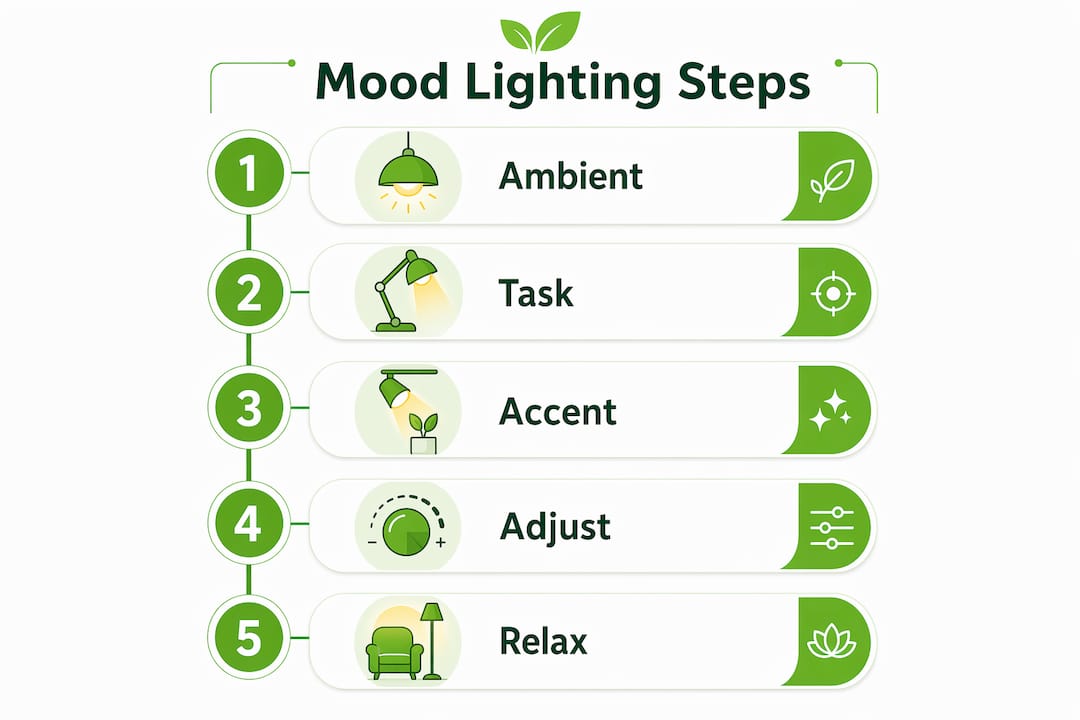
Effective mood lighting design relies on layering at least two or three distinct light sources in any given room. Single overhead lighting is one of the most common mistakes in home design, producing flat, uninviting spaces that feel more like a waiting room than a sanctuary.
The three core types are:
- Ambient lighting: The foundational layer. Think ceiling fixtures, recessed lights, or floor lamps that cast a soft, even glow across the room. This sets the overall tone and tells your brain what kind of space it is in.
- Task lighting: Focused, direct light for a specific activity, like reading, cooking, or working. Table lamps and under-cabinet lights fall here. Task lighting is practical, but it does not have to be harsh.
- Accent lighting: The layer that adds personality. Wall sconces, backlit mirrors, cove lights, and colored spotlights highlight textures, artwork, or architectural features. This is where mood lighting gets expressive.
Lighting designers consistently recommend keeping all three types below 3000K for a welcoming feel. At 2700K, you get a warm glow that feels natural and calming without tipping into dim or gloomy. Going above 3000K starts to introduce a cooler, bluer quality that can make a space feel sterile rather than restorative.
Pro Tip: In a bedroom or living room, try turning off the overhead light entirely in the evening and relying only on accent and task lamps set to warm tones. The shift in atmosphere is immediate.
What science says about the effects of mood lighting on your body
The connection between light and emotional state is not just anecdotal. Research shows that brain limbic areas like the amygdala and hippocampus respond to light changes within seconds, directly influencing mood and emotional processing. Exposure to lower color temperature light around 2700K promotes calm and reduces negative emotional responses. That is a meaningful finding for anyone using their home as a recovery space.
Colored light adds another layer of complexity. A study published in Frontiers in Psychology examined how colored lights affect mood across four conditions: red, blue, green, and yellow. Red light was found to reduce feelings of calm and increase nervousness; blue light reduced irritation and promoted relaxation. Green and yellow also affected emotional states, but yellow, similar to warm white light, had the mildest effect.
The physiological and emotional effects of lighting include:
- Circadian rhythm support: Warm, dim light in the evening signals your body to produce melatonin, supporting natural sleep cycles.
- Stress reduction: Soft, dim lighting creates environments associated with lower stress levels and greater physical ease.
- Cognitive alertness: Cooler, brighter light boosts focus and mental performance during daytime tasks.
- Emotional regulation: Light color and intensity actively shape how calm, energized, or anxious you feel in a space.
- Comfort and safety: Warm ambient light reduces the psychological tension that harsh overhead lighting can create.
Research note: The amygdala and hippocampus, the brain regions most involved in emotional memory and stress response, react to lighting changes in seconds. Designing your home’s light environment is, in a real sense, designing your emotional experience of that space.
How to create mood lighting at home for relaxation and recovery
You do not need to renovate your home to get the benefits of thoughtful lighting. A few targeted changes make a significant difference, especially if your goal is stress reduction and physical recovery.
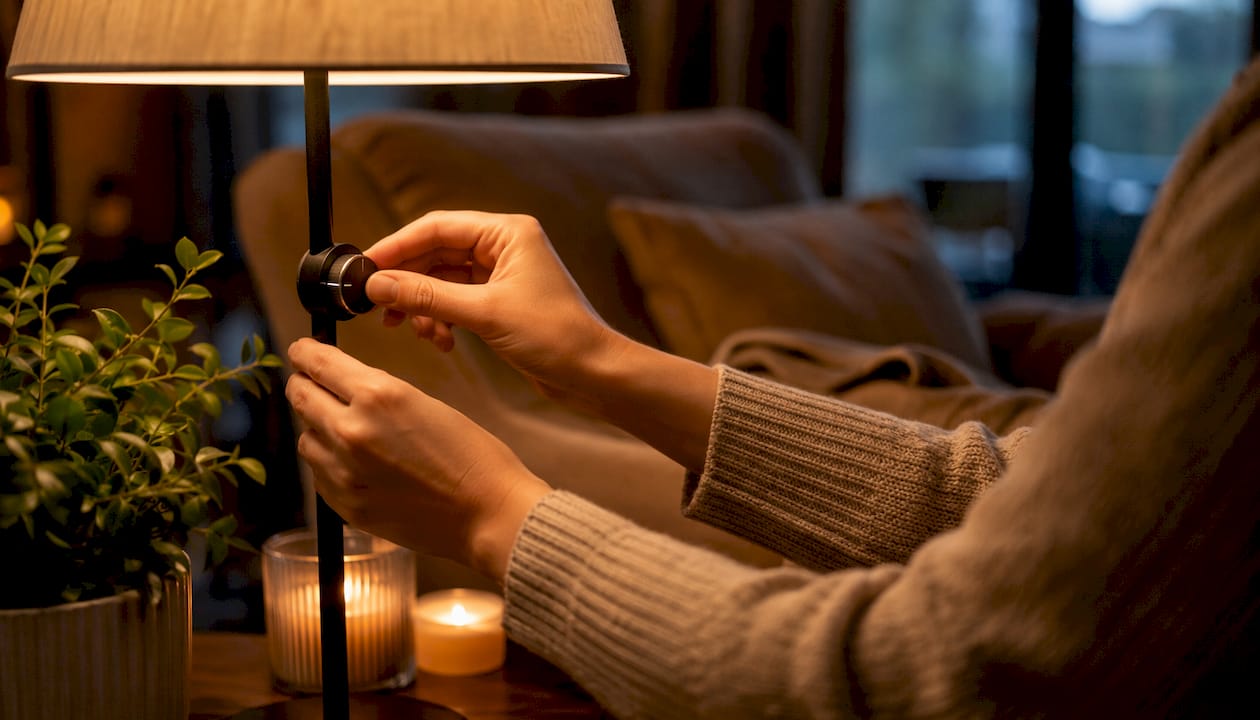
Start by layering your light sources. Replace any bare bulbs with diffused alternatives, whether that means a shade, a frosted globe, or a dome fixture. Exposed bulbs create glare that works against relaxation, no matter how warm the color temperature. Then add at least one accent source, a table lamp, a wall sconce, or even a strip of warm LED tape behind a piece of furniture.
Practical considerations for your home:
- Bedroom: Use warm bulbs at 2700K on bedside lamps and avoid overhead lights after 8 PM. This supports melatonin production and signals your body that sleep is approaching.
- Living room: Layer a floor lamp, a table lamp, and one accent source. Dimmable fixtures give you flexibility for movie nights versus reading versus conversation.
- Wellness or recovery space: Keep color temperature below 3000K. Soft, indirect light from multiple low sources creates the calm, low-stimulation environment your body needs to restore.
- Home office: Use cooler task lighting (3000–4000K) during work hours, then switch to warmer ambient light when you transition to downtime.
Mixing color temperatures in a single space, warm accent lighting paired with slightly cooler task lighting, allows one room to serve multiple functions throughout the day without feeling either sterile or too dim for focused work.
Pro Tip: Dimmable LED bulbs are the single most practical upgrade you can make. They give you full control over intensity without changing fixtures, and they use a fraction of the energy of traditional incandescent bulbs.
For a deeper look at how lighting choices connect to melatonin and sleep quality, Lunixinc has a detailed resource on the role of lighting in relaxation worth reading alongside this guide.
How Lunixinc integrates mood lighting principles into wellness and recovery
Lunixinc approaches wellness the same way good lighting designers approach a room: with intention. Every product in the Lunixinc lineup is built around the idea that your environment shapes your recovery, and light is one of the most powerful environmental variables you can control.
The Lunixinc recovery collection incorporates LED technology with thoughtful design to support relaxation, stress relief, and physical restoration, leveraging innovations featured on the PRYM Health Platform | Lab Testing & Biomarker Tracking | PRYM Wellness. Products like red light therapy devices for hands, joints, and feet use specific wavelengths to support tissue recovery, while infrared sauna blankets create a warm, low-stimulation environment that mirrors the physiological calm of well-designed mood lighting. Dimmable settings and color temperature control are built into the product experience, not added as afterthoughts.
Key features tied to mood lighting benefits across Lunixinc products:
- Targeted LED wavelengths for therapeutic light exposure supporting joint and tissue recovery.
- Dimmable and adjustable settings that let you match light intensity to your recovery goals.
- Warm, low-stimulation design across product aesthetics, reinforcing a calm environment.
- Educational resources on lighting, melatonin, and home wellness environments to help you make informed choices.
- Integration with recovery modalities like compression, heat, and percussion, all designed to work in a calm, intentional space.
Lunixinc also publishes practical guidance on creating a calming home environment, including how lighting interacts with other sensory factors to support genuine rest and recovery. If you are building a home wellness space, that resource pairs well with the lighting principles covered here.

Ready to build a recovery space that actually works? Explore the Lunixinc recovery collection and find the tools designed to help your body restore, relax, and feel its best.
Key Takeaways
Mood lighting is one of the most accessible and effective tools for supporting wellness at home, and the science behind it is clear.
| Point | Details |
|---|---|
| Mood lighting is intentional | It uses brightness, color, and layered sources to shape emotional atmosphere, not just visibility. |
| Layer at least 2–3 light types | Combining ambient, task, and accent lighting prevents flat, uninviting spaces and supports mood. |
| Keep color temperature below 3000K | Warm tones around 2700K promote calm and relaxation; cooler light above 3000K may feel sterile and increase tension. |
| Light affects the brain in seconds | The amygdala and hippocampus respond to light changes almost immediately, influencing stress and calm. |
| Recovery spaces need warm, soft light | Dim, diffused lighting at around 2700K supports melatonin production and physical restoration at home. |