


TL;DR:
- Active recovery involves low-intensity movement to promote circulation, reduce soreness, and support healing after intense workouts. It should be performed for six to ten minutes post-exercise or 20 to 45 minutes on rest days, focusing on activities like walking, yoga, or swimming at a conversational effort level. Incorporating active recovery routines helps maintain mobility, lower injury risk, and enhance long-term training consistency, especially for adults aged 30 to 55.
Active recovery is defined as low-intensity physical activity performed after strenuous exercise or on rest days to keep your body moving while it heals. Unlike sitting still between workouts, this approach uses gentle movement to stimulate blood flow, clear metabolic waste, and reduce muscle soreness without adding fatigue. Walking, yoga, light cycling, and stretching are the most common examples. For anyone between 30 and 55 who exercises regularly, understanding active recovery is one of the most practical steps you can take toward staying consistent, feeling better, and reducing your injury risk over time.
What is active recovery and how does it work?
Active recovery is low-intensity physical activity performed after strenuous exercise to keep the body moving during recovery periods. The key word is low-intensity. You are not training. You are not pushing your limits. You are simply staying in motion at an effort level that supports your body’s natural repair process.
The mechanism is straightforward. Gentle movement increases circulation, which delivers oxygen and nutrients to fatigued muscles while flushing out byproducts like lactic acid. This process reduces the stiffness and soreness that typically build up in the 24 to 48 hours after a hard workout. It also supports your nervous system. According to the National Academy of Sports Medicine, active recovery promotes parasympathetic dominance, the “rest and repair” state that allows your body to rebuild effectively.
The distinction from passive rest matters here. Passive rest means complete inactivity. Active recovery means purposeful, easy movement. Both have a place in a well-designed routine, but they serve different functions. Think of active recovery as the bridge between hard effort and full restoration.
What are the main benefits of active recovery?
The benefits of active recovery go beyond simply feeling less sore. Research and practitioner experience point to several meaningful advantages, especially for adults who train consistently.
- Improved circulation. Gentle movement keeps blood flowing to muscles, accelerating the delivery of repair nutrients and the removal of waste products.
- Reduced muscle soreness. Light activity on the day after a hard session can reduce delayed onset muscle soreness, making your next workout feel more manageable.
- Better mobility and joint health. Movements like yoga and stretching maintain range of motion, which tends to decline with age if not actively maintained.
- Lower injury risk. Keeping muscles and connective tissue mobile between sessions reduces the tightness that often leads to strains and overuse injuries.
- Mental health support. Gentle movement reduces cortisol and supports mood, making it easier to stay motivated across a long training cycle.
Research in soccer players shows that active recovery improves perceived recovery and jump test performance, even when blood biomarker levels for muscle damage do not change consistently. This tells you something important: the psychological and functional benefits are real, even when the cellular picture is mixed.
“Movement on recovery days should leave you calmer and more refreshed, not tired or energized.” — NASM
The benefits are most pronounced when you train frequently. A systematic review of 26 studies confirms that active recovery is especially useful when repeated exercise sessions occur within 24 hours of each other. If you train once a week, the impact is smaller. If you train five days a week, active recovery becomes a genuine performance tool.
How to do active recovery effectively
Knowing what active recovery is matters less than knowing how to actually do it. Three variables determine whether your recovery session helps or hurts: intensity, timing, and exercise choice.
Getting the intensity right
The most reliable intensity check is the conversation test. Active recovery intensity should be light to moderate, allowing you to hold a conversation without difficulty. If you are breathing too hard to speak in full sentences, you have crossed into training territory. That defeats the purpose entirely.

The goal is to restore mobility and circulation, not to stimulate additional adaptation. Practitioners separate active recovery into two categories: readiness work (restoring energy and movement quality) and repair work (supporting healing after injury or very high training loads). Both require the same low-effort approach, but repair work may call for even shorter durations and gentler movement choices.
When to use active recovery
Active recovery fits three main contexts: brief movement between exercise sets, a cool-down immediately after a workout, and standalone low-intensity sessions on rest days. Here is how to apply each one:
- Between sets. Walk slowly or perform light mobility drills during rest periods instead of sitting. This keeps circulation moving without adding fatigue.
- Post-workout cool-down. Spend 5 to 10 minutes walking or stretching after your main session. This is the most common and accessible form of active recovery.
- Rest day sessions. Dedicate 20 to 45 minutes to a low-intensity activity like yoga, easy cycling, or a gentle swim on days when you are not formally training.
Research supports a specific window for post-exercise active recovery. Six to ten minutes of active recovery post-exercise is the optimal duration to enhance recovery outcomes compared to doing nothing. That is a small time investment for a meaningful return.
Pro Tip: You do not need a dedicated recovery session to benefit. Short walks, light stretching after sets, and brief mobility work distributed throughout the day can be just as effective as one longer session. Consistency matters more than duration.
Active recovery vs passive recovery: which should you choose?
Understanding the difference between active recovery and passive rest helps you make smarter decisions about how to spend your off days.
| Factor | Active recovery | Passive rest |
|---|---|---|
| Definition | Low-intensity movement to support repair | Complete inactivity and rest |
| Best used when | Mild soreness, moderate fatigue, frequent training | High fatigue, injury, illness, or extreme soreness |
| Effect on circulation | Increases blood flow to muscles | Minimal circulatory stimulation |
| Nervous system effect | Promotes parasympathetic (repair) state | Allows full system shutdown |
| Risk of misuse | Can delay healing if intensity is too high | Can cause deconditioning if overused |
Active recovery and passive rest serve different purposes. Confusing the two leads to problems in both directions. Using active recovery when your body needs complete rest can slow healing and increase fatigue. Defaulting to passive rest when gentle movement would help means missing out on faster recovery and better performance.
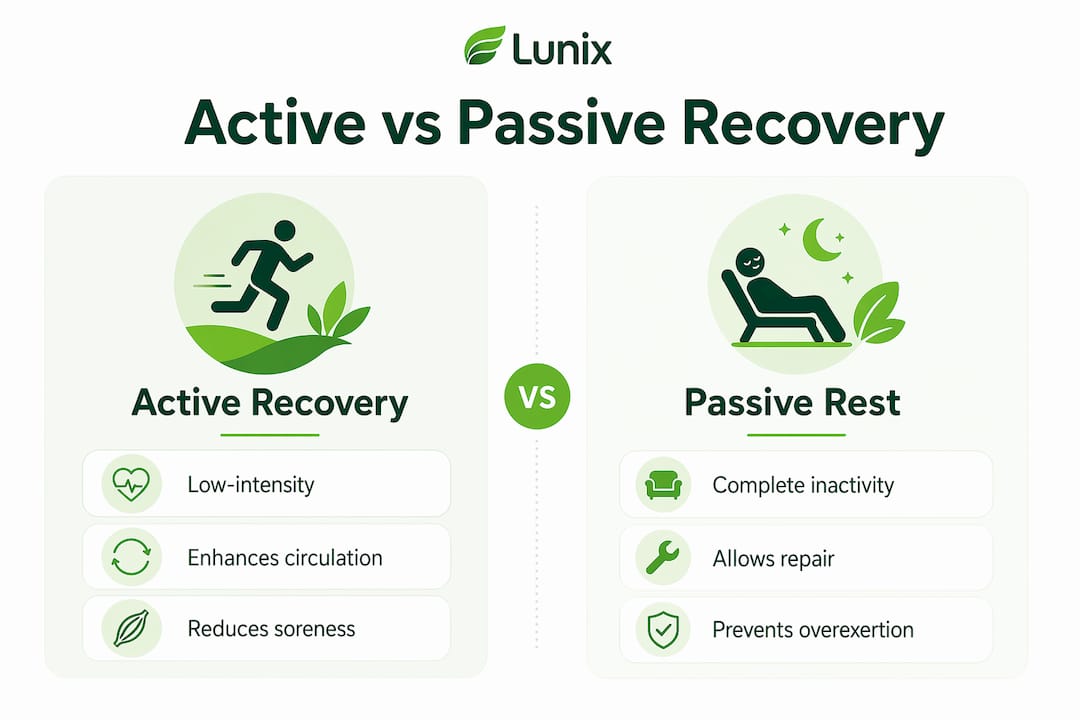
The practical rule: if you feel genuinely exhausted, sick, or are managing an injury, take a full rest day. If you feel stiff, mildly sore, or mentally flat after a hard session, active recovery will almost always leave you feeling better than the couch will.
Pro Tip: Pay attention to how you feel 10 minutes into a recovery session. If gentle movement makes you feel better, continue. If you feel worse or more fatigued, stop and rest completely. Your body’s signals are more reliable than any schedule.
Individual factors like training age, sleep quality, life stress, and overall workload all affect how much recovery you need. Individual differences significantly affect active recovery capacity, which means a one-size-fits-all approach rarely works. Adjust based on your own experience, not someone else’s program.
Active recovery exercises to include in your routine
The best active recovery exercises share one quality: they promote movement without adding meaningful fatigue. Here are the most effective options, particularly suited for adults between 30 and 55.
- Walking. A 20 to 30 minute walk at a comfortable pace is the most accessible active recovery exercise available. It requires no equipment, supports circulation, and is easy on joints. Walking outdoors adds the bonus of natural light and stress reduction.
- Gentle yoga. A slow flow or restorative yoga session improves flexibility, supports breathing, and calms the nervous system. Styles like Yin Yoga or Hatha Yoga at low intensity are ideal. These are particularly valuable for maintaining hip mobility and spinal health as you age.
- Light cycling. An easy spin on a stationary bike or a flat outdoor ride keeps the legs moving without impact stress. Keep resistance low and cadence comfortable. This works well the day after a run or lower body strength session.
- Swimming or water walking. Water provides natural resistance with minimal joint load, making it excellent for anyone managing knee, hip, or lower back sensitivity. Even a slow, easy swim for 20 minutes delivers real circulatory benefit.
- Foam rolling and mobility drills. Foam rolling targets tight tissue and improves range of motion. Pair it with hip circles, shoulder rolls, and ankle mobility work for a complete 15 to 20 minute session that addresses the areas most affected by your training.
- Stretching routines. Static stretching held for 30 to 60 seconds per muscle group works well on recovery days. Focus on the areas you trained hardest. Avoid aggressive stretching immediately after very intense sessions, as muscles are more vulnerable when fatigued.
Active recovery exercises like these can be adjusted for beginners or anyone with joint sensitivities simply by reducing duration and choosing lower-impact options. If walking causes knee discomfort, switch to water walking or gentle cycling. The goal is movement, not a specific exercise. Variety also matters. Rotating between different activities prevents overuse of the same muscle groups and keeps recovery days from feeling repetitive.
Key takeaways
Active recovery works because low-intensity movement after exercise restores circulation, reduces soreness, and supports the nervous system without adding training stress.
| Point | Details |
|---|---|
| Active recovery definition | Low-intensity movement performed after exercise or on rest days to support healing. |
| Optimal post-exercise duration | Six to ten minutes of easy movement after a session improves recovery outcomes. |
| Intensity rule | Keep effort light enough to hold a conversation throughout the entire session. |
| Active vs passive rest | Use active recovery for mild soreness; choose full rest for high fatigue or injury. |
| Best exercises | Walking, yoga, light cycling, swimming, foam rolling, and stretching are all effective choices. |
Why active recovery changed how I think about rest days
Most people treat rest days as something to get through. A gap in the schedule. A concession to the body’s limits. I used to think the same way, until I started paying attention to how I actually felt after different kinds of “rest.”
The honest truth is that complete inactivity rarely leaves you feeling restored. It often leaves you stiff, sluggish, and mentally flat. A 25 minute walk or a gentle yoga session, on the other hand, consistently produces the opposite effect. You finish feeling looser, calmer, and more ready to train again. That is not a coincidence. It reflects what the physiology actually supports.
What I have found most useful is treating active recovery as a skill, not a fallback. The ability to move gently and intentionally on hard days, to choose the right intensity, and to listen to what your body actually needs takes practice. It is easy to either push too hard (turning recovery into training) or skip it entirely (missing the benefit). The middle path requires attention.
For adults in the 30 to 55 range, this matters more than it did at 25. Recovery capacity changes. Sleep, stress, and life demands all affect how quickly you bounce back. Building structured recovery routines into your week is not optional if you want to stay consistent over years, not just months. Active recovery is one of the most practical tools you have for doing exactly that.
— Lunix
Support your recovery with Lunixinc

Active recovery works best when your environment supports it. Lunixinc designs recovery products built specifically to complement the kind of gentle, restorative movement this article describes. Whether you are winding down after a workout, managing muscle tightness, or building a dedicated recovery space at home, the Lunixinc recovery collection offers tools designed to improve circulation, ease muscle tension, and help your body restore itself between sessions. Explore options suited for adults who take their long-term wellness seriously, and find what fits your routine.
FAQ
What is the active recovery definition in simple terms?
Active recovery is low-intensity physical activity, such as walking, stretching, or yoga, performed after exercise or on rest days to support muscle repair and reduce soreness without adding fatigue.
How long should an active recovery session last?
Research shows that six to ten minutes post-exercise is the optimal minimum, while standalone rest day sessions can run 20 to 45 minutes depending on your fitness level and how your body feels.
What are the best active recovery exercises for adults over 40?
Walking, gentle yoga, light cycling, swimming, and foam rolling are the most effective options. They promote circulation and mobility with minimal joint stress, making them well-suited for physical recovery after 40.
How is active recovery different from a rest day?
Active recovery involves intentional low-intensity movement to support circulation and repair. A rest day means complete inactivity. Use active recovery when you feel mildly sore or stiff, and choose full rest when fatigue is high or you are managing an injury.
Can active recovery reduce injury risk?
Yes. Keeping muscles and connective tissue mobile between sessions reduces the tightness that leads to strains and overuse injuries. Consistent active recovery also supports joint health and range of motion, both of which decline with age when neglected.