


Yes, elevating your knee helps. It reduces swelling, improves venous and lymphatic drainage, and can lower pain in many acute injuries and post-surgical situations. It’s not a cure on its own, but it’s one of the most reliable low-risk tools you have during recovery.
- Acute sprains: eases early swelling and stiffness
- Post-surgical recovery: supported by ERAS protocols and randomized controlled trials for procedures like knee replacement
- Chronic venous swelling: helps manage daily fluid buildup in the legs
If you notice sudden calf pain, one-sided swelling, or other red-flag symptoms, elevation is not a substitute for care. Mayo Clinic guidance is a good place to check what warrants a call to your doctor.
Key Takeaways
Elevating the knee above heart level with slight flexion reduces swelling, eases pain, and supports faster recovery after injury or surgery when done consistently.
| Point | Details |
|---|---|
| Elevate above heart level | Raise the knee 10 to 30 centimeters higher than your heart for effective drainage. |
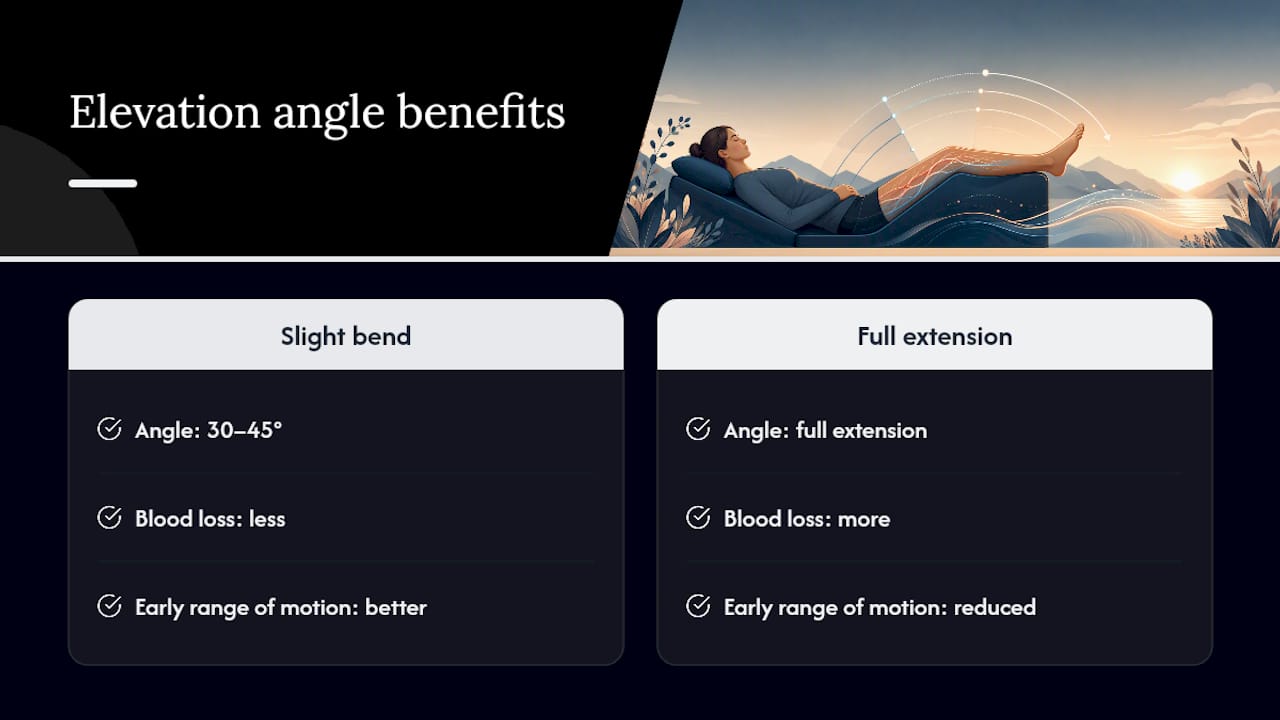
| Flex, don’t lock straight | A 30 to 45 degree knee bend improves early range of motion after surgery more than full extension. |
| First 48 to 72 hours matter most | Stay consistent with elevation sessions during the peak swelling window after injury or surgery. |
| Watch for red flags | Sudden one-sided calf pain, numbness, or skin color changes need medical attention, not just more elevation. |
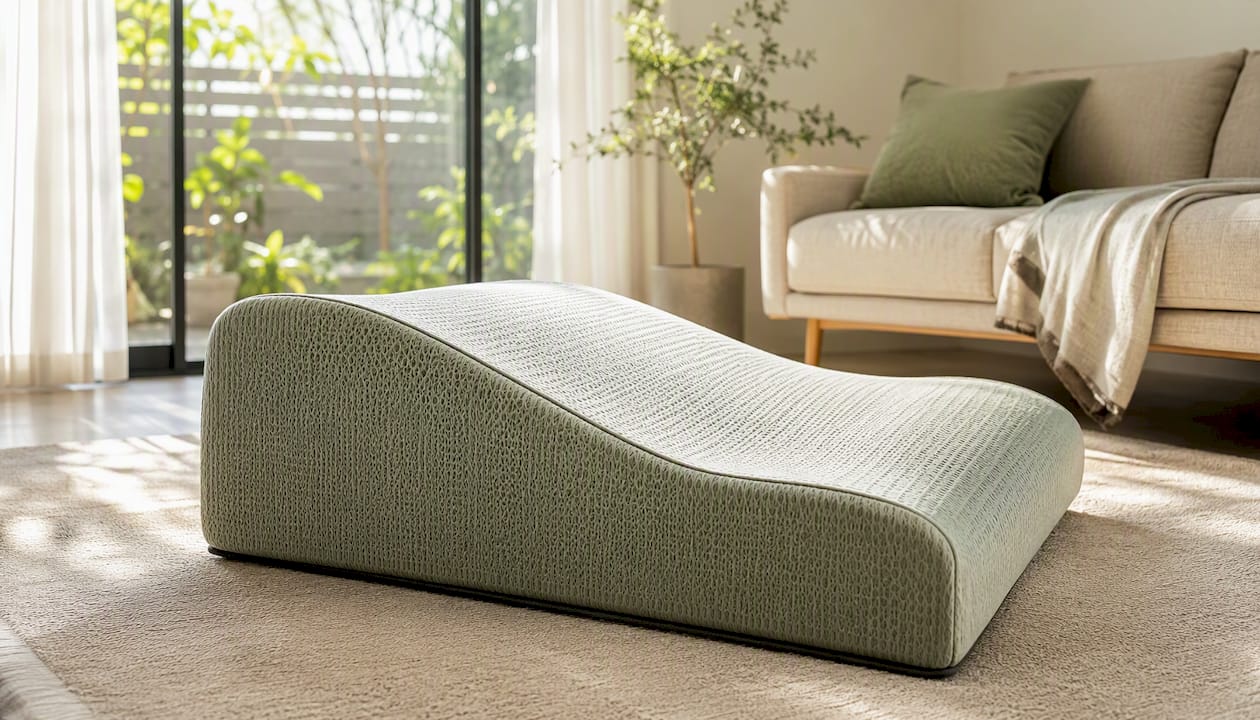
| Use a stable support device | A high-density foam wedge from Lunix’s recovery collection keeps positioning consistent through full sessions. |
Table of Contents
- How Knee Elevation Works and What It Does for Your Body
- Which Conditions Actually Benefit From Knee Elevation?
- How Do You Elevate Your Knee Correctly?
- When Should You Not Rely on Elevation Alone?
- What Does the Research Say About Knee Elevation for Recovery?
- What Should You Combine With Knee Elevation for Best Results?
- Why Lunix Sees Elevation as Underrated Recovery Care
- A Simple Way to Make Elevation Part of Your Routine
- Frequently Asked Questions
- Sources
How Knee Elevation Works and What It Does for Your Body
Gravity is doing most of the work here. When you raise your knee above the level of your heart, fluid that would normally pool in your lower leg drains back toward your torso instead of settling around the joint. Venous pressure drops, and your lymphatic system gets an easier path to clear out the extra fluid causing that puffy, tight feeling around your kneecap.
That mechanical shift produces a handful of benefits you can actually feel within a day or two:
- Reduced swelling and edema around the joint
- Less pain, since swollen tissue puts pressure on nerve endings
- Better range of motion, because a less swollen knee bends more easily
- Improved wound healing at surgical sites, since excess fluid can slow tissue repair
- Lower “hidden” blood loss after certain surgeries, when elevation is part of a structured protocol
A randomized controlled study found that elevating the hip roughly 45 degrees with the knee flexed to about 45 degrees for around 48 hours after knee replacement surgery reduced both calculated and hidden blood loss, and patients performed better on early straight-leg-raise tests at six weeks compared to those kept in full extension. That’s a meaningful difference in early recovery speed, not just comfort.
Orthopedic researchers note that this works because elevation mechanically drains interstitial fluid away from the surgical site, which helps prevent the kind of stiffness that makes early physical therapy sessions so miserable. If you’ve ever wondered why your surgeon or physical therapist keeps reminding you to prop that leg up, this is why.
Which Conditions Actually Benefit From Knee Elevation?
Elevation isn’t a one-size-fits-all fix, but it earns its place across a surprising range of situations. Here’s where it tends to make the biggest difference:
- Acute sprains or strains: slows fluid buildup in the first 48 hours, when swelling peaks
- Post-op recovery (total knee arthroplasty, high tibial osteotomy): part of structured ERAS pathways shown to improve function and reduce pain
- Lymphedema: supports drainage, though it works best alongside compression garments and manual lymphatic drainage techniques
- Chronic venous insufficiency or varicose vein swelling: lowers venous pressure and eases the heavy, aching feeling by day’s end
- Pregnancy-related swelling: a simple, medication-free way to manage third-trimester leg puffiness
- Wound care contexts: reduces localized pressure that can slow healing
One caveat worth repeating: if swelling comes with suspected infection or signs of a blood clot, elevation is supportive, not diagnostic. Post-op protocols especially work best when elevation is combined with compression, prescribed medication, and physical therapy, not used as a stand-alone fix.
How Do You Elevate Your Knee Correctly?
Getting the position right matters more than people expect. A few small adjustments separate an elevation session that actually reduces swelling from one that just leaves your leg propped up awkwardly.
- Lie down flat or recline. Sitting upright with your foot on a stool doesn’t get your knee above heart level, which is the whole point.
- Support the calf, not the back of the knee. Placing a pillow directly under the knee joint can restrict blood flow and put pressure on the popliteal region behind it.
- Raise the knee above heart level when possible. A gentle incline of roughly 10 to 30 centimeters works for most everyday swelling.
- Consider a flexed position after surgery. Clinical evidence suggests that knee flexion around 30 to 45 degrees, rather than full extension, is associated with reduced postoperative blood loss and better early range of motion.
- Hold the position for 15 to 30 minutes at a time, several times a day, and stay consistent through the first 48 to 72 hours after an injury or surgery, when swelling is at its worst.
For equipment, a dedicated knee wedge pillow or foam leg-elevation pad beats a stack of regular pillows that slide apart every time you shift. Look for high-density foam that holds its shape and a non-slip base so you’re not readjusting every ten minutes.
Pro Tip: Set up more than one elevation station. Keep a wedge on your couch and another by your bed so elevating your knee becomes something you do without thinking, not a chore you have to plan for.

When Should You Not Rely on Elevation Alone?
Elevation is safe for most people, but it has limits, and ignoring those limits can delay real treatment. Watch for these warning signs:
- Sudden calf pain or swelling in just one leg, which can signal a blood clot
- Skin that turns pale, blue, or unusually dark around the knee
- Numbness or tingling that doesn’t resolve when you reposition
- Pain that gets worse instead of better after a day or two of elevation
- Warmth, redness, or fever, which can point to infection
Elevation reduces swelling, but it does nothing to fix structural damage, treat an infection, or dissolve a clot. It should never delay a call to your doctor if something feels seriously wrong. This is exactly why post-surgical recovery plans, like a structured ERAS protocol, pair elevation with compression, medication, and physical therapy instead of leaving it to do the job alone.
Is knee elevation effective on its own after surgery? It’s effective as a component of recovery, not a replacement for your surgeon’s full protocol.
What Does the Research Say About Knee Elevation for Recovery?
The clinical evidence here is more specific than most general wellness advice, which is part of why it’s worth paying attention to.
- A randomized study on total knee arthroplasty patients found that flexed elevation for about 48 hours reduced hidden blood loss and improved early functional scores.
- A controlled study of 98 patients recovering from high tibial osteotomy found that combining an ERAS program with postoperative leg-pad elevation led to statistically significant improvements in knee function, pain scores, and quality-of-life measures.
- Reviews of postoperative limb positioning consistently favor short-term flexion protocols over full extension for reducing early edema.
Elevation works because it uses a basic law of physics, not a special technique. Get the limb above the heart, flex the knee slightly instead of locking it straight, and hold that position consistently for the first two to three days when swelling peaks. That’s when the difference between elevating correctly and just “resting with your leg up” becomes obvious in recovery speed.
Study sizes in this space tend to be modest, and protocols vary depending on whether your surgeon prefers flexion or extension, so treat elevation as a strong supporting measure; one your recovery plan should include, not one that replaces the rest of it.
What Should You Combine With Knee Elevation for Best Results?
Elevation works best as one piece of a broader recovery routine, not a stand-alone fix.
- Gentle range-of-motion exercises, as advised by your physical therapist
- Compression stockings or wraps when your provider recommends them for venous issues
- Icing during the first 48 hours after an acute injury
- Ankle pumps during elevation sessions to keep venous return moving
- Gradual return to weight-bearing activity as swelling subsides
Try pairing elevation with something you already do daily, like after dinner or during your evening wind-down, so it becomes a habit rather than a task you keep forgetting.
Pro Tip: Elevate right before bed and use a supportive sleep position to carry those benefits through the night instead of losing them the moment you lie flat.
Why Lunix Sees Elevation as Underrated Recovery Care
Elevation is one of the lowest-cost, lowest-risk tools available during recovery, and it’s easy to underuse simply because it feels too simple to matter. We think that’s a mistake. Done correctly and consistently, it supports what your body is already trying to do. For post-surgical plans or complicated conditions, always follow your clinician’s specific guidance first.
A Simple Way to Make Elevation Part of Your Routine
The hardest part of knee elevation isn’t understanding it. It’s doing it consistently without your leg sliding off a stack of couch pillows twenty minutes in.
A contoured wedge with a stable, non-slip base and high-density foam solves that problem directly. It holds the calf support in place, keeps your knee out from under direct pressure, and maintains a consistent incline for the full session instead of flattening out halfway through. That consistency is exactly what the research points to as the difference between elevation that helps and elevation that’s just resting with your leg up. Check the sizing and angle against what your clinician recommends for your specific recovery stage, then browse the Lunix recovery collection to find a wedge built for exactly this kind of daily use.
Frequently Asked Questions
How long should you elevate your knee each day? Most guidance recommends 15 to 30 minute sessions, several times daily, with extra consistency during the first 48 to 72 hours after an injury or surgery.
Is knee elevation effective for chronic swelling, not just injuries? Yes. People managing chronic venous insufficiency or lymphedema often use daily elevation alongside compression to keep long-term swelling under control.
Should you elevate your knee straight or bent? A slight bend, around 30 to 45 degrees, is often preferred after surgery since it’s linked to less blood loss and better early range of motion than full extension.
Can elevation replace compression or physical therapy? No. Elevation supports recovery, but structural damage, infection, and clotting risks need medical evaluation and treatment elevation alone can’t provide.
Sources
- Effects of knee position on blood loss following total knee arthroplasty: a randomized, controlled study
- The effects of ERAS concept combined with postoperative leg pad elevation on knee improvement, quality of life, and pain in patients after HTO surgery
- Effects of limb position on postoperative outcomes - PubMed entry
- Leg pain - Symptoms and causes - Mayo Clinic