


For most seniors, the highest-impact starting point is a combination of four product categories: an orthopedic or cervical pillow for spinal alignment, an adjustable wedge pillow for positional support, graduated compression garments for circulation, and a gentle heat or massage device for daily relaxation and muscle recovery. Each category addresses a distinct physical need, and together they cover the most common comfort gaps older adults face at home.
Here are three actions you can take right now:
- Try an orthopedic or cervical pillow first. Poor sleep posture compounds neck and back pain faster than almost any other daily habit. A new pillow is low-cost, low-risk, and often delivers noticeable change within two weeks.
- Add daytime compression socks. Over-the-counter graduated compression stockings are widely available, require no prescription for mild swelling, and can be worn during any activity.
- Trial a heated or massage device with a return policy. Whether it’s a percussion massager or an air-compression hand device, buy only from sellers offering a clear trial window so you can return it if it doesn’t fit your routine.
Key Takeaways
The most effective approach to senior comfort in 2026 is matching the right product category to a specific physical need, testing it for a defined period, and buying only from sellers with clear return and warranty terms.
| Point | Details |
|---|---|
| Start with pillows and compression | Orthopedic pillows and OTC compression socks deliver the fastest, lowest-risk results for most seniors. |
| Match loft to sleep position | Side sleepers need 3–5 inches of loft; back sleepers do better with medium loft for cervical alignment. |
| Use a 2–4 week trial window | Most comfort products need at least two weeks of consistent use before you can judge whether they’re working. |
| Check safety before heat or compression | Anyone with a pacemaker, DVT, neuropathy, or unstable cardiovascular condition needs clinical clearance first. |
| Lunixinc recovery collection | Covers orthopedic pillows, wedge sets, FIR blankets, and massagers, all with washable covers and clear warranty terms. |
Table of Contents
- What should you check before buying comfort products for seniors?
- Which product types work best for common senior needs?
- Who should check with a clinician before using these devices?
- How long should you try a product before deciding it works?
- What to check at purchase and how to care for your devices
- What Lunixinc has learned about designing for senior comfort
- Lunixinc recovery products designed for senior comfort
- Sources
What should you check before buying comfort products for seniors?
Shopping for senior comfort products in 2026 means filtering out a lot of noise. Here’s what actually matters at the point of purchase:
- Ease of use: Look for one-button or simple dial controls. Cordless or lightweight designs matter most for anyone with limited grip strength or mobility.
- Adjustability: Pillows should offer adjustable loft or fill. Massage devices should have variable pressure and temperature settings.
- Sizing guidance: Compression garments especially need clear sizing charts. A poorly fitted sleeve can restrict rather than support circulation.
- Hygiene: Removable, machine-washable covers are non-negotiable for long-term use. Check whether replacement covers are sold separately.
- Safety certifications: Look for UL or ETL listings on any electrical device. Low-voltage heating elements are safer for daily home use.
- Trial and return policy: A minimum 2–4 week trial window is reasonable for pillows and cushions. Massage devices and compression tools often show results within 1–2 weeks.
- Warranty: Ask specifically what the warranty covers: foam integrity, electrical components, and manufacturing defects are the three most important categories.
Pro Tip: Before buying, search the brand name plus “return policy” and “warranty” separately. Marketing pages often bury the details. If a seller won’t clearly state both, that’s a red flag worth heeding.
Which product types work best for common senior needs?
Matching the right product to the right problem saves money and frustration. Here’s how to think through the most common needs.
Neck pain and morning stiffness
A cervical-contour pillow filled with medium-firm memory foam or latex is often the most effective first step for older adults dealing with neck strain. The contour shape keeps the cervical spine in a neutral position through the night rather than letting it drift forward or sideways. For side sleepers, loft matters most: a pillow in the 3–5 inch range fills the gap between shoulder and ear without forcing the neck into an unnatural angle. Back sleepers generally do better with a medium loft that supports the natural curve without pushing the chin toward the chest.
Back support, acid reflux, and respiratory positioning
Wedge pillows and multi-piece wedge sets solve a different problem: they elevate the torso at a controlled angle, which helps with acid reflux, positional breathing issues, and lower back decompression during rest. A 30–45 degree incline is a common starting range for reflux relief. If you’re considering a wedge for sleep apnea or positional therapy, the clinical guidance on wedge pillows is worth reviewing before purchase.
Arthritic joints and targeted pain
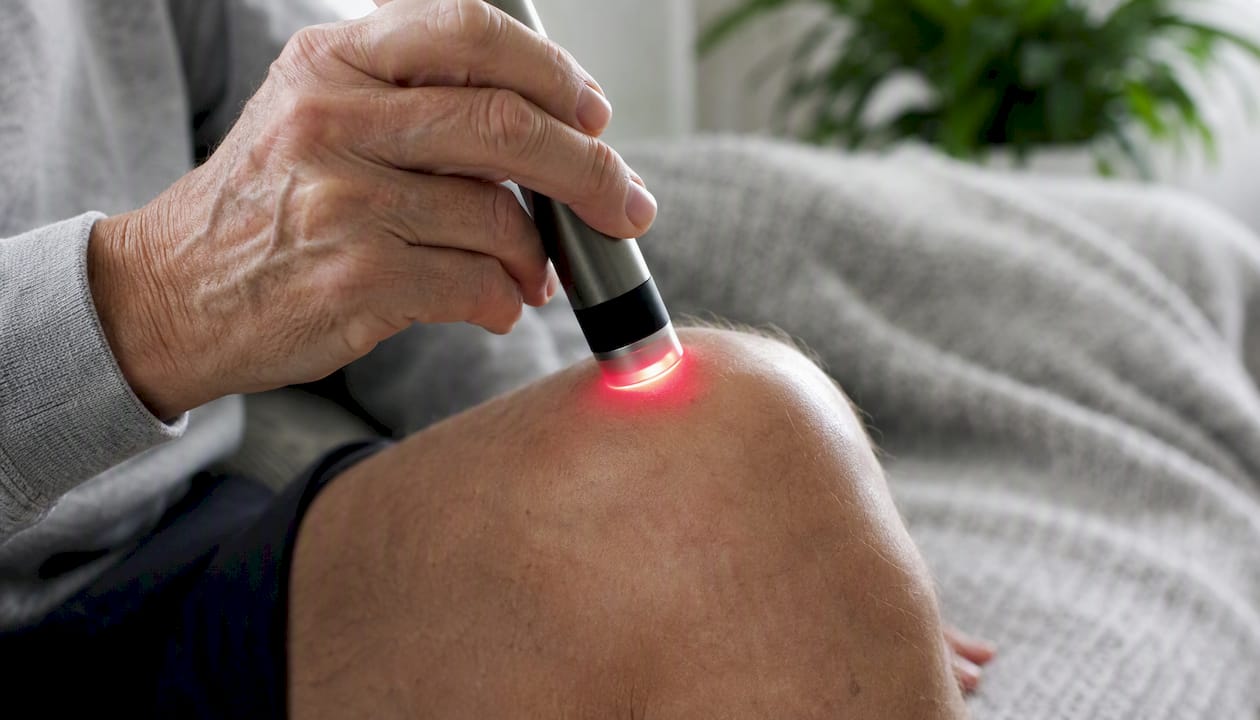
Red-light and near-infrared devices deliver localized warmth and light energy to stiff or painful joints. Sessions of 10–20 minutes are typical, and most users report perceived relief rather than structural change. Percussion massagers work differently: they use rapid, rhythmic pressure to loosen tight muscle tissue around joints. The distinction matters because red-light devices target the joint itself while percussion tools address the surrounding musculature. For hand arthritis specifically, hand exercises alongside device use tend to produce better results than devices alone.
Poor circulation and leg swelling
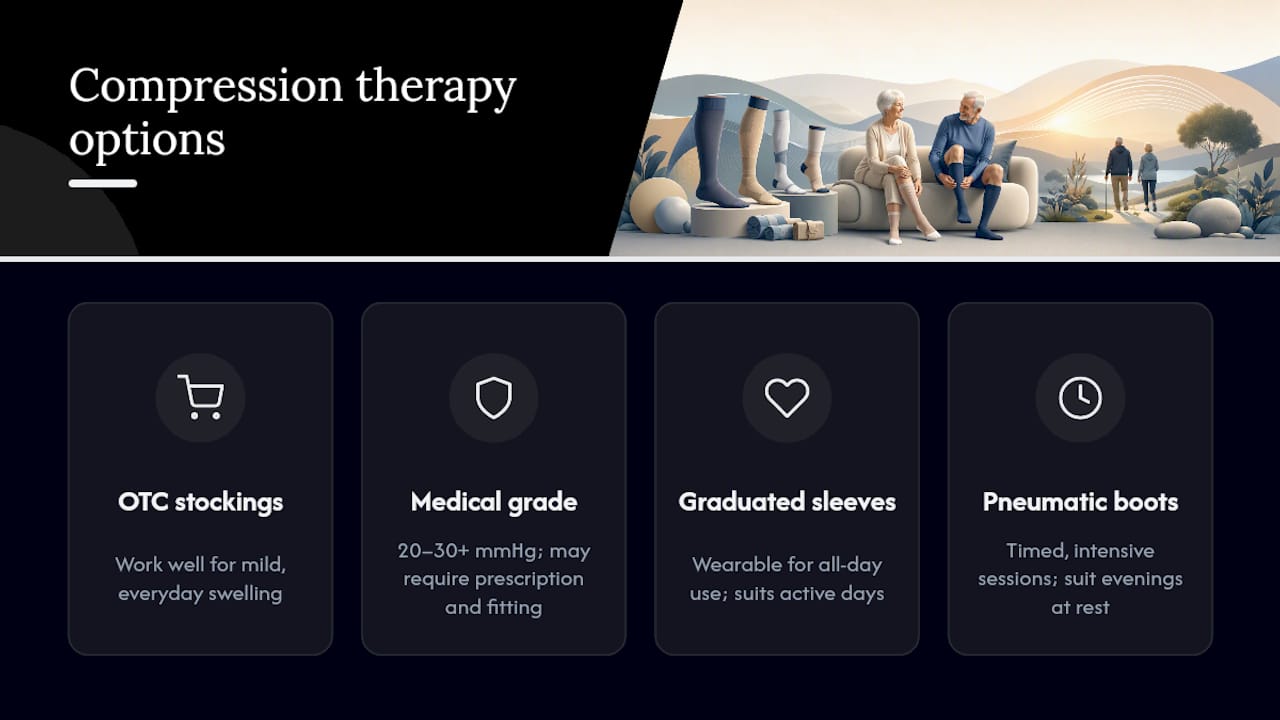
Compression therapy improves lower-leg circulation and reduces swelling. Over-the-counter stockings work well for mild, everyday swelling. Medical-grade compression (20–30+ mmHg) may require a prescription and clinical fitting, particularly if arterial disease is a factor. For session-based therapy, at-home circulation devices range from wearable graduated sleeves for all-day use to pneumatic compression boots for more intensive, timed sessions. Choose based on your daily routine: sleeves suit active days, boots suit evenings at rest.
General relaxation and mild muscle recovery
Far-infrared (FIR) blankets and low-temperature infrared panels are the gentlest option in this category. A 14-day exploratory double-blind trial reported improvements in serotonin, melatonin, and REM and deep sleep in the FIR-blanket group versus placebo. The authors note a small sample size and a male-only participant pool as significant limitations, so treat these findings as promising rather than definitive. Mayo Clinic notes that infrared heat may promote relaxation and reduce perceived soreness, but it should not replace sleep, nutrition, and hydration as recovery foundations. Use FIR tools as a complement to those basics, not a substitute.
Typical session guidance: 15–30 minutes per session, once or twice daily, works for most heat and massage devices. Start at the lowest setting and increase only after your body has adjusted over several days.
Who should check with a clinician before using these devices?
Some conditions make certain comfort products genuinely risky rather than just ineffective. Before starting any new device, check this list carefully.
- Pacemakers or implanted electronic devices: Avoid electrical stimulation devices, certain infrared panels, and any device that generates electromagnetic fields near the chest or implant site.
- Active deep vein thrombosis (DVT): Compression devices and massage tools can dislodge a clot. Get medical clearance before using any compression garment or massager if DVT is suspected or confirmed.
- Unstable cardiovascular conditions: Heat exposure temporarily raises heart rate and can lower blood pressure. Anyone with uncontrolled hypertension or unstable heart conditions should consult a physician before using FIR blankets or heated devices.
- Neuropathy or impaired heat sensation: If you can’t reliably feel heat on your skin, you can sustain burns without realizing it. Clinical clearance is required before using any heated device.
- Open skin wounds, ulcers, or active infection: No compression, heat, or massage device should be applied over broken or infected skin.
- Pregnancy: Many heat and compression devices carry specific pregnancy contraindications. Check the device manual and confirm with your OB-GYN.
When you speak with a clinician, bring the device name, the session length you plan to use, your current medications, and your relevant diagnoses. That information lets them give you a specific answer rather than a general caution.
Pro Tip: For compression garments specifically, tell your clinician whether you have any arterial disease. OTC compression is appropriate for mild venous swelling, but arterial disease changes the equation entirely.
How long should you try a product before deciding it works?
Realistic timelines prevent both premature returns and wasted months on something that isn’t helping.
- Pillows and cushions: Allow 2–4 weeks. Your body needs time to adjust to a new sleep position and support level. Soreness in the first few days is common and usually resolves.
- Compression garments: 1–2 weeks of consistent daytime use is enough to judge whether swelling and comfort improve.
- FIR blankets and infrared textiles: The preliminary trial cited above used a 14-day protocol. Expect 2 weeks before drawing conclusions, and keep expectations calibrated to relaxation and sleep quality rather than structural recovery.
- Massagers and heat devices: 1–3 weeks of regular use (daily or near-daily) is a fair evaluation window for perceived muscle relief.
To measure progress at home, track these five markers before you start and again at the end of your trial:
- Pain level on a 0–10 scale, morning and evening
- Sleep quality (a simple sleep diary or a wearable tracker)
- Swelling, measured by circumference at the widest point of the ankle or affected limb
- Daily function, such as ease of climbing stairs or getting dressed
- Subjective comfort rating on a 1–5 scale
A meaningful change is one you notice consistently across at least three of these markers. A single good night’s sleep or one low-pain morning is not enough to confirm a product is working.
What to check at purchase and how to care for your devices
At purchase, confirm these five things:
- Trial or return window (minimum 30 days for most devices; 2–4 weeks for pillows)
- Warranty length and what it covers (electrical components, foam, manufacturing defects)
- Cleaning instructions and whether covers are machine-washable
- Availability of replacement covers or parts
- A working customer support contact before you need it
Care tips that extend product life:
- Wash removable covers on a gentle cycle in cold water and air-dry to preserve foam and fabric integrity.
- Keep electronics away from moisture and store cordless devices with batteries partially charged, not fully depleted.
- Avoid folding or compressing foam wedge pillows for storage; they lose their shape permanently.
- For compression garments, hand-wash or use a mesh laundry bag to prevent elastic degradation.
Pro Tip: Register your device warranty the day it arrives. Most brands require registration within 30–90 days, and many buyers miss that window.
Comfort is highly personal, and finding the right product often takes trial and error. A generous return policy isn’t a luxury; it’s a practical necessity when buying for an older adult whose needs are specific and whose tolerance for discomfort is lower.
What Lunixinc has learned about designing for senior comfort
At Lunixinc, the design decisions that matter most aren’t the flashy ones. They’re the ones that make a product usable on day one and still working correctly a year later. Washable covers, safety zippers, high-density foam that holds its loft, and touchscreen controls with large, readable displays are not afterthoughts. They are the baseline. When we look at what actually improves comfort for healthy aging, the pattern is consistent: products that reduce friction in daily use get used, and products that get used deliver results.
The emotional dimension matters too. When a senior sleeps better, moves with less pain, and manages their own comfort without depending on a caregiver for every adjustment, that independence is meaningful. It reduces caregiver burden and restores a sense of agency that chronic discomfort tends to erode. That’s the outcome Lunixinc designs toward.
Lunixinc recovery products designed for senior comfort
Lunixinc’s recovery collection covers the core categories this guide recommends: orthopedic and wedge pillow sets with adjustable loft and washable covers, heated air-compression hand and foot massagers with touchscreen controls, far-infrared sauna blankets, and percussion massagers built for daily use. Every product in the line is designed with the buyer checklist from this guide in mind: simple operation, safety-certified heating elements, and covers you can actually clean.
Trial and warranty details are listed on each product page. Before you order, check the return window and warranty coverage directly on the site so you know exactly what protection you have. For seniors and caregivers who want to start with the most-recommended categories, the Lunixinc recovery collection is the right place to begin. Browse the full range, compare the specs, and order with confidence knowing a clear return policy backs every purchase.
Sources
- 5 Best Pillows (2026): Personally Tested
- Do infrared saunas have any health benefits? - Mayo Clinic
- Study on DAZZEON αSleep® far-infrared blanket (exploratory double-blind trial)
- Compression therapy
- Do infrared saunas improve workout recovery? The evidence is still lukewarm
- How to Improve Circulation in Legs With At Home Devices
A note on FIR textile research: The double-blind trial cited above is exploratory. Its findings on sleep hormones and sleep architecture are promising, but the small sample size and male-only participant pool mean results should not be generalized broadly. Larger, longer trials are needed before strong clinical claims can be made.
This article provides general wellness information and is not a substitute for professional medical advice. Confirm any new device or therapy with your healthcare provider, particularly if you have existing health conditions or take prescription medications.