


If you have active cancer or a suspicious lesion in the treatment area, photosensitive epilepsy, a photosensitizing medication in your routine, or you’re pregnant, treat that as your signal to pause. These groups, along with anyone with open wounds, active infections, or unprotected eyes near the panel, face real risk. Talk to the right clinician, whether that’s an oncologist, dermatologist, OB/GYN, or the doctor who prescribed your medication, before you turn the device on.
TL;DR:
- People with active cancer or a suspicious lesion should avoid red light therapy over the treatment area unless cleared by an oncologist.
- Photosensitive epilepsy or direct eye exposure require protective eyewear and medical advice before use, especially with pulsed devices.
- Medications such as isotretinoin, doxycycline, amiodarone, or supplements like St. John’s Wort increase photosensitivity, necessitating medical consultation before sessions.
- Pregnant or breastfeeding individuals should avoid abdominal treatments and seek OB/GYN approval for localized use on other body parts.
- Darker skin tones should start with lower intensity and shorter sessions to monitor for persistent redness or blistering, increasing gradually with dermatologist guidance.
Table of Contents
- What Are the Absolute vs. Relative Contraindications for Red Light Therapy?
- Which Medications and Supplements Raise Your Risk?
- Is Red Light Therapy Safe During Pregnancy or Breastfeeding?
- Do You Need Eye Protection, and What About Thyroid Concerns?
- Does Darker Skin Face Higher Risk from Red Light Therapy?
- How Do At-Home Devices Compare to Clinical Treatment for Safety?
- What Should You Ask Your Doctor Before Starting?
- How Does Lunix Build Safety into Its Red Light Devices?
- A Balanced Take on Red Light Therapy’s Benefits and Risks
- Where to Find Lunix Devices Built for Safe Home Use
- Where to Read More on Red Light Therapy Safety
- Sources
What Are the Absolute vs. Relative Contraindications for Red Light Therapy?
Not every caution carries the same weight. Some conditions mean you should not use red light therapy under any circumstances until a specialist clears you. Others just mean you proceed carefully, with a doctor’s input guiding the details. Knowing the difference keeps you from either taking an unnecessary risk or avoiding a treatment that’s actually fine for you.
Absolute contraindications are conditions where the risk of harm is well established or theoretically serious enough that clinicians recommend against treatment, full stop, unless a specialist actively signs off first.
- Active cancer or a suspicious lesion in the treatment area. Clinicians generally advise against directing light therapy over a known tumor without oncologist clearance, since the theoretical concern is stimulating tissue growth in a spot where you don’t want any encouragement. Interestingly, this isn’t a blanket rule against PBM for every cancer patient. Some clinical centers use photobiomodulation for supportive oncology care, like managing oral mucositis from chemotherapy, but always under strict medical protocols and never directly over an active tumor site.
- Photosensitive epilepsy, particularly with pulsed or flicker-mode devices. This is a recognized contraindication because rhythmic light exposure can trigger seizures in susceptible people. Continuous-output devices carry lower theoretical risk, but if you have any seizure history, get a neurologist’s opinion before you buy anything with a pulse setting.
- Direct, unprotected eye exposure. This is the most consistently documented hazard in the research, full stop, no gray area. Protective eyewear isn’t optional if you’re anywhere near an active panel.
Relative contraindications are situations where treatment might still be appropriate, but only with a doctor weighing your specific history first.
- History of cancer, even outside the treatment area. If you’ve had cancer anywhere in your body, even years ago, it’s worth a conversation with your oncologist before starting sessions elsewhere.
- Photosensitive skin diseases like lupus, porphyria, or xeroderma pigmentosum. These conditions make skin abnormally reactive to light exposure of many kinds, and dermatology guidance lists them among the conditions warranting a physician’s evaluation first.
- Recent radiotherapy in the treatment area. Irradiated skin behaves differently and heals differently. Give it time and get your radiation oncologist’s input on timing.
- Active infections or open wounds. Adding heat and light to compromised skin can complicate healing or worsen inflammation before you’ve addressed the underlying problem.
For nearly every item on the relative list, the clearance process is straightforward: bring it up at your next appointment, describe the device and intended use, and ask directly whether it’s safe given your history. Most physicians would rather answer a two-minute question now than treat a complication later.
Which Medications and Supplements Raise Your Risk?
Photosensitizing drugs change how your skin, and in some cases your retina, responds to light. Most of the clinical evidence on this centers on ultraviolet exposure specifically, but visible red and near-infrared wavelengths can plausibly compound the effect for some medications, which is exactly why a pharmacist conversation matters even when a drug label focuses on sun exposure.
Common culprits worth flagging to your doctor include:
- Isotretinoin, the acne medication, along with a waiting period after finishing a systemic course. Many dermatologists recommend spacing light-based treatments out from isotretinoin use by weeks to months.
- Doxycycline and minocycline, common antibiotics that are well documented to increase sun and light sensitivity.
- Amiodarone, a heart rhythm medication with a long half-life and known photosensitizing effects.
- Certain chemotherapy agents, where photosensitivity is a recognized side effect during and sometimes after treatment.
- Psoralens, used in some psoriasis and vitiligo treatments specifically because they amplify light response.
- St. John’s Wort, an over-the-counter supplement many people don’t think to mention to their doctor, but it carries a documented photosensitizing effect.
- Some diuretics and fluoroquinolone antibiotics, both linked to increased skin sensitivity to light exposure.
Pro Tip: Keep a running list of every medication and supplement you take, prescription and over-the-counter, and hand it to your prescribing clinician or pharmacist before you start red light sessions. It takes five minutes and closes the biggest blind spot in this whole safety conversation.
One more practical wrinkle: if you’re using an aggressive topical retinoid or an exfoliating acid regimen on the same skin, ease off right before a light therapy session. Stacking two things that each increase skin sensitivity is a good way to end up with irritation you didn’t need.
Is Red Light Therapy Safe During Pregnancy or Breastfeeding?
Controlled research on red light therapy during pregnancy is limited, and that gap alone is a reason for caution rather than confidence either way. The conservative, widely recommended approach is straightforward:
- Avoid treating the abdomen during pregnancy. Even without strong evidence of harm, there’s no compelling reason to test light exposure on a growing pregnancy when other body areas carry no such question mark.
- Get OB/GYN sign-off for any localized treatment, like a hand or foot device, before you start, particularly during the first trimester.
- If you’re breastfeeding, the data is similarly thin, though systemic absorption from a topical light source is generally considered low. Still, mention it to your OB/GYN or your baby’s pediatrician before adding it to your routine.
- Special reproductive cases deserve their own conversation. If you’re undergoing fertility treatment or managing a reproductive endocrine condition like PCOS, loop in the specialist managing that care rather than assuming general pregnancy guidance covers your situation.
None of this means red light therapy is dangerous during pregnancy. It means nobody has proven it’s safe with the kind of controlled data that would let you skip the conversation with your doctor.
Do You Need Eye Protection, and What About Thyroid Concerns?
Your retina absorbs light easily, and that’s precisely why unprotected eye exposure is the single most consistently documented safety hazard in red light therapy research, more consistent than any skin-related concern on this list. Never stare directly at an active panel, and always use the eye protection that comes with, or is recommended for, your device. This applies whether you’re using a full-body panel or a smaller targeted device.
Thyroid caution is a different story, mostly theoretical rather than proven. There’s some biological plausibility to being careful around the thyroid gland, given how sensitive that tissue is to various forms of stimulation, but the actual evidence connecting red light exposure to thyroid problems is thin. If you have a diagnosed thyroid condition, mention it to your endocrinologist before running high-dose sessions directly over the front of your neck. It’s a reasonable five-minute check, not a reason to panic.
A few other site-specific situations deserve their own pause before you start:
- Recent filler injections. Ask the provider who did the procedure how long to wait before adding light exposure to the area.
- Tattoos with metallic ink, which can theoretically heat unevenly under intense light exposure.
- Open wounds or active infections at the treatment site, where you want the underlying issue addressed first.
Does Darker Skin Face Higher Risk from Red Light Therapy?
Skin tone matters more in this conversation than most marketing pages let on. Clinical observations from dermatologists indicate that patients with darker skin tones face a higher risk of persistent redness, lasting discoloration, or even blistering with certain devices, particularly full-face masks or high-intensity sessions run without a gradual buildup. This isn’t a reason to avoid red light therapy if you have darker skin. It’s a reason to approach dosing differently than someone with lighter, less melanin-rich skin.
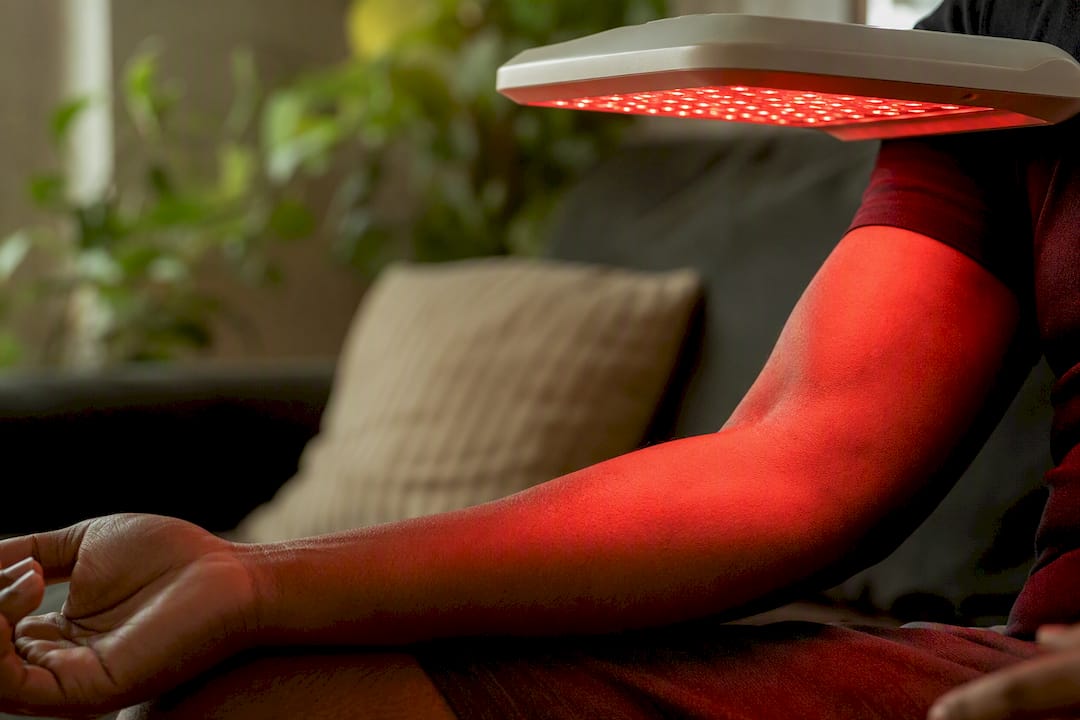
Physician guidance from the American Medical Association reinforces this directly: patients with darker skin tones should start with lower intensity and shorter session times specifically to assess tolerance before increasing exposure.
A sensible stepwise approach looks like this:
- Patch test a small area first, at the lowest available intensity setting.
- Keep the initial session short, just a minute or two, rather than jumping to a full recommended treatment time.
- Wait a full day or two and check the area for delayed redness, discoloration, or irritation before your next session.
- If everything looks normal, increase session length gradually over several sessions rather than all at once.
Pro Tip: Photograph the treatment area before your first session and after each of the first several. Side-by-side photos catch subtle hyperpigmentation changes that are easy to miss in the mirror day to day.
Stop immediately and see a dermatologist if you notice blistering, persistent darkening that doesn’t fade within a week or two, or any pain that outlasts the session itself. Those are signals your skin needs a professional look, not just a lower setting next time.
How Do At-Home Devices Compare to Clinical Treatment for Safety?
Consumer red light devices vary enormously in power output, and that variability is itself a safety issue most buyers never think to check. Stanford Medicine’s clinical overview notes that clinic-grade equipment is often considerably more powerful than what you’ll find in a home device, which cuts both ways: underpowered devices may simply not do much, while a misused higher-powered unit run too close or too long can cause burns.
Before you buy, check for these markers:
- FDA 510(k) clearance language. This tells you the device has passed a safety review, though it’s worth knowing that clearance signals low public-risk rather than a guarantee of clinical effectiveness.
- Published irradiance figures, ideally in mW/cm², so you know what you’re actually being exposed to rather than guessing.
- A built-in timer or auto-shutoff, which removes the guesswork of tracking session length manually.
- Eye protection included in the box, not sold as an afterthought accessory.
- Clear instructions on distance and session time, since irradiance drops off fast the farther you sit from the panel.
Adverse events from red light therapy are uncommon overall, but misuse or exposure to very high-powered devices can cause localized burns and blistering, according to peer-reviewed safety reviews.
The basic dosing principle worth internalizing: start low, keep early sessions short, and build up gradually rather than assuming more light automatically means more benefit. Warning signs of overuse include unusual redness that lingers well past the session, tightness, or any hint of a burn sensation on the skin.
Clinician-administered treatment is the better call when you’re dealing with active cancer anywhere near the treatment area, a complex skin disease that needs monitoring, or when you need light therapy coordinated alongside other medical treatments you’re already receiving. A comparison of clinic sessions versus home devices can help you weigh cost against the level of supervision each option provides.
What Should You Ask Your Doctor Before Starting?
A short screening pass before your first session catches most of the issues covered above in one sitting. Run through this list, and if any item applies to you, that’s your cue to talk to a clinician before, not after, you start.
- Do you have active cancer, or has a doctor flagged a suspicious lesion, anywhere in or near the treatment area?
- Are you currently taking a photosensitizing medication, including antibiotics, acne treatments, heart medications, or supplements like St. John’s Wort?
- Are you pregnant, trying to conceive, or breastfeeding?
- Do you have a personal or family history of seizures, particularly photosensitive epilepsy?
- Have you had a recent injection, filler, or surgical procedure in the treatment area?
- Do you have a diagnosed eye disease or retinal condition?
When you bring this to an appointment, tailor the question to the specialist. Ask a dermatologist about skin-specific reactions and dosing for your skin tone. Ask an oncologist directly whether light exposure near a treatment or monitoring site is appropriate. Ask your OB/GYN about abdomen exposure timing during pregnancy. Ask the physician who prescribed your medication whether it carries a photosensitizing effect worth planning around.
Certain symptoms mean you stop immediately and seek medical attention rather than waiting for your next scheduled appointment: blistering, escalating pain during or after a session, or any change in vision. None of those are “wait and see” situations.
How Does Lunix Build Safety into Its Red Light Devices?
Lunixinc designs its red light devices around the same safety logic covered throughout this article: clear dosing guidance, built-in timers, and eye protection recommendations that take the guesswork out of home use. Every device page spells out intended use so you know exactly what you’re working with before you buy.
That said, no product design substitutes for medical clearance. If you fall into any of the contraindicated groups above, active cancer in the treatment area, photosensitive epilepsy, pregnancy involving abdominal exposure, or a photosensitizing medication, the right first step is a conversation with your clinician, not a purchase. For readers who want to go deeper on the safety fundamentals, Lunixinc’s own breakdown of red light therapy safety and its explainer on how light therapy works cover the mechanics in more depth.
A Balanced Take on Red Light Therapy’s Benefits and Risks
The evidence supporting red light therapy for many everyday uses, joint discomfort, skin tone, minor inflammation, is genuinely encouraging, and it would be a mistake to let a contraindications list scare off someone who has no reason to be cautious. But it’s just as much a mistake to treat this as a risk-free wellness gadget for everyone, all the time, at any intensity.
The honest position sits between those two extremes. Most adults without the specific conditions covered here can use red light therapy with reasonable confidence, provided they respect eye protection and start conservatively. The people this article is really written for, those managing cancer, epilepsy, pregnancy, or a photosensitizing prescription, deserve a direct answer instead of a vague “consult your doctor” footnote buried at the bottom of a sales page. Get individualized clearance, choose a device with real safety documentation, and treat the checklist above as a starting point for that conversation rather than a substitute for it.
— Lunix
Where to Find Lunix Devices Built for Safe Home Use
Once you’ve cleared the contraindications that matter for your situation, choosing a device becomes a question of fit and safety features rather than guesswork. Lunixinc’s LX23 hand device, LX19 joint device, and LX24 foot device are each built with published specs, session timers, and eye-safety guidance so you’re never guessing at dosing the way you might with an unmarked panel light.

None of that replaces the clearance conversation covered throughout this article. If you have active cancer, photosensitive epilepsy, are pregnant, or take a photosensitizing medication, talk to your clinician before adding any device to your routine, Lunix or otherwise. For everyone else ready to start at a sensible, well-documented intensity, browse the full Lunix lineup to see specs, safety features, and which device fits the area you’re targeting.
Where to Read More on Red Light Therapy Safety
The clinical guidance behind this article comes from a handful of sources worth bookmarking directly. The American Academy of Dermatology’s safety overview covers skin-specific contraindications in detail. The American Medical Association’s patient guidance explains why PBM works best as an adjunct rather than a standalone fix. The FDA’s 510(k) guidance clarifies what device clearance actually means. For a broader clinical-style rundown, the team at Bone Health Sacramento has published a useful overview of who should avoid treatment. Bring any lingering questions to your own clinician. This article is a starting point, not a substitute for a conversation about your specific medical history.
Sources
- Is red light therapy right for your skin? — American Academy of Dermatology (AAD)
- Red Light Therapy: Benefits, Side Effects & Uses — Cleveland Clinic
- 6 things patients should know about red light therapy — American Medical Association (AMA)
- Photobiomodulation (PBM) devices — FDA guidance for 510(k) submissions
- Open-access review article on photobiomodulation and clinical safety (PMC)