


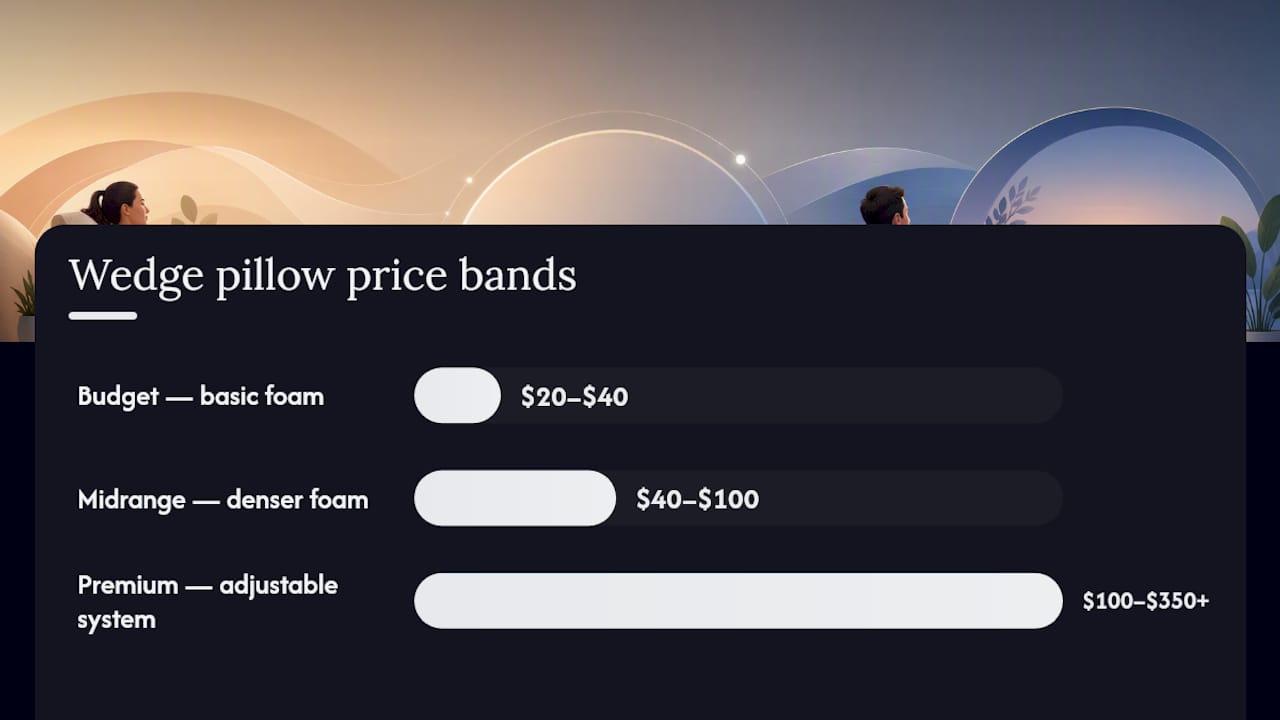
Expect to pay roughly $20 to $350 for a wedge pillow, depending on materials and features. Basic foam wedges run $20 to $40, solid memory-foam options land at $40 to $100, and adjustable or multi-piece medical-grade systems start around $100 and climb higher. Pay more when you need documented reflux relief, post-surgical positioning, or adjustable height. For occasional comfort, budget options work fine, and some ergonomic products may qualify for HSA/FSA reimbursement.
TL;DR:
- Budget wedges under $40 are suitable for occasional use but tend to lose shape and incline within one to two years due to lower foam density.
- Midrange wedges costing $40 to $100 typically feature denser memory foam and washable covers, making them better suited for reflux relief and long-term durability.
- Premium adjustable or multi-piece systems priced above $100 offer customizable height, support in multiple body areas, and added features like hot and cold pack pockets, ideal for medical needs.
- Foam type, cover certifications, adjustability, accessories, and warranty length are the primary factors influencing the price difference between low- and high-end wedge pillows.
- Buying during sales, comparing specific product dimensions and features, and considering warranty and return policies can significantly lower the overall ownership cost.
Table of Contents
- How Much Does a Wedge Pillow Cost at Each Price Tier?
- What Actually Drives the Price of a Wedge Pillow?
- Where Can You Buy a Wedge Pillow Online for the Best Price?
- Can You Use HSA or FSA Funds to Buy a Wedge Pillow?
- How Do You Pick the Best-Value Wedge Pillow for Your Needs?
- Does Spending More on a Wedge Pillow Actually Improve Results?
- How Long Does a Wedge Pillow Last Before You Need a Replacement?
- Is a Wedge Pillow Cheaper Than Other Comfort or Support Products?
- What’s the Real Cost of Owning a Wedge Pillow Over Time?
- Our Take on Price Tiers That Actually Matter
- Find the Right Wedge Pillow Set for Your Budget
- Sources
- FAQ
How Much Does a Wedge Pillow Cost at Each Price Tier?
Wedge pillow pricing splits into three clear tiers, and each one buys a genuinely different product, not just a different price tag.
Budget wedges ($20 to $40) use basic polyfoam or lower-density memory foam, come in one fixed height, and skip the extras. They work for casual elevation, watching TV in bed, or short-term use after a minor procedure. Don’t expect much pressure relief or durability past a year or two of nightly use.
Midrange wedges ($40 to $100) step up to denser memory foam, washable covers, and sometimes a dual-firmness design. This tier is where most reflux and snoring sufferers land, since the foam holds its incline better and the covers survive repeated washing.
Premium systems ($100 and up) bring adjustable height, multi-piece configurations, and medical-minded features like hot and cold pack pockets. These sets target people managing chronic reflux, post-surgical recovery, or leg and back support where the exact angle matters.
Retailer listings back this up directly. Basic and adjustable wedges commonly show up on Walmart product listings with prices varying widely depending on adjustability, and sale events can push some midrange models lower. Target lists an adjustable memory foam bed wedge pillow in a moderate price range on sale, consistent with typical midrange pricing.
Quick price snapshot:
- Budget foam wedge: $20 to $40
- Midrange memory-foam wedge: $40 to $100
- Adjustable or multi-piece orthopedic system: $100 to $350+
Sale timing matters more than most shoppers realize. Retailers frequently discount wedge pillows around mattress sale events, and checking price history before buying can shave 20% or more off the sticker price.
What Actually Drives the Price of a Wedge Pillow?
Four factors explain almost every dollar of difference between a $25 wedge and a $200 one.
Foam type and density is the biggest lever. High-density memory foam holds its shape and incline longer than basic polyfoam, which flattens under body weight within months. Latex layers, used in some premium sets, resist heat retention better than standard memory foam.
Cover fabric and certifications add cost but also add years of usable life. A washable, breathable cover with an OEKO-Tex certification signals the fabric was tested for harmful substances, which matters if you’re using the pillow nightly for a medical condition.
Adjustability and accessories push a set into the premium tier fast. Multi-piece systems that let you raise or lower the incline, plus included hot and cold pack pockets, cost more to manufacture and justify the higher price for people managing pain or swelling alongside sleep position.
Warranty and included pieces round out the difference. A single foam wedge with no warranty sits at the bottom of the price range; a boxed system with multiple pieces and a service guarantee sits at the top.
- Foam density (basic polyfoam vs. high-density memory foam vs. latex)
- Cover certifications and washability
- Adjustable height layers
- Hot/cold pack accessories
- Warranty length and included pieces
Pro Tip: Check whether the “set” you’re buying includes a leg wedge and a back wedge separately, or just one piece marketed as multi-purpose. Multi-piece systems justify a higher price only if you actually need support in more than one spot.
Where Can You Buy a Wedge Pillow Online for the Best Price?
Big-box retailers and direct brand sites both carry wedge pillows, but the price and feature set you get from each differs enough to matter.
Target and Walmart stock entry-level and midrange wedges from multiple manufacturers side by side, which makes comparison shopping easy. The Walmart listings show basic adjustable wedges as low as the $20s, with sturdier memory-foam versions climbing toward $100.
Direct brand sites, including Lunix’s wedge pillow collection, list full specs, sizing, and included accessories on the product page itself, which helps if you’re buying for a specific medical need rather than general comfort.
- Compare listed dimensions (height, width, incline angle) before price, since a cheaper wedge at the wrong angle solves nothing.
- Factor in shipping cost. Some retailers bundle it into the price; others add it at checkout.
- Check the return window. A wedge pillow is a personal comfort item, and not every seller accepts returns once the packaging is opened.
- Watch for bundle discounts on multi-piece sets, which often run cheaper than buying pieces separately.
Shipping and return policy can shift your real cost by $10 to $30 once you account for restocking fees or return shipping on bulkier orthopedic sets.
Can You Use HSA or FSA Funds to Buy a Wedge Pillow?
Most wedge pillows count as consumer health products, not medical devices, so blanket HSA/FSA coverage isn’t guaranteed. Sleep Foundation notes that some ergonomic products may still qualify for pre-tax reimbursement depending on your plan administrator’s rules.
Check the product listing for HSA/FSA eligibility language or get a letter of medical necessity from your physician if you’re buying for a documented condition like reflux or post-surgical recovery. Save the itemized receipt either way.
How Do You Pick the Best-Value Wedge Pillow for Your Needs?
Matching the pillow to your actual problem prevents you from overspending on features you won’t use, or underspending on the one feature that matters.
- Identify your primary goal first. Reflux relief typically needs a steeper incline (around 30 to 45 degrees), leg elevation needs a lower, wider wedge, and back support needs a firmer, broader base.
- Prioritize adjustability for medical use. If you’re managing a chronic condition, an adjustable multi-piece system pays for itself in better symptom control compared to a fixed-height budget wedge.
- Prioritize price for occasional use. If you just want propped-up comfort for reading or recovering from a cold, a $25 to $40 wedge does the job.
- Check the product page for specifics. Look for return policy, warranty length, and exactly which pieces are included before you compare prices across sellers.
- Consider the incline math. A wedge that’s too shallow won’t help reflux; one that’s too steep can strain your neck. Read the listed angle, not just the height in inches.
Pro Tip: If you’re not sure which incline you need, start with a midrange adjustable model rather than guessing with a fixed-height budget wedge. Adjustability lets you dial in the right angle after a few nights of testing.
Does Spending More on a Wedge Pillow Actually Improve Results?
Sometimes, but not automatically. Clinical literature on positional therapy points to angle and height as the variables that actually affect outcomes for reflux and recovery, not brand-specific padding or marketing claims.
Sleep Foundation’s buyer guidance is direct on this point: prioritize fit and pressure relief over price when choosing a wedge pillow, since the right incline for your body matters more than how much you spent.
A PMC-published review of positional therapy supports wedge elevation as a legitimate intervention for reflux and certain post-operative positioning needs, with the measurable factor being how much elevation the wedge actually provides.
That means a $200 adjustable system isn’t automatically better than a $50 midrange wedge if both hit the same effective angle. Spend more when you need adjustability, multiple pieces, or accessories like hot/cold packs for a documented condition. Skip the premium tier if a single well-chosen incline solves your problem.
How Long Does a Wedge Pillow Last Before You Need a Replacement?
Most wedge pillows hold their shape for two to five years, depending on foam quality and nightly use. Basic polyfoam wedges tend to flatten and lose their incline within one to two years of regular use, which is the most common complaint with budget models. Higher-density memory foam and latex cores resist compression longer, often lasting three to five years before the incline noticeably softens.
Cover quality affects replacement timing almost as much as the foam itself. A washable cover extends the usable life of the pillow by keeping oils, sweat, and allergens from breaking down the foam underneath. If a wedge pillow’s cover isn’t removable and washable, expect to replace the whole unit sooner simply due to hygiene, not foam failure.
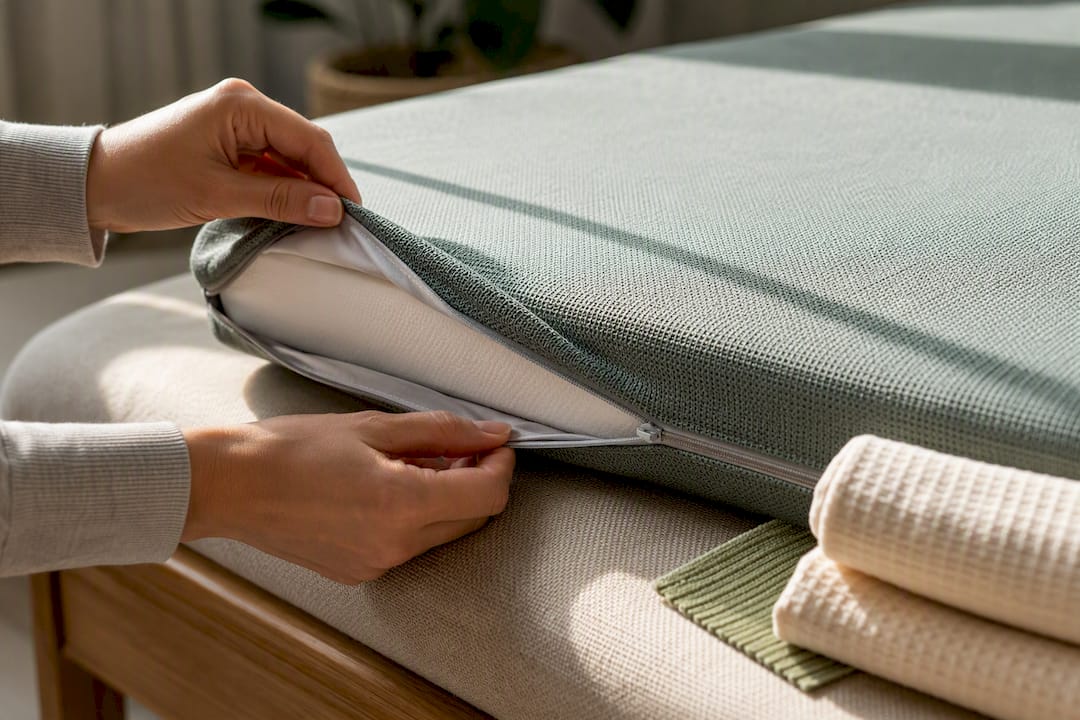
Watch for these signs that it’s time to replace: visible indentation that doesn’t spring back, a noticeably reduced incline angle compared to when it was new, or a cover that’s worn through and can’t be replaced separately.
This is where total cost per year actually favors the midrange and premium tiers. A $30 wedge that needs replacing annually costs more over three years than a $70 memory-foam wedge that lasts the full three years. Some premium systems, including multi-piece sets, offer replaceable covers or individual components, which stretches the useful life of the whole system even further and changes the real math on what you’re spending per year of use.
Is a Wedge Pillow Cheaper Than Other Comfort or Support Products?
A wedge pillow usually costs more upfront than a regular pillow but less than most specialty medical cushions built for the same job.
A standard bed pillow runs $10 to $30 and offers zero structural incline, so stacking two or three of them to approximate a wedge angle is unstable and tends to collapse overnight. You’d need to replace stacked pillows more often too, since standard pillows compress and lose loft faster than purpose-built foam wedges.
Specialty orthopedic cushions, like post-surgical positioning wedges or adjustable hospital-style bed wedges, often run $150 to $400 or more, especially when sold through medical supply channels rather than general retail. These products may offer more clinical documentation, but a well-chosen consumer wedge pillow in the $60 to $150 range delivers comparable elevation for most reflux, snoring, or general back support needs.
The real comparison isn’t wedge pillow versus regular pillow. It’s wedge pillow versus specialty medical cushion, and the wedge pillow tier usually wins on cost per year of use once you factor in durability. A $70 to $150 memory-foam wedge with a washable cover often matches the functional benefit of a $250 specialty cushion for common use cases like reflux management or elevated leg rest, without the medical-supply markup.
What’s the Real Cost of Owning a Wedge Pillow Over Time?
Total cost of ownership includes more than the sticker price. It factors in how long the pillow lasts, what a warranty covers, and whether you can replace individual pieces instead of the whole unit.
A budget $25 wedge that needs replacing every 12 to 18 months costs you $50 to $75 over three years, plus the hassle of reordering. A $90 midrange memory-foam wedge that lasts three years costs the same or less over that period, with far less compression and a cover you can actually wash.
Warranty length is the detail most shoppers skip, and it’s the one that protects your investment on premium multi-piece systems. A set with a documented warranty and individually replaceable covers or layers extends useful life well past what a single fixed-foam wedge can offer, since you’re not throwing out the entire system when one cover wears out.
Before buying, ask three questions: What’s the warranty period? Are covers or layers sold separately for replacement? What does the return policy cover if the incline doesn’t work for your body? A wedge pillow that answers all three tends to cost more upfront and less over three to five years of ownership.
Our Take on Price Tiers That Actually Matter
We think the biggest mistake shoppers make is picking a price tier based on sticker shock instead of what their body actually needs. A basic foam wedge solves casual comfort problems fine. A documented reflux or recovery need calls for adjustable height and real pressure relief testing, not the cheapest option on the shelf.
Higher-tier sets aim to give users adjustability and multi-piece flexibility, while essential pieces cover simpler comfort needs without the extra cost. Review our wedge pillow product pages for the specifics that matter to your situation.
— Lunix
Find the Right Wedge Pillow Set for Your Budget
Retail wedges force a trade-off: cheap and fixed height, or expensive and hard to compare across brands. Lunix built its wedge pillow sets to close that gap by putting adjustability and medical-minded features into the same multi-piece system, so you’re not choosing between comfort and support.

The LX8 Wedge Pillow Set gives you two adjustable layers plus a hot and cold pack pocket, useful for reflux relief one night and swelling or soreness the next. For readers who need broader support, the LX13 6pcs Orthopedic Wedge Pillow Set includes six pieces configurable for back, leg, and full-body positioning, with the same hot/cold pack feature built in.
Both sets use washable covers, so hygiene and longevity stay on your side of the equation rather than costing you a replacement every year. If you’re ready to match your incline needs to an actual product, browse the wedge pillow sets collection and compare configurations before you check out.
Sources
Pricing and guidance above draw from Sleep Foundation’s wedge pillow buying guidance, retailer listings on Walmart and Target, and product specifications from Lunix’s LX13 and LX8 product pages.
- Sleep Foundation
- Walmart product listings (example prices)
- Target product listing — adjustable memory foam bed wedge pillow
- NCBI PMC article on positional therapy and related interventions
FAQ
Is It Healthy to Sleep With a Wedge Pillow?
For most people, yes. Wedge pillows are commonly recommended for reflux, snoring, and mild back support, and clinical literature on positional therapy supports elevation as a reasonable intervention for these issues. Check with a doctor first if you have a specific spinal or post-surgical condition, since the correct incline varies by situation.
How Much Does the Costco Wedge Pillow Cost?
Costco’s wedge pillow pricing isn’t listed on Lunix’s site or in the sources reviewed for this article, so we can’t state a specific figure here. Check Costco’s own listing directly, and compare it against the $20 to $100 range typical of budget and midrange wedges at other major retailers.
Are Wedge Pillows Covered by Insurance?
Most wedge pillows are sold as consumer health products rather than medical devices, so blanket insurance coverage isn’t typical. Sleep Foundation notes some ergonomic products may qualify for HSA/FSA reimbursement instead, which is worth checking with your plan administrator before you buy.
What Are the Downsides of Using a Wedge Pillow?
Budget wedges can flatten within a year or two, losing the incline that made them useful in the first place. Fixed-height models also don’t adjust if your needs change, and some people find the angle uncomfortable for side sleeping. Adjustable multi-piece systems address both issues but cost more upfront.
How Much Should You Budget for a Wedge Pillow?
Plan for $20 to $40 if you want basic comfort, $40 to $100 for a durable memory-foam option with a washable cover, and $100 or more if you need an adjustable or multi-piece medical-minded system. Match the tier to how often you’ll use it and whether you’re managing a specific condition.