


A wedge pillow can meaningfully reduce snoring for people whose airway collapses because of body position, but it will not fix moderate or severe obstructive sleep apnea (OSA). The mechanism is simple: propping your upper body to a 30 to 45 degree incline keeps the tongue and soft palate from falling backward into the throat, which is what triggers the vibration you hear as snoring. That same elevation can also ease reflux, since gravity helps keep stomach acid from creeping up the esophagus and irritating the throat overnight.
Here’s when to stop troubleshooting on your own and call a doctor instead:
- You gasp, choke, or your partner has witnessed pauses in your breathing during sleep
- You feel excessively sleepy during the day despite a full night in bed
- Your snoring is loud and constant regardless of sleep position
- A wedge pillow provides no improvement after a genuine two to three week trial
If none of those apply, a wedge is a reasonable, low-risk first step worth testing tonight.
Key Takeaways
A wedge pillow reduces positional snoring and reflux-related throat irritation by holding the upper body at a 30 to 45 degree incline, but it cannot replace CPAP for moderate or severe sleep apnea.
| Point | Details |
|---|---|
| Correct angle range | Aim for 30 to 45 degrees; build up to it gradually rather than starting steep. |
| Placement matters most | Support the upper back and shoulders, not just the head, to avoid neck strain. |
| Watch for red flags | Gasping, witnessed apneas, or daytime sleepiness mean it’s time to see a doctor. |
| Foam density drives durability | High-density foam holds incline overnight; low-density foam flattens within a season. |
| Lunix builds for this exact use case | Lunix’s multi-layer wedge sets, like the LX8 and LX13, combine adjustable incline with washable covers and hot or cold pack support for the adjustment period. |
Table of Contents
- What Causes Wedge Pillow Snoring Relief to Work?
- Who Benefits From an Angle Pillow for Better Sleep?
- How Do You Set Up a Wedge Pillow Correctly?
- What Are the Pros and Cons of Sleeping on a Wedge?
- How Do You Choose the Right Wedge Pillow?
- How Lunix Approaches Wedge Pillow Design
- How Do You Clean and Maintain a Wedge Pillow?
- How Do Wedge Pillows Compare to Other Anti-Snoring Tools?
- What Size and Shape of Wedge Pillow Fits Your Body?
- Are There Health Conditions Where a Wedge Pillow Isn’t a Good Idea?
- A Practical Take on Positional Sleep Therapy
- Ready to Try a Wedge Pillow? Here’s How to Start
- Frequently Asked Questions
- Sources
What Causes Wedge Pillow Snoring Relief to Work?
Snoring happens because gravity does something unhelpful while you’re flat on your back. The tongue and soft palate relax and drift toward the back of the throat, narrowing the airway enough that airflow makes tissue vibrate. Lie completely flat, and you’ve built the exact conditions that produce the loudest snoring. Tilt the body upward, and gravity works with you instead of against you, pulling the tongue and soft tissue forward and away from the airway.
That’s the entire physics behind an anti snore wedge pillow, and it’s why elevation shows up again and again in clinical positional therapy research as an effective strategy for mild, position-related sleep-disordered breathing.
The angle matters more than most people assume. Sleep researchers consistently point to a specific range rather than “as high as possible”:
- Below 30°: Not enough incline to meaningfully counter gravity’s pull on the airway
- 30° to 45°: The sweet spot where most people get airway benefit without spinal strain
- Above 45°: Can create its own problems, including neck flexion and lower back pressure that disrupts sleep just as much as snoring does
The Sleep Foundation’s clinical guidance settles on 30 to 45 degrees as the range that keeps the tongue and soft palate from collapsing into the throat, without pushing the body into an unnatural curve that causes new discomfort.
There’s a second benefit riding along with the first one. Elevation doesn’t just open the airway, it also helps prevent stomach acid from rising into the esophagus, which matters because acid reflux and snoring frequently show up together. Reflux irritates the throat and larynx, and that irritation can worsen the very tissue vibration that causes snoring in the first place. If you’ve ever noticed your snoring is worse after a late dinner or a glass of wine, reflux is a likely reason why. Elevating your upper body addresses both issues with one adjustment, which is part of why clinicians frequently recommend wedges before reaching for more invasive interventions.
One important caveat: a wedge changes your position, but it doesn’t treat an anatomically narrow airway or the neurological signaling failures behind central sleep apnea. It’s a mechanical fix for a mechanical problem. When the problem is purely positional, that’s usually enough.

Who Benefits From an Angle Pillow for Better Sleep?
Not every snorer is the same kind of snorer, and figuring out which category you fall into determines whether a wedge is likely to help.
- Positional snorers — people who snore mainly or exclusively on their back, and whose partners report quieter nights when they happen to roll onto their side. This is the group most likely to see fast, noticeable results from a wedge pillow for sleep apnea prevention or mild positional OSA.
- People with GERD-related night symptoms — heartburn, a sour taste on waking, a chronic nighttime cough. Elevation helps manage both reflux and the throat irritation that compounds it, making a wedge a genuinely dual-purpose tool for this group.
- Mild, diagnosed positional OSA — if a sleep study has already confirmed a mild classification tied to sleeping on your back, a wedge can be a legitimate adjunct, though it should be discussed with the diagnosing clinician rather than substituted in blindly.
Simple triage helps before you spend money. Ask a partner, roommate, or use a phone voice recorder to track whether your snoring is louder on your back than on your side. Note how you feel by 2 p.m.: genuinely sleepy and struggling to focus is a different signal than mildly tired. If snoring is loud every night regardless of position, or you or a partner has ever noticed breathing pauses, that’s the point to ask a doctor about a formal sleep study rather than continuing to self-experiment. A wedge pillow is a smart first move for the first two groups. It is not a diagnostic tool, and it shouldn’t replace one when the warning signs above are already present.
How Do You Set Up a Wedge Pillow Correctly?
Most people who say “I tried a wedge pillow and it didn’t work” made one of a handful of avoidable mistakes. Here’s the setup that actually delivers the airway benefit clinicians describe.
- Position it under your upper back and shoulders, not just your head. This is the single most common error. Propping only your head forward flexes your neck into a chin tuck, which can pinch the airway rather than opening it. Support needs to start around the mid back and extend upward so your whole thoracic spine rises together.
- Start low and build up over several nights. Don’t jump straight to a 45° incline on night one. Start closer to 30°, let your body adjust for two or three nights, then increase gradually if you’re tolerating it well and still snoring.
- Add a small cervical support if your neck loses its natural curve. If you notice your chin tucking toward your chest once the wedge is in place, a soft, thin roll under the neck (not the head) restores a neutral line without undoing the incline.
- Use a non-slip cover or tuck a sheet corner to stop sliding. Waking up at 3 a.m. crumpled at the base of the wedge defeats the entire point. A grippy fabric surface or a fitted sheet layered over the wedge keeps you anchored through the night.
- Combine with side-sleeping when you can. Elevation plus side position is the most effective combination for airway opening. If you’re a committed back sleeper, the wedge alone still helps, but side-sleeping with wedge support stacks the benefit.
- Give it real time and track what changes. Two to three weeks is a fair trial. Keep a one-line nightly note: did you wake up on the wedge, did your partner mention snoring, how did your throat and back feel.
Pro Tip: Keep the first week’s angle modest even if you’re tempted to go straight to 45°. Your neck and lower back need time to adapt to a new resting curve, and rushing the incline is the most common reason people quit after just a few nights.
Troubleshooting common complaints: neck soreness usually means the wedge is only under your head, not your back, so reposition it lower. Sliding down through the night usually means you need a grippier surface or a slightly less steep angle. If lower back pain shows up and doesn’t resolve within a week of adjustment, that’s a sign to reduce the incline or stop and consult a physical therapist or doctor, particularly if you have an existing spine condition.
What Are the Pros and Cons of Sleeping on a Wedge?
A wedge pillow earns its popularity because the upside is real and the downside is low-stakes, but it helps to walk in with accurate expectations rather than hoping for a total fix.
What works in its favor:
- Non-invasive and drug-free, with none of the side effects tied to oral appliances or medication
- Affordable relative to CPAP machines or surgical interventions
- Doubles as reflux relief for the large overlap of people dealing with both issues
- Low risk. Worst case, you switch back to a flat pillow with no lasting harm
Where it falls short:
- Not universally effective. Snoring driven by anatomy (enlarged tonsils, a deviated septum) or moderate to severe OSA won’t resolve with positioning alone
- Some people experience transient neck or shoulder discomfort during the adjustment period
- Pre-existing lower back conditions can be aggravated by an incline that’s too steep or maintained too long
- Results are typically partial improvement, not silence. A wedge quiets positional snoring; it does not guarantee a snore-free night every time
Set your expectations around “meaningfully quieter, especially on my back” rather than “cured.” For the right candidate, that’s still a significant, real-world upgrade in sleep quality, both yours and your partner’s.
How Do You Choose the Right Wedge Pillow?
The materials inside a wedge determine whether it delivers the incline it promises on night one or whether it’s flattened out by month three. A handful of factors separate a wedge worth buying from one you’ll replace within a season.
- High-density foam that resists compression. This is the detail most shoppers skip and regret skipping. A wedge that loses its incline overnight because the foam compresses under body weight stops delivering the airway benefit it was bought for, even if the angle looked right in the store.
- Multi-layer or adjustable systems. A single foam block gives you one fixed angle. A multi-piece set lets you stack, rearrange, or swap pieces to dial in your ideal incline during that adjustment period, rather than committing to one angle blind.
- Washable, breathable covers. A cover you can remove and machine wash matters more than it sounds. Foam absorbs sweat and odor over time, and a fixed, non-removable cover shortens the useful life of the whole pillow.
- Published foam density and warranty length. A brand willing to state its foam’s compression resistance and back it with a real return or warranty window is signaling confidence in durability. Vague marketing language without a density spec is worth treating with skepticism.
On price, wedge pillows commonly run $30 to $200, and the gap is rarely random. The features that reliably justify a higher price are foam density, multi-piece adjustability, and premium washable covers. Fancy-sounding fabric names or extra accessories with no functional purpose usually aren’t worth the premium.
How Lunix Approaches Wedge Pillow Design
Lunix builds recovery and comfort products around one core idea: positioning matters as much as material, and the two only work together when they’re engineered as a system rather than bolted together as an afterthought.
That shows up directly in the construction choices behind Lunix wedge sets:
- Multi-layer, high-density foam designed to hold its incline through a full night rather than compress under body weight
- Washable, breathable covers that keep the pillow hygienic through regular use without shortening its lifespan
- Included hot and cold pack compatibility, useful for the neck or back soreness that can show up during the first week of adjusting to a new sleep angle
- Multi-piece configurations that let you build toward the 30 to 45 degree range gradually instead of committing to one fixed angle out of the box
A wedge pillow is a positioning tool, not a substitute for diagnosed OSA treatment. The goal of good wedge design is to make the correct incline easy to hold night after night, and to make it comfortable enough that people actually stick with it long enough to see whether positional therapy works for them.
That distinction shapes every product decision at Lunix: comfort and incline stability serve a therapeutic purpose, not just a marketing one.
How Do You Clean and Maintain a Wedge Pillow?
A wedge pillow lives on your bed every night, which means it accumulates sweat, skin oils, and dust mites faster than most people expect. Maintenance is straightforward, but skipping it shortens the pillow’s useful life and undermines the incline you’re relying on.
Start with the cover. Most quality wedge covers are removable and machine washable, and washing every one to two weeks keeps allergens and odor from building up. Use a gentle cycle and mild detergent, since harsh chemicals can break down the fabric’s stretch over time. Air dry when possible. High heat from a dryer can shrink a fitted cover so it no longer stretches properly over the foam.
The foam core itself typically cannot be machine washed. Spot clean with a damp cloth and a small amount of mild soap for surface stains, then let it air dry completely before recovering it, since trapped moisture inside foam invites mold. Keep the wedge out of direct sunlight for long stretches, which degrades foam faster than normal use does.
Check the incline periodically. If you notice the pillow feels noticeably flatter after a few months than it did on day one, that’s a sign the foam is compressing and losing the airway benefit it was providing. High-density foam resists this for years; lower-quality foam can flatten within a single season. A wedge that no longer holds its angle isn’t doing its job anymore, even if it still looks fine from across the room.
How Do Wedge Pillows Compare to Other Anti-Snoring Tools?
A wedge pillow occupies a specific spot on the spectrum of anti-snoring tools: low effort, low cost, and targeted at positional causes rather than anatomical ones.
Nasal strips and dilators work by physically widening the nostrils, which helps people whose snoring stems from nasal congestion or a narrow nasal passage. They do nothing for the tongue and soft palate collapse that positional elevation addresses, so they solve a different problem entirely.
Anti-snore mouthguards and mandibular advancement devices shift the lower jaw forward to keep the airway open, and they’re often more effective for snoring rooted in jaw or tongue position rather than sleep position. They also require a break-in period and, for custom-fitted versions, a dentist visit, making them a bigger commitment than a pillow.
CPAP machines remain the standard for moderate to severe OSA, delivering continuous pressurized air that keeps the airway open regardless of sleep position. A wedge pillow is not a competitor to CPAP. It’s a tool for a milder, positional problem that CPAP would be overkill for.
Throat sprays and anti-snoring supplements target tissue inflammation or lubrication, with far less consistent evidence behind them than positional therapy. A wedge pillow’s advantage across this whole category is that it requires no adaptation to a device in your mouth or nose, no daily application, and it does double duty on reflux symptoms that many of these other tools don’t touch at all.
What Size and Shape of Wedge Pillow Fits Your Body?
Body type and sleep habit both influence which wedge shape actually delivers the incline you’re aiming for, and a mismatch here is a common reason people give up before the pillow’s had a fair shot.
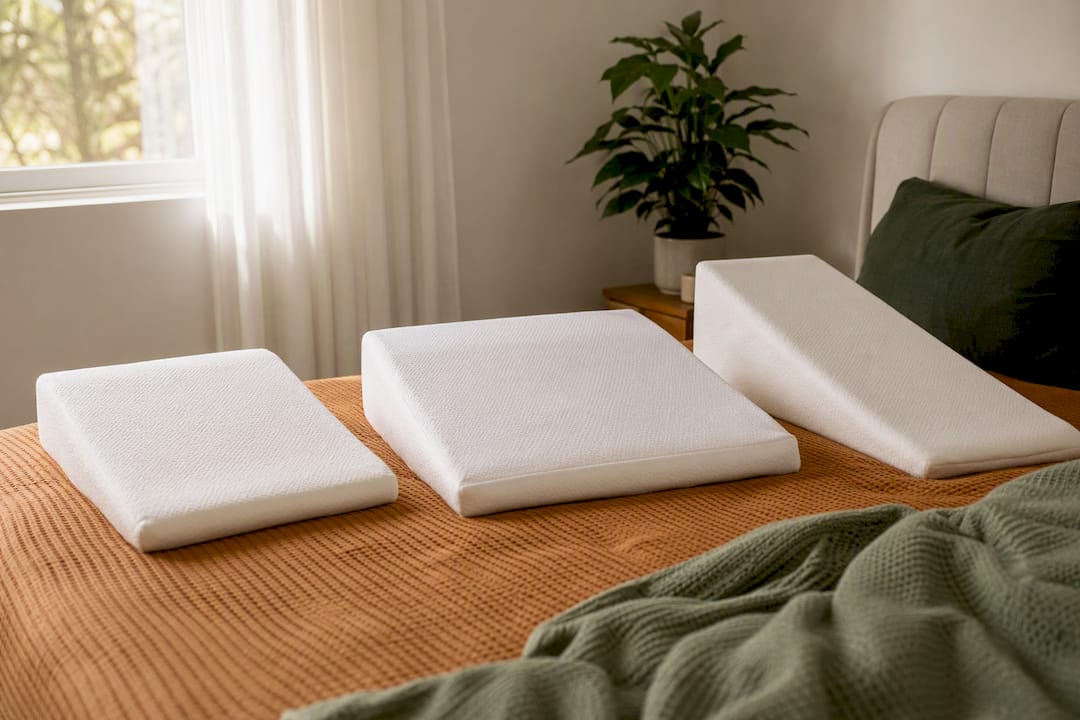
Height and torso length matter more than most buyers expect. A standard 24 inch wide wedge that comfortably supports someone at 5’4" may leave a taller person’s shoulders hanging off the edge, undermining the support the pillow is supposed to provide. Taller users generally do better with wider or longer wedge platforms, or with multi-piece systems that can be extended.
Side sleepers need slightly different geometry than committed back sleepers. A wedge with a broader, flatter plateau near the top accommodates a shoulder rolling to the side more comfortably than a sharply angled single-slope design, which can dig into the shoulder joint through the night.
Larger body frames benefit from wider wedges and firmer, higher-density foam specifically because more body weight compresses foam faster. A softer wedge that feels great for a lighter frame can flatten out disappointingly fast under more weight, losing incline exactly when it’s needed most.
Couples sharing a bed often do better with two individual wedges rather than one wide shared unit, since each person can set their own angle without disturbing the other’s incline preference. If only one partner snores, this also avoids forcing an incline on someone who doesn’t need it.
Are There Health Conditions Where a Wedge Pillow Isn’t a Good Idea?
Beyond OSA severity and reflux, a few other health situations call for a conversation with a doctor before you start sleeping at an incline every night.
Chronic lower back conditions, including herniated discs, spinal stenosis, or recent back surgery, can be aggravated by an incline that curves the spine in a way that’s fine for most people but not for a compromised one. If you have a diagnosed spine condition, ask your physical therapist or doctor about a safe angle range before assuming 30 to 45 degrees applies to you the same way it does to a healthy back.
Circulatory issues affecting the legs, such as significant varicose veins or a history of blood clots, deserve a check-in too, since sustained upper-body elevation changes overall body positioning and blood flow patterns through the night.
Pregnancy, particularly in the second and third trimester, often benefits from elevation for reflux, but the right angle and support setup can differ from general guidance, so it’s worth asking an OB or midwife rather than defaulting to the same range recommended for the general population.
Recent shoulder or neck surgery is another case where the standard “support from mid back upward” instruction may need modification. Post-surgical positioning restrictions from a surgeon should always override general wedge pillow guidance.
None of this means a wedge is off the table for these groups. It means the standard advice in this article is written for a generally healthy adult, and anyone with one of these conditions should treat that advice as a starting point for a conversation, not a substitute for one.
A Practical Take on Positional Sleep Therapy
The wellness industry loves to oversell simple interventions, and wedge pillows have caught some of that overselling. Marketing copy that promises a “snoring cure” sets people up to feel like the product failed them when what actually failed was the framing. Positional therapy works well for a specific, common problem: airway collapse driven by sleeping flat on your back. It does not touch anatomical narrowing, and it was never going to.
What gets underappreciated is the reflux connection. Most snoring content treats airway mechanics and acid reflux as separate topics, when in practice they show up in the same person on the same night constantly. Treating the incline as a dual-purpose tool, rather than a single-issue fix, is where a lot of people are leaving benefit on the table by not testing it properly or not testing it long enough.
The honest complaint about wedge pillows isn’t that they don’t work. It’s that most people give up in week one, before their neck and back have adapted to a genuinely new resting position.
Ready to Try a Wedge Pillow? Here’s How to Start
Lunix designs its wedge pillow sets around the exact criteria this article just walked through: high-density foam that holds its incline through the night, multi-layer construction for adjustability, and washable covers that keep the pillow hygienic through regular use.

If you’re mainly dealing with positional snoring or overlapping reflux symptoms, the LX8 two-layer set gives you a straightforward incline with a built-in hot and cold pack, useful for easing any neck or back stiffness during your first week of adjustment. If you want more control over your exact angle while you’re still finding what works, the LX13 six-piece system lets you rearrange pieces to build toward 30 to 45 degrees gradually rather than committing to a single fixed height on night one.
Give either set a genuine two to three week trial, tracking how you and your partner feel each morning, before deciding whether it’s solved your snoring or whether it’s time to talk to a doctor about next steps.
Frequently Asked Questions
Can you side sleep on a wedge pillow? Yes, and combining side-sleeping with wedge elevation is generally more effective for airway opening than either strategy alone. Look for a wedge with a broader plateau near the top so your shoulder has room to settle without digging into a sharp angle.
How long does it take a wedge pillow to help with snoring? Give it two to three weeks. The first several nights are mostly an adjustment period for your neck and back to adapt to a new resting angle, so judging results too early is a common reason people quit before seeing the real effect.
Is a wedge pillow good for sleep apnea? It can help with mild, positional obstructive sleep apnea, particularly when a sleep study has confirmed the diagnosis is tied to back-sleeping. It is not a substitute for CPAP in moderate or severe cases, and any OSA diagnosis should involve a doctor’s guidance on whether positional therapy is an appropriate addition to treatment.
What’s the best pillow for snoring if I also have acid reflux? A wedge pillow that elevates from the mid back upward addresses both issues at once, since the same incline that opens the airway also helps keep stomach acid from rising into the esophagus overnight.
Can a wedge pillow cause back pain? It can, particularly if the incline is too steep too soon or if you have a pre-existing lower back condition. Starting at a lower angle and increasing gradually, alongside choosing a wedge with adjustable height, reduces this risk substantially.
Sources
- Best wedge pillows of 2026: Pillows for GERD, acid reflux, and snoring — Sleep Foundation
- Stop Snoring Tonight: How a Wedge Pillow Opens Airways Fast — Ubie Doctor’s Note
- Best pillows to help you stop snoring — WebMD
- Best wedge pillows of 2026 — Sleep Doctor
- Positional therapy and sleep-disordered breathing — PMC