


Foot arthritis relief starts with three steps you can take today: apply a topical NSAID like diclofenac gel directly to the painful joint, switch to a wide, cushioned shoe with a stiff or rocker sole, and begin gentle range-of-motion exercises to keep the joint moving. These three actions address pain, mechanical stress, and stiffness simultaneously, which is why clinicians typically recommend all three together rather than one at a time.
Start here — immediate actions to try at home:
- Apply a topical NSAID (diclofenac 1% gel, available OTC) to the affected joint two to four times daily.
- Ice the joint for 15–20 minutes after activity to reduce acute swelling; switch to heat before activity to ease morning stiffness.
- Change into a supportive, wide-toe-box shoe or add a cushioned OTC insole today.
- Take an OTC oral NSAID (ibuprofen or naproxen) for short-term pain control, but do not exceed 10 consecutive days without speaking to your doctor.
- Do five minutes of seated toe and ankle range-of-motion exercises morning and evening.
- Reduce high-impact activity (running, jumping) and substitute walking or swimming while symptoms are active.
Pro Tip: If your pain is in the big toe and you feel a grinding sensation when you bend it, that is a classic sign of hallux rigidus (big-toe osteoarthritis). A stiff-soled shoe or a carbon-fiber insole that limits big-toe bend can cut pain dramatically within days.
See a doctor promptly if you notice: fever with joint swelling, sudden severe redness and warmth (possible gout or infection), inability to bear weight, or no improvement after one to two weeks of consistent self-care. These are red flags that need professional evaluation, not more home remedies.
Key Takeaways
Consistent conservative care, starting with supportive footwear, topical NSAIDs, and daily exercise, relieves foot arthritis pain for most people before more invasive options become necessary.
| Point | Details |
|---|---|
| Start with three steps | Apply a topical NSAID, switch to supportive footwear, and begin daily range-of-motion exercises as your first-line approach. |
| Know your OTC NSAID limit | Oral NSAIDs should not be taken for more than 10 consecutive days without medical supervision due to GI and cardiovascular risks. |
| Orthotics manage symptoms, not structure | Orthotics and supportive shoes reduce pressure and improve function but do not correct the foot’s underlying shape, per AAOS guidance. |
| Some orthoses show limited benefit for big-toe OA | Moderate-certainty evidence from a systematic review found arch-contouring insoles and shoe-stiffening inserts probably do not provide clinically important benefits for hallux rigidus. |
| Lunixinc recovery products | Lunix compression and massage tools are comfort adjuncts that support daily self-care alongside your prescribed medical treatment plan. |
Table of Contents
- What is foot and ankle arthritis, and what are the treatment goals?
- What types of arthritis commonly affect the foot?
- How does foot arthritis feel, and where does it hurt?
- What causes foot arthritis, and who is at higher risk?
- How do clinicians diagnose foot arthritis?
- Non-surgical treatment options for foot arthritis pain
- Daily self-care steps and exercises to stay active and reduce pain
- When is surgery considered for foot arthritis?
- What does the research actually show about common treatments?
- What are the risks and side effects of common treatments?
- What is the long-term outlook for foot arthritis?
- A practical perspective on managing foot arthritis conservatively
- How Lunix recovery products fit into your conservative care plan
- Sources
What is foot and ankle arthritis, and what are the treatment goals?
Arthritis in the foot is not a single disease. It is a group of conditions that damage the cartilage lining your joints, causing the bones to rub together and triggering pain, swelling, and stiffness. This is different from a tendon strain or plantar fasciitis, which affect soft tissue rather than the joint surface itself.
The goals of treatment are practical and worth keeping in mind as you work through your options:
- Reduce pain enough to restore normal daily activity.
- Maintain range of motion so the joint does not stiffen permanently.
- Preserve walking ability and protect the joint from accelerating damage.
- Slow progression where possible through weight management, activity modification, and appropriate footwear.
The Cleveland Clinic recommends activity such as walking and swimming, OTC and topical NSAIDs, orthotics, and corticosteroid injections for focal inflammation, reserving surgery for severe cases that significantly limit quality of life. That hierarchy matters: most people get meaningful relief well before they reach the surgical threshold.
The joints most commonly affected are the big toe (first metatarsophalangeal joint), the midfoot (tarsometatarsal joints), and the ankle (tibiotalar joint). Knowing which joint is involved helps you and your provider choose the right treatment.
Pro Tip: Keep a one-week symptom diary before your first appointment. Note which activities trigger pain, what time of day it peaks, and whether rest relieves it. That pattern tells a clinician more than an X-ray alone.
What types of arthritis commonly affect the foot?
Not all foot arthritis is the same, and the type you have shapes every treatment decision.
Osteoarthritis (OA) is the most common form. Cartilage wears down gradually, usually in the big toe (hallux rigidus) or midfoot. Pain builds with use and eases with rest. Morning stiffness typically lasts less than 30 minutes.
Rheumatoid arthritis (RA) is an autoimmune disease that attacks the joint lining. It tends to affect both feet symmetrically, often starting in the small toe joints. Morning stiffness lasts longer than an hour, and systemic symptoms like fatigue and hand involvement are common. RA requires disease-modifying drugs (DMARDs) or biologics, not just pain relievers.
Gout produces sudden, intense attacks of pain, redness, and warmth, classically in the big toe. The culprit is uric acid crystal deposits in the joint. Between attacks, the joint may feel completely normal. Gout is highly treatable with the right medications, but it needs a confirmed diagnosis.
Psoriatic arthritis can involve the feet along with skin plaques and nail changes. It may cause a sausage-like swelling of an entire toe (dactylitis), which is a distinguishing feature.
Post-traumatic arthritis develops years after a fracture or ligament injury to the foot or ankle. The joint surface was damaged at the time of injury and degenerates faster than normal.
Getting the right diagnosis matters because inflammatory types (RA, psoriatic, gout) need systemic treatment that OA does not. Treating RA with only insoles and ibuprofen will not stop joint destruction.
How does foot arthritis feel, and where does it hurt?
Common symptoms to watch for:
- Joint pain that worsens with walking, standing, or climbing stairs
- Morning stiffness that takes time to “warm up”
- Visible swelling around one or more joints
- Reduced range of motion (difficulty bending the big toe, for example)
- A grinding or clicking sensation (crepitus) inside the joint
- Progressive deformity such as bunions, hammertoes, or a flattening arch
Where the pain sits tells you a lot. Big-toe pain that limits push-off during walking points to hallux rigidus. Midfoot pain that is worse in shoes with a flexible sole suggests tarsometatarsal OA. Diffuse forefoot pain across multiple small joints, especially with swelling, raises concern for RA. Ankle pain with stiffness after rest that eases with movement is a common pattern in ankle OA.
Flare patterns differ by type. Inflammatory arthritis (RA, gout, psoriatic) produces episodic flares with significant swelling and warmth. Mechanical OA tends to produce a more chronic, predictable ache that builds through the day and eases overnight.
According to the CDC, regular physical activity reduces pain and improves function for people with arthritis, which means that even during a flare, complete rest is rarely the right answer. Gentle movement, not immobilization, is the goal.
What causes foot arthritis, and who is at higher risk?
Modifiable risk factors (things you can change):
- Excess body weight, which multiplies the load on foot joints with every step
- Repetitive high-impact activity without adequate recovery
- Poor footwear (narrow toe boxes, flat soles, high heels worn daily)
- Untreated foot deformities that alter joint mechanics over time
- High uric acid levels (diet-related, in gout)
- Smoking, which worsens inflammatory arthritis outcomes
Nonmodifiable risk factors (things you cannot change):
- Age (cartilage thins naturally over decades)
- Prior foot or ankle injury
- Family history of OA or inflammatory arthritis
- Underlying inflammatory disease (RA, psoriasis, inflammatory bowel disease)
Weight loss and activity modification are the two highest-impact modifiable steps for OA. Even modest weight reduction lowers the mechanical load on foot joints noticeably. For inflammatory types like RA and gout, the priority shifts to systemic disease control with a rheumatologist, because no amount of footwear adjustment will stop immune-driven joint destruction.
How do clinicians diagnose foot arthritis?
The typical diagnostic pathway:
- History and physical exam: Your provider asks about symptom onset, location, pattern, and prior injuries, then examines the foot for swelling, tenderness, range of motion, and deformity.
- Weight-bearing X-rays: The first-line imaging test. X-rays show joint space narrowing, bone spurs, and alignment changes that confirm OA or structural damage.
- Blood tests: Ordered when inflammatory arthritis is suspected. Rheumatoid factor, anti-CCP antibodies, uric acid, ESR, and CRP help distinguish RA, gout, and psoriatic arthritis from OA.
- Joint aspiration: If gout or infection is suspected, fluid is drawn from the joint and examined under a microscope for crystals or bacteria.
- Advanced imaging (MRI or CT): Used when soft-tissue damage, stress fractures, or surgical planning requires more detail than X-rays provide.
When to ask for a referral:
- Pain that persists or worsens despite six to eight weeks of conservative care
- Suspected RA, gout, or psoriatic arthritis (a rheumatologist should manage these)
- Neurovascular symptoms (numbness, color changes, poor circulation)
- Mechanical deformity that limits function and may need surgical correction
A diagnostic corticosteroid injection is sometimes used as both a test and a treatment: if injecting a specific joint relieves your pain, that confirms it as the pain source and buys weeks of relief at the same time.
Non-surgical treatment options for foot arthritis pain
Medications
The Arthritis Foundation lists the main medication categories: topical NSAIDs, oral NSAIDs, acetaminophen, corticosteroids, DMARDs and biologics for inflammatory disease, and gout-specific agents (colchicine, allopurinol, febuxostat).
Oral NSAIDs (ibuprofen, naproxen) work faster for moderate-to-severe pain but carry GI, cardiovascular, and kidney risks with prolonged use. Do not take them for more than 10 consecutive days without medical supervision.
Acetaminophen is gentler on the stomach and useful for mild pain, though it does not address inflammation.
DMARDs and biologics are prescribed by a rheumatologist for RA and psoriatic arthritis. They slow joint destruction rather than just masking pain.
Corticosteroid injections
A steroid injection into an inflamed joint can provide weeks to months of relief. The trade-off is that repeated injections may weaken surrounding tissue, so most providers limit them to two to three per joint per year.
Orthotics and footwear
AAOS OrthoInfo notes that orthotics and supportive shoes reduce pressure and improve function but do not correct the foot’s underlying shape. Their realistic goal is symptom management, not structural correction. Custom orthotics for RA are typically softer and take four to six weeks to fabricate after your assessment.
Physical therapy and exercises
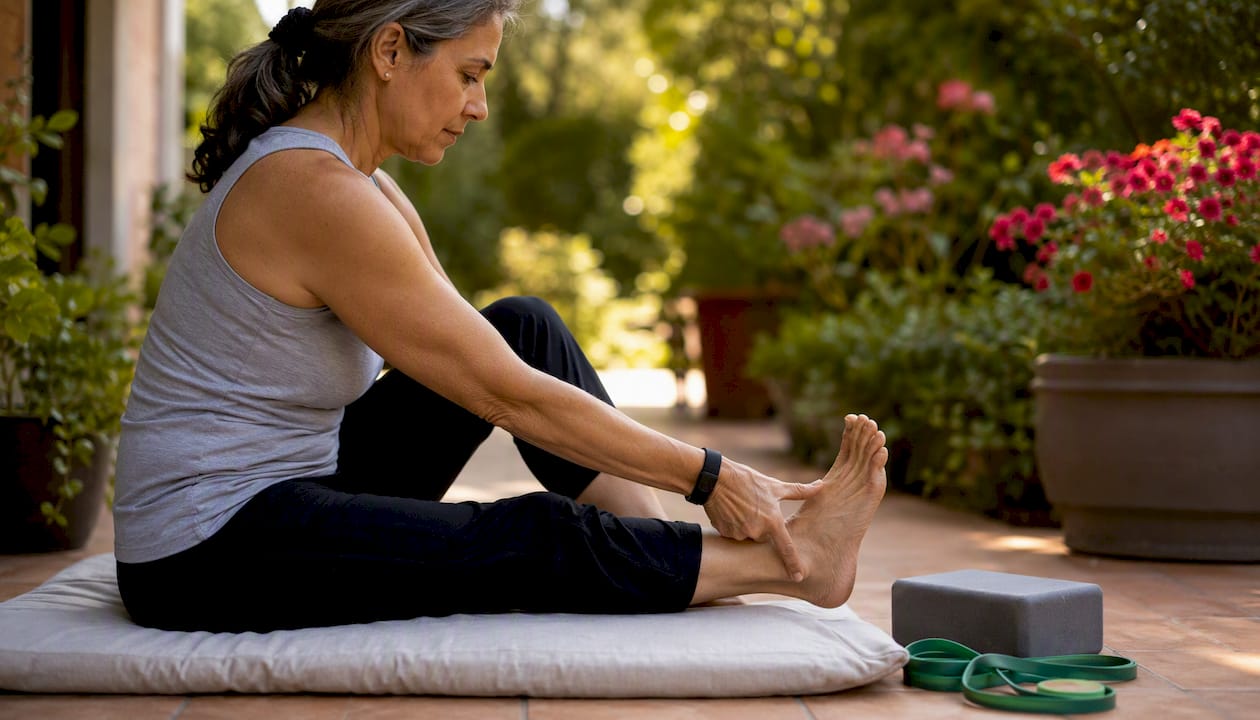
Targeted exercises improve joint mobility, strengthen the muscles that support the foot, and reduce the load on damaged cartilage. The CDC confirms that regular physical activity reduces pain and improves function for people with arthritis. See the self-care section below for a specific exercise sequence.
Lifestyle changes
Weight loss, switching to low-impact activity (swimming, cycling), and quitting smoking are the lifestyle levers with the strongest evidence for slowing OA progression and reducing inflammatory disease activity.
Complementary therapies
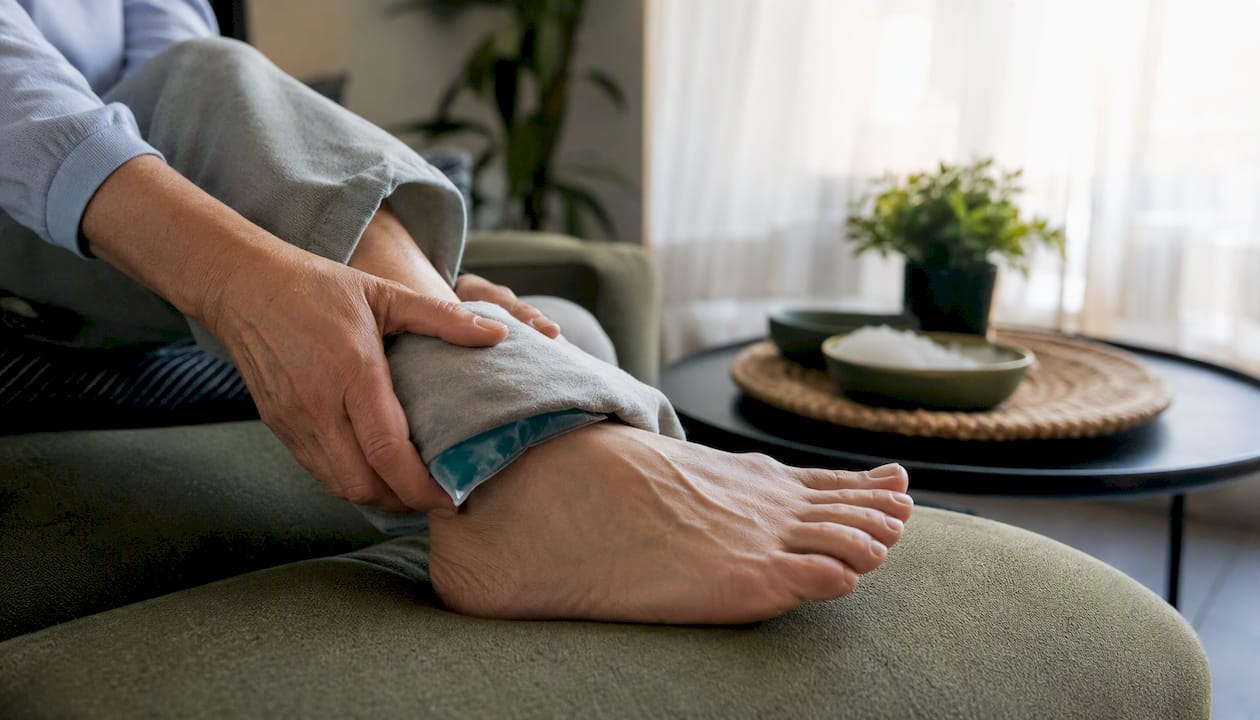
Heat before activity and ice after reduce stiffness and swelling respectively. Topical capsaicin cream depletes substance P in nerve endings and can reduce chronic joint pain with consistent use. Epsom salt soaks provide temporary comfort. Acupuncture has modest evidence for pain reduction in OA, though effect sizes are small.
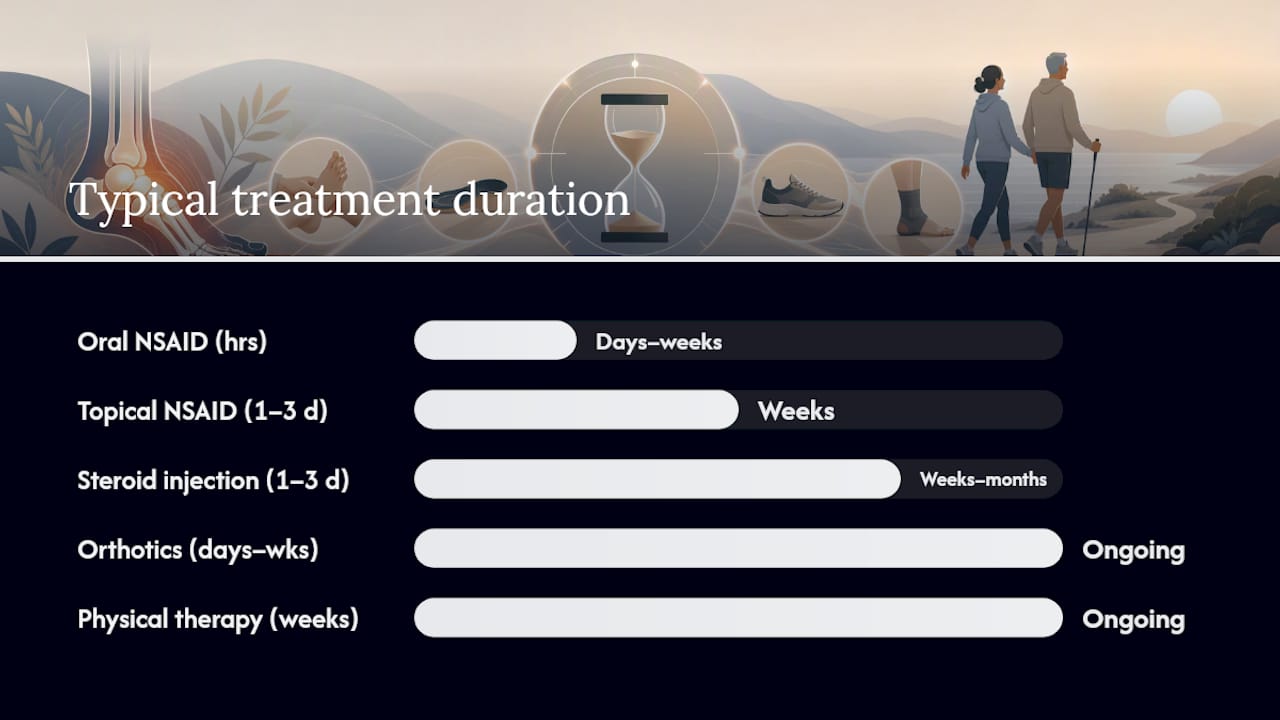
| Treatment category | Onset of relief | Evidence strength | Typical duration | Key safety concern |
|---|---|---|---|---|
| Topical NSAID | 1–3 days | Moderate | Weeks | Skin irritation; avoid broken skin |
| Oral NSAID | Hours | Moderate–strong | Days to weeks | GI, CV, kidney risk; 10-day OTC limit |
| Steroid injection | 1–3 days | Moderate | Weeks to months | Tissue weakening with repeated use |
| Orthotics | Days to weeks | Moderate | Ongoing | No structural correction |
| Physical therapy | Weeks | Strong (long-term) | Ongoing | Low; requires consistent effort |
Pro Tip: Start with footwear adjustment, a topical NSAID, and targeted exercises before moving to injections or surgery. Most people with mild-to-moderate OA get meaningful relief from this combination alone, and it avoids the risks of more invasive options.
Daily self-care steps and exercises to stay active and reduce pain
Exercises for foot arthritis
- Seated toe curls: Sit with feet flat on the floor. Curl your toes as if gripping the floor, hold three seconds, release. Ten repetitions, twice daily.
- Big-toe extension stretch: Sit and cross one foot over the opposite knee. Gently pull the big toe upward until you feel a mild stretch along the bottom of the foot. Hold 15 seconds, five repetitions per foot.
- Ankle alphabet: Seated, lift one foot and trace the letters of the alphabet with your toes. This moves the ankle through its full range without load.
- Calf raises: Stand behind a chair for balance. Rise onto your toes slowly, lower slowly. Ten repetitions. This strengthens the calf and Achilles, reducing load on the midfoot.
- Seated resistance band flexion: Loop a resistance band around the ball of your foot. Push your foot forward against the band (plantarflexion), then pull it back (dorsiflexion). Ten repetitions each direction.
- Towel scrunches: Place a small towel on the floor. Use your toes to scrunch it toward you. This builds intrinsic foot muscle strength that supports the arch.
Do this sequence daily. Consistency over two to four weeks produces measurable improvement in range of motion and pain with walking.
Shoe-buying checklist
- Wide toe box that does not compress the forefoot
- Firm midsole or rocker-bottom sole to limit painful joint bend
- Removable insole (so you can add a custom orthotic later)
- At least half an inch of space between your longest toe and the shoe tip
- Low, stable heel (under one inch)
OTC cushioned insoles are a reasonable first step. If symptoms persist after four to six weeks, ask your podiatrist about custom orthotics, which are fabricated specifically for your foot shape and take about four to six weeks to arrive.
Rapid-relief tactics
- Ice: 15–20 minutes after activity for acute swelling; wrap in a cloth, never apply directly to skin.
- Heat: Warm foot soak or heating pad for 10–15 minutes before morning activity to ease stiffness.
- Topical analgesics: Diclofenac gel or menthol-based creams applied before activity.
- Elevation: Prop your foot above heart level for 20–30 minutes after prolonged standing.
- Activity pacing: Alternate periods of walking with seated rest rather than pushing through pain.
Pro Tip: At home, never go barefoot on hard floors. Supportive slippers with a cushioned sole protect your joints during the hours you spend padding around the house, which adds up to significant cumulative load reduction. Lunix recovery accessories, such as compression and massage tools, can complement these steps as comfort adjuncts. They are not disease-modifying treatments, so continue your prescribed medical plan alongside them, and consult your clinician before use if you have open wounds, active infection, or uncontrolled inflammatory disease.
When is surgery considered for foot arthritis?
Surgery becomes a conversation when conservative care has been tried consistently for at least three to six months and pain continues to limit daily function significantly. Age, activity level, the specific joint involved, and whether the arthritis is inflammatory or degenerative all shape the decision.
Common procedures:
- First MTP fusion (hallux rigidus): The big-toe joint is fused in a functional position. It eliminates pain reliably but removes joint motion permanently. Recovery typically involves six to eight weeks non-weight-bearing, then gradual return to activity over three to four months.
- Midfoot fusion: Fuses one or more tarsometatarsal joints. Effective for severe midfoot OA but requires a lengthy recovery similar to big-toe fusion.
- Ankle fusion (arthrodesis): Eliminates ankle motion but reliably relieves pain. Preferred for younger, more active patients.
- Total ankle replacement: Preserves some ankle motion. Better suited to older, less active patients with good bone stock.
- Osteotomy: Realigns bone to redistribute load away from the damaged joint surface, used when deformity is contributing to arthritis.
For recovery guidance after surgery or physical therapy, this Lunix resource on speeding up post-procedure recovery covers practical steps for the weeks after your procedure.
Surgical risks to discuss with your surgeon: infection, non-union (bones fail to fuse), nerve damage, hardware failure, adjacent joint arthritis developing over time, and the possibility that pain relief is incomplete.
What does the research actually show about common treatments?
Key findings from trials and systematic reviews:
- Exercise and physical activity: Consistently supported across multiple guidelines. The CDC’s arthritis guidance and Cleveland Clinic both cite walking, swimming, and range-of-motion exercises as beneficial for reducing pain and preserving function.
- NSAIDs (topical and oral): Among the most reliably effective short-term options for OA pain. Topical forms offer a favorable safety profile for localized foot pain.
- Supportive footwear: Reduces mechanical load and improves comfort. Evidence is consistent, though effect sizes vary by individual foot structure.
- Orthotics for big-toe OA: A systematic review published in PMC found moderate-certainty evidence that arch-contouring foot orthoses, shoe-stiffening inserts, and a single intra-articular hyaluronic acid injection probably do not provide clinically important benefits for hallux rigidus. The review included six trials with 547 participants.
- Corticosteroid injections: Provide meaningful short-term relief for focal inflammation. Evidence is stronger for ankle and midfoot joints than for the big toe.
- Acupuncture: Small, positive trials exist for OA pain, but effect sizes are modest and evidence certainty is low.
- Viscosupplementation (hyaluronic acid): Limited evidence for foot OA specifically; the systematic review above found no clinically important benefit for a single injection in big-toe OA.
The practical takeaway: exercise, supportive footwear, and NSAIDs have the most consistent evidence. Certain orthoses and viscosupplementation for big-toe OA specifically should be approached with realistic expectations.
What are the risks and side effects of common treatments?
Every treatment carries trade-offs, and knowing them helps you have a more productive conversation with your provider.
Oral NSAIDs are effective but carry real risks with prolonged use: gastrointestinal bleeding or ulcers, elevated blood pressure, fluid retention, and reduced kidney function. People over 65, those with kidney disease, and those on blood thinners face higher risk. The 10-day OTC limit exists for good reason.
Topical NSAIDs have a much lower systemic risk profile. The main side effects are local skin reactions (redness, dryness) at the application site.
Acetaminophen is generally well tolerated but can cause liver damage at high doses or when combined with alcohol. Stick to the labeled dose.
Corticosteroid injections can cause a temporary post-injection flare (increased pain for 24–48 hours), skin thinning or depigmentation at the injection site, and with repeated use, weakening of surrounding tendons and cartilage. Blood sugar elevation is a concern for people with diabetes.
DMARDs and biologics require monitoring for immune suppression, liver function, and infection risk. These are managed by a rheumatologist with regular blood work.
Custom orthotics carry no significant medical risk, but they take four to six weeks to fabricate and require a break-in period. Poorly fitted orthotics can create new pressure points.
Surgery carries the risks outlined in the surgical section above: infection, non-union, nerve damage, and the possibility of adjacent joint arthritis developing years later.
What is the long-term outlook for foot arthritis?
Foot arthritis is a chronic condition, which means the goal is management rather than cure. That said, most people with OA maintain meaningful function for years with consistent conservative care. Pain does not inevitably worsen in a straight line; many people have stable periods that last years, particularly when they maintain a healthy weight, stay active, and protect their joints with appropriate footwear.
Inflammatory arthritis (RA, psoriatic) follows a different trajectory. Without systemic disease-modifying treatment, joint destruction can progress even when pain is controlled. Early diagnosis and treatment with a rheumatologist significantly improves long-term joint preservation.
Gout is one of the most controllable forms of arthritis. With the right urate-lowering therapy and dietary changes, attacks can become rare or stop entirely, and joint damage can be prevented.
Post-traumatic arthritis tends to progress more predictably than idiopathic OA, particularly in the ankle. Surgical options become relevant sooner in this group when conservative care plateaus.
For natural approaches that complement your medical plan, this Lunix guide on managing arthritis pain at home covers practical strategies worth incorporating into your daily routine.
A practical perspective on managing foot arthritis conservatively
The most common mistake people make with foot arthritis is waiting too long to act, then swinging to the other extreme and expecting a single intervention to fix everything. Neither approach works.
What actually moves the needle is consistency with a layered plan: the right shoes worn every day (not just when it hurts), exercises done five days a week (not just during flares), and topical analgesics used proactively before activity rather than reactively after pain peaks. These are not glamorous steps, but they compound over weeks in a way that a single injection or a new insole alone never will.
The evidence on orthotics for big-toe OA is a good example of where realistic expectations matter. The systematic review data shows that arch-contouring insoles and shoe-stiffening inserts probably do not produce clinically important benefits for hallux rigidus specifically. That does not mean orthotics are useless across the board; it means you should not spend months waiting for an orthotic to solve a problem that exercise and footwear changes address more directly.
Escalate care when you need to. If six to eight weeks of consistent conservative effort has not moved your pain level, that is the signal to see a podiatrist or rheumatologist, not a reason to try yet another home remedy. Specialist care and conservative self-care are not opposites. They work best together. For a broader look at natural approaches to arthritis relief, the Lunix blog covers evidence-informed options worth adding to your plan.
How Lunix recovery products fit into your conservative care plan
Living with foot arthritis means managing comfort every single day, not just during flares. Lunix recovery products are designed to support that daily effort as adjuncts to your medical treatment, not replacements for it.

The Lunix recovery collection includes tools for compression, circulation support, and targeted relief that fit naturally into the self-care steps your provider already recommends. Whether you are winding down after a long day on your feet or preparing for morning activity, these products are built to make your recovery routine easier to maintain.
A few important notes: Lunix products are comfort and recovery adjuncts. They do not modify disease progression, and they are not substitutes for prescribed medications, physical therapy, or specialist care. Consult your clinician before use if you have open wounds, active infection, poor circulation, or uncontrolled inflammatory disease.
Ready to add a recovery tool that fits your daily routine? Browse the Lunix recovery collection and find the right option for your needs.
Sources
The sources below include clinical guidelines, systematic review evidence, and major health-system patient guides. They are the foundation for the recommendations in this article. For personalized advice, always consult your provider.
- Non‑surgical treatments for hallux rigidus — systematic review (PMC)
- Arthritis in Foot & Ankle: Symptoms, Causes & Treatment — Cleveland Clinic
- Medications to treat foot arthritis — Arthritis Foundation
This article is for general informational purposes only and is not a substitute for professional medical advice. Confirm current treatment recommendations and medication guidelines with your physician, podiatrist, or rheumatologist.