


Set your controller to about 120°F to 140°F for most sessions, and cap sessions at 20 to 30 minutes. Experienced users who have ramped up gradually can push toward 150°F for shorter stretches, but that upper range is optional, not the goal. Whatever number you land on, preheat the blanket first, hydrate before and after, use a timer, and never fall asleep inside it. The brand builds its guidance around that temperature range.
TL;DR:
- Controllers measure a setpoint temperature that can be 20°F to 30°F higher than the actual skin contact temperature, making sensation varies widely.
- Preheating the blanket for 10 to 15 minutes and ensuring even temperature distribution significantly reduces hot spots and uneven heating during use.
- For beginners, 120°F for 15 to 20 minutes is safest, while most adults prefer 130°F to 140°F for 20 to 30 minutes; above 150°F offers minimal additional benefit.
- Gradually increasing temperature over several weeks, focusing on comfort and routine rather than maximum heat, helps prevent burns and discomfort.
- Hydration, proper clothing, and following safety guidelines are essential to minimize risks like burns, dehydration, and overheating during sauna blanket sessions.
Table of Contents
- Why Sauna Blanket Temperature Readings Don’t Match What You Feel
- What’s the Best Temperature for a Sauna Blanket by Experience Level?
- How Do You Safely Work Up to a Higher Sauna Blanket Temperature?
- What Are the Safety Rules for Using a Sauna Blanket?
- Who Should Talk to a Doctor Before Using a Sauna Blanket?
- What’s a Good Weekly Sauna Blanket Schedule for Sleep or Recovery?
- Manufacturer Guidance and What the Research Backs Up
- Lunix’s Take on Getting Sauna Blanket Temperature Right
- Try the Lunix LX17 With a Risk-Free Trial
- Sources
- FAQ
Why Sauna Blanket Temperature Readings Don’t Match What You Feel
The number on your controller is not the number your skin experiences. That gap trips up almost everyone the first time they use a sauna blanket, and it’s worth understanding before you touch the dial.
Controllers measure a setpoint, not the air surrounding your body. The panel surface, which sits directly against the fabric, commonly runs 20°F to 30°F hotter than the air trapped in the pocket where you actually lie. So a controller reading of 140°F might mean the panel is pushing past 160°F while the pocket air hovers closer to 110°F to 120°F. That’s a meaningful spread, and it’s why two people using the same blanket at the same setting can report very different sensations depending on how they’re positioned against the panels.
This is also why preheating matters more than most first-time users assume. A cold blanket heats unevenly. Panels closer to the controller often warm faster than panels near your feet, which creates hot spots rather than a steady, even heat. Running the unit empty for 10 to 15 minutes before you climb in lets the heating elements equalize, so by the time you’re inside, the whole interior is closer to a consistent temperature instead of a patchwork of warm and hot zones.
Contact points deserve extra attention. Anywhere your body presses directly against a panel, like your shoulder blades, calves, or lower back, the local heat is closer to panel temperature than pocket temperature. That’s the physics behind most beginner burn complaints: not the controller setting itself, but sustained pressure against a hot surface with no buffer.
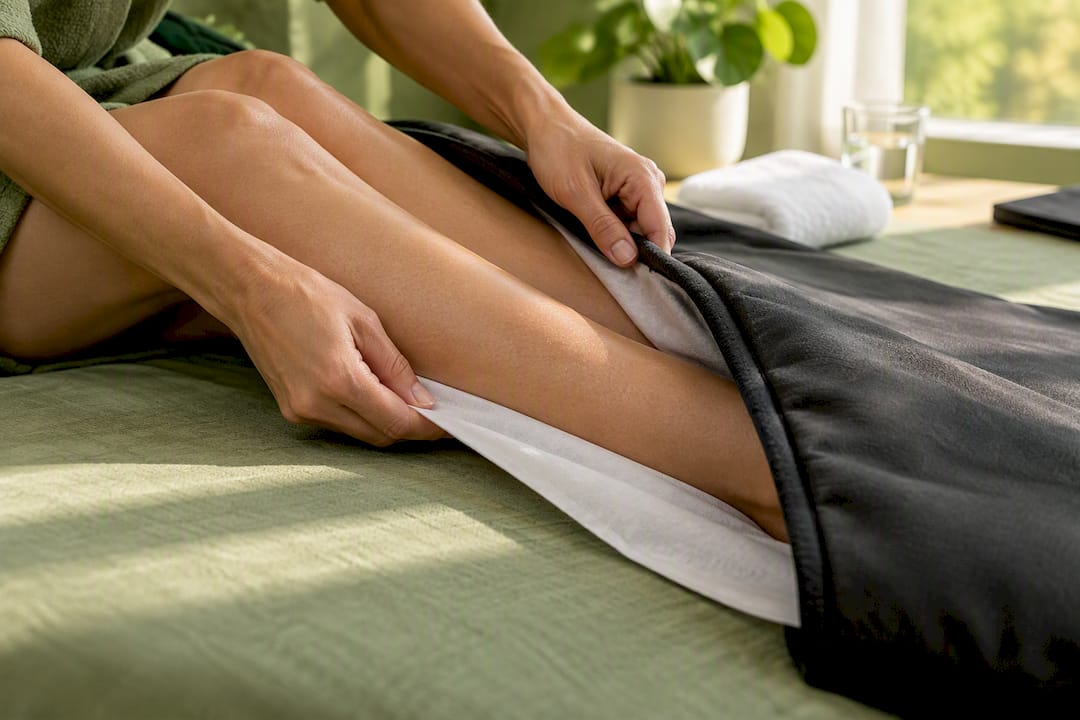
Three quick checks confirm your unit is heating evenly before you settle in for a full session. First, run the preheat cycle for the full 10 to 15 minutes rather than cutting it short. Second, zip the blanket closed evenly, since a gapped or crooked closure lets heat escape unevenly on one side. Third, slide a thin cotton insert or sheet between your skin and the panels, which spreads contact heat instead of concentrating it in one spot.
What’s the Best Temperature for a Sauna Blanket by Experience Level?
Temperature and session length move together, and the right combination depends on how heat-acclimated you already are.
Beginner band: 120°F for 15 to 20 minutes. This is where nearly everyone should start, regardless of how much heat you think you can handle. At this setting, most people notice light sweating within the first 10 minutes and a mild increase in heart rate, similar to a brisk walk. It’s enough to introduce your body to passive heat exposure without overwhelming it.
Typical and effective band: 130°F to 140°F for 20 to 30 minutes. This is the range most adults settle into once they’re past their first few sessions, and it’s where testing-based reviews consistently find the best balance of sweat output, comfort, and cardiovascular benefit. Reliable sweating typically kicks in here, and the mild cardiovascular stimulus resembles light to moderate exercise.
Experienced band: up to roughly 150°F for 10 to 20 minutes. Reserve this for users who have already put in several weeks of gradual heat exposure. Pushing past 150°F to 160°F does not scale benefits proportionally. It mostly raises burn risk and discomfort without adding meaningful physiological payoff.
A few goal-specific notes worth keeping in mind:
- For sleep support, lower heat and finish well before bedtime rather than maxing out the dial right before you climb into bed.
- For post-workout recovery, moderate heat after you’ve cooled down works better than jumping in immediately while still overheated from exercise.
- For “detox” framing, keep expectations realistic. Sweating supports the skin’s natural elimination process in a modest way. It’s not a substitute for what your liver and kidneys already do.
There’s rarely a reason to dial your blanket to its maximum setting. Reviewers note that most of the sweat response and comfort readers actually want shows up in the mid-range settings, while the top of the dial mainly exists as a design ceiling.
How Do You Safely Work Up to a Higher Sauna Blanket Temperature?
A slow ramp beats a fast one, both for comfort and for actually sticking with the habit. Here’s a simple progression that works for most beginners:
- Week 1: 120°F for 20 minutes. Focus on getting comfortable with the sensation and confirming your fit and zip closure feel secure.
- Week 2: 130°F for 25 minutes. Notice whether sweating starts earlier in the session compared to week one.
- Week 3: 135°F to 140°F for 30 minutes. By now your body has adjusted to passive heat exposure, and this range should feel manageable rather than punishing.
From there, adjust in 5°F to 10°F increments rather than big jumps, and only move up once a given setting feels routine rather than taxing.
Preheating deserves its own short routine every single time. Set the controller to your target temperature, run the blanket empty for 10 to 15 minutes, and check that heat feels even across the surface before you get in. Preheat times vary by room, since a cold bedroom in winter will take longer to bring the unit up to temperature than a warm living room in summer.
Fit matters just as much as temperature. Zip the blanket up to mid-chest, close any gaps along the seam, and tuck a towel around loose openings if needed. A loosely wrapped blanket leaks heat, which means you sweat less and end up cranking the temperature higher than necessary to compensate, when the real fix was just a tighter seal.
Pro Tip: Time your own blanket’s heat-up cycle in your actual room, not just the manufacturer’s estimate. A drafty bedroom at 65°F will take longer to reach setpoint than a warm den at 75°F, and knowing your real number keeps you from climbing in too early.
What Are the Safety Rules for Using a Sauna Blanket?
Most adverse experiences with sauna blankets trace back to a handful of preventable mistakes, not the temperature range itself.
Hydration comes first. Drink 12 to 20 ounces of water before your session, then sip more once you’re finished rather than chugging a large amount immediately. Watch for dark urine, dizziness, or a headache afterward. Those are signs you need more fluids before your next session, not a reason to lower the temperature necessarily.
Clothing acts as your buffer against contact burns. A thin cotton layer, long sleeves, and socks reduce direct skin contact with hot panels considerably. Bare skin is sometimes fine for short, lower-heat sessions once you’re experienced, but it raises the odds of a hot spot turning into an actual burn, especially at your shoulders and calves where you press hardest against the panel.
Timers and shutoff features are not optional extras. Always set a timer for your planned session length, and treat your blanket’s built-in overheat protection as a backup, not a primary safety plan. Never use a sauna blanket while sleeping, since you lose the ability to notice discomfort building.
Common mistakes to avoid:
- Starting at the highest heat setting instead of ramping up gradually.
- Skipping the preheat cycle and climbing in before heat evens out.
- Staying in one position long enough that a pressure point sits against a hot panel for the full session.
- Using the blanket over open wounds, sunburned skin, or areas with active irritation.
Who Should Talk to a Doctor Before Using a Sauna Blanket?
Passive heat therapy carries documented cardiovascular and metabolic benefits for most healthy adults, but certain conditions call for a conversation with a clinician first. That list includes cardiovascular disease, uncontrolled high blood pressure, current pregnancy, kidney disease, and neuropathy or any condition that reduces your ability to feel heat and pain normally. Certain medications also change how your body handles heat, including diuretics, beta-blockers, and anticholinergics.
A simple script makes that conversation easy: “I plan to use a far-infrared sauna blanket at around 130°F for 20 to 30 minutes, two to four times a week. Is that safe for me given my health history?”
If you notice chest pain, severe dizziness, confusion, or nausea during or after a session, stop using the blanket and seek medical care. Those symptoms are not something to push through.
What’s a Good Weekly Sauna Blanket Schedule for Sleep or Recovery?
Matching temperature and timing to your actual goal makes the habit stick.
Sleep support: Use 130°F to 135°F, three to four times a week, and finish 60 to 90 minutes before bedtime. Cool down and hydrate before you get into bed, since going straight from a hot blanket to your sheets can work against the drop in body temperature that helps trigger sleep onset.
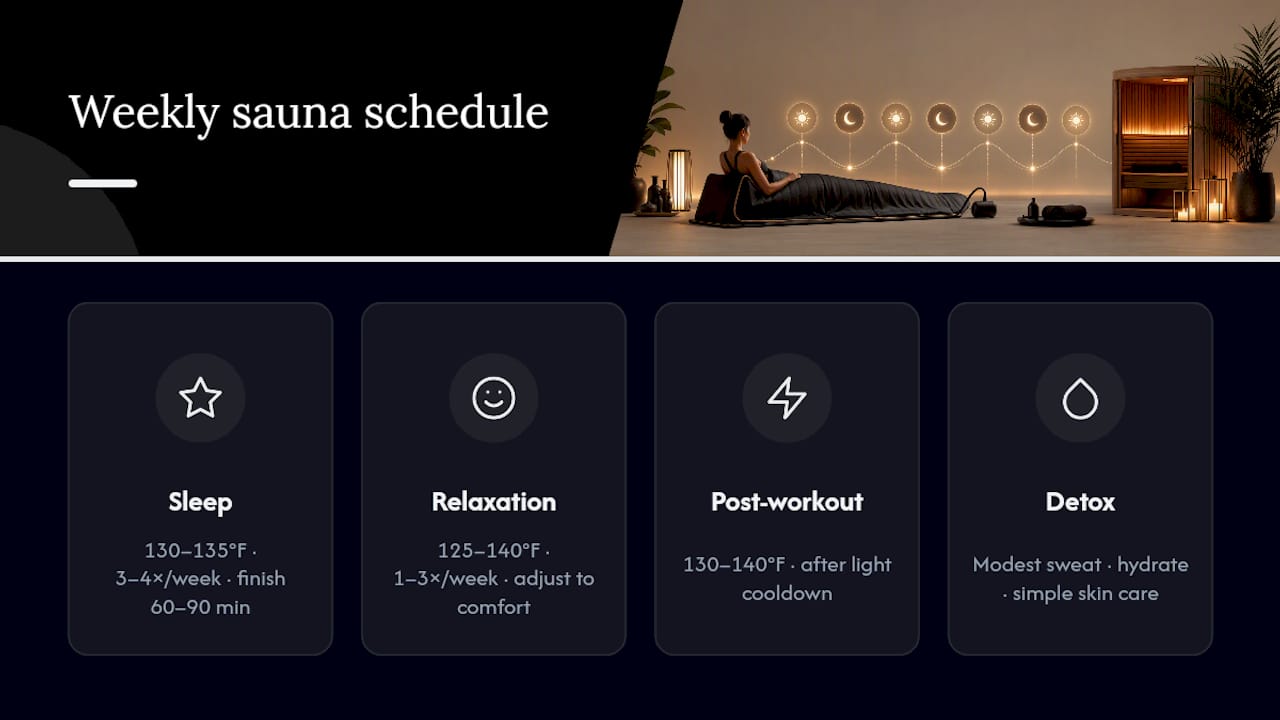
Relaxation and stress relief: One to three sessions a week at 125°F to 140°F, adjusted to your comfort, covers most people looking for a wind-down ritual rather than a fitness outcome.
Post-workout recovery: Stick to 130°F to 140°F after a light cooldown, not immediately following heavy cardio while you’re still dehydrated. Timing recovery sessions around your workout, rather than stacking heat on top of exhaustion, tends to feel far more restorative.
Detox framing: Keep this one honest. Sweating supports your skin’s natural elimination process in a modest way. Pair it with good hydration and simple skin care rather than expecting dramatic results.
Manufacturer Guidance and What the Research Backs Up
Peer-reviewed research points to meaningful sweat and cardiovascular responses in roughly the 113°F to 140°F air range, and most consumer blanket controller settings map comfortably onto that band once you account for the panel-to-pocket temperature gap. That’s not a coincidence. It’s why the guidance is designed around the typical effective temperature range rather than pushing users toward maximum heat.
Lunix recommends 2 to 4 sessions per week for most healthy adults, which lines up with how the research on passive heat exposure describes sustainable, repeatable benefit. Manufacturer-approved care matters just as much as temperature choice: wipe down the interior after each use, let it dry fully before folding, keep liquids away from the controller, and check zippers and seams regularly for wear. Skipping these steps is how uneven heating and controller issues creep in over time.
If you’re curious whether this fits your routine before committing, Lunix backs its blankets with a 14-day trial, and many buyers use their HSA funds to cover the purchase.
Lunix’s Take on Getting Sauna Blanket Temperature Right
The biggest mistake we see isn’t picking the wrong number. It’s rushing straight to it. People buy a sauna blanket expecting an intense experience on day one, crank the dial to the top, skip the preheat, and end up uncomfortable or lightly burned before they’ve given their body any chance to adjust. A slower ramp, real hydration habits, and following the manufacturer’s care steps will get you further than chasing the highest setting ever will.
— Lunix
Try the Lunix LX17 With a Risk-Free Trial
Lunix is the direct, brand-backed option for readers who want a sauna blanket built around exactly the temperature guidance in this article rather than a device that defaults to maximum heat. The Lunix LX17 infrared sauna blanket features a controller range designed around the 120°F to 150°F band, a safety zipper with overheat protection, and a washable liner that makes manufacturer-approved care simple to keep up with.

If you’ve been holding off because you’re not sure a sauna blanket fits your routine, the 14-day trial removes that guesswork. Try the ramp described above at home, see how your body responds, and decide from there. Start your 14-day trial with the Lunix LX17 and set your first session up right.
Sources
- PubMed Central article on heat therapy / sauna responses (example peer-reviewed source)
- Sauna blanket temperature: what range is safe and effective | Sweat Decks
- Infrared Sauna Blanket: How to Use, Clean and Store
- 6 Best Infrared Sauna Blankets of 2024, Tested & Reviewed | Allure
FAQ
What is the 200 rule for saunas?
Most guidance recommends sauna blanket sessions at 140°F stay between 20 to 30 minutes for comfort and safety, avoiding longer durations that might increase risk.
What are the downsides of using an infrared sauna blanket?
The main risks are contact burns from pressure points against hot panels, dehydration if you skip fluids before and after, and dizziness from staying in too long without acclimating gradually. Following a slow ramp and preheating properly reduces most of these issues considerably.
How long should you lay in a sauna blanket?
Beginners should stick to 15 to 20 minutes at lower heat, while most adults settle into 20 to 30 minute sessions once they’re acclimated to the 130°F to 140°F range. Experienced users pushing toward 150°F typically shorten sessions to 10 to 20 minutes.
Do I wear clothes in a sauna blanket?
A thin cotton layer, including long sleeves and socks, is generally recommended to reduce direct contact with hot panels and lower burn risk. Bare skin can work for shorter, lower-heat sessions once you’re experienced, but it raises the chance of a hot spot becoming uncomfortable.