


TL;DR:
- The Lunix LX10 is the best choice for most adults seeking full-leg compression therapy with thermal support. It offers direct vendor warranty, straightforward operation, and effective circulation and joint relief features. Consumers should measure for proper fit and consider their specific needs when selecting a device.
For most adults seeking circulation support, pain relief, and reliable at-home recovery, the Lunix LX10 Full Leg Compression Massager is the strongest pick for 2026. It covers the full leg, includes integrated hot/cold packs for thermal therapy, and comes backed by direct Lunix warranty and customer support — a combination that’s genuinely hard to match at its price point.
Here’s the shortlist if you want to skip straight to the decision:
- Best overall: Lunix LX10 — full-leg coverage, hot/cold thermal option, direct vendor support
- Best athlete-grade: Hyperice Normatec 3 — pro-level compression profiles, premium build
- Best value with app control: RENPHO Aeria Boot — high customization, app connectivity, lower price tier
- Best budget boots: FIT KING Dynamic Leg Compression Boots — solid basic compression, wide availability
- Best for calf-only targeting: CINCOM Air Compression Calf Wraps — compact, focused, easy to use
- Best hybrid (shiatsu + compression): Comfier 2-in-1 Massager — kneading rollers for hands-on-like relief
Jump to the comparison table below for side-by-side specs, price bands, and U.S. availability at a glance.
Table of Contents
- How do these leg massagers compare side by side?
- Detailed reviews: which leg massager is right for you?
- How we chose and compared these leg massagers
- How do leg massagers actually work?
- How to choose a leg massager: what actually matters
- Who should be careful with leg massagers?
- Key Takeaways
- Why Lunixinc recommends the LX10 for most buyers
- The Lunix LX10: specs, where to buy, and what’s included
- Useful sources and further reading
How do these leg massagers compare side by side?
| Product | Best For | Massage Type | Coverage | Heat | Intensity / Customization | Portability | App / Connectivity | Price (US Retail) | Warranty |
|---|---|---|---|---|---|---|---|---|---|
| Lunix LX10 | Full coverage + thermal therapy | Sequential IPC | Full leg | Yes (hot/cold packs) | Multiple levels | Moderate | No app | Mid ($150–$250) | Lunix direct warranty |
| Hyperice Normatec 3 | Athletes, portability | Sequential IPC | Full leg / boots | No | Advanced profiles | High | Yes (app) | Premium ($400+) | Standard |
| FIT KING Dynamic Boots | Budget compression | Sequential IPC | Full leg | No | Basic | Moderate | No | Budget (<$100) | 24-month |
| FIT KING 082A | Basic full-leg coverage | Sequential IPC | Full leg | No | Basic | Moderate | No | Budget (<$100) | 24-month |
| RENPHO Aeria Boot | Value + app control | Sequential IPC | Full leg / boots | No | High (many levels) | Moderate | Yes (app) | Mid ($150–$250) | Standard |
| Comfier 2-in-1 | Kneading / shiatsu relief | Shiatsu + compression | Calf + foot | Yes (select models) | Moderate | Moderate | No | Mid ($100–$200) | Standard |
| Renpho RF-ALM070 | Calf/foot + app control | Sequential IPC | Calf + foot | No | Moderate | Moderate | Yes (app) | Budget–Mid (<$150) | Standard |
| Fit King FT-009A | Light to medium compression | Sequential IPC | Calf + foot | No | Basic | Moderate | No | Budget (<$100) | 24-month |
| Fit King FT-057A | Low-cost calf/foot relief | Static + sequential | Calf + foot | No | Basic | High | No | — | Standard |
| Perfecore Full-Leg | Mid-range full coverage | Sequential IPC | Full leg | No | Moderate | Moderate | No | Mid ($150–$250) | Standard |
| Magic Makers Full-Leg | Mode variety + occasional heat | Sequential IPC | Full leg | Yes (select models) | Moderate | Moderate | No | Mid ($100–$200) | Standard |
| CINCOM Calf Wraps | Targeted calf therapy | Sequential IPC | Calf only | No (heat on some variants) | Basic–Moderate | High | No | Budget (<$100) | Standard |
| Amzdeal S9001 | Discontinued — reference only | Sequential IPC | Calf + foot | No | — | — | No | Discontinued | N/A |
A note on U.S. availability: All active products above are sold through major U.S. retailers (Amazon, brand websites, select sporting goods stores). The Amzdeal S9001 is discontinued and no longer available at retail; it appears here for readers researching compatibility or used-market options only.
Statistic callout: Some compression boot models are priced above $700 and marketed as medical-grade recovery tools, with FSA and HSA eligibility — a sign of how far the category has moved from clinic-only equipment toward everyday home use.
Matching device to use case: For daily swelling and circulation, the Lunix LX10’s full-leg sequential compression with thermal support covers the most ground. Athletic recovery calls for the Normatec 3’s advanced compression profiles. Travelers and commuters will appreciate the Normatec Go or the compact CINCOM wraps. Budget buyers get the most compression per dollar from the FIT KING Dynamic Boots or the FT-009A.
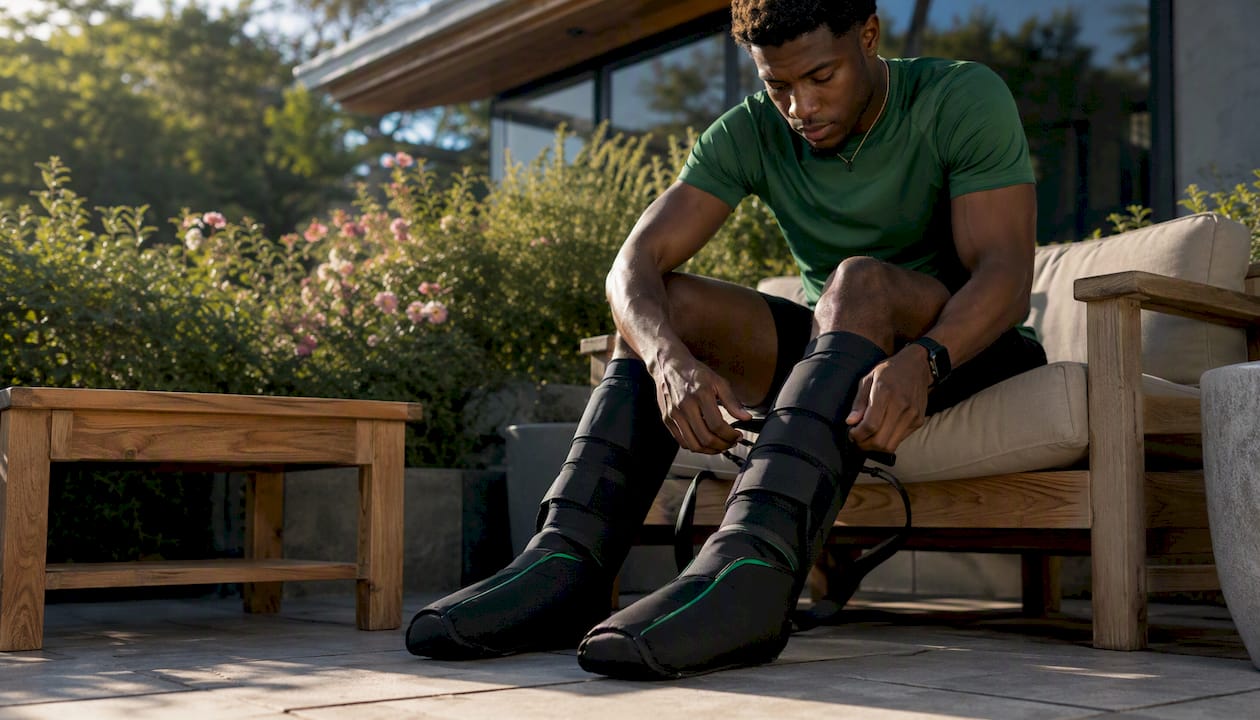
Detailed reviews: which leg massager is right for you?
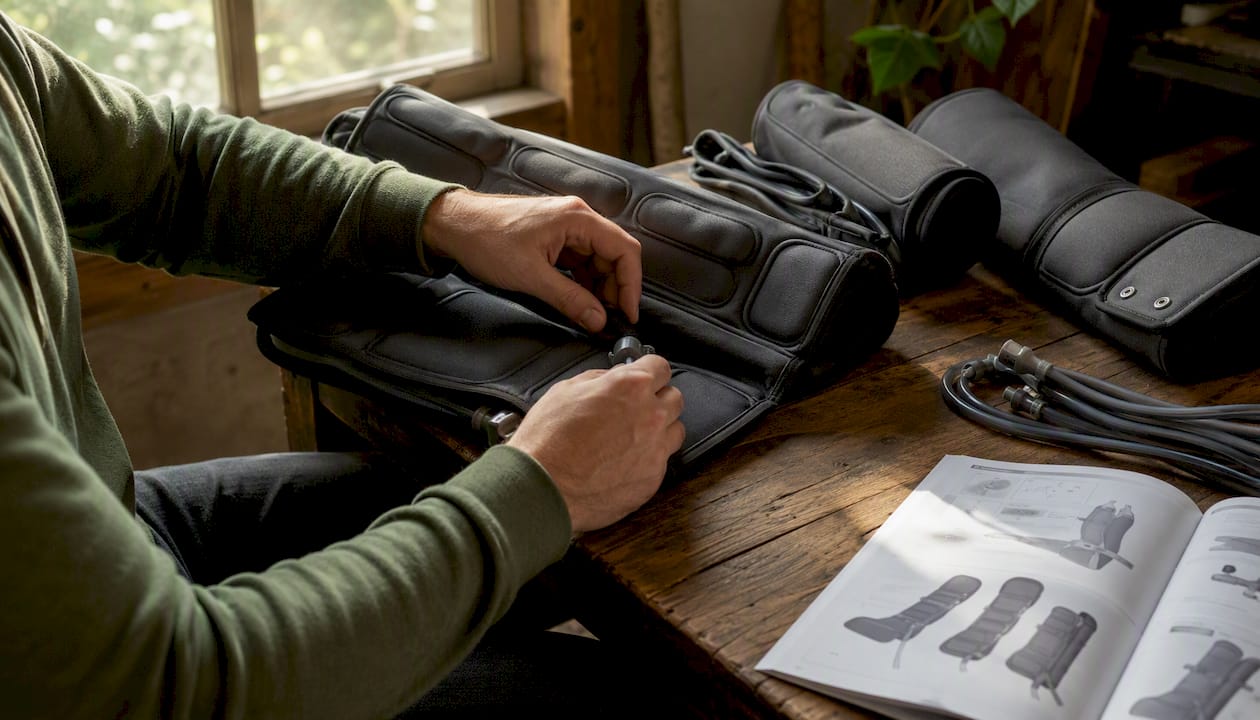
Lunix LX10 Full Leg Compression Massager
The LX10 is built for the everyday adult who wants real full-leg coverage without the complexity of an app or the price tag of an athlete-grade system. Its standout feature is the integrated hot/cold pack option — most devices at this price force you to choose between compression and thermal therapy, but the LX10 delivers both in one session.
Key specs:
- Coverage: Full leg (foot through thigh)
- Massage type: Sequential IPC compression
- Heat: Yes — hot/cold packs included
- Power source: Plug-in
- Connectivity: No app required
Pros: Full-leg coverage with thermal option; direct Lunix warranty and support; multiple intensity levels; no app dependency for straightforward operation.
Cons: Plug-in only (no battery mode for portability); no advanced app-based profiles.
Best for: Most adults who want full coverage, thermal therapy, and the peace of mind of buying direct from the vendor with warranty support.
Hyperice Normatec 3
The Normatec 3 is the benchmark for athlete-grade compression — pro teams and serious runners use it because the compression profiles go well beyond what budget devices offer. The app control lets you adjust zone intensity individually, which matters when one leg needs more attention than the other.
Key specs:
- Coverage: Full leg (boots format)
- Massage type: Sequential IPC with zone control
- Heat: No
- Connectivity: Bluetooth app
- Price: Premium ($400+)
Pros: Advanced zone-by-zone customization; premium build quality; widely recognized by athletic trainers; FSA/HSA eligible on select purchases.
Cons: High price; no heat option; app dependency can frustrate non-tech users.
Best for: Athletes, cyclists, and runners who want the most sophisticated compression available and are willing to pay for it.
RENPHO Aeria Boot
RENPHO has built a strong reputation in the consumer wellness space, and the Aeria Boot earns its place in the mid-tier by offering more intensity levels and app customization than most devices at its price. If you want to fine-tune your sessions without spending Normatec money, this is the most logical step up from a basic compression boot.
Key specs:
- Coverage: Full leg / boots
- Massage type: Sequential IPC
- Heat: No
- Connectivity: RENPHO app (Bluetooth)
- Price: Mid ($150–$250)
Pros: High number of intensity levels; app control for program variety; strong brand support.
Cons: No heat; app required to unlock full feature set (less ideal for users who prefer simple controls).
Best for: Buyers who want customization and app-based control at a price well below premium devices.
FIT KING Dynamic Leg Compression Boots
FIT KING’s Dynamic Boots are the go-to entry point for buyers who want real sequential compression without spending more than $100. Reviewers consistently note the compression is effective for basic circulation and swelling relief. The trade-off, as hands-on reviews confirm, is that Velcro straps and single-zone inflation on lower-cost models can reduce effectiveness compared to true multi-zone sequential IPC.
Pros: Affordable; widely available; 24-month warranty; decent compression for the price.
Cons: Velcro donning can be fiddly; fewer zones than mid-range devices; no heat.
Best for: First-time buyers or anyone who needs basic compression therapy without a large upfront investment.
FIT KING 082A Full Leg Compression
The 082A is FIT KING’s familiar mid-budget wrap, and it shows up in nearly every 2026 roundup because it’s widely reviewed and easy to find. Controls are simple — no app, no complex menus. What you give up is heat and the zone granularity of pricier devices.
Pros: Simple controls; full-leg coverage; accessible price; large review base.
Cons: No heat; basic intensity options; similar limitations to other budget FIT KING models.
Best for: Users who want basic full-leg coverage and straightforward operation at a budget price.
Comfier 2-in-1 Massager
The Comfier takes a different approach entirely. Where most devices on this list use pneumatic compression, the Comfier adds shiatsu-style rollers that knead calves and feet the way a therapist’s hands would. If you find pure air compression too mechanical or want something that feels more like a traditional massage, this is the device to consider.
Pros: Shiatsu kneading adds hands-on sensation; calf and foot coverage; heat on select models.
Cons: Not a full-leg compression system; rollers don’t replicate clinical IPC therapy.
Best for: Users who want kneading-style relief for tired calves and feet rather than full pneumatic compression.
Renpho RF-ALM070
The RF-ALM070 focuses on calf and foot coverage with app-based program control. It’s a solid choice if your main concern is lower-leg fatigue after standing or walking, and you want the flexibility of adjusting sessions from your phone.
Pros: App connectivity; targeted calf/foot coverage; recognizable brand support.
Cons: Calf/foot only (no thigh coverage); no heat.
Best for: Users prioritizing lower-leg relief with app-based control.
Fit King FT-009A and FT-057A
These two budget entries from Fit King cover similar ground: light-to-medium compression for calves and feet at entry-level prices. The FT-009A includes accessory options and a 24-month warranty, making it the slightly stronger buy. The FT-057A is even more affordable but comes with simpler straps and fewer controls. Neither will satisfy users who need full-leg or thigh coverage.
FT-009A pros: Strong compression for the price; accessory compatibility; 24-month warranty. FT-057A pros: Very low price; broad aftermarket availability.
Shared cons: Calf/foot only; basic controls; no heat; simpler strap systems.
Best for: Shoppers who need light compression on a tight budget and don’t require full-leg coverage.
Perfecore Full-Leg Massager
The Perfecore sits squarely in the middle of the market: full-leg coverage, decent intensity control, and a price that won’t shock you. It doesn’t lead on any single feature, but it’s a balanced option for users who want full coverage without committing to a premium price.
Best for: Users who want full-leg coverage with solid intensity control at a mid-tier price.
Magic Makers Full-Leg Massager
Magic Makers offers mode variety and, on select configurations, heat — which puts it in a small group of full-leg devices that combine thermal and compression therapy. It’s available through mainstream retail channels, making it easy to find and return if needed.
Best for: Buyers who want a full-leg option with multiple modes and occasional thermal features from a mainstream retail source.
CINCOM Air Compression Calf Wraps
Compact and calf-specific, the CINCOM wraps are the right call when you only need targeted lower-leg therapy. They’re lightweight, easy to travel with, and have earned a large review base. Some variants include heat, which adds useful versatility for users dealing with calf tightness or restless leg syndrome.
Best for: Anyone who needs targeted calf therapy, travels frequently, or wants a secondary device for on-the-go use.
Amzdeal S9001 (Discontinued)
The S9001 is no longer available at retail. If you’re researching it, you’re likely checking used-market availability or parts compatibility. For anyone still shopping, redirect your attention to the active budget options above.
How we chose and compared these leg massagers
This guide draws on a combination of hands-on review sources, real-user feedback, published 2026 roundups, and clinical context from physical therapists and athletic trainers. The last review pass was completed in 2026.
Products were evaluated across nine axes: full-leg versus partial coverage, compression type (sequential IPC versus static), heat availability and adjustability, sizing and fit guidance, ease of donning and daily use, noise level, portability and power source, warranty and customer support quality, and price-to-value ratio. App connectivity was assessed as a secondary factor, not a primary one — many high-rated devices intentionally skip complex connectivity for straightforward controls, and that’s often the right call for older adults or users who prefer simple operation.
Real-user feedback shaped the rankings, particularly around fit complaints (Velcro complexity, calf circumference mismatches) and session comfort. Affiliate relationships may exist with some linked retailers; those relationships never influence which products appear or how they are ranked. Rankings are based on the evaluation criteria above.
How do leg massagers actually work?
Most leg massagers on this list use intermittent pneumatic compression (IPC), sometimes called sequential compression. Air chambers inside the sleeve or boot inflate and deflate in a set sequence, moving from the foot upward toward the thigh. This mimics the natural muscle-pump action that helps push blood and lymphatic fluid back toward the heart.
Here’s how the main device types differ in practice:
- Sequential IPC compression: Chambers inflate in sequence (foot → calf → thigh), creating a wave-like pressure that actively moves fluid up the leg. This is the therapeutic core of most devices on this list and the mechanism clinicians point to for DVT prevention and edema management.
- Static compression: All chambers inflate simultaneously and hold pressure. Less effective for fluid movement than sequential IPC, but simpler and cheaper to manufacture. Common in entry-level budget devices.
- Shiatsu/roller: Mechanical rollers or nodes knead the calf and foot tissue. No pneumatic compression — the sensation is closer to a hands-on massage. Useful for muscle tension and fatigue, but it doesn’t replicate the circulatory benefits of IPC.
- Percussion: Rapid, targeted pulses into muscle tissue. More common in handheld massage guns than in leg-specific devices. Effective for localized soreness but not for systemic circulation support.
One thing worth knowing before your first session: compression massagers use squeeze-and-release cycles rather than kneading. First-time users sometimes find the sensation jarring if they expect a hands-on knead. Starting at a lower intensity and working up over a few sessions is the sensible approach.
Thermal add-ons (heat pads, hot/cold packs) complement IPC by relaxing muscle tissue before compression begins and reducing joint stiffness. Testing across multiple devices found that sequential IPC plus thermal support delivers more practical relief for many everyday users than premium app-driven features alone. For a broader look at how different recovery device types compare, the Lunixinc resource on recovery tools for adults 40+ is worth a read.
Physical therapists and athletic trainers are consistent on one point: these devices are primarily for passive recovery. They help you feel less fatigued after activity or long periods of standing, but they are not long-term clinical cures for serious medical conditions.
How to choose a leg massager: what actually matters
The features that look impressive in a product listing aren’t always the ones that matter most in daily use. Here’s a practical framework for narrowing your choice.
Coverage: full leg vs. calf-only vs. boots
Full-leg devices (foot through thigh) cost more and take up more storage space, but they address circulation across the entire lower limb. Calf-only wraps are compact and affordable but miss the thigh and knee. Boots-style devices cover foot and calf well and tend to be the most portable format.
Compression type: sequential IPC vs. static
Sequential IPC is the standard you want for circulation and edema support. Static compression (all chambers at once) is cheaper but less effective for moving fluid. If a product listing doesn’t specify “sequential,” assume it may be static.
Heat: adjustable vs. fixed vs. none
Heat matters most for joint stiffness and cold-weather use. Look for adjustable heat levels rather than a single fixed temperature. Devices that list specific temperatures (for example, 113°F, 122°F, and 131°F) give you more control than those with vague “low/high” labels.
Fit and sizing
Measuring your calf circumference before buying is the single most important step most buyers skip. If the compression chambers don’t align with your calf muscle, the therapeutic effect drops significantly. Check the manufacturer’s sizing chart against your actual measurements, not just your shoe size or general “M/L” clothing size.
Noise and power source
Plug-in devices are quieter and more consistent than battery-powered ones. If you plan to use your massager while watching TV or reading, look for reviewers who specifically mention quiet pump operation. Battery-powered devices trade some power consistency for portability.
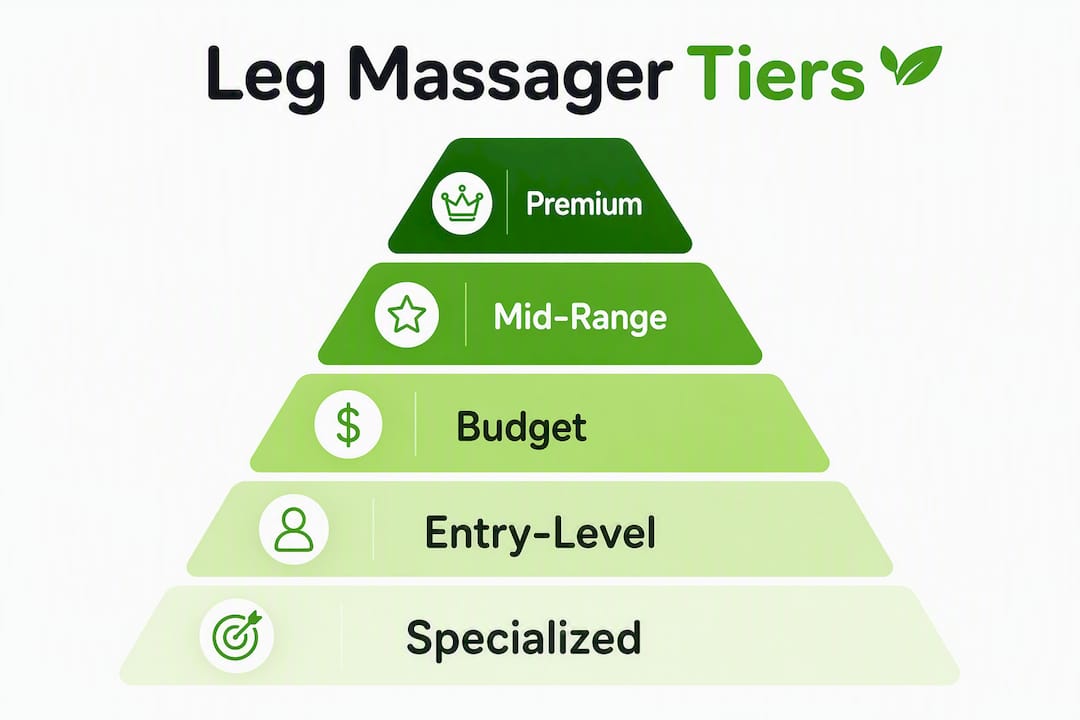
Price bands and what to expect
- Under $150 (budget): Basic sequential or static compression, calf/foot coverage, simple controls, no heat. Good for first-time buyers or light daily use.
- $150–$450 (mid-range): Full-leg coverage, sequential IPC, heat options, multiple intensity levels, possible app connectivity. The sweet spot for most everyday users.
- $450+ (premium): Advanced zone control, app-based profiles, premium materials, FSA/HSA eligibility on select models. Justified for athletes or users with specific clinical needs.
Multiple 2026 review roundups place the Normatec 3 and RENPHO Aeria Boot at opposite ends of the value spectrum, with the Normatec earning its premium price through advanced compression profiles and the RENPHO delivering strong customization at a fraction of the cost.
Pro Tip: If you’re unsure whether you’ll use a leg massager consistently, start in the mid-range rather than going straight to premium. A $200 device you use daily will do more for your circulation than a $500 device that sits in the closet.
For a broader look at therapeutic massage tools and how compression fits alongside other recovery options, the Lunixinc 2026 guide covers the full picture.
Who should be careful with leg massagers?
For most healthy adults, leg massagers are safe and well-tolerated. A few guidelines make sessions more effective and comfortable.
Recommended session length: Consistent use of short, regular sessions after activity or long periods of inactivity is recommended for most adults, as it helps flush built-up tension and reduce muscle soreness. Manufacturers and reviewers generally advise keeping individual sessions within 15–20 minutes for optimal results.
A normal physiologic response to know about: Improved fluid movement from compression can trigger an increased urge to urinate shortly after a session. This is a common response to fluid redistribution, not a device fault.
Who should consult a clinician first:
- Anyone with a known or suspected deep vein thrombosis (DVT)
- People with active skin infections, open wounds, or recent leg surgery
- Those with uncontrolled hypertension or severe peripheral artery disease
- Individuals with edema caused by heart, kidney, or liver conditions
These aren’t reasons to avoid leg massagers entirely, but they are reasons to get medical clearance before starting regular sessions. Compression therapy is a recovery tool, not a substitute for clinical treatment.
Sizing reminder: Measure your calf circumference and compare it to the manufacturer’s chart before every purchase. A misfit sleeve reduces therapeutic benefit and can cause discomfort at the chamber seams.
This article is general wellness information, not medical advice. Confirm current guidance with your healthcare provider for your specific situation.
Key Takeaways
The Lunix LX10 is the strongest all-around pick for most adults in 2026, combining full-leg sequential compression, hot/cold thermal therapy, and direct vendor support at a mid-range price.
| Point | Details |
|---|---|
| Best overall pick | Lunix LX10 delivers full-leg IPC, hot/cold thermal therapy, and direct warranty support at a mid-range price. |
| Best athlete-grade option | Hyperice Normatec 3 offers advanced zone control and app profiles; priced at $400+ with FSA/HSA eligibility on select purchases. |
| Sequential IPC beats static | Sequential IPC moves fluid up the leg in waves; static compression holds pressure without that circulatory benefit. |
| Measure before you buy | Calf circumference determines chamber alignment; a misfit sleeve reduces therapeutic effect regardless of device quality. |
| Lunixinc LX10 direct purchase | Buying the LX10 from Lunixinc gives you direct warranty support and access to replacement accessories like the LX10 remote. |
Why Lunixinc recommends the LX10 for most buyers
Most leg massager comparisons focus on specs alone. What they underweight is the total ownership experience: what happens when a strap wears out, when you need a replacement remote, or when you have a question about sizing six months after purchase.
The LX10 was designed with that reality in mind. Full-leg sequential compression and integrated hot/cold packs address the two most common reasons adults reach for a leg massager — circulation support and joint stiffness. The controls are straightforward, which matters for users who don’t want to manage an app just to start a session. And because you’re buying direct from Lunixinc, warranty support and replacement parts (including the LX10 remote) are accessible without navigating a third-party retailer.
Lunixinc values real-user feedback in how products are positioned and supported. The LX10’s sizing guidance reflects that — the goal is a device that fits correctly from day one, because a well-fitted compression sleeve is the difference between a tool you use daily and one that collects dust.
The Lunix LX10: specs, where to buy, and what’s included
If you’ve read this far, you already know the LX10 is the pick Lunixinc stands behind for most adults. Here’s the practical summary before you buy.
LX10 at a glance:
- Full-leg sequential IPC compression (foot through thigh)
- Integrated hot/cold pack for thermal therapy
- Multiple intensity levels; no app required
- Plug-in power source
- Sizing designed for a range of adult calf circumferences (check the sizing chart on the product page)
The LX10 is available directly through the Lunixinc recovery collection, where you’ll also find the full warranty terms, shipping details, and return policy. Buying direct means your warranty is handled by Lunixinc, not a marketplace intermediary, and replacement accessories like the remote are available when you need them.
Visit the LX10 product page to confirm sizing, review current pricing, and place your order.
Useful sources and further reading
The following sources informed this guide. Each is linked directly for verification and further reading. This guide was last updated in 2026.
- Mayo Clinic — Edema: Symptoms and Causes: Clinical overview of edema, its causes, and when compression therapy is relevant.
- Hopkins Medicine — DVT Prevention: Intermittent Pneumatic Compression Devices: Explains the clinical mechanism of IPC and its role in DVT prevention.
- Wirecutter (The New York Times) — Pro Athletes Love These Massage Boots: Hands-on review roundup covering athlete-grade compression boots, pricing, FSA eligibility, and expert commentary from athletic trainers.
- Forbes Vetted — Best Compression Boots 2026: Expert-tested roundup with a vascular specialist consulted; covers compression levels, zone counts, and fit guidance.
- Wareable — Best Leg Massagers 2026: 2026 roundup highlighting top-rated models across price segments, including Normatec 3 and RENPHO Aeria Boot.
- WiseGearLab — Best Leg Compression Machines 2026: Multi-device testing with emphasis on sequential IPC versus thermal options for daily users.
- Vetted Cart — FIT KING Leg Massager Review: Hands-on review covering FIT KING trade-offs, Velcro complexity, and single-zone inflation limitations.
- Gomin Reviews — RenuPro Leg Massager with Heat and Compression: Detailed review noting heat level specs (113°F, 122°F, 131°F), seated usability, and pump noise.
- FCCJ — 12 Best Electric Leg Massagers for Circulation (July 2026): Six-week, 15-user panel test covering compression effectiveness, ease of use, and swelling reduction across 12 models.