


Sauna blanket cost typically ranges from entry-level to premium models with longer warranty and low-EMF materials, and many shoppers choose mid-tier options. Budget models suit anyone testing whether they’ll actually use one; mid-tier fits regular users; premium makes sense if you want a longer lifespan and stronger safety documentation. Running costs stay low either way, often under $0.30 per 45-minute session.
TL;DR:
- Mid-tier sauna blankets, priced between $250 and $450, offer the best balance of features, build quality, and durability for regular use.
- Higher-end models usually include lower EMF claims, stronger shielding layers, and longer warranties, but may be unnecessary for casual or first-time users.
- The actual operating cost remains low, averaging around $0.15 to $0.30 per 45-minute session, with most blankets lasting 2 to 3 years before replacement.
- A blanket with genuine shielding and tested specifications tends to cost more due to better materials, seams, and safety features that impact long-term reliability.
- For testing heat therapy habits, a mid-tier model with a 14-day trial and potential HSA/FSA reimbursement offers a low-risk, cost-effective entry point.
Table of Contents
- How Much Do Sauna Blankets Cost by Tier?
- What Actually Drives the Price Difference?
- How Much Does It Cost to Run a Sauna Blanket?
- Is a Sauna Blanket Worth the Money?
- How to Choose the Right Sauna Blanket
- Lunix Facts: Care, Trial, and Reimbursement Notes
- What’s the Real Total Cost of Ownership?
- How Do Popular Price Points Compare?
- The Real Buying Nudge
- Try the Lunix LX17 With Less Risk
- Sources
- FAQ
How Much Do Sauna Blankets Cost by Tier?
Price tells you almost everything about what’s inside a sauna blanket, and the gap between a $150 model and a $650 one isn’t marketing fluff. It’s the heating elements, shielding, seams, and warranty paper you’ll actually need someday.
Entry-level: $100 to $250. These use basic heating elements with a single temperature zone and minimal controls, often just a dial or a few preset buttons. Warranties tend to run 30 to 90 days, and the outer material is usually a lighter-gauge PVC or vinyl blend. Aggregated pricing data confirms this floor, with sticker prices for blankets typically starting around $150, though some off-brand listings dip below that.
Mid-tier: $250 to $450. This is where most buyers actually shop, and for good reason. You get better zip construction, a wider temperature range (often up to 158 to 165°F), and controllers that hold a set temperature instead of drifting. Editorial testing from outlets like InStyle puts several tested premium branded units between $399 and $699, overlapping the top of this tier with the bottom of the next.
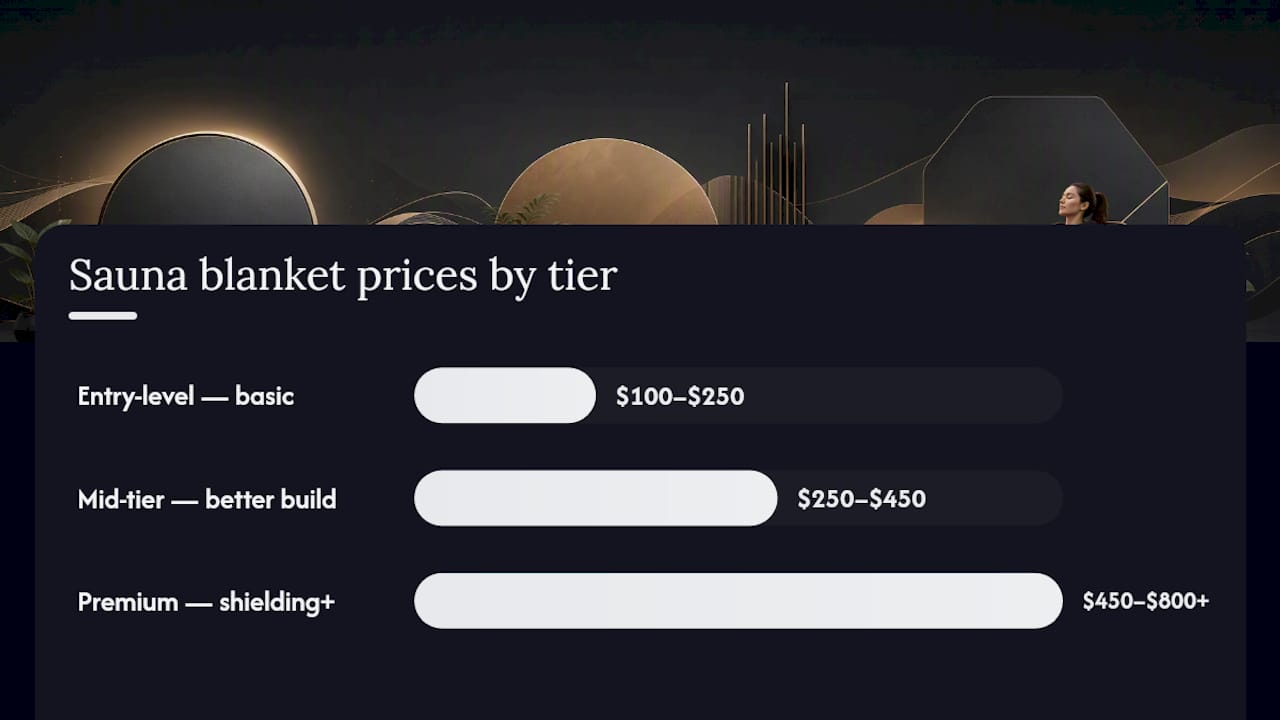
Premium: $450 to $800+. These models add lower-EMF claims backed by actual shielding layers, denser far-infrared panels, and warranties stretching a year or longer. You’ll also see extras: carrying cases, spare liners, phone-app control. Consumer reporting places many blankets in this range, with some models running close to $600 once you account for the features buyers actually want.
A few things change your real out-of-pocket number regardless of tier:
- Seasonal bundles often knock 15 to 25 percent off sticker price, especially around New Year’s and Black Friday.
- Bundled accessories (liners, gloves, covers) can add $20 to $60 if not included.
- HSA and FSA eligibility, where applicable, can offset a meaningful chunk of the purchase since it’s paid pretax.
- Shipping is frequently free on blankets over $200, but returns sometimes carry a restocking fee worth checking before you buy.
What Actually Drives the Price Difference?
A $150 blanket and a $650 blanket both wrap you in heat, but the build quality behind that heat is where your money goes.
Materials and seams. Cheaper models use thinner outer shells with fewer stitched layers, which means faster wear at the zipper and fold lines. Waterproof, multi-layer covers resist sweat damage longer and reduce the chance of the interior heating pad shorting out from moisture exposure.
Heating design. Look for how many heating zones a blanket has (single zone versus dual zone for feet and torso separately), its maximum surface temperature, and whether the brand actually specifies far-infrared wavelength rather than just calling it “infrared heat.” Vague heat specs are a signal the manufacturer is skipping detail for a reason.
EMF shielding. This is where marketing gets loose. Plenty of listings claim “low EMF” without publishing a measured figure. A blanket with real shielding will typically state milligauss readings rather than a blanket assertion, which matters more than most buyers realize when comparing what EMF numbers actually mean for safety.
Controller and warranty. Timers, dual-zone controls, and app or remote operation add cost but also convenience you’ll notice weekly. Warranty length is one of the most reliable price-quality signals: 30-day coverage suggests a manufacturer expecting light use, while a full year or more suggests they’re standing behind the build.
Pro Tip: Before comparing prices across listings, check whether the watts and temperature range are listed as tested figures or just “up to” claims. A blanket advertising 175°F but hedging everywhere else in the spec sheet is telling you something.
How Much Does It Cost to Run a Sauna Blanket?
Most sauna blankets draw between 300 and 600 watts, which puts a 45 minute session’s electricity cost in the range of a few cents to around a quarter, based on typical U.S. residential electricity rates. Aggregated cost breakdowns put blanket sessions around $0.15 to $0.30 in electricity per 45-minute use, which is close to nothing compared to the purchase price itself.
Here’s how that adds up over time:
- Weekly cost: three sessions a week at $0.25 average lands around $0.75 weekly in electricity.
- Annual cost: that’s roughly $39 a year in power, not counting the blanket itself.
- Five-year cost: electricity alone totals under $200 over five years at that usage pace.
- Replacement factor: most blankets last 2 to 3 years with regular use, so a five-year ownership window likely means buying one replacement unit.
That replacement cadence matters more than the electricity math. A $300 blanket replaced once over five years puts your rough five-year outlay near $600 including power, still well under a sauna tent’s $200 to $800 sticker price or a built-in cabin’s $3,000 to $15,000-plus installed cost. Long-term ownership math only tips toward cabins when multiple people share sessions over many years, which is a very different use case than a single person testing a new habit.
Is a Sauna Blanket Worth the Money?
For a solo user testing whether heat therapy fits into their week, a sauna blanket is usually the more sensible buy than a tent or cabin, mainly because you’re not locking $3,000 into a room you might use twice a month. Recovery-focused reviewers generally agree: buy the blanket to test the habit, then upgrade only if you’re consistently using it and need room for more than one person at a time.
Where blankets fit best:
- Renters who can’t install or store a standing sauna.
- Single users who don’t need to share a session with a partner or family member.
- Anyone traveling frequently, since a blanket folds into a bag while a cabin obviously doesn’t.
- People testing whether they’ll actually stick with a heat-therapy routine before committing bigger money.
Tents and full saunas make more sense for households where two or more people use the space regularly, or where the social ritual of a shared sauna session is part of the appeal. A blanket is inherently a solo, lying-down experience. It doesn’t replicate the room-filling heat or the seating and standing space a cabin offers, and posture matters here: some users find lying flat for 30 to 45 minutes less comfortable than sitting upright in a tent or cabin.
On the health claims, keep expectations grounded. Medical reviewers note that passive heating from these blankets can genuinely help with muscle relaxation, temporary circulation improvement, and mild pain relief, but marketing language around “detoxing” through sweat doesn’t hold up. Physiology writers point out that your liver and kidneys, not your skin, do the actual toxin clearance. A blanket is a relaxation and recovery tool, not a medical device.
How to Choose the Right Sauna Blanket
Run through this before adding anything to your cart:
- Confirm the wattage and temperature range as tested numbers, not vague “up to” language.
- Check the warranty length against the price. Anything under 90 days on a $300+ purchase is a mismatch worth questioning.
- Look for actual EMF measurements, not just a “low EMF” badge with no data behind it.
- Read the return and trial policy before you buy, since sauna blankets are hard to sell used once opened.
- Verify cleaning instructions are provided. A blanket without a clear maintenance guide will likely fail faster than one with manufacturer-backed care steps.
Ask sellers directly about HSA documentation if you plan to use pretax dollars, since not every brand provides the paperwork automatically. Also watch for red flags: aggressive “cures” or “detoxifies” language, specs that change between the product title and the description, or no visible return address for physical returns.
Pro Tip: Before finalizing a price comparison, add shipping, any applicable sales tax, and warranty registration fees to the sticker price. A $280 blanket with $25 shipping and a $40 optional extended warranty is really a $345 purchase; compare that full number against competitors, not just the headline price.
Lunix Facts: Care, Trial, and Reimbursement Notes
Lunix backs its blankets with details that matter once you own one, not just at checkout.
- A 6-step deep-clean routine approved by the manufacturer, which helps extend the life of the heating liner and outer cover well past the point cheaper units typically fail.
- HSA reimbursement guidance covering typical reimbursable ranges between $300 and $900, plus where to check your own plan’s eligibility.
- A 14-day trial window, giving you a low-friction way to test whether the habit sticks before committing to a full purchase.
- Full specifications and purchase details live on the Lunix LX17 Portable Infrared Sauna Blanket product page.
What’s the Real Total Cost of Ownership?
The sticker price is never the whole story. Once you factor in the accessories most buyers end up wanting, total ownership cost climbs 10 to 20 percent above the initial purchase for a lot of shoppers.
A carrying case, if not included, typically adds $20 to $40 and matters more than it sounds like if you plan to travel or store the blanket between uses. Replacement liners or covers, useful once the original starts showing wear, run another $30 to $60 depending on the brand. Some buyers also add a yoga mat or towel layer underneath for comfort, a small but real cost most price comparisons skip entirely.

Then there’s the maintenance side. Following manufacturer cleaning guidance doesn’t cost extra beyond basic supplies you likely already own, but skipping it tends to shorten the blanket’s working life, pushing you toward that replacement purchase sooner than the typical 2 to 3 year window.
The honest total cost of ownership calculation looks like this: purchase price, plus one likely accessory purchase in year one, plus electricity (a few dollars monthly at most), plus a probable replacement unit somewhere around year three. For most solo users, that full number still lands well under what a single year of cabin installation and upkeep would cost.
How Do Popular Price Points Compare?
Rather than naming specific competing brands, it helps to think in price bands and match them to what you’re actually getting, since the spread between listings at the same price point can be wide.
At the $150 to $250 range, you’re buying a functional single-zone blanket with basic timer controls. It works for testing the habit, but expect a shorter usable life and thinner documentation on EMF and materials. Fine for renters or first-time buyers who want to know if they’ll use it before spending more.
At $250 to $450, you typically get dual-zone heating, better seam construction, and warranties in the 6-to-12-month range. This tier is where cost-per-session math starts to look genuinely favorable, since you’re not replacing the unit as quickly. Editorial testers have found several models in this window offering the best balance of features to price.
At $450 and above, you’re paying for documented EMF shielding, app-based controls, and warranties often stretching a full year or longer. The pros here are longevity and better safety documentation; the con is that you’re paying a premium for features a casual user might never fully use. If you already know you’ll use a blanket three or more times weekly for years, this tier tends to pay for itself in avoided replacement costs.
The Real Buying Nudge
If you’re testing the habit, buy mid-tier and calculate your cost per session before you commit to premium. Three sessions weekly at $0.25 each adds up to almost nothing next to the purchase price, so let a trial period and HSA eligibility do the risk reduction, not guesswork.
— Lunix
Try the Lunix LX17 With Less Risk
Most of the buying friction with sauna blankets comes from committing to a price before knowing if the habit sticks, and that’s exactly where the Lunix LX17 Portable Infrared Sauna Blanket changes the math. It’s built for the solo user this whole guide points toward: portable enough to store in a closet, backed by manufacturer care instructions that extend its working life past the typical 2 to 3 year replacement window, and covered by a 14-day trial so you’re not locked into a decision after one session.
The LX17 fits shoppers who want dual-zone heating and clearer specifications than budget listings typically offer, without jumping to the $450-plus premium tier before they know they’ll use it. If HSA funds are part of your plan, the reimbursement guidance above walks through typical eligible ranges. Check full specifications and current pricing on the Lunix LX17 product page, or browse the wider red light therapy collection if you’re building out a fuller recovery routine.
Sources
- Do Sauna Blankets Actually Work? | GQ
- Best infrared sauna blankets | Medical News Today
- Sauna tent vs blanket vs real sauna: full comparison | Sweat Decks
- Are Sauna Blankets Actually As Good As A Real Sauna, Or Are They BS? | HuffPost
- Sauna Blanket vs Sauna: Which Is Worth It in 2026 | LifespanVault
FAQ
Are Sauna Blankets Worth the Money?
For solo users testing a heat-therapy habit, yes. They cost far less upfront than a tent or cabin and deliver genuine relaxation and circulation benefits, though not the “detox” results some marketing implies.
How Much Do Sauna Blankets Cost?
Prices generally run from $100 for entry-level models to $800 or more for premium units, with most branded blankets landing between $399 and $699. The Lunix LX17 falls within that typical mid-to-premium range; check the product page for current pricing.
Is a Sauna Blanket as Good as a Real Sauna?
It delivers similar passive heating benefits like muscle relaxation and temporary circulation improvement, but it can’t replicate the shared, room-filling experience of a full sauna. Ownership math favors blankets for individual users, while cabins only pay off with heavy multi-person, multi-year use.
How Long Should You Stay in a Sauna Blanket?
Most sessions run 30 to 45 minutes, with surface temperatures reaching up to around 175°F on higher settings. Start shorter if you’re new to heat therapy, and always follow the manufacturer’s specific guidance for your model.