


Red light therapy typically runs $25–$200 per session at studios and medspas, while home devices span roughly $100 to $10,000+, with the most practical mid-range panels landing between $300 and $700. If you’re weighing whether to book sessions or buy a device, the math usually tips toward a home panel once you’re using it three or more times per week.
Here’s the quick breakdown before you read further:
- Single studio session: $25–$200 depending on treatment type and location
- In-office medical/dermatology session: roughly $50–$150 per visit, often higher at specialty clinics
- Monthly studio membership: typically $50–$150/month for unlimited or multi-session access
- Handheld and targeted home devices: $100–$400 (hands, feet, joints)
- Mid-size home panels: $300–$700
- Full-body systems and beds: $1,500–$10,000+
- Breakeven estimate: a $500 mid-range panel at $80/session equivalent pays for itself in roughly 6–7 sessions, or about two to three months of regular use
Sessions make sense when you’re testing the therapy or need occasional full-body access. A home device pays off when you plan consistent, targeted use, especially for joint pain, hand recovery, or foot relief.
Key Takeaways
Red light therapy costs $25–$200 per session at studios, while a mid-range home panel ($300–$700) typically pays for itself within two to three months of regular use.
| Point | Details |
|---|---|
| Per-session clinic cost | Studio sessions run $25–$200; in-office medical sessions typically cost $50–$150. |
| Home device sweet spot | Mid-range panels at $300–$700 cover most goals; targeted devices run $100–$400. |
| Breakeven rule of thumb | A $500 panel at $80/session equivalent pays for itself in roughly 6–7 sessions. |
| Insurance and HSA/FSA | Standard insurance rarely covers cosmetic RLT; HSA/FSA may apply with a physician note and FDA documentation. |
| Lunix targeted devices | The LX23, LX24, LX19, and LX16 belt cover hands, feet, joints, and back for daily home use. |
Table of Contents
- What red light therapy actually treats (and why it matters for your budget)
- Red light therapy cost at clinics, medspas, and gyms
- At-home device pricing: what you get at each price tier
- What actually changes the price of red light therapy
- Can you use insurance, HSA, or FSA for red light therapy?
- Is red light therapy worth the money?
- Safety, side effects, and when to check with a clinician first
- How to shop for a home red light device: a practical checklist
- Where to find treatments and how to pay less per session
- The honest case for sessions vs. home devices
- Lunix devices for your recovery routine
- Sources
What red light therapy actually treats (and why it matters for your budget)
Red light therapy, also called photobiomodulation, uses specific wavelengths of red light (roughly 630–680 nm) and near-infrared light (810–880 nm) to penetrate skin and soft tissue. The goal is to support cellular energy production, which can reduce surface inflammation and support tissue recovery. You can read a fuller breakdown of how light therapy works if you want the biological detail.
The reason this matters for cost is simple: your goal determines how often you need treatment, and frequency is the biggest driver of total spend.
Common use cases include:
- Facial skin health: fine lines, tone, and mild acne, typically requiring multiple sessions per week for several weeks
- Localized joint and muscle pain: knees, elbows, shoulders, hands, and feet, often used several times weekly as an ongoing routine
- General recovery and wellness: post-workout muscle recovery, used regularly by active adults
- Mild wound support and circulation: often used alongside other modalities like sauna or cryotherapy
Red light therapy is noninvasive and generally well-tolerated. Many studios offer it as an add-on to other services, which can affect how you’re charged.
Red light therapy cost at clinics, medspas, and gyms
Per-session pricing varies more than most people expect, largely because “red light therapy” covers everything from a small face panel at a nail salon to a full-body medical-grade bed at a dermatology clinic.
| Treatment Type | Typical Price Range | Common Session Length |
|---|---|---|
| Targeted spot (face or joint) | $25–$200 | 10–20 minutes |
| Half-body panel | $40–$100 | 15–20 minutes |
| Full-body panel or bed | $60–$200 | 15–30 minutes |
| Medical/dermatology office | $50–$150+ | 20–30 minutes |
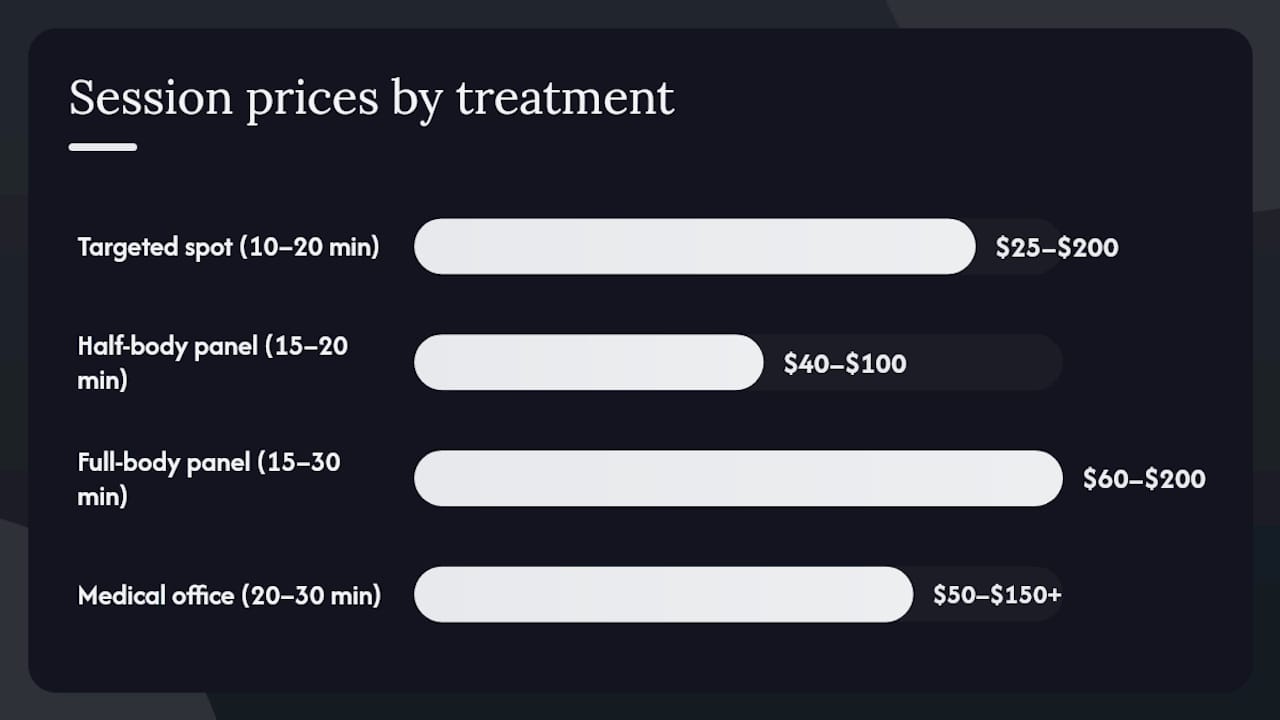
WebMD notes that session costs often start around $80 in many clinics, which aligns with the mid-range of these figures. Brown University Health similarly places the typical range at $25–$200 per session depending on provider type and treatment area.
A few things worth knowing before you book:
- Geographic differences are real. A session in New York City or Los Angeles can run $150–$200 for a full-body bed. The same service in a mid-sized Midwestern city might cost $50–$80.
- Studio vs. dermatologist pricing: Dedicated RLT studios and wellness gyms tend to charge less per session than dermatology offices, but medical-grade equipment and clinician oversight at a derm office can justify the premium for specific skin conditions.
- Packages and memberships cut costs significantly. Most studios offer monthly memberships in the $50–$150 range for unlimited or multi-session access. A drop-in rate of $80/session becomes roughly $17–$25/session on an unlimited monthly plan, which changes the math considerably.
For a typical skin improvement goal, most protocols suggest 3–5 sessions per week for 4–6 weeks, then a maintenance schedule. At drop-in rates, that initial course alone could cost $480–$2,400. A monthly membership brings that down substantially.
At-home device pricing: what you get at each price tier
Home devices are where the cost-of-red-light-therapy conversation gets more interesting. The price range is enormous, and the difference between a $150 handheld and a $700 panel is real, not just marketing.
Lifespan Vault’s panel research makes a useful point: coverage area and verified irradiance are the two factors that actually determine session time and value. A device with higher irradiance at your treatment distance delivers the same light dose in less time, which matters for daily use.
Here’s how the tiers break down:
- Handhelds and targeted devices ($100–$400): Best for localized treatment, hands, feet, knees, and elbows. Compact, easy to use daily. The Lunix LX23 Red Light Hand Pain Relief Device and LX24 Red Light Foot Pain Relief Device fall into this tier, designed specifically for targeted relief in areas that are hard to treat with a flat panel.
- Face masks ($100–$300): Designed for facial skin goals, hands-free wear during sessions. Coverage is limited to the face.
- Mini and mid-size panels ($300–$700): The practical sweet spot for most home users. Covers a torso, back, or leg panel at one time. Requires repositioning for full-body coverage but handles most common use cases well.
- Large panels and multi-panel systems ($700–$2,500): Better coverage per session, faster treatment times, but a significant upfront investment.
- Full-body beds and professional-grade systems ($2,500–$10,000+): Designed for commercial or serious home use. Rarely necessary for typical wellness or pain-relief goals.
For joint and multi-area recovery, the LX19 Red Light Joints Therapy Device wraps around knees, elbows, and shoulders, giving targeted coverage without the need for a full panel. The LX16 Red Light Therapy Belt takes a wearable approach for back and core areas, which is useful if you want hands-free treatment during daily activity.
The breakeven math: If a studio session costs you $80 and you use a $500 mid-range panel three times per week, you recover the device cost in roughly 6–7 equivalent sessions. Over a year of regular use, the savings compared to a $100/month membership add up to several hundred dollars.
What actually changes the price of red light therapy
Whether you’re comparing clinics or devices, these are the levers that move the number up or down.
- Coverage area: A spot treatment for one hand costs less than a full-body session. Devices priced for larger coverage areas cost more because they require more LEDs and power.
- Irradiance (mW/cm²): Higher irradiance means shorter sessions for the same light dose. Medical-grade equipment and premium home panels deliver more power at the treatment surface. Verified irradiance at a stated distance is more useful than raw LED count.
- Session length: Longer sessions at lower irradiance can achieve the same dose as shorter sessions at higher irradiance. Clinics charging for time may not be delivering more value than a shorter, higher-power session.
- Provider credentials and overhead: A board-certified dermatologist’s office carries higher overhead than a wellness studio, and that shows up in pricing. For cosmetic goals, a studio is usually sufficient. For active skin conditions, a clinical setting may be worth the extra cost.
- Location: Major metro areas consistently price sessions 30–50% higher than suburban or rural providers for comparable equipment.
- Package vs. drop-in: Drop-in rates are almost always the most expensive per session. Memberships and multi-session packages typically offer the best per-session value at clinics.
- Bundled services: Many studios bundle RLT with sauna, cryotherapy, or compression therapy. These bundles can offer good value if you use the other services, but they inflate cost if you only want light therapy.
For home devices, the additional cost drivers are:
- Wavelength combination: Devices offering both red (~660 nm) and near-infrared (~850 nm) wavelengths cover more use cases than single-wavelength options.
- LED density and build quality: Higher LED density at a given panel size generally means more even coverage and better irradiance consistency.
- FDA registration or clearance: FDA-registered devices have met basic safety standards. FDA-cleared devices have demonstrated efficacy for a specific intended use, a meaningful distinction for medical applications.
Pro Tip: Check mW/cm² at your actual treatment distance, not the manufacturer’s peak figure measured at zero distance. A device rated at 100 mW/cm² at 6 inches may deliver only 30–40 mW/cm² at 12 inches, which changes your required session time significantly.
Can you use insurance, HSA, or FSA for red light therapy?
The short answer: standard health insurance typically does not cover red light therapy for cosmetic uses. AARP confirms that insurance usually won’t cover in-office sessions for cosmetic purposes, though HSA and FSA payments may be accepted by some providers.
Here’s how to approach it practically:
- HSA/FSA eligibility: Pre-tax dollars can apply when red light therapy is prescribed for a diagnosable medical condition, such as chronic joint pain, wound healing, or a dermatologic condition. You’ll need documentation: a physician’s note or prescription, the device’s FDA registration or clearance paperwork, and confirmation from your HSA/FSA administrator before purchasing.
- Home devices: Some FDA-registered home devices qualify for HSA/FSA purchase when used for a medical purpose. Check with your plan administrator, as eligibility varies. Telewellness platforms like FitRx can help connect you with a provider who can document medical necessity for skin-related conditions.
- Insurance exceptions: Some insurance plans cover phototherapy for specific diagnosed conditions (psoriasis, vitiligo) when performed in a clinical setting under physician supervision. This is distinct from wellness RLT and requires a formal diagnosis and referral.
- Clinic payment options: Most studios and medspas offer memberships, multi-session packages, and first-visit discounts. Some accept CareCredit or similar healthcare financing, which can spread the cost of a package over several months.
If you’re buying a device primarily for medical reasons, save all paperwork: the invoice, the device’s FDA documentation, and any prescribing physician’s notes. That paper trail is what makes an HSA/FSA reimbursement claim defensible.
Is red light therapy worth the money?
Red light therapy has a solid evidence base for surface-level skin improvements and mild musculoskeletal pain relief. AARP’s clinical review notes it is effective for surface skin health but is not a substitute for invasive dermatologic procedures like lasers or injectables for deep wrinkles or significant pigmentation. That’s an honest framing worth keeping in mind.
For facial skin goals (tone, fine lines, mild acne), a typical protocol runs 3–5 sessions per week for 4–6 weeks, then monthly maintenance. At studio rates, the initial course costs $300–$1,500+ depending on session pricing. A mid-range home panel covers the same protocol for a one-time cost of $300–$700, making it cost-effective for anyone committed to consistent use.
For joint and localized pain, many users report noticeable improvement over 4–8 weeks of regular use. A targeted home device in the $150–$400 range handles this goal well, and the ongoing cost is essentially zero after purchase.
For general recovery and wellness, the value depends entirely on frequency. Occasional users, say once or twice a month, are better served by studio sessions. Regular users, three or more times per week, almost always find a home device pays for itself within a few months.
A few honest caveats:
- Results are incremental. Red light therapy supports the body’s natural processes; it doesn’t produce dramatic overnight changes.
- Consistency matters more than any single session. Skipping weeks undermines the cumulative effect.
- For serious skin conditions or chronic pain with an underlying cause, RLT is a complement to medical treatment, not a replacement.
Safety, side effects, and when to check with a clinician first
Red light therapy has a strong safety profile for most adults. Common minor effects include temporary skin redness at the treatment site and mild eye sensitivity if used without protection. These typically resolve within a few hours.
More important is knowing when to pause and get medical advice:
- Active cancer in or near the treatment area: Consult an oncologist before using any light therapy device on or near a tumor site.
- Photosensitizing medications: Certain antibiotics (doxycycline), retinoids, and some antidepressants increase light sensitivity. Check with your prescribing physician before starting treatment.
- Pregnancy: While RLT is generally considered low-risk, specific protocols for pregnant people haven’t been extensively studied. Consult your OB before use.
- Implanted electronic devices: Pacemakers and neurostimulators near the treatment area warrant a clinician check before using high-powered devices.
- Active skin conditions under treatment: If you’re using prescription topicals or undergoing clinical phototherapy for psoriasis or vitiligo, coordinate with your dermatologist before adding a consumer device. NYU Langone’s phototherapy guidance and UCI Health’s phototherapy services both illustrate how clinical light protocols differ from consumer wellness use.
Practical safety checks for home device users:
- Always wear appropriate eye protection during sessions, even with devices marketed as “eye-safe.”
- Follow the manufacturer’s recommended distance and session time. Closer is not always better.
- If you’re combining RLT with other skin treatments, check with a dermatologist about sequencing. The American Academy of Dermatology provides guidance on wearable light therapies and clinical standards worth comparing against device claims.
How to shop for a home red light device: a practical checklist
Buying a home device is a one-time decision that affects years of use, so it’s worth spending 20 minutes on specs before you spend $300–$700. Here’s what actually matters.
The checklist:
- Wavelength(s): Look for red light in the 630–680 nm range for surface skin, and near-infrared in the 810–880 nm range for deeper tissue and joint support. Dual-wavelength devices cover both goals.
- Verified irradiance at treatment distance: The number that matters is mW/cm² at 6 or 12 inches, not at zero distance. Third-party verification is the gold standard.
- Coverage area: Match the panel size to your primary treatment area. A 12"×6" panel works well for a hand, foot, or knee. A torso or back needs a larger panel or a wearable wrap.
- Documented session time to hit dose: A reputable device will specify how many minutes at a given distance deliver a therapeutic dose (typically 10–60 J/cm² depending on the goal).
- FDA registration or clearance: FDA-registered means the device meets basic safety standards. FDA-cleared means it has demonstrated efficacy for a specific use. For medical applications, clearance is the stronger signal.
- Warranty and return policy: A 1-year minimum warranty is standard for reputable devices. A 30-day return window gives you time to assess real-world results.
- HSA/FSA eligibility documentation: If you plan to use pre-tax funds, confirm the device comes with the paperwork your administrator requires.
Pro Tip: If you’re treating multiple areas (hands, feet, and a knee, for example), a mid-size panel you can reposition is often more cost-effective than buying three separate targeted devices. But if portability and ease of use matter more, targeted wearable devices like the Lunix LX19 or LX16 belt let you treat while moving around.
Lunix devices are designed with these checklist items in mind. The LX23 hand device and LX24 foot device offer targeted coverage for the areas most people treat daily. The LX19 joint device wraps around knees, elbows, and shoulders for hands-free treatment. The LX16 belt handles back and core areas with a wearable design. Each comes with manufacturer documentation and warranty terms you can review before purchasing.
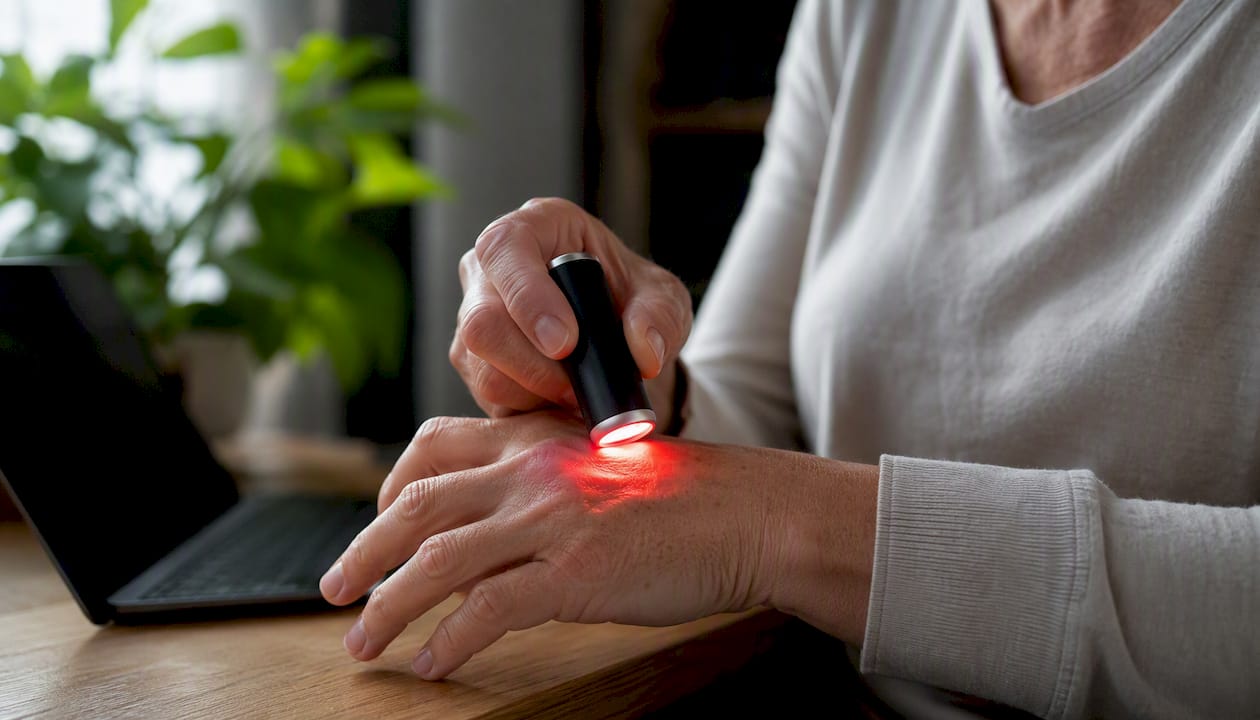
For more on the infrared therapy benefits that complement red light use, Lunixinc’s blog covers the practical health case in plain language.
Where to find treatments and how to pay less per session
Red light therapy is available at more locations than most people realize, and the provider type affects both price and quality.
Where to look:
- Dedicated RLT studios: The most common option in most U.S. cities. Typically offer memberships, packages, and drop-in rates. Equipment quality varies, so ask about the device brand and session irradiance.
- Medspas: Often combine RLT with other aesthetic services. Pricing tends to be higher, but staff credentials and equipment quality are usually stronger.
- Dermatology clinics: Best for skin conditions requiring clinical oversight. Highest per-session cost, but appropriate when a diagnosis is involved.
- Health clubs and gyms: Some offer light booths as a membership add-on. Convenient and affordable, though equipment may be lower-powered than dedicated studios.
- Chiropractic and physical therapy clinics: Increasingly common for joint and muscle recovery applications. Often bundled with other treatment modalities.
Savings tactics that actually work:
- Monthly memberships cut per-session cost by 60–80% compared to drop-in rates at most studios.
- Multi-session packages (10 or 20 sessions) typically offer 15–25% off the single-session price.
- First-visit discounts are standard at most studios. Use them to test equipment quality before committing to a membership.
- Seasonal promotions: January and September tend to bring wellness promotions at studios and medspas.
- Bundled memberships with sauna or cryotherapy can offer good value if you use both services regularly.
Vetting a provider quickly:
Ask about the device brand, the irradiance output, and the session length. A provider who can’t answer those questions may not be running equipment that delivers a therapeutic dose. Clear cancellation and refund policies are a basic trust signal worth checking before you commit to a package.
The honest case for sessions vs. home devices
The conventional wisdom says “try sessions first, then buy a device.” That’s reasonable advice for someone who isn’t sure red light therapy will work for their specific goal. But for many buyers, especially those dealing with chronic joint pain, hand stiffness, or foot discomfort, that trial period is unnecessary. The clinical evidence for localized pain relief is consistent enough that waiting to “test” the therapy at a studio before buying a targeted home device mostly just delays results and adds cost.
Where sessions genuinely make sense: full-body skin goals, occasional use, or situations where you want professional guidance on a skin condition before committing to a protocol. A dermatologist or medspa session for facial rejuvenation, for example, gives you a calibrated starting point and professional oversight that a home device can’t replicate.
Where a home device makes more sense: any goal that requires consistent, frequent treatment of a specific area. Hands, feet, knees, and back are the clearest examples. You’ll use the device daily, the treatment area is defined, and a targeted device like the Lunix LX23 or LX19 fits that use case precisely. The math almost always favors the device within two to three months.
One thing most buyers underestimate: the value of convenience. A device you use every morning while drinking coffee delivers more cumulative light dose than a studio session you book twice a month. Consistency, not intensity, is what drives results with red light therapy.
Lunix devices for your recovery routine
If you’ve decided a home device fits your needs, the Lunix recovery collection covers the most common targeted use cases: hand pain relief, foot recovery, joint therapy, and wearable back support.
The LX23 targets hand pain and stiffness with a wrap-around design built for daily use. The LX24 addresses foot discomfort and plantar recovery. The LX19 wraps around knees, elbows, and shoulders for hands-free joint therapy. The LX16 belt covers back and core areas with a wearable format that fits into a normal routine without requiring you to sit still.
Every Lunix device comes with manufacturer warranty terms and return policy details listed on the product page, so you can review them before purchasing. For buyers planning to use HSA or FSA funds, check the product documentation for FDA registration details and save your purchase receipt.
Visit the Lunix recovery collection to compare devices, review specs, and find the right fit for your specific recovery goals.
Sources
These are the primary sources used to verify clinical context and pricing figures in this article. Each is worth bookmarking if you want to dig deeper before making a purchase or booking decision.
- Does Red Light Therapy Really Work on Wrinkles? — AARP
- Red Light Therapy: Benefits, Safety and Things to Know — Brown University Health