


Unplug your sauna blanket and let it cool completely before you touch it. Wipe both the interior lining and exterior shell with a soft microfiber cloth dampened with mild soap and water, or a diluted white vinegar solution for extra freshness. Never spray liquid on the controller or cord, only wipe them, and never submerge any part of the unit. Allow the blanket to air-dry completely before folding it away.
TL;DR:
- Regular wiping after each use is enough to prevent odors and sweat buildup, with deep cleaning needed only once a month or when odors persist.
- Use only mild, pH-neutral soap, diluted vinegar, distilled water, or microfiber cloths, and always test cleaners on a hidden area first.
- Deep cleans should focus on seams and creases to remove oils and salts, avoiding scrubbing to prevent damage to the heating wires.
- Air-drying fully in a ventilated space and storing in a breathable bag extend the blanket’s lifespan and prevent mold growth.
- Using a moisture-wicking liner underneath the blanket is essential to reduce routine cleaning needs and maintain hygiene over time.
Table of Contents
- Quick Sauna Blanket Cleaning Checklist After Every Session
- What Supplies Are Safe to Use on a Sauna Blanket?
- How Do You Deep Clean a Sauna Blanket Properly?
- How Should You Dry and Store a Sauna Blanket?
- Routine Maintenance Checks That Extend the Blanket’s Life
- When Is a Sauna Blanket Actually Unsafe to Use?
- Where to Find Model-Specific Lunix Care Instructions
- Why Most Cleaning Advice Undersells the Session Habit
- Get Support and Replacement Parts for Your Sauna Blanket
- Sources
- FAQ
Quick Sauna Blanket Cleaning Checklist After Every Session
You don’t need a deep clean after every session. Most times, a quick routine keeps things fresh in just a few minutes.
- Unplug the blanket and set the controller aside.
- Open it flat on a clean surface so it can air out.
- Wipe the inner surface with a slightly damp microfiber cloth, focusing on areas in direct contact with your skin.
- Wipe the controller casing with a barely damp cloth, never wet.
- Allow it to air-dry fully, open and unfolded, before storing.
- Fold or roll loosely and store in a breathable bag.
Run a deeper clean whenever you notice lingering odors after airing out, visible sweat stains, or after illness. Frequent users should consider a full deep clean regularly to clear oils and salts that accumulate from sweat.
What Supplies Are Safe to Use on a Sauna Blanket?
Your sauna blanket’s interior is a synthetic, heat-conductive material, and the wrong cleaner can degrade it fast or damage the heating wires underneath. Stick to gentle products every time.
Safe to use:
- Microfiber cloths (at least two, one for washing and one for rinsing/drying)
- Mild, pH-neutral soap, such as baby shampoo or a gentle dish soap, diluted in water
- Distilled water in a spray bottle for controlled application
- White vinegar diluted 1:3 or 1:4 with water as a natural disinfecting rinse
Never use:
- Bleach or any chlorine-based cleaner
- Abrasive scrubbers or scouring pads
- Fabric softener
- A washing machine or dryer, even on delicate settings
- Direct submersion in water
- A hair dryer or space heater aimed at the electronics to speed drying
Before you start, unplug the unit, let it cool completely, and lay it flat on a clean, dry surface. Remove any liner or towel used during the session, and detach the controller first if your model allows it.
Pro Tip: Test any cleaner, even diluted vinegar, on a small hidden spot first and let it dry. Some synthetic linings shift color slightly with repeated exposure, and you want to catch that on an inch of fabric, not the whole panel.
How Do You Deep Clean a Sauna Blanket Properly?
A monthly deep clean goes beyond the quick wipe. It targets the oils, sweat salts, and skin cells that build up in seams and creases where a fast pass misses.
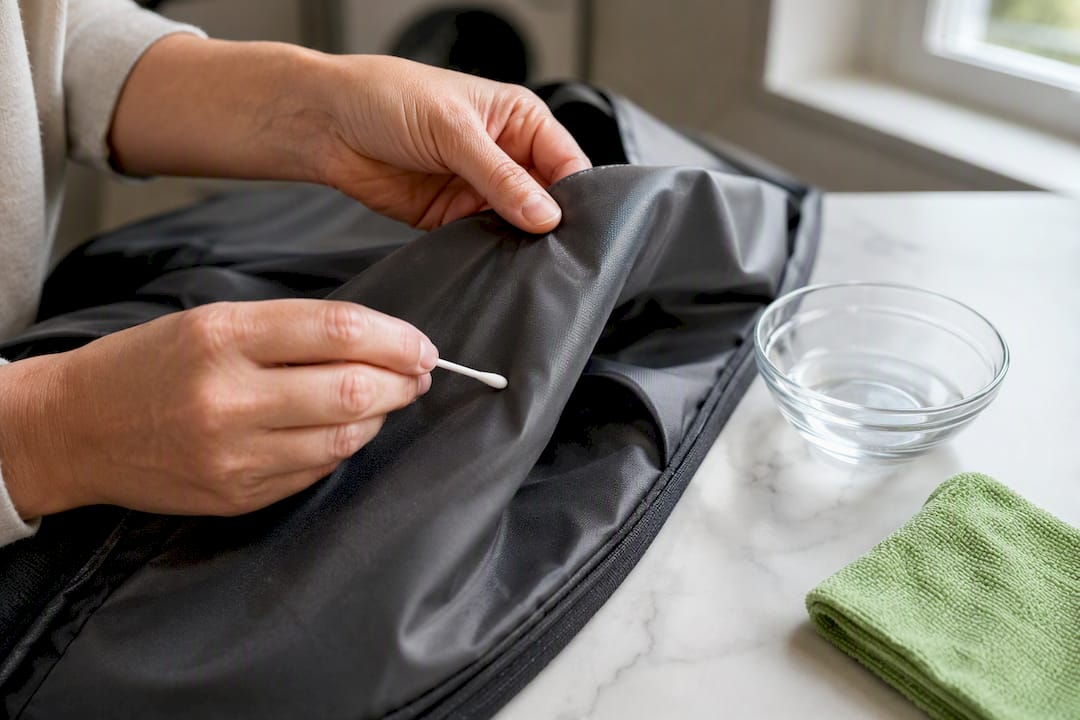
- Spot-test first. Apply your cleaning solution to a hidden interior seam and wait a few minutes to confirm no discoloration.
- Mix your solution. Combine mild soap with distilled water, or mix white vinegar with water at a 1:3 or 1:4 ratio for a light disinfecting pass.
- Apply with a cloth, not a spray bottle, on the interior lining. Dampen the cloth rather than saturating the fabric, and work in small sections.
- Open seams and Velcro closures to reach the creases where sweat collects, especially the panels that touch your neck and lower back during a session.
- Blot, don’t scrub. Press the cloth against the fabric rather than rubbing hard, which can wear down the coating over the heating elements.
- Rinse with a second, clean damp cloth to lift away soap or vinegar residue, then repeat on any spot that still looks or smells off.
The exterior shell gets a lighter touch since it doesn’t contact skin directly. If you use your blanket on a couch or bed, wipe down any zone that touched the fabric to prevent transfer. If you use it on the floor, check the underside for dust and pet hair that can work into the seams over time.
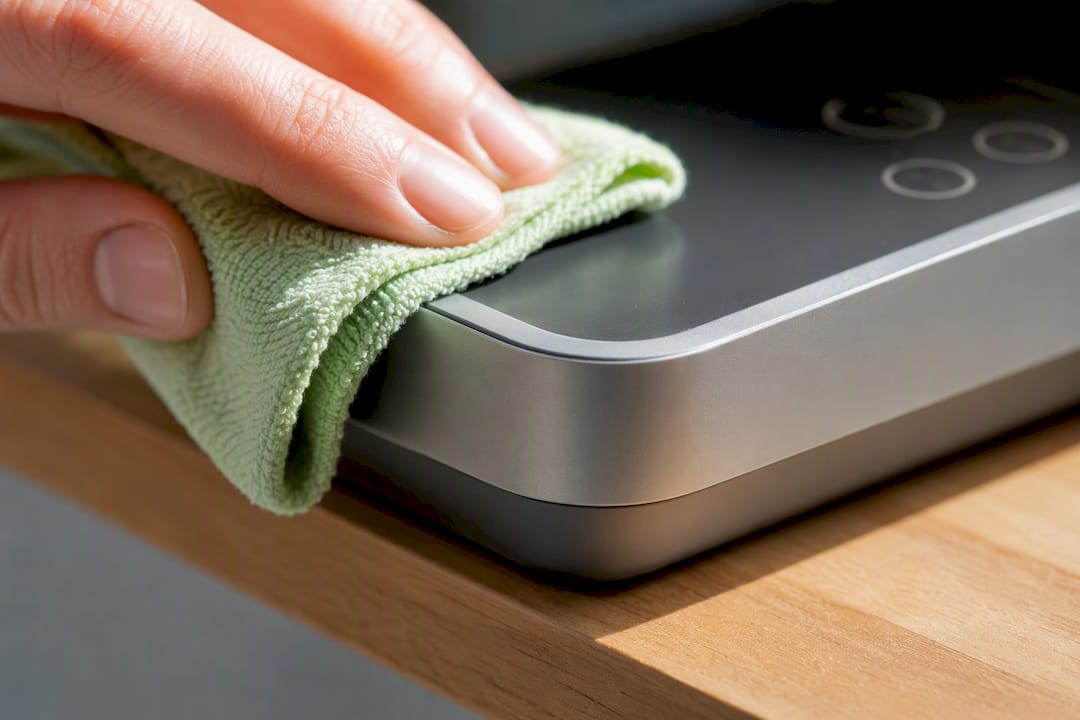
The controller and cord get handled separately from the rest of the blanket. Wipe the casing with a barely damp cloth only, never spray cleaner directly onto it, and never let water pool near the ports or buttons. Store the controller in a dry spot, away from the folded blanket if there’s any residual dampness at all.
On frequency, wipe the interior after every single use and run this full deep-clean sequence about once a month, or sooner if you sweat heavily during sessions. Heat increases blood flow and helps the body clear metabolic byproducts like lactic acid, which is part of why people reach for sauna blankets after workouts in the first place, and keeping the surface clean protects that benefit rather than undermining it with buildup.
How Should You Dry and Store a Sauna Blanket?
Trapped moisture is the real enemy here. It’s what leads to musty odors and, over time, mold on the inner lining.
- Air-dry in a ventilated, shaded spot. Leave the blanket fully open, not folded, until it’s dry to the touch inside and out.
- Give it real time. In a room with decent airflow, expect 30 to 45 minutes; in a closed, humid room, it can take over an hour.
- Roll instead of sharp-folding once dry, to avoid creasing the heating wires or stressing the seams at fixed fold lines.
- Store in a cool, dry, breathable bag, not a sealed plastic bin.
- Skip the basement or attic if either runs humid in your climate. A closet shelf or dresser drawer works better.
- Rotate liners and covers every few months if you use one, since these absorb sweat directly and wear out faster than the blanket itself.
Routine Maintenance Checks That Extend the Blanket’s Life
A five-minute inspection every few uses catches small problems before they become expensive ones.
- Check stitching and seams for fraying or loose threads, especially near the heating panel edges.
- Test zippers and Velcro closures to confirm they still catch cleanly without snagging fabric.
- Inspect the cord and controller casing for cracks, exposed wire, or discoloration near the connection point.
- Feel for even heat distribution during your next session, noting any cold spots or unusually hot patches.
Run this check every four to eight uses, and do a more thorough once-over monthly alongside your deep clean. Simple upkeep, like cleaning debris out of a zipper track or swapping a worn liner, is easy to handle yourself.
Pro Tip: Keep a quick log on your phone of any odd heating pattern with the date and a photo. If you ever need to contact support, that record speaks louder than “it felt weird a while back.”
If you ever notice a section that won’t heat evenly, stitching that’s pulled loose near the wiring, or a cord that feels warm along its length, stop using the blanket and reach out to the manufacturer or a qualified technician before your next session.
When Is a Sauna Blanket Actually Unsafe to Use?
Some situations call for stopping immediately, no exceptions. If you smell burning, see sparks, or feel heat concentrated unevenly in one spot, unplug the blanket and don’t use it again until it’s been inspected.
For less urgent issues, work through them in order:
- Persistent odor after airing out: Run a full vinegar wipe-down on the interior. If the smell returns within a day or two even after drying completely, that can point to trapped moisture deep in the insulation, which may mean internal damage rather than surface residue.
- Stubborn stains: Try a second, more concentrated soap pass, blotting rather than scrubbing. If a stain doesn’t lift after two attempts, stop and check with the manufacturer instead of reaching for a stronger chemical.
- Electrical concerns: Check that the cord isn’t frayed, the controller powers on normally, and the heat feels even across the full panel. Document any inconsistency with a date, description, and photo before contacting support, since this record helps with warranty claims.
A systematic review of post-exercise heat exposure found mixed evidence on recovery benefits and noted that heat exposure adds to your body’s total recovery load. That’s worth remembering if you’re using your blanket daily on top of hard training. Both heat and cold can reduce muscle soreness depending on timing, so pushing session frequency up isn’t automatically better recovery.
Where to Find Model-Specific Lunix Care Instructions
The steps above cover general infrared sauna blanket care, but your specific model may have details worth checking against the manual that shipped with it. The Lunix LX17 Portable Infrared Sauna Blanket product page lists model-specific care notes, warranty terms, and support contacts for anyone who owns that unit.
General cleaning advice complements the manual, it doesn’t replace it. If your device manual specifies a different dilution ratio or a particular cloth type, follow that guidance first.
Heat therapy increases circulation and helps clear metabolic byproducts like lactic acid, which is a large part of why sauna blankets have become a staple in post-workout routines. If you’re curious about how session timing and frequency affect recovery, Lunix’s guide on sauna blanket benefits and its $300 to $900 HSA reimbursement breakdown are both useful starting points for getting more value out of the device you already own.
Why Most Cleaning Advice Undersells the Session Habit
Most cleaning guides treat this like a chore you do when the blanket finally smells bad. That’s backwards. The real fix isn’t a better cleaning product, it’s changing what touches the blanket in the first place.
A thin liner or moisture-wicking layer between your skin and the interior fabric does more for long-term hygiene than any deep-clean routine ever will, because it stops sweat, oils, and salt from reaching the lining at all. Owners who skip this step end up scrubbing monthly just to undo what a $10 liner would have prevented.
The other place conventional advice falls short is treating heat exposure as risk-free just because it’s “just a blanket” and not a full sauna cabin. It isn’t risk-free. It adds real load to your recovery, and pairing daily sessions with high training volume can work against you rather than for you. Prioritize the liner habit first, the wipe-down second, and pay attention to how your body responds to frequency before you assume more heat automatically means more recovery.
— Lunix
Get Support and Replacement Parts for Your Sauna Blanket
A blanket with a removable, wipeable cover survives years of regular sessions instead of months. That’s the difference between wrestling with harsh cleaners on aging fabric and simply pulling off a liner for a quick wash.

The Lunix LX17 Portable Infrared Sauna Blanket is built with that kind of everyday care in mind, and its product page has the full specs, warranty details, and replacement part information you’d want before committing to a routine like the one above. If you’re already a Lunix owner and need a replacement liner, a support contact, or the official care instructions for your exact model, start at the Lunix home page and navigate to support from there. It’s the fastest way to get the right part or answer without guessing at generic advice.
Sources
- Ice Packs vs. Warm Compresses For Pain | Johns Hopkins Medicine
- Effects of Post-Exercise Heat Exposure on Acute Recovery and Training-Induced Performance Adaptations: A Systematic Review - PMC
- What is the biochemical and physiological rationale for using cold-water immersion in sports recovery? A systematic review. | PubMed
FAQ
What Are the Downsides of Using an Infrared Sauna Blanket?
Heat exposure adds to your total recovery load, and a systematic review found mixed evidence on whether it improves training adaptations. Skipping regular cleaning also raises the risk of odor buildup and, in rare cases, skin irritation from trapped sweat and oils.
Do Sauna Blankets Reduce Cortisol?
Heat therapy is linked to increased circulation and relaxation responses, but cortisol reduction specifically isn’t something the available research on sauna blankets confirms directly. What’s better supported is that heat helps clear metabolic byproducts and eases muscle tension after exercise.
How Long Should You Sit in a Sauna Blanket?
Most sessions typically last between a half hour to an hour depending on the model and your tolerance, but the more important factor is total weekly load, not one session’s length. Since heat exposure adds recovery stress, pair frequency with how your body responds rather than a fixed daily habit.
Can Bacteria Grow in a Dry Sauna Blanket?
Bacteria and mold need moisture to thrive, so a fully air-dried blanket stored in a breathable bag carries low risk. The danger comes from folding it away damp or storing it in a humid closet, basement, or attic where trapped moisture lingers in the lining.
How Often Should You Deep Clean a Sauna Blanket?
Wipe the interior after every session, and run a full deep clean about once a month if you use it several times a week. Increase that frequency if you notice lingering odor, visible stains, or if you’ve used the blanket while sick.