


Buy a modular play couch when it meets three conditions: a removable, machine-washable cover, a high-density foam core that resists sagging, and a safety zipper design that keeps the pull out of a toddler’s reach. Skip anything that fails one of those tests. Beyond that, measure your space, keep an adult nearby during active play, and treat piece count as a space decision, not a status symbol.
TL;DR:
- Foam density is key, as high-density foam resists flattening and supports active play for at least one to two years under regular use.
- Washable, stain-resistant fabric covers are essential for maintenance, but foam quality ultimately determines the couch’s durability.
- Safety zippers that tuck away pulls and reinforced seams at stress points are necessary to prevent injuries and extend the couch’s lifespan.
- A 5 to 7 piece set suits basic lounging and small forts, while an 11 to 14 piece set allows for tunnels, ramps, and multi-level builds.
- Parents should verify warranty coverage, available replacement covers, and measure space carefully before purchasing to ensure fit and longevity.
Table of Contents
- What to Look for When Buying a Modular Play Couch
- What Materials Make a Modular Play Couch Last?
- How Many Pieces and Shapes Do You Actually Need?
- Is a Play Couch Safe for Toddlers and Young Kids?
- Creative Setup Ideas for One or Two Play Couch Sets
- How Long Does a Modular Play Couch Actually Last?
- How Lunix Builds Play Couches for Real Family Use
- Designing Furniture for the Way Kids Actually Play
- Where to Buy a Lunix Modular Play Couch
- Sources
What to Look for When Buying a Modular Play Couch
A modular play couch is really a system of foam-filled shapes, cover fabric, and hardware. Each part carries its own risk of disappointing you six months in, so check them individually before you check out.
- Cover fabric and washability. Look for a cover you can unzip and toss in the machine, not one that requires spot-cleaning gymnastics every time a juice box explodes.
- Foam density and rebound. Firmer foam holds its shape after months of jumping, building, and general chaos; soft, low-density fill flattens fast and stops supporting climbing or crash-landing play.
- Zipper safety. Covered zippers or safety-zip designs keep the pull tab away from curious fingers and reduce the risk of injury from a fully exposed metal track.
- Seam reinforcement. Double-stitched seams at stress points (corners, edges kids grab) matter more than thread count ever will.
- Piece count and shapes. A 5 to 7 piece set works for a single lounge or small fort. An 11 to 14 piece set opens up ramps, tunnels, and two-story builds.
- Footprint and storage. Measure the room before you buy, not after the boxes arrive. Modular pieces are bulky even when they stack.
- Warranty length and return window. A generous return window matters more than a flashy warranty number if the couch simply doesn’t fit your space or your kid’s play style.
None of these items work in isolation. A gorgeous cover on a couch with soft, quick-flattening foam is a short-term win and a long-term regret. Check the foam claim and the cover claim together, because manufacturers rarely fail on both at once, but they do sometimes lead with the one that looks best on a product page.
What Materials Make a Modular Play Couch Last?
Foam is the part of a play couch that decides whether it survives toddlerhood or gets replaced within a year. High-density polyurethane foam resists compression under repeated jumping and crash-landing play, while softer, lower-density fills flatten out and lose their bounce within months of daily use. If a listing does not mention foam density at all, treat that as a gap worth asking about directly rather than assuming the best.
Cover fabric involves a real tradeoff. Tightly woven, stain-resistant fabrics survive spills and crayon incidents better than plush or breathable materials, but the toughest fabrics sometimes feel stiffer against skin. Most families land on a middle ground: a washable, densely woven cover that is comfortable enough for lounging but sturdy enough to handle shoes, snacks, and the occasional marker.
Nontoxic materials have become one of the top screening criteria for parents shopping this category, according to a recent roundup of play couches with nontoxic materials. That focus makes sense. Kids spend hours with their faces pressed into these cushions, and low-emission foam and fabric matter more here than they would on a guest room sofa nobody sits on for long stretches.
Construction details separate a couch that lasts from one that develops sad, lumpy corners within a year. Reinforced stitching at edges and corners resists the stress of kids climbing on and off dozens of times a day. Zipper design matters just as much: a safety zipper that tucks the pull away from small hands protects little fingers and reduces the wear that comes from constant zipper access.
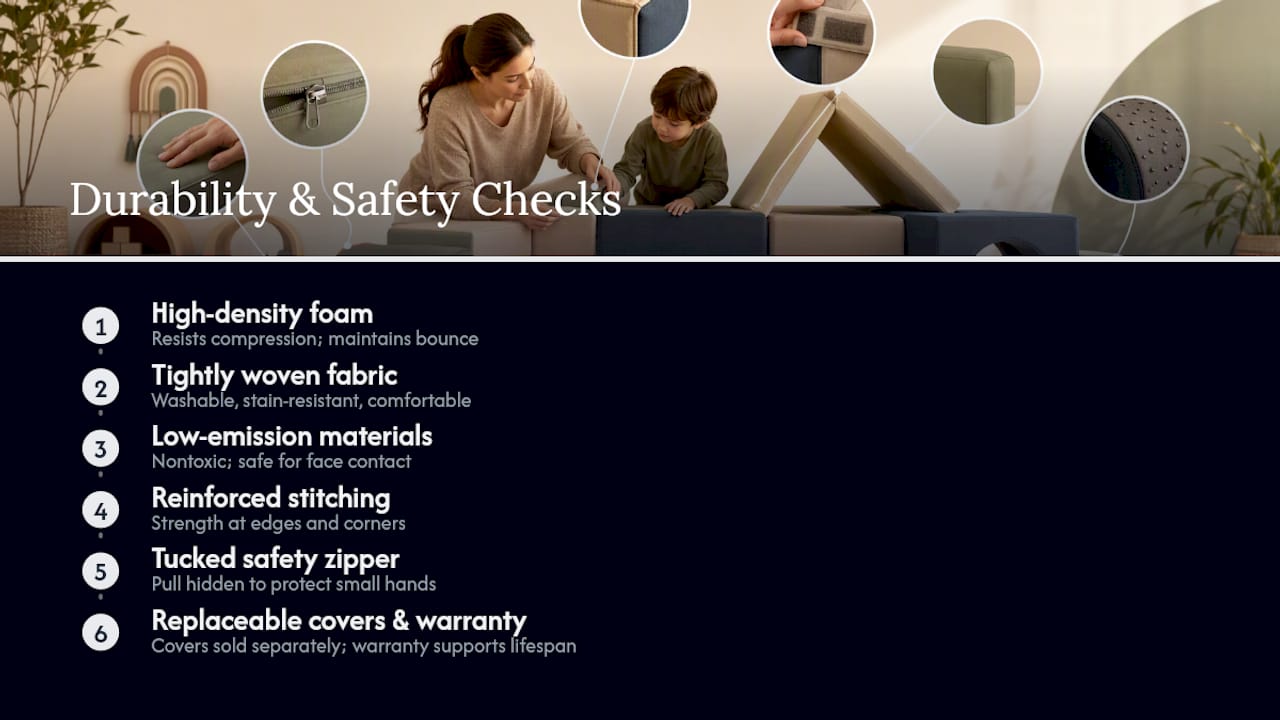
Before buying, ask two direct questions: what does the warranty actually cover, and can you buy replacement covers separately? A couch that ships with genuinely available replacement covers effectively resets its own lifespan every time one gets worn out or stained beyond saving.
How Many Pieces and Shapes Do You Actually Need?
Piece count determines what you can build, and shape variety determines how creative those builds get. A single mat or small set handles basic lounging. A 5 to 7 piece configuration adds a couch shape plus a wedge or two, enough for a simple ramp or backrest fort. An 11 to 14 piece set, like the larger sets on the market, gives you enough rectangles, triangles, and wedges to build tunnels, two-level forts, and ramps in the same afternoon.
- Measure your floor space first, including clearance for kids to run, climb, and fall safely without hitting furniture edges.
- At least one wedge and two triangle pieces unlock most ramp, backrest, and fort builds, a detail confirmed by dozens of documented one and two set builds that use exactly those shapes.
- Rectangles and squares form the base of tunnels and crash pads, while triangles create the sloped surfaces kids climb and slide down.
- Buying for siblings or future growth means thinking about expandability. A second set roughly doubles your configuration options rather than simply doubling seating capacity.
- Storage planning matters more with larger sets. Labeled bins and a dedicated corner keep loose pieces from turning into trip hazards when the couch is disassembled.
If you already own one set and are deciding whether to add a second, think about what you actually want to build. A single set covers lounging and small forts well. Two sets are what turn a play couch into a tunnel system or a genuine obstacle course.
Is a Play Couch Safe for Toddlers and Young Kids?
Modular play couches are safe for toddlers and young kids when adults stay nearby during active play and the pieces sit on clear, obstacle-free flooring. Soft play areas function best with clear pathways and dedicated soft landing zones, a principle drawn straight from OSHA’s guidance on soft surfaces originally written for workplace fall protection but directly applicable to a living room fort zone.
Stacking height is the main tipping hazard. Two or three pieces stacked for a “tower” build is generally manageable for supervised play; anything taller invites a fall onto a hard floor if the couch pieces are the only cushioning nearby. Keep a rug or extra mat under high builds as a landing buffer.
Cleaning and inspection keep both safety and hygiene intact over time. Follow this simple rotation:
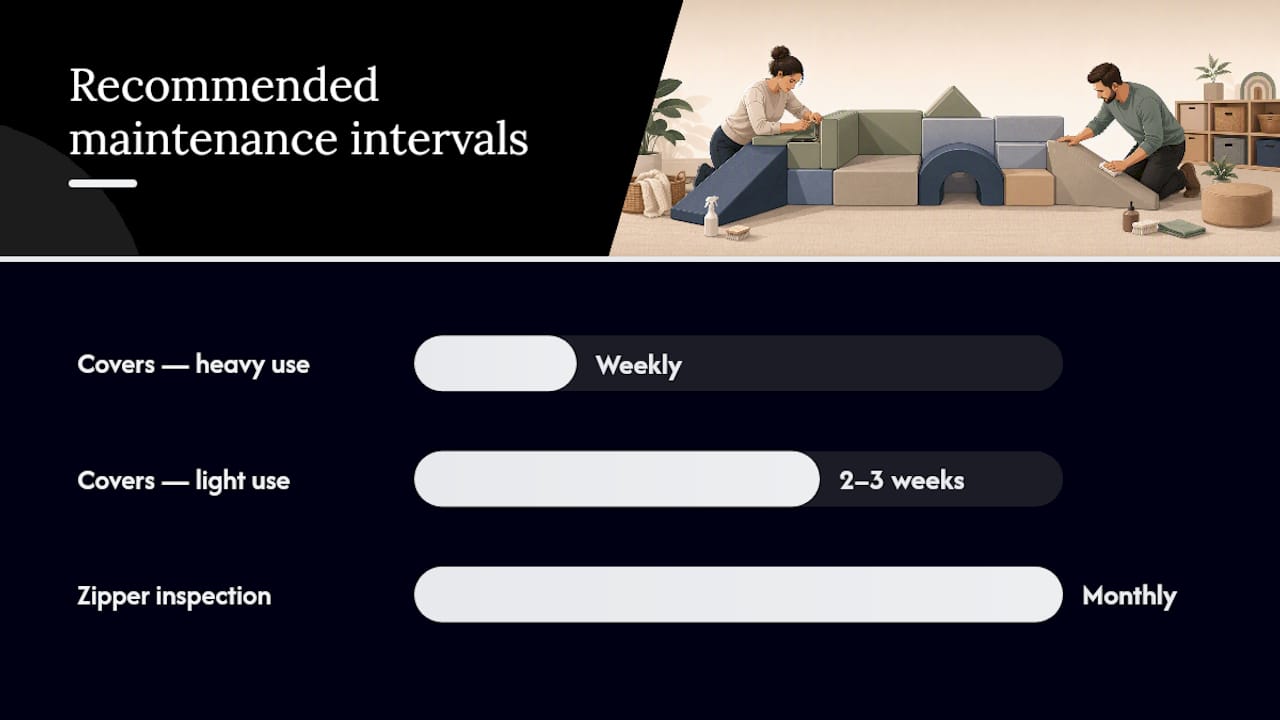
- Unzip and remove covers weekly if the couch sees daily use, or every two to three weeks for lighter use.
- Wash covers on the manufacturer’s recommended cycle, typically cold or warm with mild detergent, and skip the dryer’s high heat setting to protect elastic seams.
- Spot-treat foam cores immediately with a mild soap solution and let them air dry fully before recovering, since trapped moisture inside foam causes odor and mildew.
- Inspect zippers monthly for stuck teeth or a loosening pull tab, and check seams for fraying at corners and high-contact edges.
- Press each piece firmly and check how quickly it rebounds. Foam that stays compressed for more than a few seconds is losing its structural support.
Pro Tip: Keep one extra cover on hand for your most-used piece. Swapping a soiled cover for a clean one in thirty seconds beats waiting on a wash cycle while your kid stares at a bare cushion.
Rotating accessories and refreshing the setup does double duty here. It keeps play interesting and gives you a natural excuse to pull covers off for washing on a regular schedule, a habit play couch setup guides recommend as much for hygiene as for novelty.
Creative Setup Ideas for One or Two Play Couch Sets
A single set already supports more builds than most parents expect, and a second set multiplies the possibilities rather than just adding bulk.
With one set, try a reading nook built from the backrest pieces and a couple of cushions tucked against a wall, a mini ramp using one wedge angled off a low rectangle, or a simple crash pad made by laying flat pieces side by side under a climbing spot. A basic fort takes shape fast when you lean two rectangles together and top them with a soft cushion roof.
With two sets, you unlock a genuine tunnel by lining up arches or rectangles end to end, a taller two-level fort with a working ramp entrance, and an obstacle course that strings together a wedge climb, a tunnel crawl, and a crash landing. A seesaw or rocker build using a wedge as a fulcrum works well for slightly older kids with steady balance.
- Swap cushion covers seasonally to keep the same shapes feeling new.
- Add a secret panel or fabric flap to a fort for extra imaginative play.
- Store unused pieces upright against a wall to save floor space between builds.
How Long Does a Modular Play Couch Actually Last?
Foam compression is the honest measure of a play couch’s lifespan, not the calendar. Under heavy daily use from an active toddler or two, expect visible softening in the highest-traffic pieces within one to two years. Lower-density foam compresses faster, sometimes within months, which is exactly why foam quality belongs at the top of your buying checklist rather than as an afterthought.
Warranty language deserves a careful read before you assume it covers what you think it does. Many product listings advertise warranties running up to several years as a durability signal, but coverage scope varies widely between brands, and most exclude normal wear-and-tear or damage from misuse, a distinction warranty comparisons across popular sets consistently flag as worth clarifying before purchase. Ask specifically whether foam compression is covered or only structural defects.
Extra, removable covers are the simplest lifespan extension available. Being able to swap a stained or worn cover for a fresh one keeps the foam core protected and the whole piece looking presentable years past its first birthday, according to practical setup guidance for parents who track this kind of everyday wear.
A workable maintenance rhythm: a quick wipe-down or cover check weekly, a full inspection of zippers, seams, and foam rebound monthly, and a deep wash of all covers on a seasonal basis. Parents comparing notes in online forums about play couch regrets tend to cite skipped maintenance, not the couch itself, as the reason durability disappointed them.
How Lunix Builds Play Couches for Real Family Use
Lunix designs its modular sets around the same criteria this guide walks through, not around marketing language. The LX15 14-piece set and the LX22 11-piece set both use high-density foam cores, washable and removable covers, and a safety zipper design that keeps hardware away from small hands.
Both sets come with a warranty, and replacement covers may be available separately so a stained or worn piece does not necessarily mean retiring the whole couch. Check each product page for current color options and piece breakdowns before deciding which set fits your room.
Designing Furniture for the Way Kids Actually Play
Kids do not treat furniture the way adults do. A couch cushion becomes a ramp, a fort wall, a trampoline, and a nap spot within the same afternoon, often within the same hour. Designing for that reality means refusing to choose between safety and imagination, because a play couch that sacrifices either one fails the family using it.
The instinct to prioritize looks over foam quality is understandable and, in our view, backwards. A washable cover in a beautiful color means nothing if the foam underneath flattens by month four. We think the boring specs, foam density, zipper design, seam reinforcement, deserve more attention than they usually get in glossy product photos, precisely because they are what determines whether a set survives a second kid or gets donated after the first.
Sensory and physical engagement with soft, moldable furniture also supports real developmental value beyond entertainment, a connection explored further in this guide to sensory play and child development. That’s worth keeping in mind the next time a play couch build looks like nothing more than a pile of cushions on the living room floor.
— Lunix
Where to Buy a Lunix Modular Play Couch
If you have made it this far, you already know what to check: foam density, washable covers, safety zippers, and honest warranty terms. Lunix builds both of its current sets around exactly those specs, so the comparison work you just did applies directly here.

The LX15 14-piece set gives you enough shapes for tunnels, ramps, and multi-level forts in one purchase, while the LX22 11-piece set fits smaller rooms without giving up wedge and triangle versatility. Both come with extra-cover options if you want a spare on hand for faster cleanup between wash cycles.
Before you check out on any modular set, confirm the return window, shipping timeline, and exactly what the warranty excludes. For a closer look at how these pieces translate into real playroom setups, visit Lunix’s product pages to compare sizes, colors, and current availability, then pick the set that matches the room you are actually filling.
Sources
This guide drew on a few outside sources worth bookmarking for your own research. The OSHA soft-surface safety guidance informed the clear-pathway and soft-landing recommendations throughout this piece. For hands-on build inspiration, play couch setup ideas and the 1 and 2 set Nugget couch build list both shaped the practical configuration tips above.
- OSHA safety guidance (soft surfaces)
- Play couch setup ideas that keep kids playing longer
- 22 fun and easy 1 and 2 Nugget couch ideas
- 6 Best Play Couches With Nontoxic Materials (2026)