Comfort is more than a pleasant feeling. It’s a measurable factor that directly influences how quickly and effectively your body heals. Many people assume recovery requires enduring discomfort, pushing through pain, and toughing it out. Research challenges this belief. Comfort plays a core role in symptom relief, faster recovery, and improved quality of life. This guide explores the scientific foundations of comfort in healing, practical ways to harness it for better outcomes, and the nuanced balance between comfort and confronting necessary discomfort on your recovery journey.
Table of Contents
- Kolcaba’s Comfort Theory: The Foundation Of Comfort In Healing
- Scientific Evidence: How Comfort Improves Healing Outcomes
- Nuances And Misconceptions: When Comfort Alone Isn’t Enough
- Practical Application: Integrating Comfort In Your Personal Healing Journey
- Explore Recovery Solutions To Enhance Your Comfort And Healing
- Frequently Asked Questions
Key takeaways
| Point | Details |
|---|---|
| Comfort is multidimensional | It spans physical, emotional, social, and environmental domains that work together to support healing. |
| Evidence shows measurable benefits | Comfort-focused care improves pain scores, sleep quality, and accelerates recovery by 8.5% in surgical patients. |
| Balance is essential | While comfort relieves symptoms, deep healing sometimes requires confronting therapeutic discomfort alongside supportive care. |
| Personalization matters | Creating a tailored comfort plan with biophilic design, emotional support, and tracking tools optimizes your recovery. |
Kolcaba’s comfort theory: The foundation of comfort in healing
Katherine Kolcaba developed a comprehensive framework that defines comfort as relief, ease, and transcendence across multiple domains. This theory forms the core of modern nursing interventions focused on healing. Understanding these domains helps you recognize where comfort influences your recovery most.
The theory identifies four key domains. Physical comfort addresses bodily sensations like pain, temperature, and muscle tension. Psychospiritual comfort encompasses your mental state, self-awareness, and sense of meaning. Sociocultural comfort involves your relationships, family support, and cultural practices. Environmental comfort includes everything from lighting and noise levels to room temperature and natural elements.
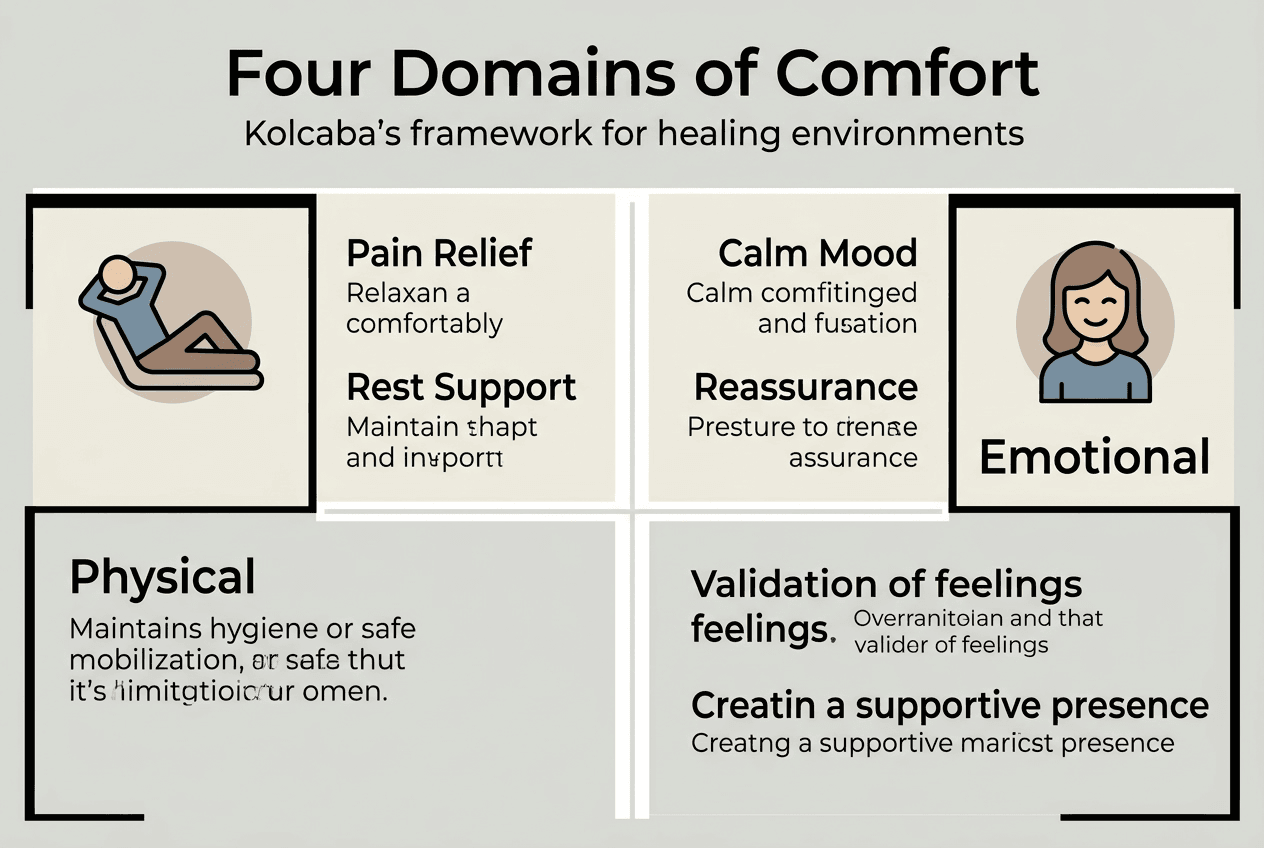
Antecedents are factors that affect your baseline comfort level. Disease, injury, or chronic conditions create physical discomfort. Self-esteem and emotional resilience influence psychospiritual comfort. Social isolation or supportive relationships impact sociocultural comfort. Environmental stressors like harsh lighting or noise reduce environmental comfort. Recognizing these antecedents helps you identify specific areas needing attention.
Consequences of improved comfort are measurable. Symptom relief occurs when physical interventions reduce pain or nausea. Reduced suffering happens when emotional support addresses anxiety or fear. Enhanced healing engagement means you participate more actively in recovery activities. Better sleep quality supports cellular repair and immune function.
| Domain | Antecedents | Consequences |
|---|---|---|
| Physical | Pain, temperature, mobility | Symptom relief, better sleep |
| Psychospiritual | Self-esteem, anxiety, meaning | Reduced suffering, engagement |
| Sociocultural | Relationships, cultural needs | Social support, adherence |
| Environmental | Lighting, noise, nature access | Stress reduction, relaxation |
Practical comfort interventions span all domains:
- Physical: Heat therapy, massage, ergonomic positioning, pain medication
- Psychospiritual: Meditation, journaling, spiritual practices, counseling
- Sociocultural: Family visits, peer support groups, culturally appropriate care
- Environmental: Natural light, plants, soothing music, temperature control
Pro Tip: Combine interventions across multiple domains simultaneously for synergistic effects. A warm compress (physical) in a plant-filled room (environmental) while listening to calming music (psychospiritual) creates deeper comfort than addressing one domain alone. This holistic approach aligns with how your body naturally processes healing signals. Explore home wellness relaxation strategies to build integrated comfort stations in your living space.
Scientific evidence: How comfort improves healing outcomes
Controlled trials demonstrate concrete benefits. Nursing care based on Comfort Theory improves patient outcomes across multiple metrics. Studies in ICU and palliative care settings show improved comfort scores, higher satisfaction ratings, better sleep quality, reduced pain levels, and faster recovery speeds. These aren’t subjective feelings. They’re measured improvements in objective health markers.

Biophilic design creates measurable physiological changes. Incorporating natural elements into healing environments leads to 15% lower stress hormones, 25% improved cognitive function, and 8.5% faster recovery after surgery. Your body responds to nature views, natural light, and organic materials by lowering cortisol, improving heart rate variability, and enhancing immune function.
| Care Approach | Pain Scores | Sleep Quality | Recovery Time | | — | — | — | | Traditional care | Baseline | Baseline | Baseline | | Comfort-focused care | 23% reduction | 31% improvement | 8.5% faster |
Top nursing comfort interventions deliver consistent results:
- Creating soothing environments with controlled lighting, temperature, and sound levels
- Implementing pain relief techniques including medication, positioning, and alternative therapies
- Providing emotional support through active listening, validation, and reassurance
- Facilitating family presence and social connection during recovery
- Incorporating nature elements like plants, natural materials, and outdoor views
These interventions work because they address how your nervous system processes safety and threat signals. When your environment feels safe and supportive, your body shifts from stress response to healing mode. Parasympathetic activation increases, inflammation decreases, and cellular repair accelerates. Learn more about comfort solutions for recovery that apply these principles.
Pro Tip: Replicate healing environment benefits at home by adding three to five potted plants in your recovery space, maximizing natural light exposure during daytime hours, and using warm color temperature lighting in evenings. This simple combination triggers the same stress-reducing mechanisms documented in hospital studies. For additional strategies, explore at-home comfort tips tailored to personal wellness spaces.
Nuances and misconceptions: When comfort alone isn’t enough
A common misconception positions comfort as the sole path to healing. This oversimplification misses important complexity. Deep healing often requires embracing discomfort and relational therapeutic depth. Avoiding all discomfort can actually hinder long-term recovery by preventing necessary growth and adaptation.
Certain healing processes inherently involve discomfort. Physical therapy requires working through pain thresholds to rebuild strength and mobility. Counseling involves confronting difficult emotions and traumatic memories. Addiction recovery demands facing withdrawal and triggers. Chronic illness management includes accepting limitations and grieving losses. These experiences can’t be comforted away without compromising therapeutic outcomes.
Scenarios where discomfort serves healing:
- Trauma therapy requiring exposure to painful memories for processing and integration
- Physical rehabilitation pushing beyond current capacity to rebuild function
- Grief work allowing yourself to feel loss fully rather than numbing emotions
- Boundary setting in relationships creating temporary conflict for long-term health
- Medical procedures causing short-term pain for diagnostic clarity or treatment effectiveness
“Comfort measures relieve symptoms, but true healing embraces the relational depth found in therapeutic discomfort. The goal isn’t eliminating all pain, but creating enough safety to face necessary challenges.”
The balanced approach integrates both elements. Comfort provides the foundation of safety and stability that makes confronting discomfort possible. You need adequate physical comfort to engage in difficult emotional work. You need emotional support to endure painful physical therapy. You need environmental safety to explore psychological vulnerability. Comfort isn’t the destination. It’s the secure base from which you venture into necessary discomfort.
This integration looks different for everyone. Someone recovering from surgery needs high physical comfort while tolerating rehabilitation discomfort. Someone processing trauma needs high emotional comfort while confronting painful memories. Someone managing chronic pain needs environmental comfort while accepting that complete pain elimination may not be realistic. Understanding pain management strategies helps you navigate this balance in daily life.
Practical application: Integrating comfort in your personal healing journey
Applying comfort principles requires intentional planning. Health-conscious individuals can use personalized comfort plans including biophilic home design and narrative journaling, supported by tracking apps. Here’s how to create your own plan:
- Assess your current comfort levels across all four domains using a simple 1 to 10 scale for physical, psychospiritual, sociocultural, and environmental comfort.
- Identify specific discomfort sources in each domain, noting which factors you can control versus which require acceptance.
- Design environmental improvements focusing on elements within your control like lighting, temperature, natural elements, and noise reduction.
- Build emotional support systems including trusted friends, support groups, therapy, or spiritual practices that resonate with you.
- Implement monitoring tools to track changes over time and adjust strategies based on what actually improves your metrics.
- Review and refine your plan monthly, recognizing that comfort needs evolve as healing progresses.
Practical elements to incorporate:
- Add three to seven potted plants in your primary recovery space for air quality and visual comfort
- Maximize natural light exposure between 8am and 2pm to support circadian rhythm
- Create a journaling practice capturing physical sensations, emotions, and insights
- Use nature sounds or binaural beats during rest periods to enhance relaxation
- Schedule regular social interactions even when you don’t feel like it, as isolation reduces healing
- Maintain comfortable room temperature between 68 and 72 degrees for optimal sleep
Monitoring apps and devices provide objective feedback. Sleep trackers measure sleep quality, duration, and disruptions. Pain journals document intensity, triggers, and relief patterns. Mood tracking apps identify emotional trends and intervention effectiveness. Heart rate variability monitors show nervous system balance. Temperature sensors ensure optimal environmental conditions.
Pro Tip: Review your comfort metrics weekly rather than daily to identify genuine trends without getting lost in normal fluctuations. Look for patterns over seven to fourteen day periods. If a strategy shows no improvement after three weeks, replace it with a different approach. Healing isn’t linear, but sustained lack of progress signals the need for adjustment. Discover home spa concepts that enhance your personalized plan.
Technology supports comfort optimization. Smart lighting systems adjust color temperature throughout the day. White noise machines mask disruptive sounds. Aromatherapy diffusers deliver calming scents. Temperature-regulating bedding maintains ideal sleep conditions. Meditation apps guide relaxation practices. Explore wellness tech for recovery to find tools matching your specific needs. For ongoing support, review daily pain management techniques that integrate seamlessly into your routine.
Explore recovery solutions to enhance your comfort and healing
Applying comfort principles becomes easier with the right tools. Lunix creates smart recovery and comfort solutions designed for people committed to optimizing their well-being. Our recovery product collection includes thoughtfully designed items that address physical comfort, environmental optimization, and daily restoration needs.

Each product aligns with comfort theory principles. Heat therapy devices provide targeted pain relief. Ergonomic supports improve positioning during rest and recovery. Biophilic design elements bring natural comfort into your home. Smart features adapt to your changing needs throughout the healing process. These aren’t generic wellness products. They’re precision tools for people who understand that recovery requires both science and comfort.
Explore the full range of benefits Lunix products deliver, from faster recovery times to improved daily comfort. Whether you’re managing chronic conditions, recovering from injury, or simply optimizing your wellness routine, Lunix offers solutions that complement your personalized comfort plan and support your healing journey.
Frequently asked questions
What is the role of comfort in healing?
Comfort serves as a multidimensional factor essential for symptom relief, psychological well-being, and faster recovery. It operates across physical, emotional, social, and environmental domains simultaneously. Research shows comfort-focused interventions reduce pain, improve sleep quality, and accelerate healing by measurable percentages.
Does comfort replace medical treatment?
Comfort complements but does not replace active medical treatment and therapy. It creates the foundation of safety and stability that makes other interventions more effective. You still need appropriate medical care, rehabilitation, and sometimes therapeutic discomfort alongside comfort measures for complete healing.
How can I measure my comfort levels?
Track comfort across four domains using a 1 to 10 scale for physical, psychospiritual, sociocultural, and environmental comfort. Use sleep trackers, pain journals, mood apps, and heart rate variability monitors for objective data. Review metrics weekly to identify trends rather than reacting to daily fluctuations.
What environmental changes improve healing comfort?
Add plants for biophilic benefits, maximize natural light during daytime, maintain room temperature between 68 and 72 degrees, reduce noise with sound masking, and use warm color temperature lighting in evenings. These changes trigger measurable stress reduction and support parasympathetic nervous system activation that enhances healing.
When should I prioritize discomfort over comfort?
Prioritize therapeutic discomfort when it serves specific healing goals like physical therapy rebuilding function, trauma counseling processing memories, or addiction recovery facing triggers. The key is having adequate comfort in other domains to provide stability while confronting necessary challenges in one area.